Pale Leaves on Anthurium: Causes, Checks & Fixes
Quick answer
Pale leaves on Anthurium usually mean the plant is not building enough chlorophyll-most often from too little bright indirect light, followed by root stress from wet mix or iron and nitrogen deficiency on new growth. First step: compare leaf color on newest leaves vs older ones and check whether the pot sits more than a few feet from usable window light.
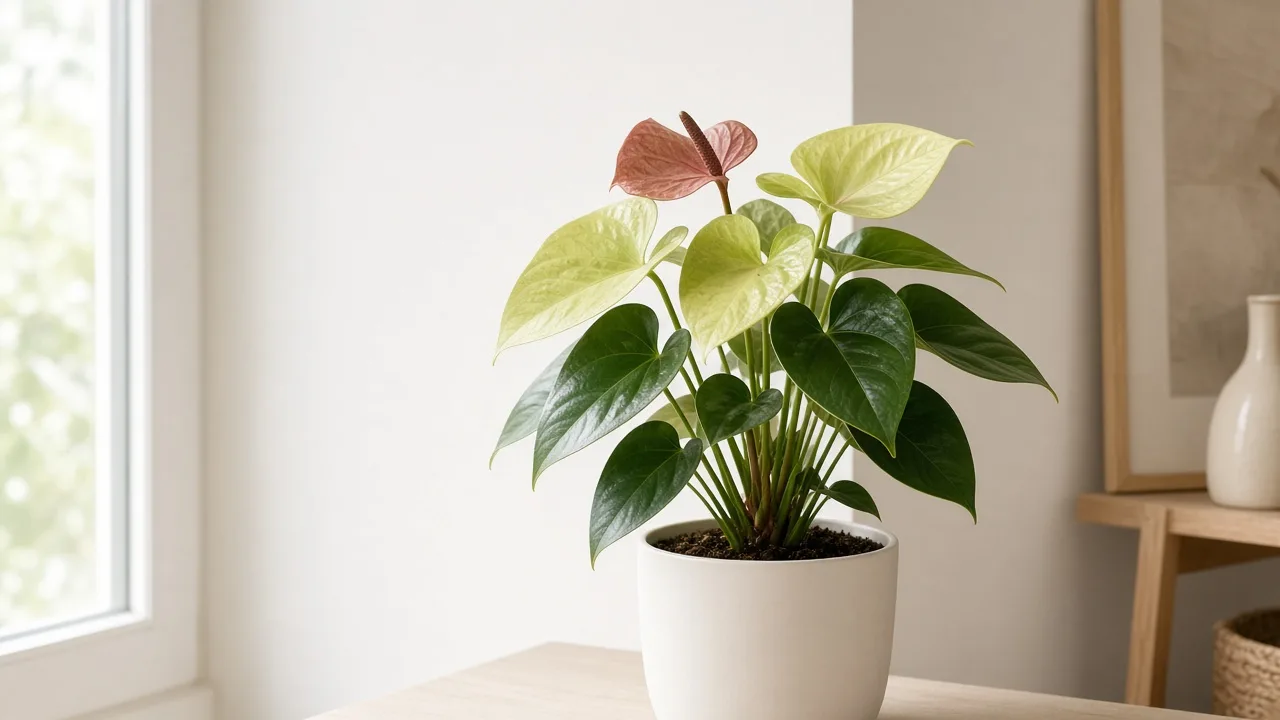
Pale Leaves on Anthurium: Causes, Checks & Fixes
This guide covers pale leaves on Anthurium. See also the general Pale Leaves guide, watering, and light pages for this plant.
Pale Leaves on Anthurium: Causes, Checks & Fixes
Quick answer
Pale leaves on Anthurium (Anthurium andraeanum, flamingo flower) mean chlorophyll is thinning across the glossy heart-shaped foliage-not a single disease. On this compact rosette aroid, the most common indoor trigger is too little bright indirect light, which produces washed-out yellow-green blades on elongated petioles before blooms fade too. Root stress from wet mix, iron or nitrogen deficiency on new growth, spider mite stippling, and cold drafts also bleach color.
For how pale foliage develops in general, see our pale leaves guide. On Anthurium, the pattern usually shows up as dull upper leaves while the plant still looks alive-not crispy sun-bleach and not always full yellow yet.
First step: compare newest leaves to older ones and measure window distance. Do not fertilize or repot on day one until you know whether light, roots, or nutrients are the limiter.
What pale leaves look like on Anthurium
Healthy Anthurium foliage should be deep, glossy green-almost waxy on the heart-shaped blades. Pale leaves lose that saturation and can read as lime-green, yellow-green, or chalky washed-out green.
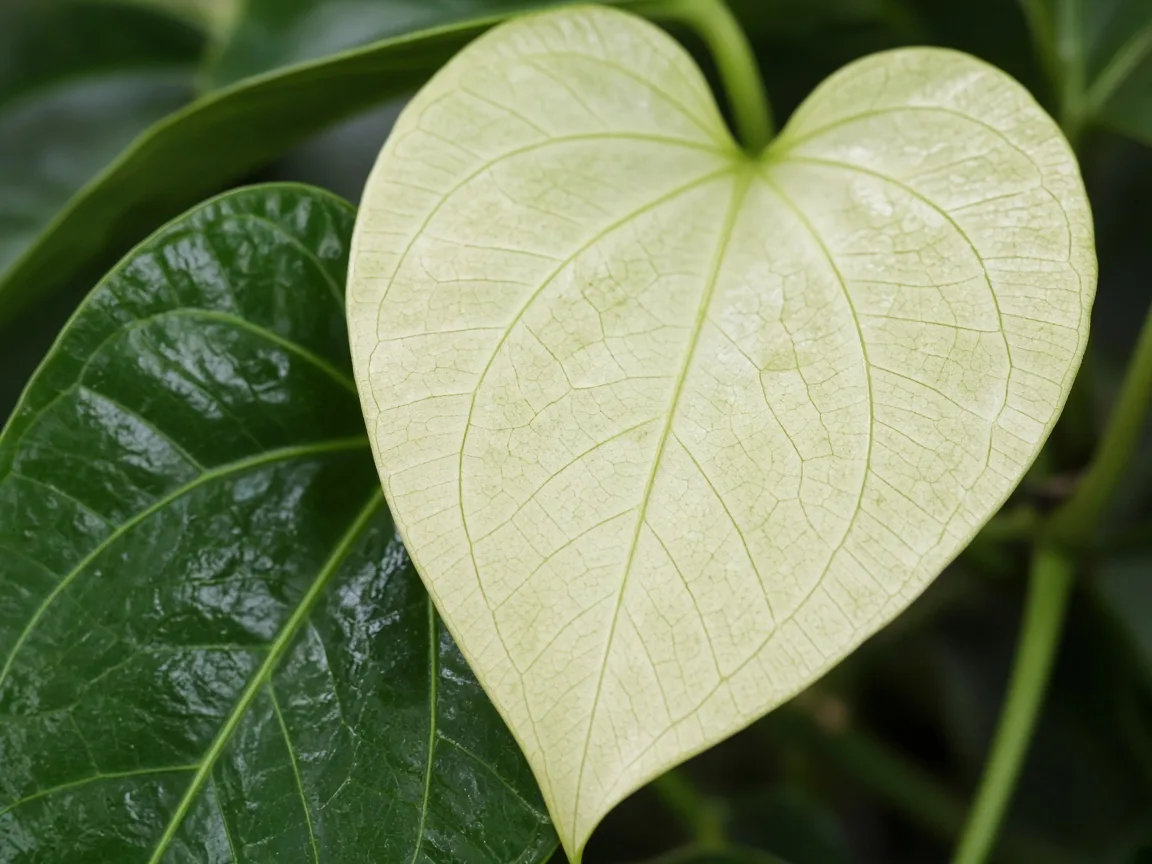
Pale Leaves symptoms on Anthurium - compare faded tissue with still-green blades on the same rosette.
Low light (most common)
- Newest leaves emerge paler than older ones, often on longer, thinner petioles
- Whole plant looks washed-out but not scorched
- Few or small spathes; new bracts may open pale (see faded flowers on Anthurium)
- Soil dries slowly because photosynthesis is weak
Root stress / overwatering
- Multiple leaves fade together, sometimes shifting toward yellow
- Mix stays wet; pot feels heavy days after watering
- Texture may feel soft or limp on pale tissue
- Often overlaps with yellow leaves on Anthurium as stress worsens
Nutrient deficiency
- New growth stays pale while older leaves remain darker (iron pattern)
- Uniform pale green on newer and middle leaves with slow growth (nitrogen)
- Occurs after long periods without feed, or when Anthurium soil is too alkaline or compacted
Pests
- Speckled or stippled pale patches with webbing on undersides (spider mites on Anthurium)
- Fine pale dots that do not follow a watering pattern
Normal aging
- One oldest bottom leaf fades slowly over months
- Crown and spathes stay firm; moisture rhythm is stable
Pale spathes vs pale foliage on Flamingo Flower
Anthurium owners often notice color loss on blooms before leaves look dramatic. A newly opened spathe that is lime-green or washed-out pink is usually a light problem, not a separate disease-the bract is modified leaf tissue whose pigments need energy from bright filtered light. That is different from a six-to-eight-week-old spathe turning green as part of normal aging on faded flowers.
Foliage paleness affects the entire rosette’s ability to feed the plant. Spathe paleness can appear first because the plant prioritizes whatever growth it can still afford. If both leaves and new blooms look dull, fix placement and root oxygen before chasing bloom booster alone.
Why Anthurium gets pale leaves
Insufficient bright indirect light
Anthurium evolved in warm, humid Colombian and Ecuadorian rainforests under bright filtered canopy light-not deep interior shade. NC State Extension notes that insufficient light decreases flower production on A. andraeanum, and the RHS warns that too little light will prevent flowering on anthuriums-the same energy shortage thins chlorophyll in foliage. A pot on a shelf six feet from glass may look fine to human eyes while the rosette slowly bleaches.
Semi-epiphytic roots running out of oxygen
Anthurium roots need air as much as moisture. Missouri Botanical Garden recommends evenly moist, well-drained organic mix for flamingo lily-not constantly wet peat. In dense, soggy mix, fine roots suffocate even when leaves have not yellowed fully yet-paleness can be an early stress signal before overwatering on Anthurium advances to rot. Dim light compounds this because the plant drinks less while the same weekly watering keeps mix wet longer.
Iron and nitrogen gaps on new growth
Yellowing from lack of nutrients is documented on flamingo flower when feeding or root uptake fails. Iron shortage often shows on youngest leaves first; nitrogen shortage can pale broader sections of the rosette with weak new blades. Do not assume deficiency until light and moisture are ruled out-fertilizer on a root-stressed plant can burn pale tissue.
Pests and environmental stress
Spider mites thrive in dry heated air and drain color through stippling. Cold drafts below roughly 15°C (59°F) or chilled water can stall chlorophyll production and pale new leaves temporarily.
How to confirm the cause
Work through these checks in order:
- Leaf position - Newest only vs whole plant vs single bottom leaf.
- Window distance - Within roughly 3–5 feet of east or filtered south light? See not enough light on Anthurium if petioles are lengthening.
- Soil moisture at 2 inches - Wet for days (root stress) vs appropriate dry-down per Anthurium watering guide.
- Spathe color on new blooms - Washed-out new bracts reinforce a light diagnosis.
- Leaf undersides - Webbing, stippling, or sticky residue?
- Feed history - No fertilizer for many months on an otherwise stable plant?
- Temperature - Near AC vents, cold windowsills, or recent outdoor move?
The first fix to try
If the plant sits far from usable daylight or new growth is pale on long petioles: move the pot closer to bright indirect light today-within a few feet of an east window or behind a sheer on south. Do not repot, prune hard, or fertilize until you have tested brighter placement for two weeks.
If pale leaves coincide with wet soil and soft texture, skip the light-only assumption-stop watering until the top inch dries and empty saucers before reassessing.
Step-by-step recovery
- Correct light first when stretch and wash-out match - Follow Anthurium light guide placement; avoid hot direct sun that bleaches rather than greens.
- Match watering to dry-down - Water when the top inch is dry; never leave standing water in saucers.
- Inspect roots if rapid spread on wet mix - Unpot only when sour smell or many leaves pale within days; trim mushy roots into fresh airy mix per root rot on Anthurium.
- Treat mites if stippling is present - Rinse undersides; isolate until stippling stops spreading.
- Feed only after culture stabilizes - If new leaves stay pale on good light and moisture, use a balanced or iron-containing formula at label strength during active growth per Anthurium fertilizer guide. Suspect iron deficiency when only youngest leaves bleach; nitrogen deficiency when the whole rosette looks uniformly light green with slow growth.
- Remove fully spent bottom leaves - One faded old leaf at the base can be snipped once the crown is stable.
Recovery timeline
| Stage | What to expect |
|---|---|
| 1–2 weeks | Paleness should stop spreading once light or moisture is corrected |
| 2–4 weeks | Next leaves emerge darker with shorter petioles-primary success marker |
| Ongoing | Old pale blades may not re-darken; spathe color improves on subsequent blooms |
Judge success by new rosette growth, not old leaf color.
Lookalike symptoms
| Pattern | What you see | Likely cause |
|---|---|---|
| Pale new leaves, long petioles | Washed-out upper rosette | Low light |
| Pale + wet soil + limp feel | Spread across multiple leaves | Root stress / overwatering |
| Pale youngest leaves only | Older blades still dark | Iron deficiency |
| Uniform pale green, slow growth | Whole rosette light | Nitrogen deficiency |
| Speckled pale patches | Webbing underneath | Spider mites |
| One bottom leaf fading slowly | Crown still deep green | Normal aging |
| Bleached patches on sun side | Crispy edges | Too much direct sun |
Mistakes to avoid
- Fertilizing a pale, wet-rooted plant first - Fix oxygen and light before feed.
- Confusing old spathe greening with leaf paleness - Aging bracts are normal; dull new foliage is not.
- Misting instead of fixing light - Humidity helps edges but does not replace chlorophyll-building light.
- Repotting on day one - Unless roots are clearly rotting, stabilize moisture and placement first.
- Keeping a pale plant in a dim bathroom - Humidity without usable light often worsens slow dry-down.
How to prevent pale leaves next time
Grow Anthurium in bright indirect light with moist, well-drained soil and 60–80% humidity. Water when the top inch dries. Use chunky aroid mix. Rotate the pot weekly. Feed lightly in active growth only after new leaves hold color. Review Anthurium overview seasonally when winter short days reduce indoor light.
When to use this page vs other Anthurium guides
- Not enough light on Anthurium - Use when stretch and bloom failure dominate before foliage looks pale.
- Yellow leaves on Anthurium - Use when chlorosis has progressed to obvious yellow, especially on wet soil.
- Faded flowers on Anthurium - Use when only spathes lose color, especially on older blooms.
- Iron deficiency on Anthurium - Use when youngest leaves bleach but veins stay greenish on otherwise good culture.
- Anthurium problems hub - Browse all common issues on this species.
Related Anthurium guides
- Anthurium overview
- Anthurium watering
- Anthurium light
- Anthurium soil
- Anthurium fertilizer
- Overwatering on Anthurium
- Root rot on Anthurium
- Anthurium problems
Related tool
Use the Plant Problem Diagnosis Tool to narrow causes for pale leaves on this plant before changing multiple variables at once.