Caterpillars on Areca Palm: Causes, Checks & Fixes
Quick answer
Caterpillars on areca palm chew irregular sections from narrow leaflets and unfolding spears, leaving dark pellet-like frass on arching fronds or the floor below—usually after patio placement, nursery hitchhikers, or moth eggs near open windows. First step: isolate the clump and inspect every cane's soft growth at night with a flashlight, then hand-pick every larva before treating foliage.
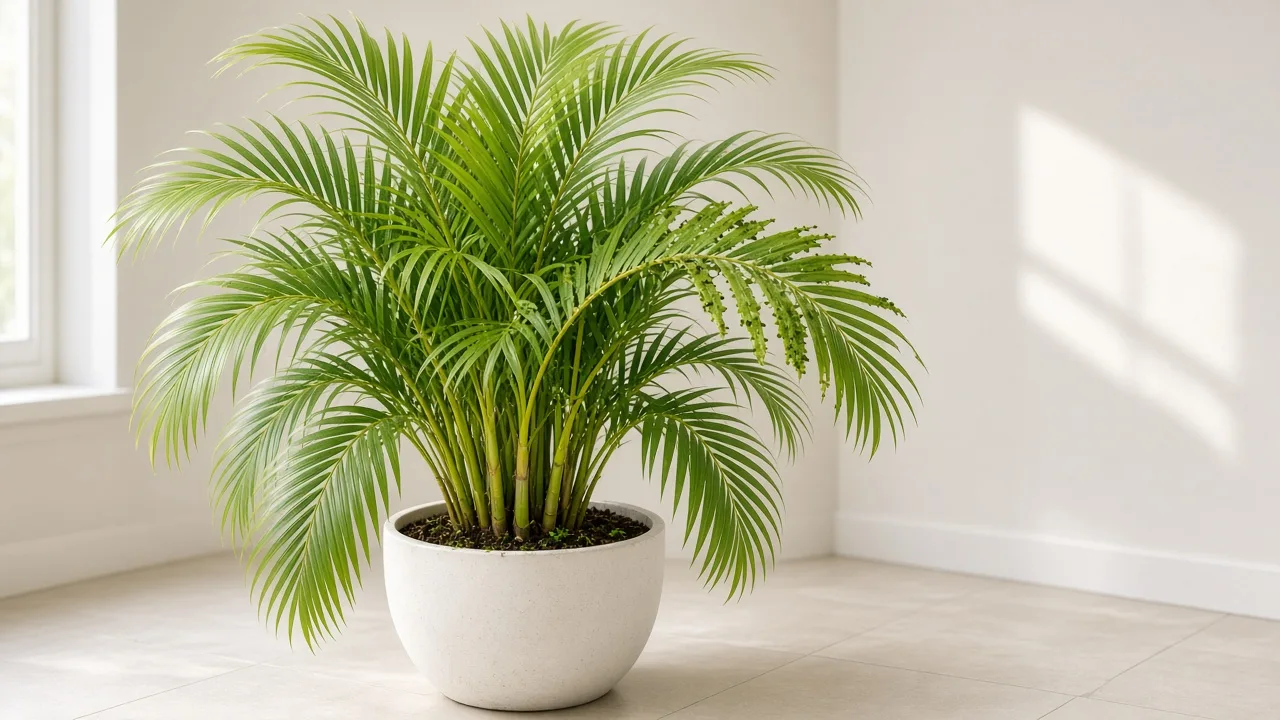
Caterpillars on Areca Palm: Causes, Checks & Fixes
This guide covers caterpillars on Areca Palm. See also the general Caterpillars guide, watering, and light pages for this plant.
Caterpillars on Areca Palm: Causes, Checks & Fixes
Quick answer
Caterpillars on areca palm (Dypsis lutescens) chew irregular notches from narrow leaflets along arching pinnate fronds with 40–60 leaflets per side and leave dark pellet-like frass on leaflets, cane stems, or the shelf below. Indoor cases are uncommon compared with scale, whiteflies, and spider mites on palms, and usually trace to hitchhiking larvae after patio season, nursery stock, open windows, or moth eggs on outdoor clumps.
For general caterpillar biology and control options, see our caterpillars guide. On areca palm, larvae often hide inside folded unfolding spears and along the rachis where dozens of narrow leaflets overlap—places a quick soil-moisture check never reaches.
First step: isolate the clump and inspect unfolding spears and leaflet folds at night with a flashlight, then hand-pick every caterpillar into soapy water before treating foliage.
When to use this page vs other Areca Palm guides
| Pattern | Read next |
|---|---|
| Ragged chew + frass pellets + visible larvae | This page |
| Clean tear, no frass, no spread after moving pot | Holes in leaves (mechanical) |
| Serpentine tunnels inside leaflet, no through-holes | Leaf miners |
| Sticky honeydew on unfolding spears | Aphids |
| Pinhead stippling and fine webbing | Spider mites |
| Silvery scarring, slender fast adults | Thrips |
| Lower frond yellowing only, firm canes, no chew | Overwatering or yellow leaves |
What caterpillars look like on areca palm
Caterpillar damage is easy to overlook on areca palm because each frond carries dozens of narrow leaflets and the multi-cane clump looks healthy from a distance. When larvae are active, the signature is ragged missing tissue with pellet frass—not the clean snap of a bumped pot or the stippling of sap feeders.
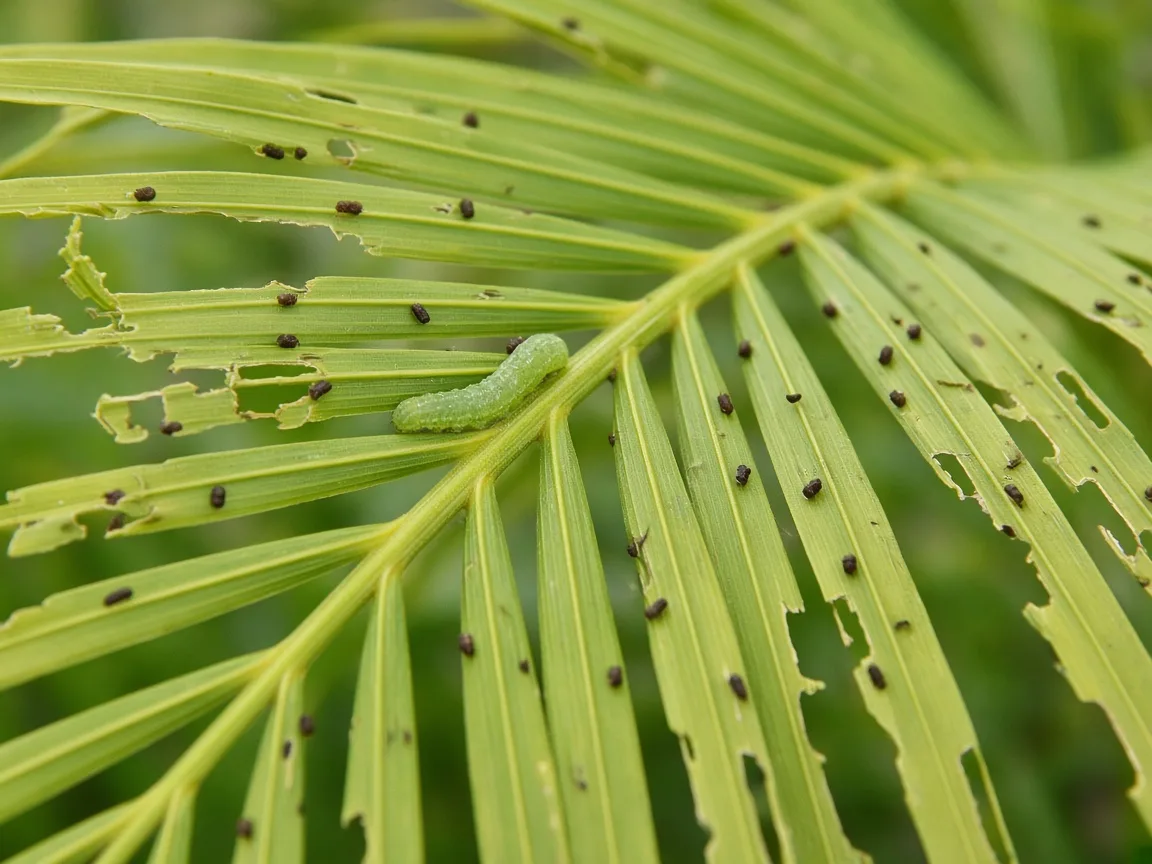
Irregular chew notches on narrow leaflets with dark pellet-like frass—compare with an intact neighbor leaflet on the same rachis.
Chewed notches and holes:
- Irregular sections missing from narrow lance-shaped leaflets along each arching rachis
- Ragged edges that look torn inward, not the straight crease of mechanical bending on a tall frond
- Dark green or black pellet-like frass on leaflets, cane stems, the pot rim, or the floor below
Larva signs (when you can see them):
- Green, brown, or patterned caterpillars curled along a rachis, inside a folded unfolding spear, or at the soil line on patio clumps
- Visible chewing on the newest spear leaflets before damage spreads down the frond
- Unlike leaf miners, damage goes through the leaflet—not inside a bordered tunnel visible when backlit
Growth impact on areca palm:
- Individual leaflets are expendable; a few notches on firm canes are usually cosmetic
- A single larva can notch several narrow leaflets along one rachis because leaflets cluster tightly on pinnate fronds
- Spear damage that stops new fronds from opening is more serious than lower-frond holes—watch whether the next unfolding spear emerges cleanly
Unlike spider mites, caterpillars do not produce stippling or webbing. Unlike aphids, no sticky honeydew appears—only open chewing wounds and frass.
Why areca palm gets caterpillars
Caterpillars are far less common indoors than sap-sucking pests like spider mites or mealybugs. On Dypsis lutescens, when you see chew damage, suspect a recent introduction rather than chronic indoor pressure.
Patio season and open windows
Areca palms summer outdoors on shaded patios more often than many houseplants. Moths can fly in through open doors or windows and lay eggs on tender foliage they recognize as food. When you bring the clump indoors in fall, eggs or tiny larvae may already be present on unfolding spears.
Nursery hitchhikers
Clemson Extension notes houseplant insects most often enter on newly purchased plants or specimens brought in from outdoors. Caterpillar eggs on potting media or leaf undersides are easy to miss on a feathery palm with dozens of leaflets per frond.
Tender unfolding spears attract chewers
When light is adequate and the palm pushes new spears through spring and summer, each unfolding frond offers soft tissue in a tight fold—similar to the tender growth caterpillars prefer to eat. Areca rarely branches from random cuts, so damage concentrates on the softest leaflet tissue at the crown rather than old lower fronds.
No indoor predators
Outdoors, birds and beneficial insects reduce caterpillar numbers. Indoor palms lack those natural controls, so a single larva can chew through several leaflets before you notice frass on the floor below.
Lookalike symptoms to rule out
Not every hole in an areca frond means caterpillars. Palm owners often confuse chew damage with mechanical tears, mining insects, or sap feeders.
| What you see | Likely cause | Quick check |
|---|---|---|
| Ragged chew + frass pellets + visible larvae | Caterpillars | Night inspection with flashlight on unfolding spears |
| Clean tear, no frass, no spread | Holes in leaves (mechanical) | Damage matches pot bump or pet chew; no pellets below |
| Serpentine tunnels inside leaflet | Leaf miners | Backlit leaflet shows bordered tunnel, not through-hole |
| Fine stippling and webbing, winter flare | Spider mites | Paper tap test; no pellet frass |
| Sticky spears plus pear-shaped clusters | Aphids | Honeydew tackiness; insects on soft growth |
| Silvery scarring, no frass pellets | Thrips | Slender fast adults; no dark pellet droppings |
| Large holes with silvery dried slime trail | Slug or snail (rare indoors) | No frass pellets; slime on pot rim or floor |
Confirmed caterpillars show live worm-like larvae or fresh chew with pellet frass—not holes alone on mature lower fronds.
How to confirm the cause
Work through this inspection in order. A typical five- to eight-cane indoor clump takes 15–20 minutes with a flashlight if you check every spear systematically.
- Isolate the clump on a tray away from other houseplants before handling fronds.
- Night inspection - Caterpillars are masters of camouflage; check at night when larvae are more active on leaflets and rachises.
- Location on the plant - Caterpillars on unfolding spears, leaflet folds along the rachis, and undersides of soft new growth. Damage on only the lowest mature fronds with no frass above often points to mechanical injury instead.
- Frass shake test - Hold a chewed leaflet over white paper and tap lightly. Dark pellet-like droppings rolling off confirm caterpillar feeding.
- All canes in the clump - Check every stem in the cluster, not only the cane that looks worst. Eggs may sit on potting media from a recent repot per the repotting guide.
- Care cross-check - Confirm soil is not soggy for days per the watering guide. Water stress slows recovery but does not create caterpillars.
If you find firm canes, clean new spears, and no larvae after a careful night check, old chew may be from a larva already removed—keep scouting weekly rather than spraying blindly.
First fix for areca palm
Move the infested clump away from other houseplants and hand-pick every caterpillar you find at night, dropping them into soapy water or relocating far outdoors.
Wear gloves in case you encounter a hairy or spiny larva. Manual removal is the most effective immediate treatment for houseplant caterpillars. Work systematically from the topmost unfolding spear on each cane down the rachis, parting leaflet clusters with a soft brush or your fingers to expose folds.
Do not apply Bt, insecticidal soap, or neem until you have confirmed live larvae and finished at least one thorough hand-picking pass. Do not fertilize a pest-hit palm hoping to push replacement growth—that produces more soft tissue caterpillars prefer. Do not repot on day one unless you suspect eggs in potting media; caterpillars on foliage rarely require fresh mix immediately.
Areca palm is listed as non-toxic to cats and dogs by the ASPCA, which makes hand-picking safer in pet-aware homes—but still keep pets away from soapy water buckets and any later spray residues.
Step-by-step recovery
After the initial isolation and hand-picking:
Rinse to dislodge eggs and hatchlings
- Shower the clump in a tub or shower after visible larvae are removed. Use lukewarm water to wash leaflets and rachises. Rinsing dislodges tiny caterpillars or eggs you may have missed.
- Tilt the pot so runoff leaves the crown—not pooling where canes meet. Let fronds dry in bright indirect light per the light guide, not direct south-window sun while wet.
Bt kurstaki if chewing continues
- Apply Bacillus thuringiensis var. kurstaki (Bt) if fresh chew appears after two hand-picking sessions. Bt.k. is toxic when ingested by moth and butterfly larvae and is selective for caterpillars. Spray upper and lower leaflet surfaces and unfolding spears per label directions.
- Repeat at label intervals until no fresh chew or frass appears for two weeks. Bt works only when caterpillars eat treated tissue.
Cleanup and monitoring
- Vacuum or wipe frass from the floor and pot rim so new pellets are obvious.
- Prune only heavily chewed spears you cannot clean—cut at the base of the affected frond and sterilize blades between canes. Areca rarely branches from random cuts; avoid removing more fronds than necessary.
- Hold fertilizer until new spears look clean and firm for two weeks. Resume at half strength during active spring and summer growth if the palm is in bright light per the fertilizer guide.
Keep the plant isolated until you see no fresh chew or frass for at least two weeks after the last treatment.
Recovery timeline
Hand-picking shows results within one to two nights when only one or two larvae are present. A Bt course often takes one to two weeks with label-interval repeats because a single caterpillar can do significant damage in a short time and eggs may hatch in waves.
Chewed leaflets do not re-green—areca holds individual fronds for a long time and sheds damaged lower tissue rather than repairing holes. Judge success by firm upright new spears and falling frass counts, not by restoring every older arching frond to perfection.
Expect a clean unfolding frond within two to four weeks on a healthy clump in adequate light. Some lower frond yellowing may follow if the palm was already stressed from a recent move.
What not to do
Do not return an isolated clump to the plant corner after spotting one larva—eggs may remain in potting media or leaflet folds.
Do not use dish detergent instead of labeled Bt or plant-safe products on palm leaflets.
Do not soak the crown or let water sit in the spear pocket for days after repeated shower treatments—standing moisture invites rot unrelated to caterpillars.
Do not stack repotting, heavy frond removal, and chemical treatment the same week on a palm already stressed from a recent patio move.
Do not assume holes alone on lower mature fronds mean caterpillars. Confirm frass pellets and larvae first.
Do not ignore fresh chew on herbs or patio vegetables near the areca—moths often lay eggs on multiple host plants in one room.
Areca palm care cross-check
While treating caterpillars, keep baseline care stable:
- Light - Bright indirect light supports stiff new spears per the light guide. Weak light slows recovery after pest damage.
- Water - Water when the top 1–2 inches of soil are dry; avoid keeping roots wet for days while you shower foliage repeatedly.
- Humidity - Target 50–70% if possible per the overview; dry air favors spider mites more than caterpillars, but stressed palms recover slowly from any pest hit.
- Temperature - Keep above 50°F; cold exposure triggers lower frond loss unrelated to chew damage.
- Leaf scouting - Wipe dusty leaflets with a damp cloth every few weeks so early chew and frass are visible across many narrow leaflets per frond.
Fixing pests without stabilizing light and watering leaves areca vulnerable to the slow decline it is already known for.
How to prevent caterpillars next time
Isolate new clumps before placing them near existing collections and inspect unfolding spears weekly during quarantine.
Screen windows and doors that stay open at night, especially in late summer when moth activity peaks.
Rinse and inspect every cane after outdoor summer stays before the clump rejoins indoor groupings.
Scout soft growth on every cane every week through spring and summer when the palm pushes active growth. Pay special attention after fertilizing—tender new tissue attracts chewers.
Quarantine any plant that summered outdoors before it sits beside your areca. Check neighboring broad-leaf plants and herbs in the same room; moths are less picky indoors than in the garden.
When to worry
Treat as urgent when fresh chew marks appear on multiple cane tips within a week, frass accumulates across several arching fronds, or larvae show on several houseplants from the same patio batch.
Lower urgency fits one small larva on a single spring spear if you isolate and hand-pick immediately. Areca rarely dies from caterpillars alone on an otherwise healthy clump—but heavy sustained feeding on unfolding spears can stall growth for a season.
Replace severely declining specimens only after repeated control cycles fail and the clump keeps losing new spears despite stable care. Division of healthy offshoots at repotting is an option if part of the clump remains clean.
Related areca palm problems
- Areca palm overview - Baseline light, water, humidity, and pest risk
- Holes in leaves - Mechanical tears without frass pellets
- Leaf miners - Serpentine tunnels inside leaflets, not ragged through-chew
- Aphids - Sticky honeydew on unfolding spears without pellet frass
- Spider mites - Winter stippling and webbing without chew holes
- Watering areca palm - Moist-but-not-soggy rhythm during shower treatments
When to use this page vs other Areca Palm guides
- Areca Palm watering guide - Use for routine moisture checks before assuming caterpillars is the main issue.
- Areca Palm problems hub - Browse all common issues on this species.
- Holes in leaves on Areca Palm - Different entry point when symptoms overlap with caterpillars.
- Leaf miners on Areca Palm - Different entry point when symptoms overlap with caterpillars.
- Aphids on Areca Palm - Different entry point when symptoms overlap with caterpillars.