Leaf Miners on Areca Palm: Causes, Checks & Fixes
Quick answer
Leaf miner larvae tunnel inside areca palm leaflets, leaving pale winding trails on narrow pinnate fronds. First step: isolate the clump and clip off mined leaflets or whole frond sections—contact sprays rarely reach maggots protected inside tissue.

Leaf Miners on Areca Palm: Causes, Checks & Fixes
This guide covers leaf miners on Areca Palm. See also the general Leaf Miners guide, watering, and light pages for this plant.
Leaf Miners on Areca Palm: Causes, Checks & Fixes
Quick answer
Pale squiggles inside narrow leaflets on areca palm (Dypsis lutescens) usually mean leaf miner larvae feeding between the upper and lower surfaces of individual leaflets—not ragged caterpillar chew with pellet frass or spider mite stippling on frond undersides.
For general leaf miner biology and control options, see our leaf miners guide. On areca palm, the signature is a bordered serpentine tunnel visible when you backlight a narrow leaflet along an arching pinnate frond—easy to miss until you inspect leaflet by leaflet on each cane.
First step: isolate the clump and clip off mined leaflets or whole frond sections before larvae mature and drop to pupate on the soil surface.
When to use this page vs other Areca Palm guides
| Pattern | Read next |
|---|---|
| Bordered pale tunnel inside leaflet, dark frass line when backlit | This page |
| Ragged chew + pellet frass + visible larvae | Caterpillars |
| Clean tear, no frass, no internal trail | Holes in leaves (mechanical) |
| Pinhead stippling and fine webbing | Spider mites |
| Silvery scarring, slender fast adults | Thrips |
| Sticky honeydew on unfolding spears | Aphids |
| Lower frond yellowing only, firm canes, no mines | Overwatering or yellow leaves |
What leaf miners look like on areca palm
Leaf miner damage is easy to overlook on areca palm because each arching frond carries 40–60 narrow lance-shaped leaflets per side and the multi-cane clump looks healthy from a distance. When larvae are active, the signature is a serpentine pale tunnel inside a leaflet—not a hole chewed through the blade.
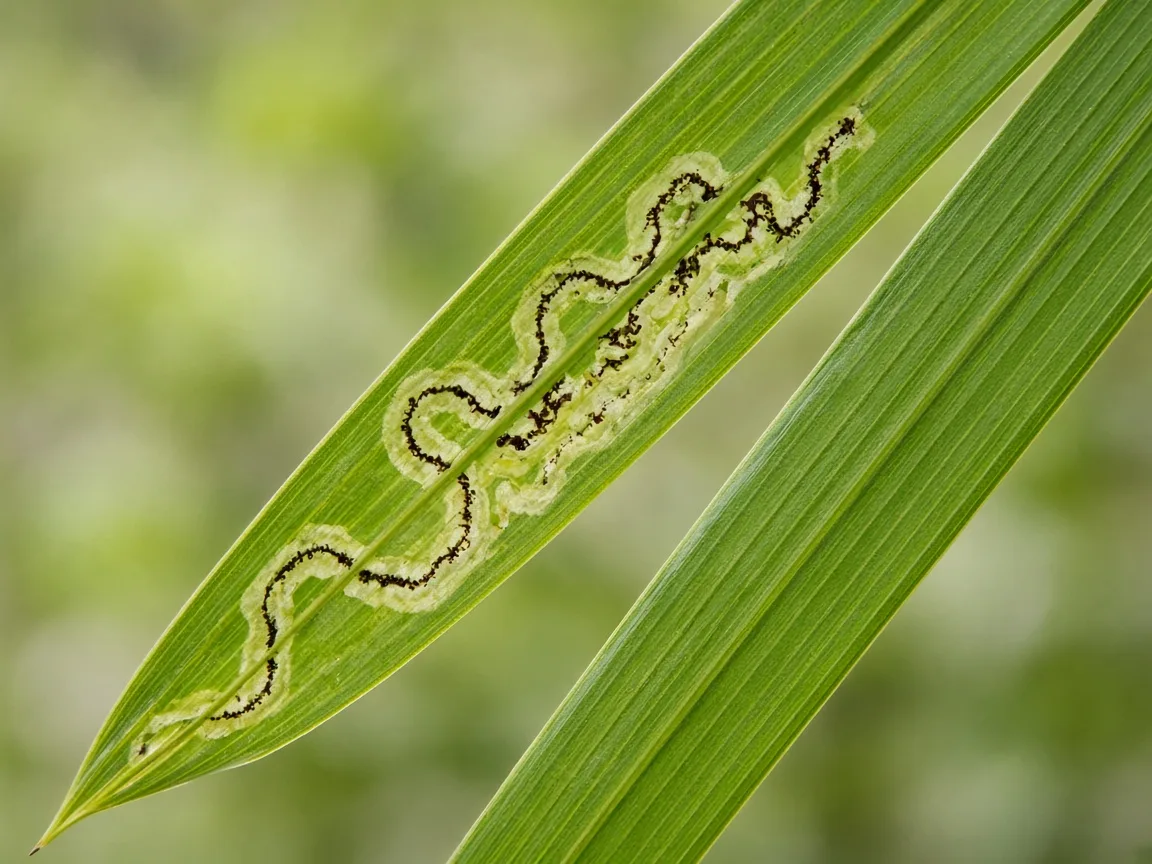
Pale winding mine inside a narrow areca leaflet with a dark frass line—backlight the leaflet to confirm the bordered internal tunnel.
Serpentine mines on narrow leaflets:
- Twisting white or pale trails inside individual leaflets along each arching rachis, often widening as the larva grows
- A dark line of larval waste (frass) running through the pale tunnel when you hold the leaflet to light
- Leaflet surface stays intact except for tiny adult feeding punctures and a small exit hole when the larva leaves
Adult fly signs:
- White stippling from female flies puncturing leaflets to feed on sap before laying eggs—may appear on several leaflets along one rachis
- Small black-and-yellow flies near windows or on unfolding spears in warm months (often Liriomyza species such as the American serpentine leafminer)
- Brown seedlike pupae on the pot rim, soil surface, or floor below after larvae exit mined leaflets
Growth impact on areca palm:
- Individual mined leaflets are expendable; a few cosmetic trails on firm canes rarely threaten the clump
- Mines on unfolding spear leaflets are more worrying than old lower-frond damage—watch whether the next spear emerges without fresh expanding tunnels
- Unlike caterpillars, miners do not remove tissue outright; unlike aphids, no sticky honeydew appears
Why areca palm gets leaf miners
Leaf miners are small fly larvae (Liriomyza species) that tunnel between leaf surfaces. On Dypsis lutescens, indoor cases are less common than spider mites, scale, and whiteflies but usually trace to a recent introduction rather than chronic indoor pressure.
Patio season and nursery hitchhikers
Areca palms summer outdoors on shaded patios more often than many houseplants. Flies can reach patio clumps and lay eggs inside tender leaflets. When you bring the clump indoors in fall, mines may already be inside leaves before stippling is obvious.
Nursery-grown clumps with dozens of leaflets per frond make it easy to miss white punctures or a single expanding mine on one cane.
Tender unfolding spears attract egg-laying
When light is adequate and the palm pushes new spears through spring and summer, each unfolding frond offers soft leaflet tissue in a tight fold. In warm weather the life cycle can be as short as two weeks, allowing multiple generations indoors through a single growing season.
Insecticide flares after treating other pests
Outbreaks of vegetable leafminers are often associated with insecticide use that kills parasitic wasps in the Diglyphus genus that normally keep leaf miner numbers low. If mines appeared two to three weeks after a broad-spectrum spray for scale or spider mites, suspect loss of natural enemies more than random bad luck.
No indoor predators
Outdoors, parasitic wasps and other beneficials reduce leaf miner numbers. Indoor palms lack those natural controls, so a single fly can lay eggs across several narrow leaflets before you backlight one suspect blade.
How to confirm the cause
Work through these checks before treating:
- Backlight a suspect leaflet. A bordered internal tunnel with a frass line confirms leaf miner—not brown tips from dry air or fluoride alone.
- Check whether the mine is expanding. A lengthening trail means an active larva; an old brown mine may be empty.
- Look for frass inside the tunnel. A dark line distinguishes miners from thrips silvering or spider mite stippling on the leaflet surface.
- Rule out chewers. Caterpillars remove tissue outright, leaving ragged holes and pellet frass—not enclosed serpentine trails.
- Inspect new plants. Mines on one nursery palm in a mixed display often explain a sudden appearance on otherwise healthy areca.
- Note recent sprays. A flare of mines after pyrethroid or broad-spectrum treatment on neighboring plants fits parasite loss more than new infestation.
If you see only fine yellow dots without bordered trails, suspect spider mites. Silvery scarring without internal tunnels points to thrips. Brown crispy margins without a mine pattern fit low humidity—not leaf miners.
First fix for areca palm
Isolate the clump and clip off mined leaflets or entire frond sections.
Cut affected leaflets at the base where they meet the rachis, or remove the whole frond at the cane if mines run through most leaflets on that stem. Bag removed foliage in the trash—not the compost pile—so larvae cannot pupate in your bin. If pests are detected, isolate the plant from others until you see no new expanding mines for two weeks.
Do not reach for insecticidal soap, neem, or horticultural oil as a first response on a palm with a few cosmetic mines. Larvae inside leaflets are shielded from contact products—insecticides are not very effective for leafminer control—and repeated wetting stresses a palm you may already be showering for other reasons.
Step-by-step recovery
After mined leaflets are removed, work in this order:
Scout unfolding spears on every cane
- Inspect every three to five days through warm months—mines hide on the smallest leaflets of new spears. Rotate the pot and backlight suspect leaflets along each rachis.
- Vacuum or wipe seedlike pupae from the pot rim and soil surface so new brown pupae are obvious.
Stabilize baseline care
- Keep watering steady during recovery. Do not let pest stress coincide with drought; follow the watering rhythm and avoid keeping roots wet for days after repeated foliage rinses.
- Hold fertilizer while mines are active. Soft nitrogen-rich new growth is easier for flies to puncture. Resume half-strength palm feed only after new mines stop appearing for two weeks per the fertilizer guide.
Monitor adults without over-spraying
- Hang yellow sticky traps near—not on—the clump to catch adult flies and monitor activity. Traps detect problems; they do not replace leaflet clipping.
- Escalate only if needed. If mines cover most leaflets on multiple fronds despite weekly removal, a systemic product labeled for leaf miners on ornamentals may help as a last resort—still secondary to sanitation on home palms. Pyrethroid sprays can encourage leafminers by eliminating parasites; read labels for indoor use and pet-accessible placement before treating near a pet-safe palm.
Keep the plant isolated until you see no fresh expanding mines for at least two weeks after the last clipping session.
Recovery timeline
| Severity | What to expect |
|---|---|
| Cosmetic mines on a few leaflets of one frond | Visible improvement within days after removal; clean leaflets on the next spear in one to two weeks if flies are not laying heavily |
| Moderate infestation across several fronds | Two to three weeks of regular leaflet removal before mine counts drop, assuming no broad-spectrum sprays suppress natural enemies |
| Weak clump with mines on most fronds plus overwatering stress | Four weeks or longer until spear growth stabilizes—fix root-zone conditions before expecting clean new fronds |
Mined tissue never turns green again—areca holds individual fronds for a long time. Judge success by absence of new expanding mines, not by old trails fading. Mining usually has little impact on plant health on established specimens; unusually heavy damage can slow growth or cause leaf drop.
Lookalike symptoms to rule out
| What you see | Likely cause | How to tell apart |
|---|---|---|
| Winding pale tunnel inside leaflet | Leaf miner | Bordered trail with frass line; leaflet surface intact |
| Ragged chew + pellet frass | Caterpillars | Tissue removed; no enclosed serpentine trail |
| Fine yellow dots, possible webbing | Spider mites | No enclosed tunnel; stippling across leaflet undersides |
| Brown tips and margins | Low humidity or brown tips | Edge browning without internal mine; no frass line |
| Silvery scars on leaflets | Thrips | Surface scarring; no bordered internal tunnel |
| Clean snap or tear | Holes in leaves | Mechanical damage; no mine or frass |
What not to do
Do not return an isolated clump to the plant corner after spotting one mine—larvae may pupate on the soil surface and adults can reinfest unfolding spears.
Do not compost mined leaflets; larvae may survive and pupate in the pile.
Do not use broad-spectrum insecticides for scale or whiteflies and then wonder why leaf miners exploded two weeks later.
Do not assume pale lower-frond discoloration alone means miners—confirm the internal tunnel first.
Do not remove entire canes for three mined leaflets on one older frond—targeted leaflet clips are usually enough.
Do not soak the crown or let water sit in the spear pocket for days after repeated shower treatments unrelated to miners.
Areca palm care cross-check
Leaf miners are a pest issue, not a watering schedule problem—but stressed palms recover slower after you remove foliage.
- Light - Bright indirect light supports stiff new spears per the light guide. Weak light slows replacement fronds after pest damage.
- Water - Water when the top 1–2 inches of soil are dry; avoid keeping roots wet for days while you monitor pupae on the soil surface.
- Humidity - Target 50–70% per the overview; dry air favors spider mites more than leaf miners, but stressed clumps replace mined leaflets slowly.
- Soil - Well-draining palm mix per the soil guide; soggy roots do not cause mines but slow regrowth after pruning.
How to prevent leaf miners next time
Isolate new clumps before placing them near existing collections and backlight leaflets on unfolding spears weekly during quarantine.
Rinse and inspect every cane after outdoor summer stays before the clump rejoins indoor groupings.
Remove mined leaflets during weekly care before larvae drop to pupate—especially on patio-returned palms in fall.
Avoid broad-spectrum sprays for other pests when leaflet clipping and targeted controls would suffice; preserve parasitic wasps that normally regulate leafminers.
Scout soft growth on every cane through spring and summer when the palm pushes active growth. Pay special attention after fertilizing—tender new leaflet tissue attracts egg-laying flies.
When to worry
Treat as urgent when expanding mines appear on multiple cane tips within a week, seedlike pupae accumulate on several pots from the same patio batch, or new spear leaflets keep mining despite weekly clipping.
Lower urgency fits one old cosmetic mine on a single lower frond if you isolate and clip immediately. Areca rarely dies from leaf miners alone on an otherwise healthy clump—mining rarely kills established plants—but heavy sustained mining on unfolding spears can stall growth for a season.
Replace severely declining specimens only after repeated sanitation cycles fail and the clump keeps losing new spears despite stable care.
Related areca palm problems
- Areca palm overview - Baseline light, water, humidity, and pest risk
- Caterpillars - Ragged through-chew with pellet frass, not internal tunnels
- Holes in leaves - Mechanical tears without frass or mines
- Spider mites - Winter stippling and webbing without serpentine trails
- Aphids - Sticky honeydew on unfolding spears without internal mines
- Watering areca palm - Moist-but-not-soggy rhythm during recovery
When to use this page vs other Areca Palm guides
- Areca Palm watering guide - Use for routine moisture checks before assuming leaf miners is the main issue.
- Areca Palm problems hub - Browse all common issues on this species.
- Caterpillars on Areca Palm - Different entry point when symptoms overlap with leaf miners.
- Spider mites on Areca Palm - Different entry point when stippling appears without internal tunnels.
- Holes in leaves on Areca Palm - Different entry point when damage is mechanical, not mined.