Ash Gourd Light Needs: Sun Hours & Placement
Ash Gourd Light Needs: Sun Hours & Placement
Ash Gourd Light Needs: Sun Hours & Placement
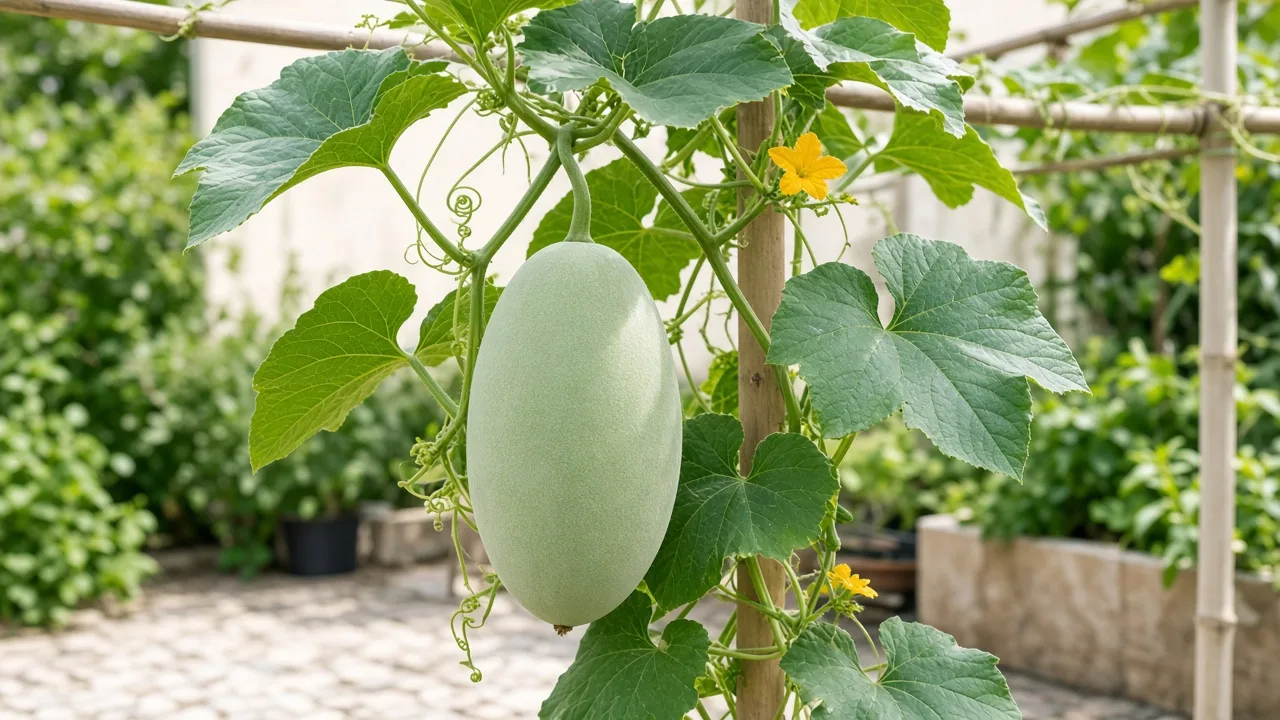
Ash gourd (Benincasa hispida)—winter melon, wax gourd, petha, or kushmanda on Indian terraces—is a warm-season cucurbit vine, not a low-light houseplant. Plants of the World Online (Kew) places it in the cucumber family as a scrambling annual widely grown for large, waxy-skinned fruits. The plant builds long stems, broad leaves, and heavy melons only when the canopy receives full sun for most of the day. If you are debating whether a shaded balcony is “bright enough,” start here before you sow—light mistakes show up weeks later as weak vines, empty female flowers, and golf-ball fruit that never swells.
This guide covers how much sun winter melon actually needs, where to place vines on rooftops and in ground beds, what partial shade really costs you, and how to bridge weak indoor starts with grow lights. For identity, sowing calendars, and bitter-fruit safety, see the overview first.
Ash Gourd Light Needs: The Quick Answer
Treat six to eight hours of unobstructed direct sun daily as the working minimum for reliable ash gourd on a trellis or open bed. Missouri Botanical Garden lists Sun: Full sun for Benincasa hispida and notes that the annual vine is best grown in fertile, well-drained loam in full sun. Many warm-season cucurbits produce more consistent fruit toward eight to ten hours (Epic Gardening) when heat and watering stay steady—winter melon is no exception.
On an Indian plains terrace, that usually means the open south or west side of the roof, away from tall parapet walls, water tanks, and neem trees that throw afternoon shadow. A spot that feels hot and bright at noon is often correct; a spot that stays cool and dim all day is not.
Hours of direct sun per day
Use a simple shadow test on a clear day. Stand where the vine will climb and look for a sharp hand shadow on the soil or pot surface. If direct beams hit that spot from mid-morning through mid-afternoon, you are likely in the productive range. If you only get a fuzzy shadow or sun for an hour between buildings, expect survival growth—not a steady winter-melon harvest.
Vines can run several metres with fruits commonly weighing 5–20 kg at maturity. Check light along the full trellis run, not just at the seedling hole. The top of a pergola may be sunny while the base sits in wall shade; lower leaves then cannot feed fruit on upper stems.
Full sun versus partial shade
Full sun for vegetables generally means at least six hours of direct rays on the leaf canopy. Partial shade—often three to five hours of direct sun plus bright indirect light—may keep a vine alive but rarely supports the flower and fruit load ash gourd needs. Gardening Channel states that winter melon wants an area with full sunlight and well-draining soil, with partial afternoon sunlight only as a climate tool in harsh heat—not as a permanent low-light strategy.
Unlike compact greens, wax gourd cannot be “saved” with extra fertilizer when photons are missing; weak light plus rich feed tends toward soft, leggy stems and poor fruit set instead of bigger melons.
Why Ash Gourd Is a Sun-Driven Winter Melon Vine
Ash gourd belongs to Cucurbitaceae, the same broad family as cucumber, pumpkin, and bottle gourd. These plants evolved as rapid summer vines that intercept as much light as possible while the season is warm. PlotMyGarden lists full sun among core winter-melon needs alongside steady moisture and roughly 110 days to maturity for many gardens.
Large, broad leaves are solar panels. When they receive strong light, the plant pushes tendrils up your trellis, opens yellow male and female flowers, and swells young fruit. When light is weak, the plant reallocates energy to stem elongation—searching for sun—rather than to fruit you can harvest.
Light demand during flowering and fruit swell
Female flowers appear with a tiny round ovary at the base; males sit on thin stalks. Both open in the morning. Low light during the weeks before bloom reduces the number of female flowers and weakens pollen viability, which makes hand pollination on balconies more important when bees are scarce—see the overview for flower timing. Even perfect pollination cannot compensate for a vine that never built enough leaf area in adequate sun during the prior month.
Fruit swell is a second peak demand period. Hanging melons on a sunny trellis dry quickly after rain; melons sitting in shaded, damp corners rot faster and tie back to soil drainage and ground contact. Light and airflow work together here.
How sun supports the waxy storage rind
The chalky wax bloom that gives winter melon its name develops as fruit matures on a well-fed, sun-exposed vine. Storage types left to ripen on the plant need the same strong light that drives leaf photosynthesis through late summer. Shaded fruit may size unevenly and form a thin wax coat, shortening pantry life compared with melons grown in open sky.
Best Outdoor Placement in India and Warm Climates
Indian growers typically sow in late winter through spring for summer harvests or with kharif rains when nights stay warm—not a shaded winter corner. Gardening Channel recommends sowing outdoors once soil reaches about 60°F (16°C), or starting seed indoors and transplanting after nights stay warm. Both windows assume warm nights and increasing cumulative light—not dim courtyards.
Rooftop, terrace, and open kitchen-garden beds
On terraces, prioritize unshaded roof area with room for a sturdy trellis or overhead net (machan). Place grow bags or mounds so the vine’s south side (in the Northern Hemisphere) receives the longest sun arc. Keep tall coolers, AC condensers, and sheet-metal sheds to the north side of the planting so they do not cast a moving shadow across noon hours.
In in-ground kitchen gardens, avoid planting immediately north of mango, neem, or wall lines that block winter and spring sun. Direct-sow or transplant only after soil warms to about 21°C (70°F). A black grow bag in full sun warms faster than a shaded corner with “good air temperature.”
Monsoon cloud cover and humidity
Monsoon sowings still need the brightest available site, even when clouds roll in. Humid, overcast weeks slow drying on leaves and encourage mildew; they do not remove the plant’s long-term need for high cumulative light. If your terrace is sunny in pre-monsoon May but deeply shaded once trees leaf out, move bags before vines are a metre long—cucurbits resent root disturbance less at the seedling stage than when heavy.
During breaks in the monsoon, full sun returns quickly. Vines that established in weak light may not catch up when skies clear; sow timing and site matter more than a late nitrogen boost.
Container and Wall-Shade Traps on Balconies
Apartment balconies often fail winter melon for light geometry, not for lack of gardener effort. Short parapets, neighbor walls, and glass railings can block low-angle morning sun. A pot “in full sun” at June noon may sit in shade by September when the sun angle drops.
Use the shadow test at 7 a.m., noon, and 4 p.m. on a clear day. If any of those checks fails to show direct sun on the pot rim, treat the site as partial shade and expect reduced yield. Hanging a pot over the outer railing can buy an hour of sun—ensure the railing and hooks are rated for wet soil weight from a mature vine plus fruit.
Reflective white walls help; dark stairwells do not. Do not rely on indoor light through a window for a multi-metre vine. Mature ash gourd belongs outdoors on the brightest structure you can safely rig—see repotting for when seedlings outgrow starter cells before they go outside.
Direct Sun Tolerance and Midday Heat
Established ash gourd vines tolerate hot, humid summers when roots stay moist. Gardening Channel notes that in some areas a site with full morning sunlight and partial afternoon sunlight protects plants from harsh temperatures—especially for young transplants on bare rooftop tile.
Harden transplants by giving them one hour more direct sun per day over several days, or erect 30–40% shade cloth for the first week after transplant during peak afternoon hours. Remove cloth once new leaves emerge firm and dark green. Established vines with deep roots handle midday heat if soil moisture stays even; wilting at noon that recovers by evening is often heat management—confirm with the finger test in watering.
Fruit with thin young skin can sunburn if suddenly exposed after canopy thinning. If you open the vine heavily for airflow per pruning, expect to shade exposed melons briefly or harvest tender cooking fruit sooner.
When Partial Shade Fails Wax Gourd Crops
Partial shade might produce a few small melons on an aggressive cultivar, but it is a poor fit for the species’ biology. Ash gourd is not spinach; it cannot be grown as a leaf crop in dim courtyards. Shaded vines attract fewer pollinators, stay wetter after dew, and compete poorly for space on crowded terraces.
If your only outdoor space is a north-facing gallery with two hours of sun, do not expect reliable winter melon. Grow microgreens or shade-tolerant herbs instead, or rent a community plot with open sky. Honest site selection saves three months of frustration.
Warning signs of too little light
Watch new growth two to three weeks after transplant. Pale, yellow-green young leaves, long internodes between leaves, and tendrils that reach horizontally toward the brightest corner signal insufficient light. Female flowers may form but drop without swelling. Fruit that starts often stalls golf-ball size and yellows.
These symptoms overlap with nitrogen deficiency, but on a shaded terrace the first fix is more sun, not more feed. Move the bag, lower a trellis panel, or trim overhanging branches before escalating fertilizer.
Warning signs of too much reflected heat
Too much reflected heat from metal roofing can cause crisp brown leaf edges even when light is technically adequate—pair bright sites with mulch and steady moisture. Seedlings moved straight from a dim nursery bed to bare rooftop tile can scorch—bleached patches on young leaves and stalled growth for a week.
Starting Seeds Indoors and Grow-Light Bridging
Short-season or hill-district growers sometimes start seed indoors in peat pots several weeks before the last frost risk (Missouri Botanical Garden). Indoors is a bridge, not the finish line. Gardening Channel advises moving sprouted seedlings to bright, indirect light with warmth until outdoor soil is ready—stretching toward a dim windowsill within days unless a lamp supplements.
Run a full-spectrum LED grow light about 12–14 hours per day, keeping foliage within the manufacturer’s recommended distance so stems stay stocky. Transplant outdoors as soon as nights stay above roughly 18–20°C and the terrace site passes the shadow test. See propagation for soak times, depth, and peat-pot planting to avoid root shock.
Seasonal Light Shifts Through the Growing Year
Day length and sun angle change faster than vine growth. A February-sown plant climbs into stronger March sun; a July-sown monsoon vine may begin under clouds then finish in harsh September glare. Re-check placement at monthly intervals if nearby construction or tree growth alters shadows.
In cooler hill stations, prioritize every hour of winter–spring sun on south-facing slopes. In lowland cities, autumn fruit may still ripen when nights remain warm; light alone will not ripen storage melons if temperatures collapse—plan harvest before cool nights stall growth.
When to use this page vs other Ash Gourd guides
Use this page when you are choosing or judging a sunny site, hardening seedlings onto a terrace, or diagnosing leggy vines and poor fruit set that trace back to shade. For how often to water once sun exposure is set, open watering. For mix, pH, and drainage that keep roots active in hot beds, see soil. For nitrogen and potassium timing after light is adequate, see fertilizer. For sowing, soaking, and transplant steps, see propagation. For vine training and canopy thinning, see pruning. For moving seedlings from small cells to large bags, see repotting. For species identity, cultivar goals, and bitter-fruit safety, start at overview.
Related Ash Gourd guides
- Overview — winter melon identity, India sowing windows, trellis planning, and food-safety notes.
- Watering — moisture checks that change with full sun, wind, and fruit load.
- Soil — mixes that drain fast on hot roofs without drying out every morning.
- Fertilizer — feeding when strong light drives rapid vine extension.
- Propagation — seed prep and transplant timing tied to your brightest warm weeks.
Conclusion
Ash gourd rewards open, all-day sun on a sturdy trellis—not a dim indoor corner or a permanently shaded balcony. Aim for at least six to eight hours of direct light on the climbing canopy, harden seedlings into rooftop glare gradually, and re-check shadows as the season turns. When new leaves stay dark green and female flowers set swelling fruit, your light placement is working; when stems stretch and fruit stalls small, move the vine toward sky before you change anything else.