Thrips on Asparagus Fern: Causes, Checks & Fixes
Quick answer
Thrips on Asparagus Fern show up as silvery scrape marks, black specks, and kinked new cladode spears on the softest growth—usually before damage spreads to older sprays. First step: isolate the plant and shake a suspect new spear over white paper to confirm slender moving insects before you spray anything.
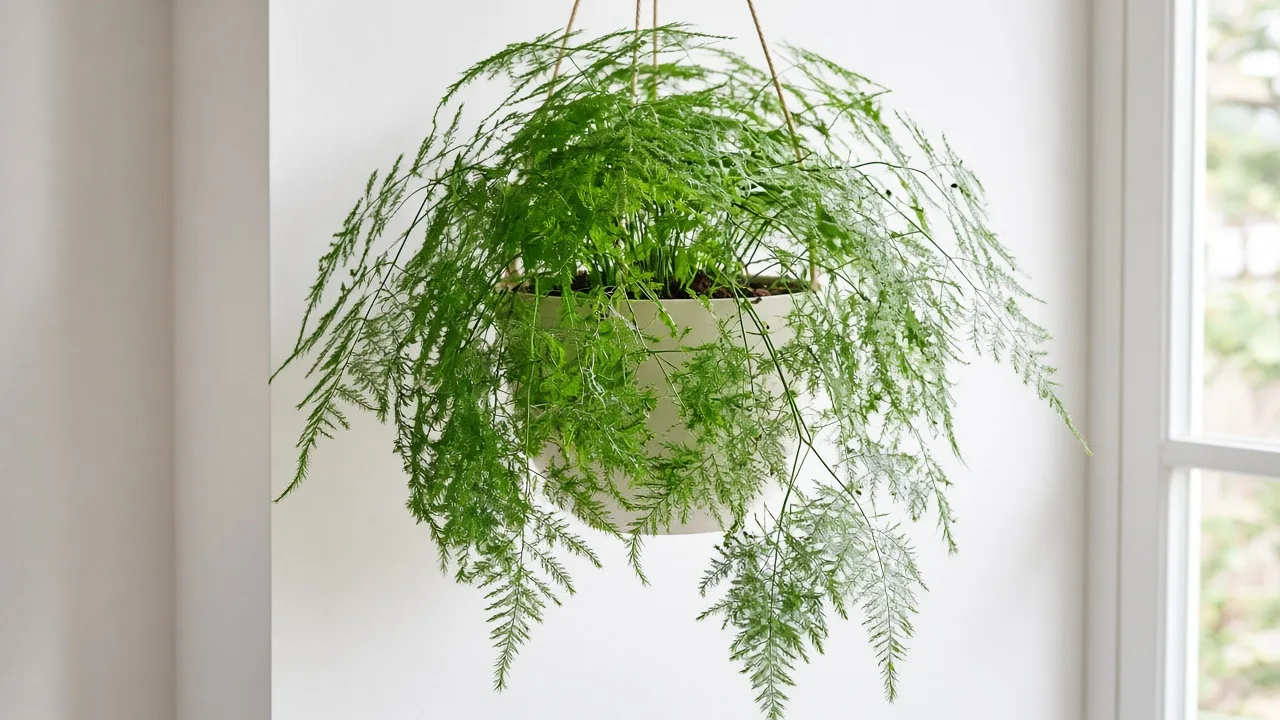
Thrips on Asparagus Fern: Causes, Checks & Fixes
This guide covers thrips on Asparagus Fern. See also the general Thrips guide, watering, and light pages for this plant.
Thrips on Asparagus Fern: Causes, Checks & Fixes
Quick answer
Thrips on Asparagus Fern are small, slender insects with rasping-sucking mouthparts that scrape sap from the softest tissue this fast-growing plant produces. They are not a watering failure and they do not mean your fern is doomed—but they do need action before damage locks into new growth.
The classic first clue: silvery-gray scars or dull patches on new cladode spears at the crown, sometimes with tiny black excrement specks, while older outer sprays still look green from a distance. On hanging baskets, damage often starts on upward-facing junctions inside the feathery cascade.
First step: isolate the plant and confirm thrips with a white-paper shake test on a suspect new spear. Move the pot away from neighbors, hold white paper under a soft new tip, tap the stem sharply, and look for slender insects that crawl quickly. Only after you see live pests or matching scrape marks should you rinse and begin treatment.
For general thrips biology, spread, and control options, see our thrips pest guide. On Asparagus Fern, damage concentrates on new cladode spears, flower stalks, and inner overlapping sprays—places a quick glance from above rarely catches.
What thrips look like on Asparagus Fern cladodes
Asparagus Fern (Asparagus setaceus) is not a true fern. Its “needles” are fine cladodes on arching wiry stems arranged in horizontal planes. Thrips exploit exactly that geometry: they rasp the surface cells of the softest new tissue and leave scars that stand out against fresh green needles.
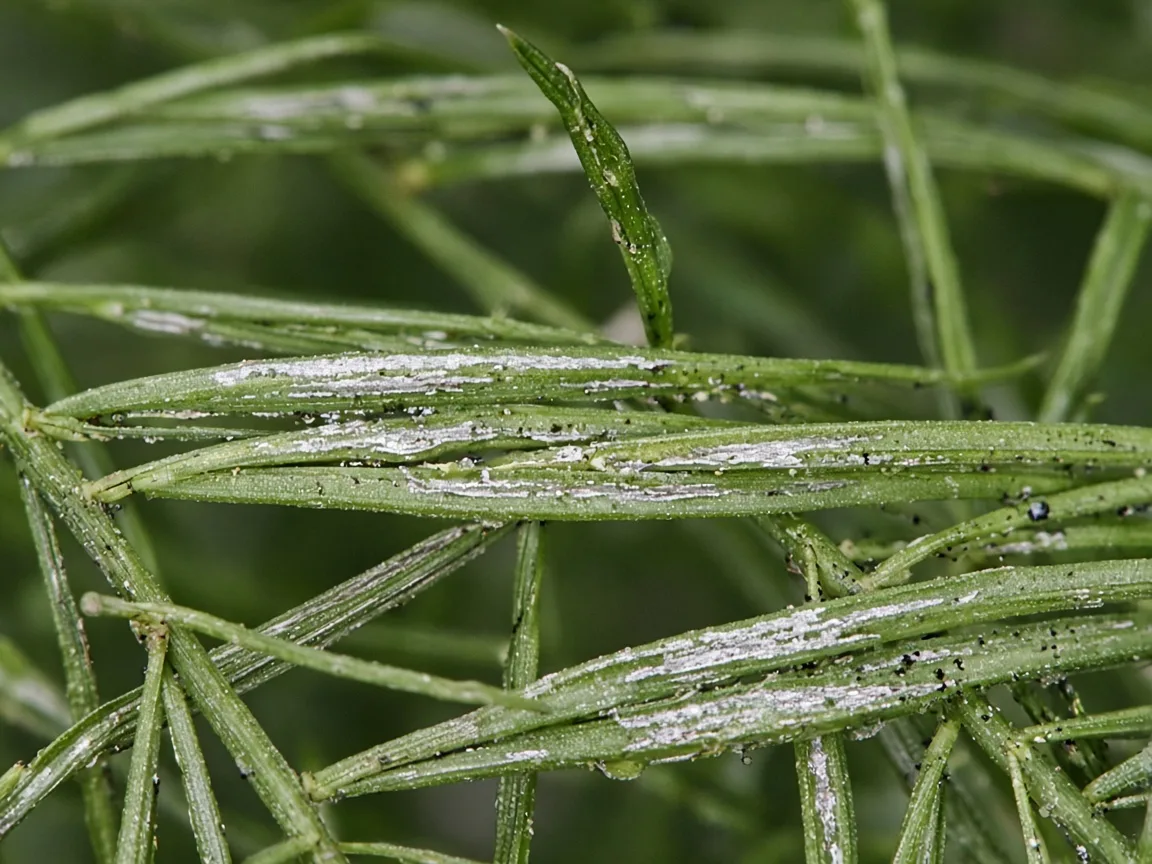
Thrips symptoms on Asparagus Fern - compare silvery scrape marks and black specks with healthy tissue on the same plant.
Typical signs include:
- Silvery or gray-white scrape marks on cladode surfaces—each scar is dead surface tissue where thrips rasped and drained sap.
- Tiny black or brown specks of excrement on undersides or along scarred needles.
- Twisted, stunted, or kinked new spears emerging from the crown when feeding hits buds early.
- Dull, papery patches on heavily fed cladode clusters; severe feeding can yellow sprays and trigger drop.
- Distorted flower stalks if the plant is producing small white blooms—infested buds may fail to open cleanly.
- Slender yellow, brown, or black insects barely visible without a magnifier; adults have fringed wings and rice-grain bodies under 1/16 inch long.
Thrips concentrate on new growth at the crown, soft cladode tips, and inner overlapping frond layers where sprays meet. Outer oldest needles on a hanging basket may stay green briefly while inner new spears show silvery scarring first. Dense Sprengeri-type baskets hide colonies longer than airy plumosa forms because overlapping needles create sheltered feeding sites.
Why new cladode spears attract thrips first
During spring and summer, Asparagus Fern pushes a steady stream of soft new spears in bright indoor light. Thrips prefer young leaves, buds, and tender growth because surface cells are easy to rasp and sap flows freely—exactly what new cladodes at the crown provide.
Horizontal cladode planes create hiding spots. Arching stems carry needle sprays in layered planes. Thrips feed on the sheltered upper surfaces of inner sprays where you rarely look during routine watering from above. A healthy-looking outer cascade can mask active damage on new spears tucked against the crown.
Flower stalks are a second hot zone. If your plant produces small white blooms or berry precursors, those soft stalks are softer than mature cladodes and often missed during casual checks. Thrips on buds can distort or streak flowers before they open.
Most infestations start with introduction. Thrips hitchhike on new nursery plants, cut flowers, open windows in mild weather, or neighboring houseplants that were never quarantined. A summer move outdoors and return in fall is a common reinfestation route—especially when baskets sat near garden hosts.
Stress lowers recovery speed, not always the initial cause. Chronic drought or dim corners can yellow cladodes, but thrips still need introduction. If you see silvery scars plus live insects on new growth, treat the pest cycle first. If yellowing spreads without scrape marks or moving specks on paper, cross-check watering and light separately.
The same genus shows similar rasping damage on agricultural asparagus ferns: feeding can shorten and twist cladophylls and cause needle drop when colonies build on soft fern growth. Indoor setaceus follows the same tissue pattern on its fine cladodes.
Lookalike symptoms to rule out
Not every pale or scarred mark on cladodes is thrips. Check these before treating:
| What you see | Likely cause | How to tell apart |
|---|---|---|
| Silvery scrape marks + black specks on new spears | Thrips | Paper shake shows slender crawlers; scars are linear scrapes, not round dots |
| Fine yellow-white stippling with webbing | Spider mites | Upper-surface dots; slow-moving specks; favors dry winter air |
| Sticky honeydew on tips and shelf below | Aphids | Pear-shaped colonies on soft tips; tacky residue |
| White cottony wax in stem joints | Mealybugs | Removable wax; smears pink on crush |
| Chewed through-holes in cladodes | Caterpillars | Frass pellets; visible larvae |
| Internal tunnels when backlit | Leaf miners | No surface scrape marks; winding trails inside |
| Uniform papery brown tips only | Low humidity | Margins crisp; no black specks or moving insects |
| Yellow clumps on dry soil | Underwatering | Pot light; no scrape pattern on new spears |
Confirmed thrips show silvery scarring plus either moving specks on paper or visible slender insects—one sign alone is not enough if you cannot find live pests or fresh black excrement.
How to confirm the cause
Work through this inspection in order:
- Isolate the plant on a tray away from other houseplants before handling foliage.
- Choose the softest growth - New spears at the crown, cladode tips on the newest arching stems, and any flower stalks are the highest-yield sites on this species.
- Hold white paper under a suspect spray and tap sharply. Blowing lightly into blooms and leaves can also make thrips move, making them easier to spot.
- Spread overlapping fronds apart and inspect inner horizontal planes with a 10× magnifier—look for adults, pale nymphs, and black excrement along wiry stems.
- Check from below on hanging baskets - Lift outer cascades and shine a phone light into the crown. Silvery scars on upward-facing junctions are a common thrips pattern on Asparagus Fern.
- Note the environment - Recent new plant, summer outdoor stint, open window, or matching scars on a pothos on the same shelf all support a thrips diagnosis.
- Scan neighbors even if they look clean; silvery damage on ivy or philodendron nearby means quarantine the whole group.
If you find scrape marks but no live thrips after a thorough check, treat anyway—eggs hatch in cycles and colonies rebound within days on fast-growing soft tissue.
First fix: isolate and rinse new spears
Isolate the plant and rinse every soft new spear and inner cladode layer with lukewarm water.
Move the pot away from other houseplants immediately. Thrips spread on airflow, hands, and touching fronds. Place the fern in a sink or shower, cup your hand or plastic over the rim so tuberous roots do not wash out, and spray new spears, flower stalks, and inner overlapping sprays until water runs clear. Tilt arching fronds so sheltered planes get direct flow—thrips hide where horizontal cladode layers overlap.
This single step is the correct first response because it knocks down active insects without chemical risk. Do not apply soap or oil on day one before rinsing—you need to see how many thrips remain after knockdown.
Wear gloves if sap irritates your skin, and keep cats away during treatment—Asparagus Fern is toxic to pets if chewed, and wet foliage should dry before animals return.
Do not repot, prune heavily, or fertilize during the first treatment. Repotting does not remove foliar thrips and adds stress. Fertilizer pushes more soft growth that new thrips will prefer.
If rinsing is not enough
When silvery scarring spreads after two thorough washes spaced three to five days apart:
- Apply insecticidal soap labeled for houseplants, coating new spears and inner sprays until runoff. Contact products only kill insects they touch—repeat every five to seven days for at least three cycles because eggs hatch on staggered schedules.
- Test one stem first and wait 48 hours before treating the whole plant—fine cladodes can show phytotoxicity on sensitive specimens.
- Consider spinosad or horticultural oil only if soap fails and label directions allow indoor use. HGIC lists spinosad among options for thrips on houseplants outdoors; move treated plants out of direct sun until cladodes dry.
- Trim isolated bad spears if one arch carries heavy scarring you cannot reach with spray. Snip at a junction rather than pulling needles by hand.
Keep soap runoff from flooding tuberous roots at the pot base. Asparagus Fern wants evenly moist—not waterlogged—soil per the watering guide.
Step-by-step recovery
After the initial rinse:
- Re-inspect in three days - Check the same new spears with white paper. If thrips return, repeat the shower from multiple angles.
- Apply insecticidal soap if colonies persist after two thorough rinses. Work spray into inner crown junctions and new tips.
- Repeat soap every five to seven days for three cycles to catch newly hatched nymphs.
- Add spinosad or neem oil only on a passed patch test if soap cycles fail. Apply during cooler morning hours in bright indirect light—not on wilted or drought-stressed cladodes.
- Hold the plant isolated until you see at least one week with no live thrips on inspection after your last spray.
- Watch the next flush of crown spears - Clean, evenly green new growth means the cycle is breaking. Old scarred cladodes may stay dull permanently.
Recovery timeline
Week 1: New scarring should stop spreading after the first rinse plus one follow-up wash or soap treatment. Fresh black specks on emerging spears mean the cycle is not broken—keep treating.
Weeks 2–3: With weekly contact sprays, live thrip counts drop. Old scarred cladodes stay silvery or dull permanently; they will not re-green. Damaged needles will not rejuvenate on old stems.
Weeks 4–6: Clean new spears emerging from the crown mean the plant is winning. Asparagus Fern can grow quickly when conditions improve, but full frond recovery may take a full growing season if outer sprays were heavily marked.
Judge success by new growth and absent fresh specks, not by old cladode color. Remove only sprays that are mostly scarred and crisp—keep partially marked foliage if the plant is sparse, because this species recovers faster with some photosynthetic surface intact.
Mistakes to avoid
Do not spray only the outer cascade of a hanging basket. Thrips feed on new spears and inner layers; top-only treatment leaves most of the colony alive.
Do not stop after one good-looking week. A single missed egg batch restarts the outbreak when new soft growth appears.
Do not increase fertilizer on a thrips-stressed plant hoping for faster regrowth. Feed only after new spears look clean and you have finished the treatment cycle.
Do not soak the tuberous crown during shower rinses—keep water directed at foliage while protecting soil from washing out. Standing water at the crown invites rot on a species already sensitive to wet mix.
Do not confuse spider mite stippling with thrips scarring—mites leave fine dots and webbing in dry air; thrips leave silvery scrapes and black specks on new spears.
Do not use dish detergent in place of products labeled for plants. Homemade soap mixes can burn tender cladodes and lack predictable contact action.
Asparagus Fern care cross-check
While treating thrips, keep the basics steady rather than overcorrecting:
- Light - Bright indirect light supports recovery and continuous clean new spears. Sudden moves to dim corners slow the flush you use to judge success—see the light guide.
- Water - Evenly moist soil without waterlogging. Let the top inch feel barely dry before watering again; chronic overwatering yellows fronds without removing pests.
- Humidity - Moderate humidity suits this species. Very dry air favors spider mites, a separate problem that can overlap with pest stress.
- Fertilizer - Hold heavy feeding until new growth looks clean for two weeks. Normal modest doses resume after the infestation clears.
If many lower cladodes yellow while only new spears have scrape marks, split the diagnosis: treat thrips on soft growth and separately verify watering and light for the broader yellow-leaf pattern.
This plant is toxic to cats and dogs. Keep treated plants where pets cannot chew wet foliage after spraying, and wear gloves if sap bothers your skin during wiping or pruning.
How to prevent thrips next time
Prevention on Asparagus Fern is mostly about early detection during its fast growth phases:
- Scout new crown spears weekly from spring through early autumn when cladode production is highest.
- Quarantine new plants for at least two weeks before placing them near your fern.
- Inspect before and after summer shade outdoors—thrips from garden hosts often reinfest when you bring the basket back inside in fall. Rinse and paper-shake before merging with indoor collections.
- Rinse inner cladode layers monthly on hanging baskets during active growth.
- Space pots so fronds do not touch; thrips walk across contact points overnight.
- Preserve beneficial insects by avoiding broad-spectrum sprays unless necessary—lady beetles and lacewings sometimes help when ants are not protecting pests.
See the Asparagus Fern overview for baseline light, water, and soil standards that keep arching stems resilient.
When to escalate
Treat as urgent when silvery scarring covers most new spears, matching damage appears on several plants from the same shelf, or the fern stops producing new cladodes during what should be active growth despite normal light and moisture.
Also escalate if new spears stay twisted and pale after three weekly contact treatments with confirmed technique—inspect again for spider mites, aphids, or environmental burn before switching to stronger pesticides.
Consider discarding a severely scarred, low-value plant in a shared indoor collection—bag it before moving so thrips do not scatter during disposal. Most healthy Asparagus Ferns recover with consistent washing and repeated contact sprays if tuberous roots and the crown stay firm.
When to use this page vs other Asparagus Fern guides
- Asparagus Fern problems hub - Browse all common issues on this species when you are not sure which symptom fits.
- Curling leaves - Different entry point when distortion might be pests, humidity, or light overlap.
- Distorted leaves - Use when new growth looks twisted but scrape marks are unclear.
- Spider mites - Use for stippling and webbing in dry indoor air, not silvery scrape marks.
Related Asparagus Fern guides
- Asparagus Fern overview - species context and baseline care
- Watering - moisture rhythm without waterlogging tuberous roots
- Light - bright indirect placement for continuous new spears
- Spider mites - stippling and webbing in dry indoor air
- Aphids - sticky honeydew on soft cladode tips
- Mealybugs - cottony wax in cladode axils
- Caterpillars - through-holes and frass, not silvery scrapes
- Yellow leaves - when yellowing is not thrips alone