Black Spots on Baby Rubber Plant: Causes, Checks & Fixes
Quick answer
Black spots on baby rubber plant are usually fungal leaf spot on wet glossy leaves, fixed necrosis from overwatering or cold drafts, or darkening that follows root failure—not normal aging on healthy top growth. First step: stop misting and overhead watering, then check whether the top inch of mix has been wet for days.
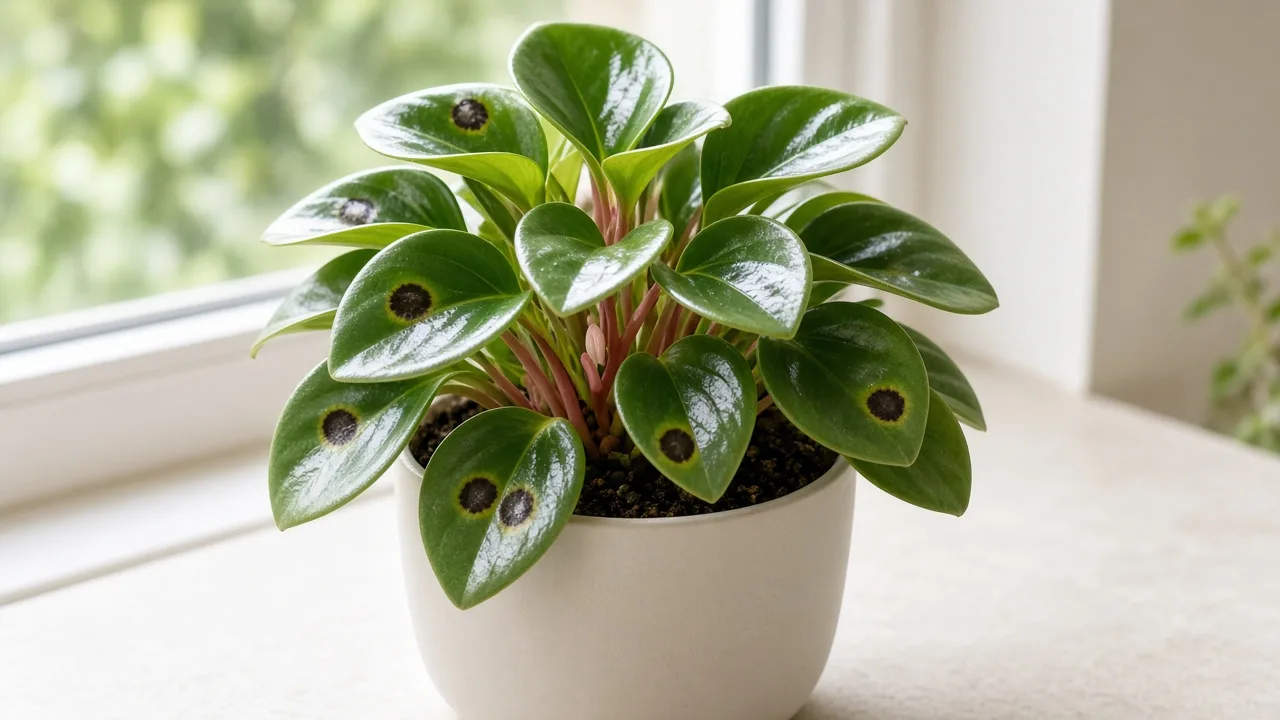
Black Spots on Baby Rubber Plant: Causes, Checks & Fixes
This guide covers black spots on Baby Rubber Plant. See also the general Black Spots guide, watering, and light pages for this plant.
Black Spots on Baby Rubber Plant: Causes, Checks & Fixes
Quick answer
Black spots on baby rubber plant (Peperomia obtusifolia) are localized tissue death or surface mold—dark patches on thick, spoon-shaped glossy leaves that can mean very different problems. On this compact bushy desk plant, the pattern usually splits four ways: wet circles with yellow halos on glossy blades suggest fungal leaf spot after foliage stays damp, black mushy tissue at pink petiole bases on heavy wet mix tracks overwatering or advancing root rot, dry fixed black patches on lowest leaves only often trace normal bottom-leaf aging or cold drafts, and black smear that wipes off points to sooty mold from honeydew after mealybugs in leaf axils. For general spot-disease mechanics, see our black spots guide. On obtusifolia, thick succulent-like leaves store water while small roots rot quietly, crown splash from desk watering keeps glossy blades wet overnight, and the name “rubber plant” sends owners toward Ficus-style watering that this species cannot survive.
A few isolated dry black marks on one lower leaf are cosmetic. Spreading wet-looking spots on multiple new leaves or black mushy tissue at the stem base need action the same week—not extra fertilizer.
First step: stop wetting foliage and check the top inch of mix. Water at soil level only, improve airflow around the bushy crown, and verify the top-inch dry-down before the next drink. If stems feel soft at the soil line, route to root rot before fungicide.
When to use this page vs other Baby Rubber Plant guides
| Your question | Best page |
|---|---|
| Dark spots or smears on thick glossy leaves | This page |
| Whole leaves yellowing on wet soil | Yellow leaves |
| Mushy roots, sour smell, wilt on wet mix | Root rot |
| Heavy pot, damp surface, no mushy roots yet | Overwatering |
| Uniform brown edges, not round spots | Brown leaves |
| White cotton in pink leaf axils | Mealybugs |
| Fine webbing on glossy undersides | Spider mites |
What black spots look like on Peperomia obtusifolia
Healthy baby rubber plant leaves are thick, waxy, and spoon-shaped—usually 2 to 4 inches long on a compact 8-to-12-inch bushy plant with often pink-tinged petioles. Black spotting breaks that pattern in recognizable ways:
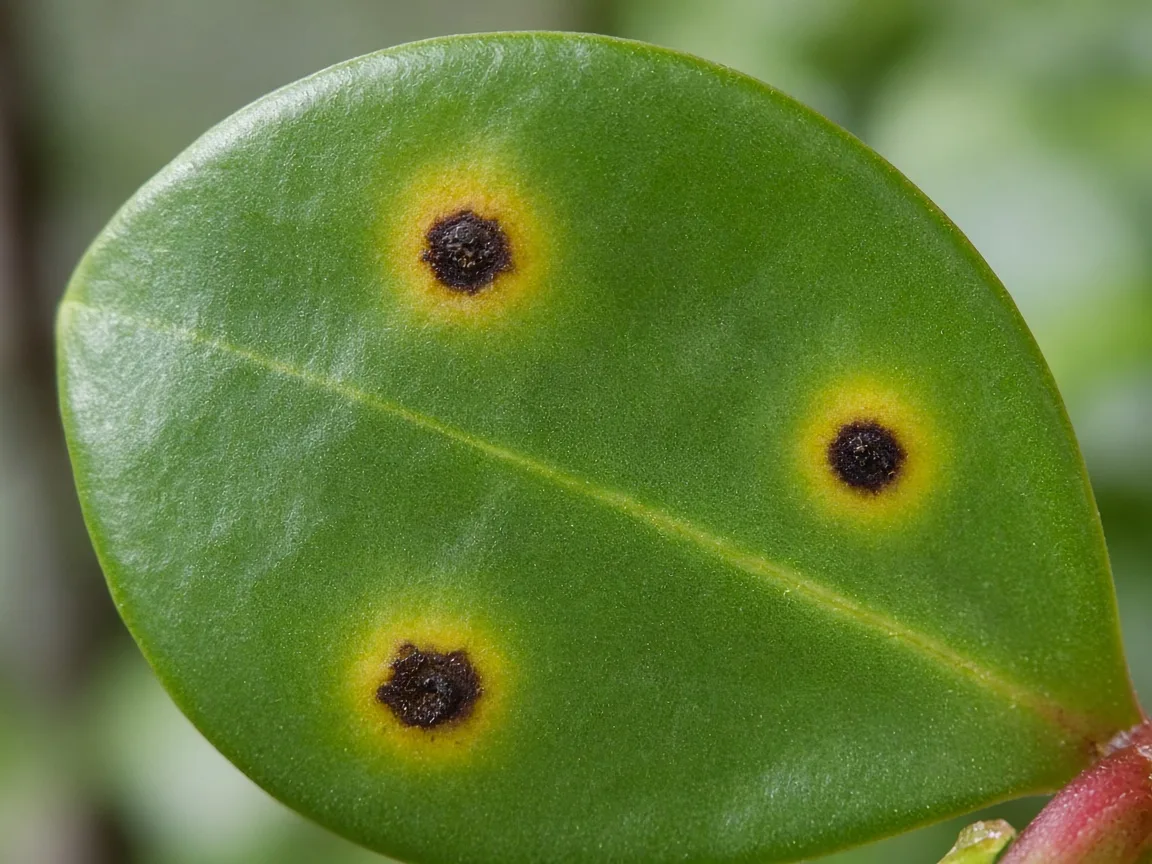
Dark lesions on thick glossy Peperomia obtusifolia foliage—compare wet leaf-spot halos with dry fixed necrosis at the leaf base.
- Small dark brown to black circles with yellow halos — Often start water-soaked, then crisp at center. RHS notes dark spots with yellow margins may be fungal leaf spot on wet foliage.
- Black mushy patches where thick leaves meet pink petioles — Soft tissue at the base of a glossy blade on constantly damp mix; often overlaps root rot when the stem base dents.
- Dry black or brown patches on lowest leaves only — Bottom leaves age out on this slow-growing shrub while new top growth stays firm and green.
- Black coating that wipes off with a damp cloth — Sooty mold on sticky honeydew from mealybugs nesting in leaf axils; the leaf underneath is often still green.
- Fixed dry black mark after a cold night — Chilling injury can discolor leaves on tropical houseplants; obtusifolia near a winter window may show papery black patches that do not spread like infection.
- Single dry black mark, no halo, no spread — Bumping a thick desk plant, pet damage, or a healed wound on one blade. Stable for months.
Spots on newest leaves at the stem tips are more urgent than one old mark on the lowest senescing leaf.
Why thick obtusifolia leaves hide wet-soil damage until spots appear
Baby rubber plant is built like a small succulent shrub: thick, fleshy leaves similar to succulents store moisture while the root system stays modest relative to leaf volume. That reservoir effect means foliage can look firm and glossy for weeks while roots suffocate in wet mix below.
When roots fail, lower leaves often develop dark patches or yellow first while upper growth still looks acceptable—a pattern that sends owners toward “disease spray” when the real problem is chronic overwatering. NC State Extension notes overwatering is a big problem on obtusifolia and can lead to root rot. Black spots that coincide with a heavy pot, sour smell at the drainage hole, or soft tissue at pink petiole bases are root-zone warnings, not airborne leaf pathogens alone.
Crown splash on a compact desk plant
Obtusifolia’s bushy architecture puts many glossy leaves at the pot rim where runoff collects during careless watering. On a shelf or desk, it is easy to splash the crown when you tilt the nursery pot or pour from a narrow-spout can. Clemson HGIC notes fungal leaf spots can be prevented by ensuring leaves stay dry when the plant is watered—advice that matters more on obtusifolia than on thin-leaved trailers because the waxy cuticle holds droplets on overlapping blades in a tight clump.
Spots that appear on mid-crown leaves after you started misting, shower-rinsing, or overhead watering in a dim corner usually trace to wet-blade culture. Route to better light and soil-level watering before fungicide.
Do not follow rubber-tree watering on obtusifolia
The common name baby rubber plant causes real damage. Ficus elastica (true rubber plant) is a woody tree with a larger root system and different moisture rhythm. Peperomia obtusifolia wants water when the top inch of soil dries in a snug, fast-draining pot—not the steadier moisture and larger containers Ficus tolerates.
Owners who water obtusifolia on a rubber-tree calendar keep the mix saturated while growth idles in winter. Wet soil and cold temperatures often lead to root rots on tropical houseplants. Black stem bases and spreading dark patches on lower leaves frequently start here—not from a mysterious pathogen.
Why Baby Rubber Plant gets black spots
Fungal leaf spot on wet glossy leaves
Fungal spores germinate on persistently wet leaves and create brown to black lesions with yellowish margins. On obtusifolia’s thick waxy cuticle, individual spots may stay small but multiply on several crown leaves after repeated misting or splash watering in low light.
Overwatering and root failure
Root rot is the most common disease of peperomia and follows soil that stays wet too long. Fixed dark patches on lower leaves while the pot feels heavy and cool usually track the same wet-mix problem—see overwatering and root rot before fungicide.
Mealybugs and sooty mold
Mealybugs are among pests to monitor on obtusifolia. They hide in pink leaf axils and excrete honeydew that grows black sooty mold on glossy surfaces below. The wipe test separates this from fixed necrotic spots instantly.
Cold drafts and temperature shock
Leaves near a winter window or HVAC vent can develop dry brown-black patches that do not spread like infection. Compare with recent placement changes and whether only exposed blades were hit.
Normal lower-leaf senescence
A slow-growing bushy plant naturally sheds oldest bottom leaves. One or two lower blades with tan-to-black margins over months, with clean firm new growth above, is aging—not emergency disease.
Spider mite stippling
Spider mites are listed as pests on obtusifolia. Fine stippling on glossy undersides can bronze and darken on stressed leaves—check for webbing before assuming leaf-spot fungus. See spider mites when stippling is the main pattern.
How to confirm the cause
Work through these checks before repotting or spraying:
- Wipe test — Damp cloth on the spot. Smears = sooty mold; treat mealybugs first. Fixed in leaf = necrosis or pathogen.
- Spot texture — Wet, greasy, or water-soaked margins suggest active disease. Dry, papery black patches suggest sun, cold, or old mechanical damage.
- Halo presence — Yellow ring around a dark center fits fungal leaf spot per RHS guidance.
- Location on the plant — Spots only on lowest leaves with clean new top growth = senescence or splash. Random spots on mid-crown and newest leaves with misting habit = wet-blade culture.
- Leaf axils — White cottony clusters confirm mealybugs before fungicide.
- Soil moisture — Top inch wet for a week with heavy pot weight points to overwatering, not airborne leaf pathogens.
- Stem base — Soft, dark tissue where fleshy stems meet soil confirms crown or root involvement. Firm green stems with isolated leaf spots = leaf-level problem.
The first fix to try
Stop wetting foliage and verify the top inch of mix is dry before the next drink.
Tilt the pot, water at soil level only, and empty the saucer within thirty minutes. Hold fertilizer until new growth looks healthy for two weeks. If black smears off when wiped, isolate the plant and treat mealybugs with alcohol swabs on every visible colony in pink axils before washing leaves.
If the stem base feels soft or the mix smells sour, skip fungicide and follow the root rot protocol the same week.
Step-by-step recovery
For fungal leaf spot (wet spots with halos)
- Remove the worst affected leaves with clean scissors—sterilize blades between cuts.
- Stop misting and overhead watering permanently on this plant.
- Move to brighter indirect light so the top inch of mix dries predictably between drinks.
- Improve airflow around the bushy crown without cold drafts.
- Re-check new leaves weekly for two weeks. Spots on fresh growth mean the environment is still too wet.
For sooty mold and mealybugs
- Isolate from other houseplants on the same shelf.
- Swab visible mealybugs with 70% isopropyl alcohol on a cotton tip.
- Wash glossy leaves with lukewarm water and a soft cloth to remove mold residue.
- Re-inspect pink petiole axils weekly for two weeks.
- If colonies persist, follow the full mealybugs page.
For overwatering without confirmed mushy roots
- Stop watering until the top inch is dry throughout the pot—often 10 to 14 days in recovery.
- Confirm drainage holes are open and no standing water sits in a cachepot.
- See overwatering for dry-down rhythm and soil mix targets.
For root or crown rot
If stems soften at the soil line, unpot, trim mushy roots, and repot into fresh perlite-amended mix per the root rot guide. Start stem cuttings from firm shoots above any soft tissue as backup.
Recovery timeline
Mild fungal leaf spot often stabilizes within one to two weeks after you keep foliage dry and correct watering. Judge success by new spoon-shaped leaves emerging without fresh spots—old black tissue does not revert to green.
Overwatering recovery without root surgery may take two to four weeks once dry-down is consistent. Root-trimmed plants often push the first firm new leaf in three to six weeks during spring or summer growth.
Signs of improvement: the pot lightens between waterings on schedule, new leaves at stem tips are firm and fully glossy, and spots stop appearing on fresh growth.
Signs of worsening: stem softening spreads upward, wet-looking spots appear on most new leaves within a week, or the mix smells sour again within days of repotting.
What not to do
Do not keep misting because spots look like a “humidity problem”—wet leaves invite the pathogens you are trying to fight.
Do not apply fungicide while still overhead watering or keeping mix saturated. Chemicals cannot replace dry foliage and appropriate dry-down.
Do not follow true rubber plant (Ficus elastica) watering advice on obtusifolia.
Do not fertilize a stressed plant hoping to “boost” recovery. Salt stress hits weakened roots hardest.
Do not repot into a much larger decorative pot during recovery—snug containers dry faster and match obtusifolia’s small root habit.
How to prevent black spots next time
- Water when the top inch of mix is dry, at soil level only. Let compost partially dry between waterings as RHS Peperomia guidance recommends.
- Use perlite-amended mix in a pot with open drainage sized to the root ball. See the soil guide.
- Skip misting on desk obtusifolia unless you also increase light and airflow enough that blades dry within an hour.
- Scout pink axils weekly for mealybugs before sooty mold covers glossy leaves.
- Adjust winter frequency when growth slows—wet mix in a cool room is a common black-spot and rot trigger.
- Quarantine new plants before placing them beside existing specimens on a shared shelf.
When to worry
Treat black spots as urgent when the crown feels soft, black mushy tissue spreads up stems within days, or wet-looking spots appear on most new leaves after you have already stopped misting. At that stage, inspect roots the same day and start stem-cuttings backup from any firm shoots.
If only one bottom leaf shows a dry stable mark and the top inch of mix dries on schedule, you likely have normal aging or a healed wound—not an emergency.
Baby rubber plant care cross-check
| Factor | Healthy target | Black-spot warning sign |
|---|---|---|
| Watering | Top inch dry before next drink | Surface stays damp 7+ days; pot always heavy |
| Leaves | Firm, glossy, slow new growth | Wet halos on multiple blades; mushy petiole bases |
| Soil | Perlite-amended, fast-draining | Dense peat, sour smell, mold on soil |
| Light | Medium to bright indirect | Dim corner + misting + same summer watering |
| Pests | Clean pink axils | White cotton + black smear that wipes off |
| Stem base | Firm when you pinch gently | Soft, dark, denting tissue at soil line |
For full care context, see the baby rubber plant overview.
Related Baby Rubber Plant guides
- Baby Rubber Plant overview
- Baby Rubber Plant watering
- Baby Rubber Plant light
- Baby Rubber Plant soil
- Overwatering on Baby Rubber Plant
- Root rot on Baby Rubber Plant
- Yellow leaves on Baby Rubber Plant
- Brown leaves on Baby Rubber Plant
- Baby Rubber Plant problems hub
Related tool
Use the Plant Problem Diagnosis Tool to narrow causes for black spots on this plant before changing multiple variables at once.