Leaf Miners on Baby Rubber Plant: Causes, Checks & Fixes
Quick answer
Leaf miners on baby rubber plant leave pale serpentine tunnels inside soft new leaves—not ragged chew holes with pellet frass. Indoor cases are uncommon on thick mature obtusifolia foliage and usually trace to patio bring-ins or nursery hitchhikers. First step: isolate the pot and pinch off every mined leaf at the pink petiole, bag the foliage, and backlight remaining blades before you spray.
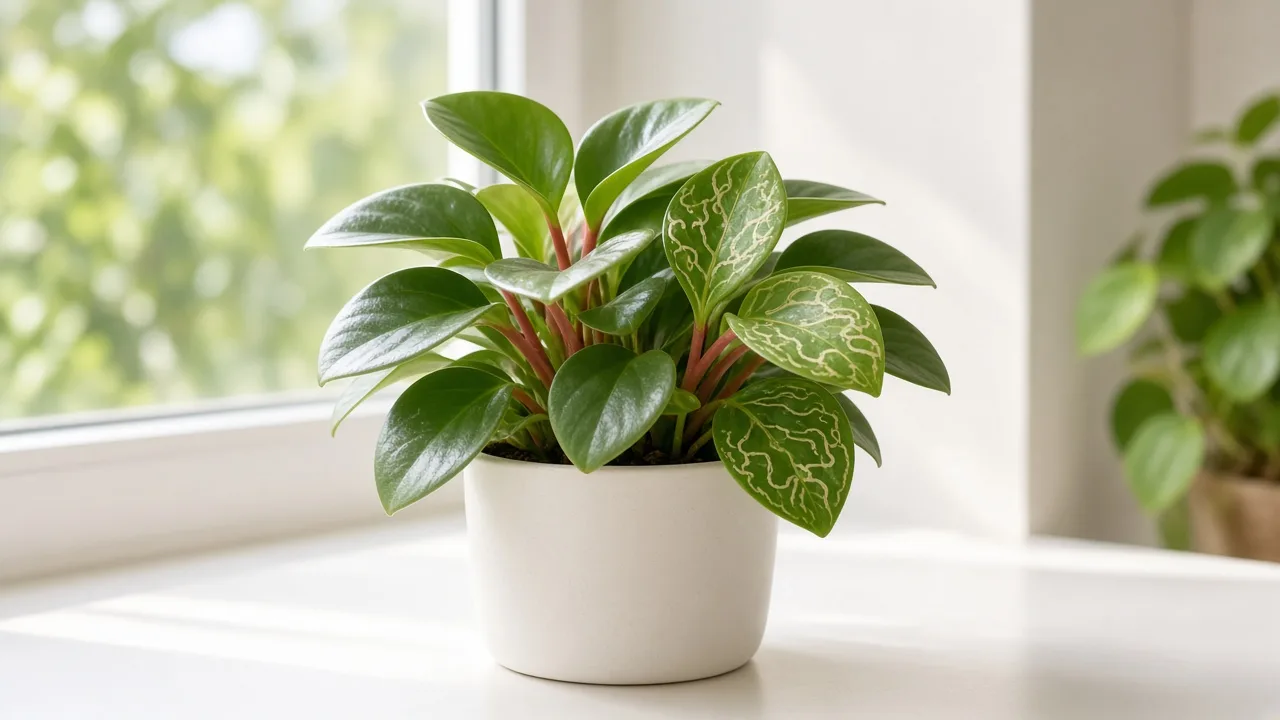
Leaf Miners on Baby Rubber Plant: Causes, Checks & Fixes
This guide covers leaf miners on Baby Rubber Plant. See also the general Leaf Miners guide, watering, and light pages for this plant.
Leaf Miners on Baby Rubber Plant: Causes, Checks & Fixes
Quick answer
Leaf miners on baby rubber plant (Peperomia obtusifolia) are tiny fly larvae feeding between the upper and lower surfaces of a leaf, leaving winding pale tunnels visible when you backlight a suspect blade. Indoor obtusifolia is more often troubled by mealybugs, spider mites, and whiteflies than leaf miners—but when serpentine mines appear after outdoor summer placement, nursery hitchhikers, or crowded plant shelves, the pattern is unmistakable if you know how to separate it from caterpillar chew or mechanical tears.
For how leaf miner larvae tunnel inside foliage and why contact sprays underperform, see our leaf miners guide. On baby rubber plant, the diagnostic clue is usually a short bordered pale trail inside a thin young leaf or soft unfurling tip—not a full-thickness chew with pellet frass on glossy waxy mature foliage that larvae often skip entirely.
First step: isolate the pot and pinch off every mined leaf at the pink petiole—bag the removed foliage and backlight remaining blades before you spray.
When to use this page vs other baby rubber plant guides
| Pattern | Read next |
|---|---|
| Serpentine tunnel inside the leaf blade | This page |
| Ragged chew + pellet frass + visible larvae | Caterpillars |
| Clean tear, no frass, no spread after moving pot | Holes in leaves (mechanical) |
| Pear-shaped insects + sticky honeydew on new tips | Aphids |
| White cottony clusters at stem joints | Mealybugs |
| Pinhead stippling and fine webbing | Spider mites |
| Yellow lower leaves, heavy wet pot, no tunnels | Overwatering or root rot |
What leaf miners look like on baby rubber plant
The clearest sign is a serpentine mine—a twisting white or pale brown trail inside a leaf, often with a dark line of larval waste (frass) running through it. The mine widens as the larva grows. Unlike caterpillars, which skeletonize tissue and leave ragged holes with pellet frass on the surface, leaf miner damage keeps the outer leaf surface mostly intact except for a small exit hole when the larva matures.
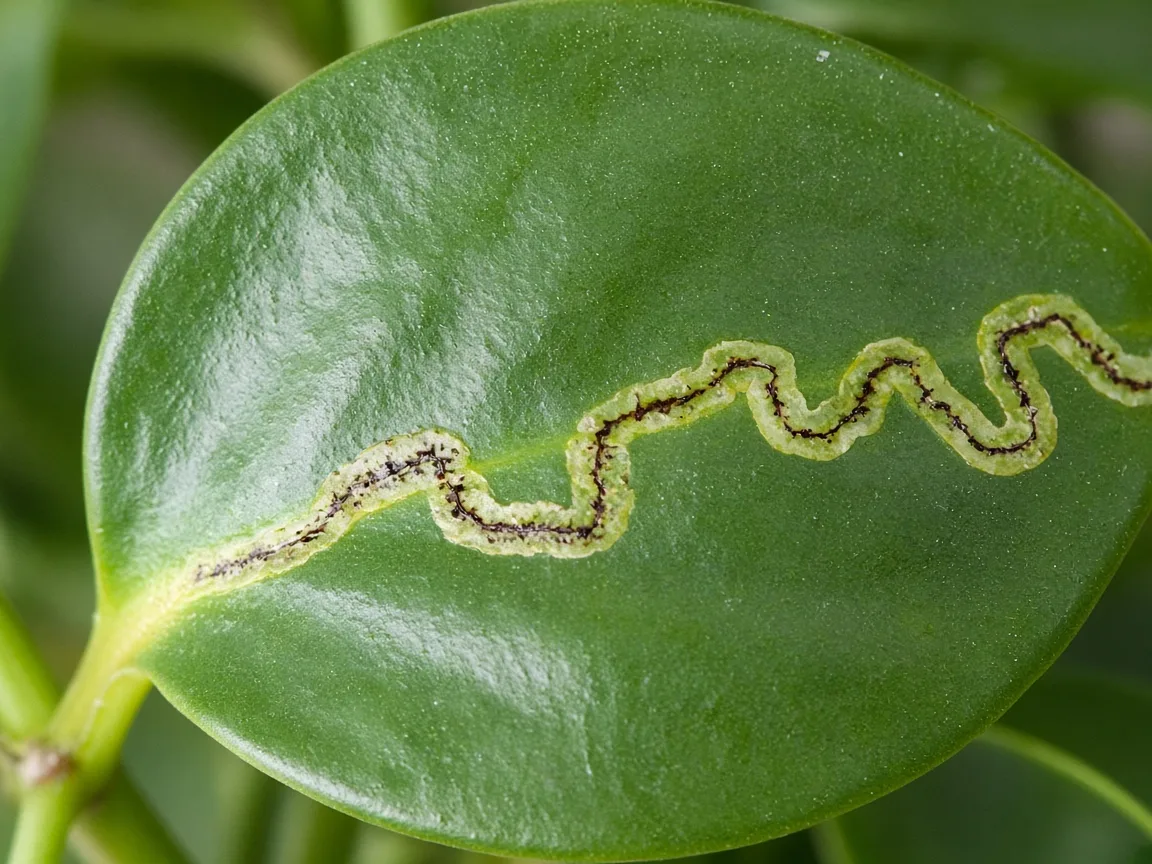
Pale bordered tunnel with a dark frass line inside a thin obtusifolia leaf—hold the blade to light to confirm the mine stays enclosed between both waxy surfaces.
Other clues on P. obtusifolia:
- White stippling on glossy cupped obovate leaves from adult females puncturing tissue to feed on sap before laying eggs inside the blade
- Mines on soft new leaves at stem tips where tissue is still thin—not on every thick mature blade
- A small yellow maggot visible inside an active mine if you gently tear the widest part of the tunnel on a thinner leaf
- Brown seedlike pupae on the soil surface or pot rim after larvae exit mines and pupate in growing media—common beneath patio pots where debris collects
Because obtusifolia leaves are thick, coriaceous, and almost succulent-like, mines show up most often on unfurling tips and thin young leaves where chewing between layers is easier. A single pale squiggle on one soft leaf can look dramatic on a compact desk plant—even when firm pink-tinged stems and plump neighbors look fine from across the room.
Backlight test on thick waxy obtusifolia leaves
Baby rubber plant foliage is thicker than spider plant straps but thinner than a rubber tree (Ficus elastica) blade. Backlight a suspect obovate glossy leaf with a phone flashlight held behind the blade. A true leaf miner trail shows as a bordered tunnel with intact green tissue on both sides of the pale path and often a dark frass line down the center. Caterpillar damage punches through both surfaces—you see open air and missing tissue, not an enclosed trail. Mechanical snaps from moving a desk pot leave a clean break without an internal bordered mine.
Soft new tips vs mature thick leaves on obtusifolia
This is the baby rubber plant pattern generic leaf miner pages miss. Before you spray, confirm you are not treating mechanical damage, pet chew, or caterpillar frass:
| Feature | Leaf miner (this page) | Caterpillar chew |
|---|---|---|
| Location | Inside bordered tunnel in thin young leaf or soft tip | Ragged edge chew on unfurling tip or spike base |
| Surface | Outer waxy layer mostly intact | Through-holes with pellet frass on leaf or saucer |
| Backlight | Enclosed pale trail between both surfaces | Open missing tissue, no bordered internal path |
| Mature thick leaves | Rarely mined—larvae skip hardened waxy tissue | Larvae concentrate on soft tips, not every old blade |
Pink petioles and desk-pot scale on obtusifolia
P. obtusifolia grows as a compact bushy shrub rarely taller than a foot indoors, with petioles usually tinged pink on branched distinct stems. When you remove a mined leaf, pinch at the petiole base—not halfway down the blade—so you do not leave larval tissue behind in the remaining stub. On a small desk pot with only a dozen leaves, removing two or three mined soft tips looks bare briefly, but firm stems mean the plant can flush clean growth in bright indirect light within two to four weeks.
Why baby rubber plant gets leaf miners
Leafminers in the genus Liriomyza—including species that feed on numerous crop and ornamental hosts—attack many greenhouse and broad-leaved plants. Adult flies lay eggs inside leaf tissue; larvae mine between epidermal layers for about two weeks in warm conditions before exiting to pupate in soil or on the pot surface. Warm patio conditions allow multiple overlapping generations through spring and summer.
Baby rubber plant invites leaf miners for practical reasons when they do appear:
- Soft new flushes at stem tips give females fresh tissue to puncture—often the only tender leaves on a pot of otherwise thick waxy blades
- Outdoor summer placement near bright light is the most common route indoors—eggs may already be inside leaves weeks before tunnels appear
- Crowded plant shelves with obtusifolia grouped near begonia, impatiens, or other miner-prone ornamentals let flies move between pots
- Warm greenhouse and nursery stock can carry mines on arrival before you ever set the pot outdoors
- Broad-spectrum insecticide use on other pests can kill parasitic wasps that normally keep leaf miner numbers low—secondary outbreaks after aphid or spider mite sprays happen in home collections
Leaf miners rarely kill established plants. Unusually heavy mining can cause affected leaves to drop, but a stable obtusifolia in bright light with proper dry-down watering usually outgrows cosmetic damage if you remove mines early. Overwatering is baby rubber plant’s usual killer, not leaf miners—susceptible to rot if soils are kept too moist. Chronic wet soil does not cause leaf miners directly; it slows recovery once feeding stops.
How to confirm leaf miners on baby rubber plant
Work through these checks in order before changing watering, light, or fertilizer:
- Backlight every suspect leaf — Hold the blade between your phone flashlight and your eye. A bordered internal tunnel with a dark frass line confirms miners; open holes with pellet frass mean caterpillars.
- Mark an active mine — Draw a light pencil line at the tunnel tip with a non-toxic marker or photograph it. If the trail lengthens over three to five days, a larva is still feeding inside.
- Check soft tips first — Scan unfurling leaves and cream-colored flower spikes at stem tips where tissue is thinnest. Mature thick neighbors may show only white stippling from adult feeding punctures.
- Inspect soil and pot rim — Look for brown or yellow pupae on the soil surface after larvae exit mines—especially on patio pots.
- Review recent history — Patio summer, nursery purchase, open windows, or new plants on the same shelf in the past month strongly support introduction rather than chronic indoor pressure.
- Squeeze the stem — Firm pink-tinged tissue means foliar mining, not root rot. Mushy stems with wet heavy mix route to overwatering instead.
If you find an expanding bordered tunnel inside a thin leaf, leaf miners are confirmed. If only ragged chew with frass appears, switch to the caterpillars guide.
The first fix to try
Isolate the pot and remove every mined leaf at the petiole base. Bag removed foliage in the trash—do not compost mined leaves where pupae could survive. This single action stops most indoor outbreaks on a compact obtusifolia before larvae exit to pupate in the soil.
Why removal beats spraying first on baby rubber plant:
- Larvae feed between leaf layers where contact sprays cannot reliably reach them
- Thick waxy mature leaves already resist new mines—clearing soft-tip damage often ends the visible problem on a desk pot
- Obtusifolia stores water in leaves; repeated sink showers without dry-down invite root stress faster than a few pruned tips
After removal, set the pot away from other plants for two weeks and backlight remaining leaves every few days. Only escalate to sprays if new expanding mines appear on clean growth.
Step-by-step recovery
Once mined leaves are removed and the plant is isolated:
- Scrape the top quarter-inch of soil if you saw pupae on the surface—discard in the trash, then let the mix dry normally per the watering guide.
- Place in bright indirect light — Mines spread slower on stressed specimens in dim corners. Move to a stable light position rather than stacking fertilizer and repotting on the same day.
- Monitor with backlight checks every three to five days for three weeks. Photograph any suspect tip so you can compare mine length.
- Yellow sticky trap nearby (optional) — A small trap beside the pot can catch adult flies and confirm whether new punctures are still occurring—useful on crowded shelves.
- Systemic or translaminar options (only if mines keep expanding) — Products with translaminar movement such as spinosad can reach larvae inside tissue per greenhouse ornamental guidelines, but test on one leaf first because obtusifolia can be sensitive to repeated foliar treatments. Follow label rates for ornamentals and keep pet-safe handling in mind—baby rubber plant is non-toxic to cats and dogs, but sprays should still dry before pets return to the area.
- Resume normal care once two weeks pass with no new mines—return the pot to its regular spot and scout soft tips during each watering check.
Do not repot solely for leaf miners unless the mix is staying wet and lower leaves yellow while stems soften—that pattern is overwatering, not mining.
Recovery timeline
Judge progress by new growth, not repair of old mined tissue:
| Timeframe | What to expect |
|---|---|
| Days 1–3 | Removed leaves look gone; remaining blades unchanged |
| Week 1 | No new expanding mines on backlight checks |
| Weeks 2–3 | Clean soft tips emerge on firm stems in warm bright conditions |
| Week 4+ | Cosmetic gap from pruned tips fills as obtusifolia pushes a new flush |
Mined tissue never regreens. A brown, empty tunnel on an older leaf you chose to keep stays visible until you prune that blade or it drops naturally. Recovery means feeding stops and new tips arrive clean.
Lookalike symptoms
| What you see | Likely cause | Key difference |
|---|---|---|
| Bordered pale tunnel inside waxy leaf | Leaf miners (this page) | Tunnel visible when backlit; surface mostly intact |
| Ragged chew + frass pellets | Caterpillars | Through-holes at leaf margin; pellet frass on surface |
| Clean straight tear, no frass | Mechanical damage | Holes in leaves — no larvae, no spread |
| Pear-shaped insects + honeydew | Aphids | No internal tunnels |
| White cottony clusters | Mealybugs | Wax clusters, not serpentine trails |
| Pinhead dots + fine silk | Spider mites | Stippling across mature leaves; no frass line inside |
| Yellow lower leaves, wet heavy pot | Overwatering | Mushy tissue—not bordered internal mines |
Mistakes to avoid
- Spraying contact insecticide as the first move. Larvae inside leaf tissue survive surface sprays—remove mined leaves first.
- Treating caterpillar chew as leaf miners. Ragged edge holes with pellet frass outside mean caterpillars, not internal tunnels.
- Assuming thick waxy leaves mean pest-proof. Mealybugs and spider mites are the usual indoor suspects, but miners still arrive on patio plants and nursery stock—on soft tips, not every mature blade.
- Increasing watering because leaves look damaged. Baby rubber plant roots rot in wet mix—follow the watering guide dry-down rhythm instead of compensating with extra drinks after every rinse.
- Composting mined foliage. Pupae can survive in debris—bag and trash removed leaves.
- Broad-spectrum sprays on the whole shelf. Killing parasitic wasps can worsen leaf miner outbreaks on neighboring plants.
Prevention
- Quarantine new baby rubber plants two to three weeks before placing them beside an established shelf specimen
- Rinse and inspect soft unfurling tips after outdoor patio season or near open windows
- Inspect new plants carefully at purchase and monitor for two to three weeks—the typical larval development window indoors
- Scout tips during each watering check in warm months when flies are active
- Give bright indirect light and fast-draining soil in a snug pot so healthy new tips emerge predictably—then any pale tunnel stands out immediately on backlight
- Space crowded desk pots so flies do not bridge between miner-prone neighbors and obtusifolia soft flushes
- Avoid routine broad-spectrum sprays for mealybugs or spider mites unless necessary—targeted treatment preserves natural enemies
When to worry
Escalate treatment when fresh mines appear on multiple soft tips within a week despite removal, when pupae accumulate across the soil surface on a small starter pot, or when mines show on several houseplants from the same nursery batch. Chronic mining on every new flush can slow growth on a compact desk specimen even when stems stay firm.
A single cosmetic trail on one soft tip after a patio summer is not a lost cause—prompt isolation and leaf removal usually resolves it. Reassess for overwatering or root rot if lower leaves yellow widely, the mix stays wet, and stems soften—not when you see bordered internal tunnels on an otherwise plump plant.
Conclusion
Leaf miners on baby rubber plant are a soft-tip, backlight-confirmed pest—serpentine tunnels inside thin young leaves mean isolate the pot, pinch off mined foliage at pink petioles, and tell internal mines from caterpillar chew or mechanical snaps before you spray. Judge recovery by clean new tips on firm stems, not perfect older foliage on every branch.
Related baby rubber plant guides
Related tool
Use the Plant Problem Diagnosis Tool to narrow causes for leaf miners on this plant before changing multiple variables at once.