Holes in Leaves on Baby Rubber Plant: Causes, Checks & Fixes
Quick answer
Holes in baby rubber plant leaves mean tissue was torn or chewed—thick obtusifolia foliage does not fenestrate indoors. First step: look at the hole edge, then inspect soft new tips, pink petiole joints, and spike bases under bright light before you spray or change watering.
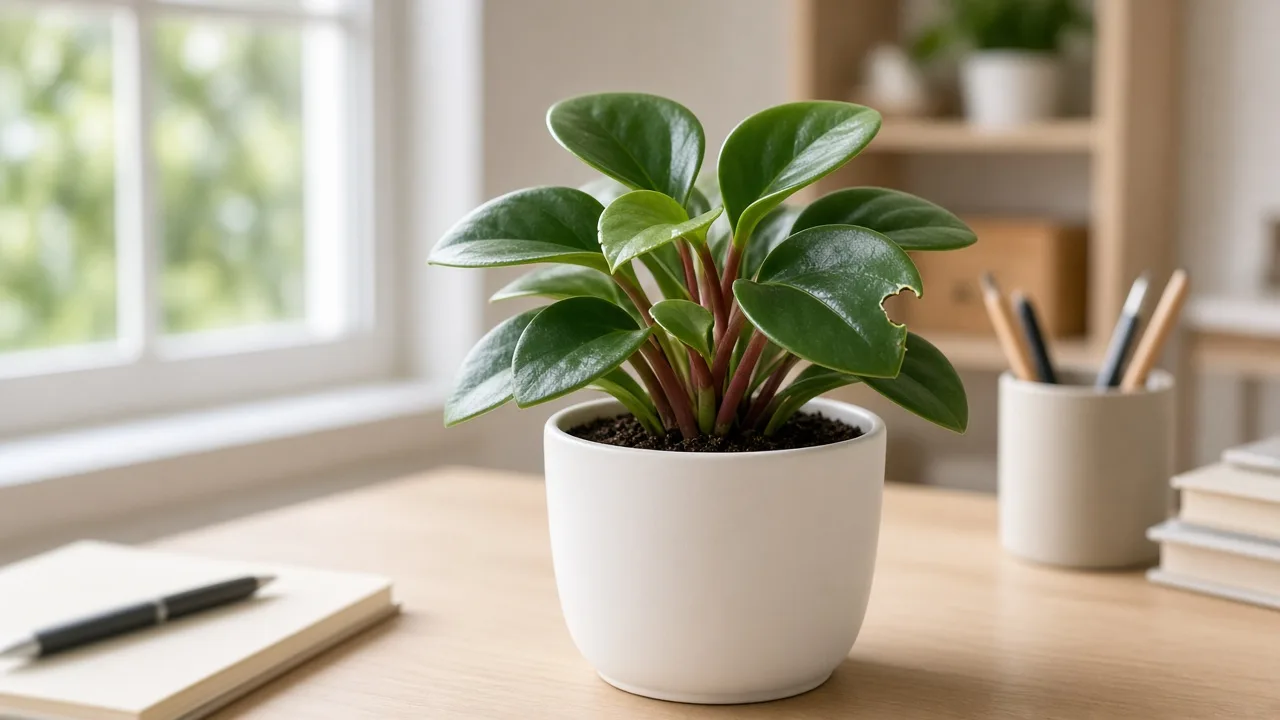
Holes in Leaves on Baby Rubber Plant: Causes, Checks & Fixes
This guide covers holes in leaves on Baby Rubber Plant. See also the general Holes in Leaves guide, watering, and light pages for this plant.
Holes in Leaves on Baby Rubber Plant: Causes, Checks & Fixes
Quick answer
Holes in baby rubber plant (Peperomia obtusifolia) mean something removed or tore tissue—caterpillar chewing on soft new tips, thrips rasping, leaf-miner tunnels, mechanical snags on thick waxy blades, or pet nibbling on accessible lower leaves. Unlike split-leaf monsteras, obtusifolia keeps whole glossy obovate leaves on a compact bushy stem. Any open hole is damage, not a natural fenestration pattern.
For how chewing pests and mechanical tears work in general, see our holes in leaves guide. On baby rubber plant, the edge test and soft-tip inspection come first—mature thick leaves snap cleanly against shelf corners while larvae chew unfurling tips and cream flower spikes.
First step: look at the hole edge, then inspect soft new tips, pink petiole joints, and spike bases under bright light before you spray or change watering.
When to use this page vs other baby rubber plant guides
| Pattern | Start here | Or route to… |
|---|---|---|
| Ragged holes with frass on soft tips or spikes | Caterpillars | This page for edge-test routing |
| Serpentine tunnels inside thick waxy blade | Leaf miners | This page if holes are full-thickness |
| Silver streaks, black specks, scarred new tips | Thrips | — |
| Sticky honeydew on soft new growth | Aphids | Mealybugs |
| Fine stippling and webbing, few true holes | Spider mites | — |
| Clean straight tear on one mature leaf, no frass | This page (mechanical) | — |
| Brown halos before tissue drops out | Black spots | — |
| Yellow lower leaves, heavy wet pot, no chew | Overwatering | Root rot |
What holes in leaves look like on baby rubber plant
Baby rubber plant grows as a compact upright shrub with glossy, coriaceous, almost succulent-like leaves on pink-tinged petioles and branched stems. When you see a hole, sort it by pattern:
Mechanical tears (most common on desk specimens) — Clean linear splits or one-time holes on outer thick waxy blades that brushed a shelf lip, monitor edge, or neighboring pot. Damage stays on the same leaf after you rotate the container. No frass, no internal trails, no spread to new tips over weeks.
Caterpillar chewing — Irregular notched margins on softest new leaves at stem tips or along cream-colored flower spikes. Dark pellet-like frass on foliage, pink petioles, or the desk below. Mature thick leaves are usually skipped. See caterpillars.
Leaf miner trails — Winding pale or brown tunnels inside the glossy blade with only a small exit hole—not a large ragged margin chew. Backlight the thick leaf to see bordered serpentine paths. See leaf miners.
Thrips rasping — Tiny scrape marks, silvery or bronze streaks, and black varnish-like specks on upper surfaces; soft new tips may look scarred before they fully open. Full-thickness holes develop as rasped tissue dies and drops out. See thrips.
Pet or rabbit nibbling — Torn sections on lower, accessible leaves without insect signs. Baby rubber plant is non-toxic to cats and dogs per ASPCA listings, but pets still shred foliage they can reach. This guide does not replace veterinary advice if ingestion is suspected.
Spider mite stippling — Fine pale dots across the leaf face; repeated puncturing can leave bronze patches that dry and fall, creating hole-like gaps. Webbing on undersides in dry rooms. See spider mites.
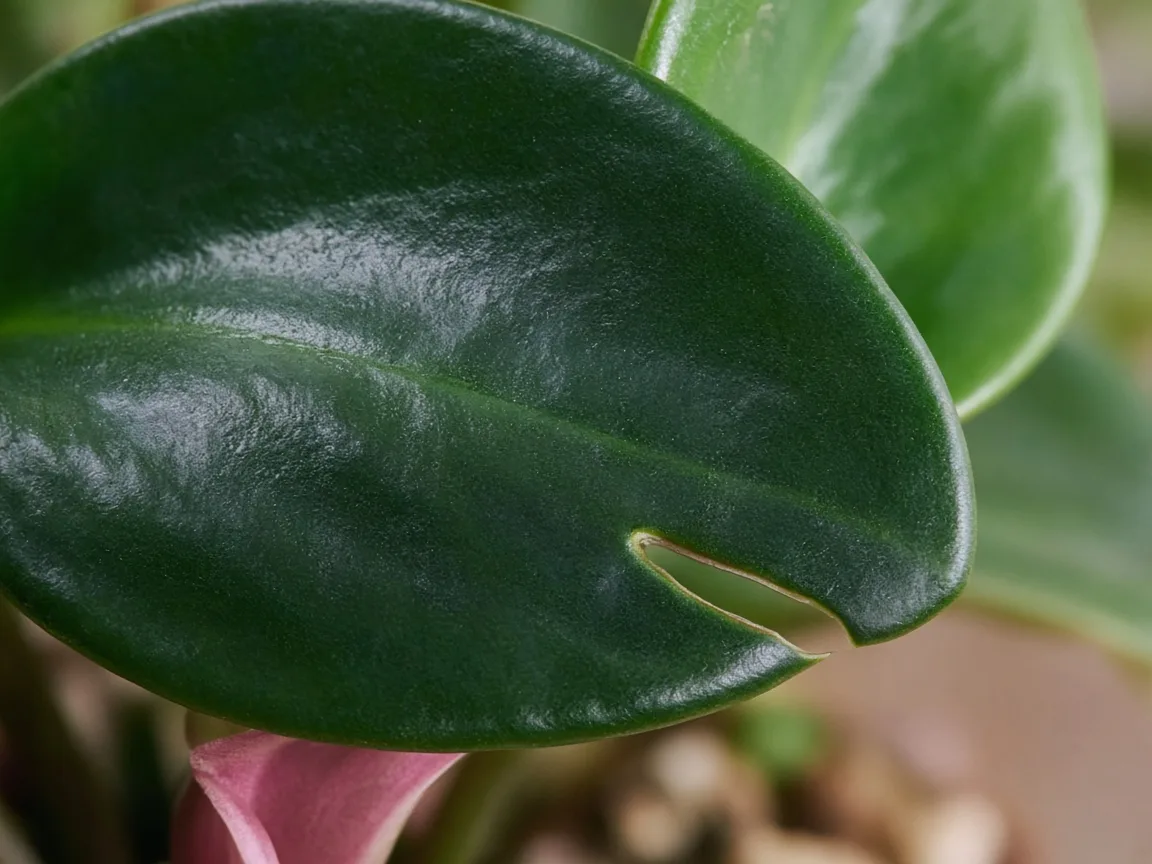
A clean margin tear on thick waxy obtusifolia tissue—compare with ragged chew and frass on a soft new tip on the same plant before treating.
Thick mature leaves vs soft new tips (obtusifolia only)
This is the baby rubber plant pattern generic hole guides miss. Larvae and thrips concentrate on tissue that is still thin, while mature leaves resist chewing and instead snap mechanically:
| Feature | Soft-tip damage | Mature thick leaf damage |
|---|---|---|
| Location | Unfurling tip, spike base, thin young leaf | Outer blade that brushed furniture |
| Edge shape | Ragged inward chew | Clean snap or linear tear |
| Frass | Dark pellets with caterpillars | None with mechanical tears |
| Backlight test | Through-hole at margin | Internal bordered tunnel = leaf miners |
| Spread | New tips weekly if pest active | Same leaf unchanged for weeks |
If every hole sits on hardened lower foliage with no frass and no new damage after you moved the pot, mechanical snagging is more likely than an active pest colony.
Compact desk-plant snag zones (obtusifolia only)
Obtusifolia’s bushy upright habit to about 12 inches makes it a desk and shelf plant—and the outermost glossy blades take the first hit when you slide a laptop, mug, or second pot past the rim. Pink petioles wing slightly where leaves meet branched stems, creating corners that catch on shelf lips. A single clean hole on one mature leaf at the pot’s traffic side, with firm plump neighbors and no frass, usually means reposition the pot, not pesticide.
Pet-safe but chewable foliage (obtusifolia only)
Because baby rubber plant is listed as non-toxic to cats and dogs, owners sometimes keep it at pet height on coffee tables. Cats bat at the thick glossy blades; dogs nibble lower leaves. Tears at pet height on multiple accessible plants, without trails or frass, point to placement on a shelf or in a room the pet cannot reach—then scout for real pests on the remaining intact tips before spraying.
Why baby rubber plant gets holes in leaves
Mechanical damage is the most common cause of isolated holes on mature obtusifolia leaves. Thick waxy tissue does not tear from normal indoor humidity swings the way thin prayer-plant blades might. Instead, one-time snags against furniture, bumped pots, or crowded shelf mates produce clean holes that never spread.
Chewing pests target soft growth, not the whole plant. Caterpillars and occasional thrips concentrate on unfurling tips and spike bases where tissue is still thin. Mature coriaceous leaves look untouched while new flushes show ragged notches—see caterpillars or thrips.
Leaf miners tunnel inside thick blades. The waxy cuticle can hide serpentine feeding until you backlight a leaf or notice a small exit hole. Indoor miners often arrive on nursery stock or patio bring-ins.
Sap-sucking pests can open holes indirectly. Thrips scrape surfaces and suck sap; repeated cell death lets tissue fall out. Mealybugs, spider mites, and whiteflies are the usual obtusifolia pests listed by extension references—stippling and honeydew come first; holes follow if feeding continues unchecked.
Pets reach floor-level and table-level foliage. Non-toxic status does not stop chewing. Multiple torn lower leaves without insect signs suggest pet contact, not infestation.
Overwatering does not cause holes directly—but susceptible to rot if soils are kept too moist, obtusifolia under root stress pushes weak, thin new tips that tear more easily. Fix chronic wet mix through the watering guide after you rule out active feeding.
Baby rubber plant does not develop natural perforations indoors. If someone suggests “your peperomia is supposed to have holes like a monstera,” that advice applies to different species—not P. obtusifolia.
How to confirm the cause
Work through these checks in order:
- Edge test — Ragged, irregular margin with chew marks → insects. Clean linear tear → mechanical or pet snag. Serpentine trail visible when you backlight the thick blade → leaf miners.
- Frass check — Dark pellets on leaves or below the pot → caterpillars. Neither frass nor trails → consider mechanical, pet, or a past one-time tear.
- Tip priority — Examine unfurling tips and cream spike bases before assuming mature thick leaves are the feeding site.
- Undersides and petiole joints — Flip leaves and scan pink petiole axils where mealybugs nest and thrips hide on sheltered backs.
- White-paper tap — Hold paper under a suspect leaf and tap sharply. Moving dark lines confirm thrips; barely visible dots point to spider mites.
- Night patrol — Inspect with a flashlight after dark on spike bases and soft tips. Caterpillars feed when room lights are low.
- Timeline — New holes on different soft tips weekly signal active feeding. One unchanged tear on one mature leaf for a month suggests past snag or pet contact.
- Pot traffic check — Note whether the holed leaf sits on the side that brushes a shelf, monitor, or second pot when you water.
First fix for baby rubber plant
Photograph the holed leaf, run the edge test, then inspect soft new tips, spike bases, and pink petiole joints before you spray or repot.
| Confirmed pattern | First fix |
|---|---|
| Clean tear on one mature leaf, no frass, no spread | Rotate the pot or move it off the traffic shelf—no pesticide |
| Ragged chew + frass on soft tips | Isolate and hand-pick larvae at night; see caterpillars |
| Serpentine trail inside blade | Pinch off and bag affected leaves; see leaf miners |
| Silvery streaks + live thrips on tap test | Isolate and rinse every leaf underside; see thrips |
| Torn lower leaves at pet height, no pests | Move pot to a pet-free shelf; no spray needed if tips stay clean |
| Stippling + webbing in dry air | Raise humidity and rinse foliage; see spider mites |
This single routing step prevents the common mistake of showering and spraying a plant that only needed repositioning away from a shelf corner—and on obtusifolia, repeated wet foliage without dry-down invites the root problems that matter more than cosmetic holes.
Step-by-step recovery
After the first fix matches the confirmed cause:
Mechanical or pet tears (one or two isolated holes)
- Trim only leaves more than half torn if they catch on the pot rim when you rotate it
- Move the plant to a stable spot with bright indirect light and fast-draining soil in a snug pot
- No pesticide, no repotting, no fertilizer stack on the same day
Active chewing or rasping pests (spreading soft-tip damage)
- Follow the dedicated sibling guide—caterpillars, thrips, or leaf miners—after isolation
- If you rinse in the sink, tilt the pot so mix drains and let the top inch dry before the next drink per the watering guide
- Treat every plant from the same nursery batch or patio group, not just the worst-looking pot
Mixed damage (old mechanical tear plus new tip chew)
- Fix the active pest first on soft tips
- Leave old mature holes alone unless they snag furniture—they will not heal closed
Hold fertilizer until new tips emerge without fresh holes or frass for two weeks.
Recovery timeline
Judge recovery on clean new tips and frass-free spikes, not old perforated mature foliage:
- Immediate: Correct routing stops the wrong treatment (spraying a mechanical tear, or ignoring frass on a soft tip)
- 1–2 weeks: No new holes on emerging tips after pest removal or pot repositioning
- 2–4 weeks: New leaves emerge from tips without chew marks—normal pace for obtusifolia in bright indirect light
- 2+ months: Several clean flushes confirm the population or snag source is resolved
Thick obtusifolia tissue does not regenerate holes on existing blades. Success means firm pink-tinged stems and clean new growth, not a cosmetic reset of every old notch on a bushy desk plant.
Lookalike symptoms
| What you see | Likely cause | Key difference on baby rubber plant |
|---|---|---|
| Clean straight tear, no frass | Mechanical snag | Mature thick leaf on traffic side of pot |
| Ragged chew + pellets on soft tip | Caterpillars | See caterpillars |
| Serpentine trail when backlit | Leaf miners | Internal tunnel, not margin chew |
| Silvery streaks + black specks | Thrips | Soft new tips scarred first |
| Stippling + fine webbing | Spider mites | Few true holes until tissue drops |
| Sticky honeydew, no through-holes | Aphids or mealybugs | Aphids / mealybugs |
| Yellow lower leaves + wet mix | Overwatering | No frass; stems may soften |
Mistakes to avoid
- Treating every hole as caterpillars. Clean straight breaks with no frass on mature waxy leaves mean mechanical damage—hand-picking larvae that are not there wastes time and stresses the plant.
- Showering repeatedly without dry-down. Obtusifolia stores water in thick leaves; wet mix from daily rinses invites overwatering while you hunt pests that never existed.
- Spraying before the edge test. Thrips, caterpillars, and mechanical tears need different first fixes—confirm the pattern on soft tips and spike bases first.
- Expecting old holes to close. Trim or tolerate marked mature leaves; judge recovery on new tips only.
- Stacking repot, prune, and pesticide on one day. Make one targeted correction, then read the plant’s response over one to two watering cycles.
How to prevent holes next time
- Give outer leaves clearance on desk and shelf edges where obtusifolia’s glossy blades snag easily
- Quarantine new baby rubber plants two to three weeks before placing them beside an established shelf specimen
- Scout soft tips and spike bases during each watering check in warm months
- Keep pet-safe plants on shelves pets cannot reach if nibbling has happened before
- Rinse and inspect spike tips after outdoor patio season or near open windows
- Space crowded desk pots so stolons do not bridge pests between containers
- Maintain bright indirect light and fast-draining mix so healthy new tips stand out against any fresh damage immediately
When to worry
Escalate when fresh holes appear on multiple soft tips within a week despite hand-picking or rinsing, when serpentine trails spread through new growth, or when frass accumulates across several stems during warm months. Treat the whole nursery batch or patio group, not one pot in isolation.
A single clean tear on one mature leaf that has not changed in a month is usually past mechanical damage—not an emergency. Reassess for root rot if lower leaves yellow widely, the mix stays wet, and stems soften—not when you see one old snap on an otherwise plump desk plant.
Conclusion
Holes in baby rubber plant leaves are damage, not a natural leaf pattern—run the edge test, inspect soft new tips and spike bases, and route ragged chew with frass to caterpillars, internal trails to leaf miners, and clean mature-leaf tears to repositioning before you spray. Judge recovery by clean new tips on firm stems, not perfect older foliage on every branch.
Related baby rubber plant guides
Related tool
Use the Plant Problem Diagnosis Tool to narrow causes for holes in leaves on this plant before changing multiple variables at once.