Holes in Leaves on Basil: Causes, Checks & Fixes
Quick answer
Holes in basil leaves usually come from flea beetles (tiny round shot-holes), caterpillars or slugs (ragged chew with frass or slime), or clean harvest tears with no pest signs. First step: match the hole pattern on the top leaves you harvest, then inspect leaf undersides at dusk with a flashlight.
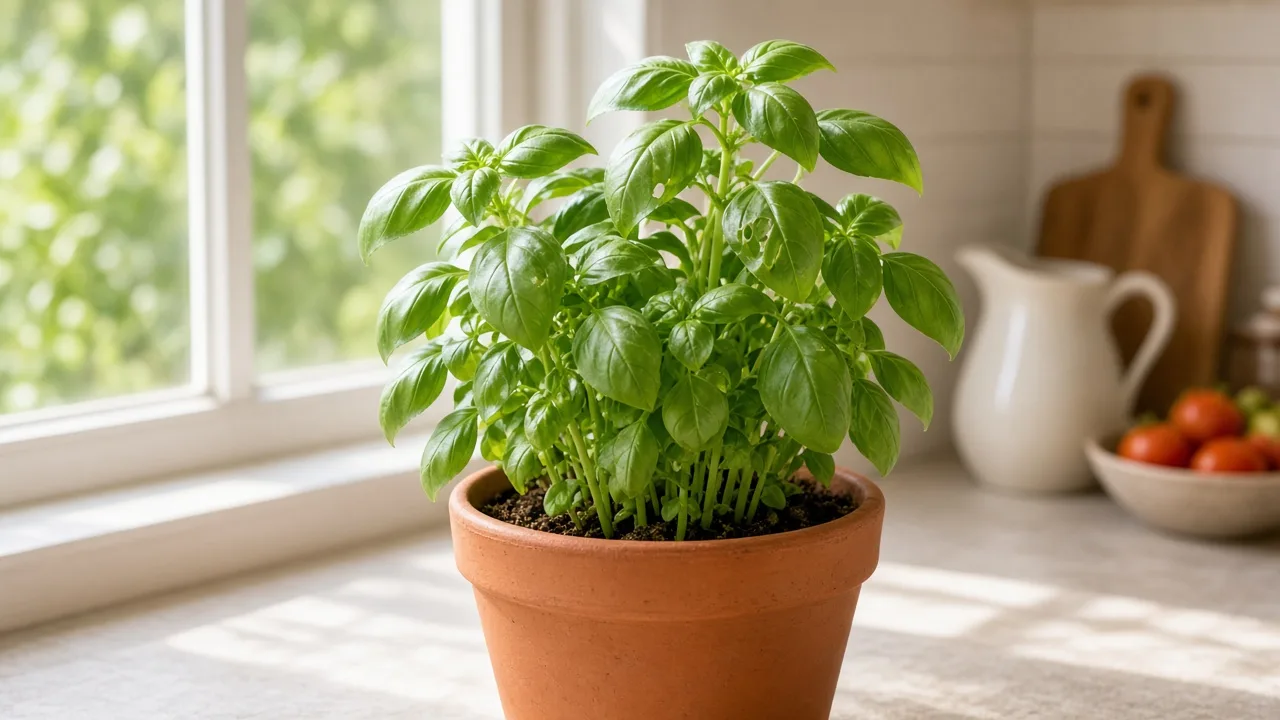
Holes in Leaves on Basil: Causes, Checks & Fixes
This guide covers holes in leaves on Basil. See also the general Holes in Leaves guide, watering, and light pages for this plant.
Holes in Leaves on Basil: Causes, Checks & Fixes
Quick answer
Holes in basil (Ocimum basilicum) leaves are almost always chewing damage—not a nutrient deficiency or watering problem. The shape of the hole tells you which pest (or non-pest cause) to treat.
For how chewing pests and mechanical tears work in general, see our holes in leaves guide. On basil, the diagnostic clue is usually on the top harvest zone—the soft tips you pinch for pesto—where flea beetles leave tiny round shot-holes, caterpillars and slugs leave ragged chew with frass or slime, and scissors leave clean straight tears with no spread.
First step: match the hole pattern on your topmost leaves, then inspect leaf undersides at dusk with a flashlight.
When to use this page vs other Basil guides
| Pattern | Read next |
|---|---|
| Ragged chew + frass pellets + visible larvae | Caterpillars on Basil |
| Serpentine tunnels inside leaf, no through-holes | Leaf miners on Basil |
| Sticky honeydew, pear-shaped clusters on tips | Aphids on Basil |
| Clean tear from scissors, no frass, no spread | This page (mechanical or harvest damage) |
| Many tiny round shot-holes on young leaves | This page (likely flea beetles) |
| Skeletonized leaves with veins left behind | This page (likely Japanese beetles) |
What holes look like on Basil
Basil is grown for its aromatic leaves, so any hole matters for harvest quality—not just plant health. Damage usually appears on the upper half of the plant where tissue stays tender, while woody lower stems often look untouched.
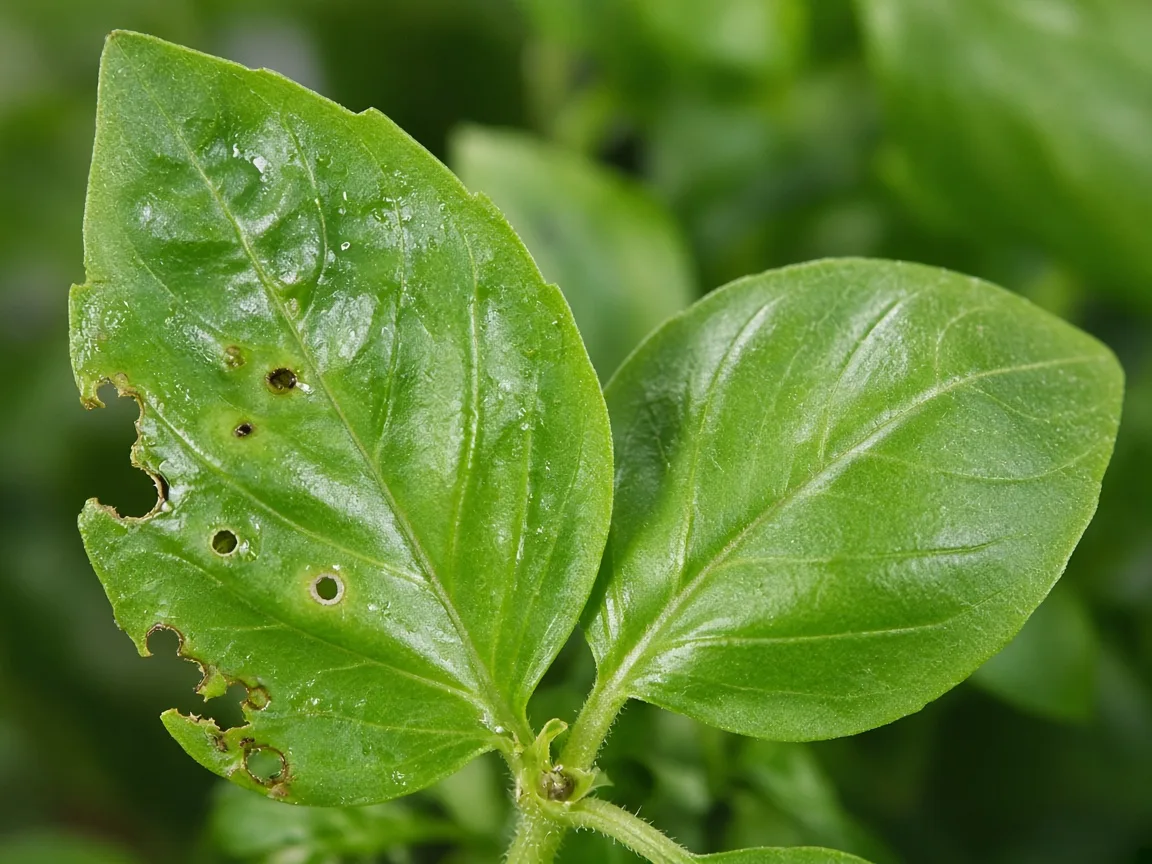
Irregular chew notches and small shot-holes on tender basil leaves—compare hole shape with an intact neighbor leaf on the same stem.
| Pest or cause | Hole pattern | Droppings / residue | Active when | First fix on basil |
|---|---|---|---|---|
| Flea beetles | Many tiny round shot-holes | No pellets; beetles may jump when disturbed | Day | Protect soft growth; knock beetles into soapy water |
| Caterpillars / armyworms | Ragged edges, missing sections | Dark frass pellets on stems or saucer | Night | Handpick at dusk; see caterpillars page for Bt |
| Slugs / snails | Irregular tears, edge notching | Silvery slime trails on leaves or pot rim | Night | Handpick; remove damp shelter around pots |
| Japanese beetles | Skeletonized tissue, veins left | Metallic green beetles on leaves | Day (summer) | Handpick into soapy water |
| Leaf miners | Serpentine tunnels inside tissue | No open holes or frass | Day (larvae inside) | Leaf miners on Basil |
| Harvest / mechanical | Clean straight tear, one leaf | No frass, slime, or spread | Any time | No treatment—adjust harvest technique |
Why Basil gets holes in leaves
Basil is a fast-growing annual herb in the mint family that pushes soft new shoots whenever sun and water are good. Every harvest pinch and every side branch creates exactly the tender tissue chewing pests prefer. Unlike slow woody houseplants, a productive basil pot offers a continuous buffet from spring through summer.
UC IPM lists flea beetles, armyworms, and snails and slugs among the main invertebrate pests on basil. Indoor kitchen basil rarely develops chronic chewing unless something was recently introduced.
Balcony and patio hitchhikers. Basil summered outdoors or near open windows can pick up eggs on leaf undersides. Pests arrive on nursery stock and outdoor plants and continue feeding indoors where predators are absent.
Supermarket and garden-center herbs. Eggs or tiny larvae can hide on store-bought basil still in nursery trays—especially when those pots sat outdoors at the retailer.
Young seedlings outdoors. Flea beetles create characteristic shot-hole damage on tender leaves and jump when disturbed. Seedlings and freshly transplanted basil are most vulnerable before stems toughen.
Bolting flower spikes. When basil starts to bolt, soft bud clusters at the top become prime feeding sites—similar to how aphids colonize spikes, but with open chew wounds instead of honeydew.
Harvest-zone holes: scissors tears vs pest chew
This is the basil pattern generic holes pages miss. Because you harvest constantly, mechanical damage is common and easy to mistake for insects:
- Scissors or fingernail tears leave a clean, straight edge on one or two recently picked leaves—no frass pellets, no slime, no new holes appearing overnight on neighboring leaves
- Pest chew leaves ragged, irregular margins and often spreads to the next soft tip within days
- Damage follows the stems you pinch for cooking, not random old foliage at the soil line
- A basil plant harvested heavily yesterday may look “attacked” when the real issue is rough tearing—recheck in 48 hours; pest damage keeps advancing
If you harvested yesterday and see one clean tear with no frass, wait before spraying. If ragged chew with pellets appears on unpicked top leaves, route to pest treatment.
Kitchen windowsill basil: when holes are a hitchhiker
Year-round indoor basil rarely develops new chewing damage unless:
- Plants recently came indoors from outdoor beds or balcony summering
- Open windows let moths in during warm months
- Nursery or supermarket herbs arrived with eggs on undersides
If indoor holes appear without frass or slime after two dusk inspections, rule out brief outdoor exposure or a single harvest tear before treating an edible herb with sprays. Indoor plants lack natural enemies that control caterpillars and slugs outdoors—a single egg mass can feed along one pot for weeks before you notice pellets on the saucer.
How to confirm the cause
- Match hole shape in daylight — shot-holes vs ragged chew vs clean tear (see table above).
- Inspect again at dusk with a flashlight for slugs, snails, and active caterpillars on leaf undersides.
- Check the saucer and pot rim for dark frass pellets (caterpillars) or silvery slime (slugs).
- Tap a damaged stem over white paper — flea beetles may jump off; frass pellets roll off if caterpillars were feeding.
- Review recent harvest — one clean tear on a picked leaf means mechanical damage, not infestation.
If you see serpentine tunnels inside leaves instead of open holes, that points to leaf miners, not chewers. If tissue is spotty or necrotic without real bite marks, consider black spots or disease rather than insect feeding.
First fix for Basil
Match the hole pattern, then take one targeted action—do not spray before you know the pest type on an herb you eat.
- Shot-holes (flea beetles): knock visible beetles into soapy water; protect vulnerable soft growth with lightweight row cover outdoors until stems toughen.
- Ragged holes with frass (caterpillars): handpick larvae at dusk first; see caterpillars on Basil for Bt if feeding continues.
- Irregular tears with slime (slugs/snails): handpick after dark and remove damp shelter under and around containers.
- Skeletonized leaves (Japanese beetles): handpick metallic beetles into soapy water during their summer flight period.
- Clean scissors tear, no spread: no pest treatment—adjust harvest technique and monitor unpicked leaves.
For culinary basil, start with hand removal and water rinsing before any spray. Always follow product labels and harvest intervals before cooking with treated leaves.
Step-by-step recovery by cause
Flea beetle recovery
Shot-holes on outdoor seedlings often stabilize once plants grow past the sixth-leaf stage and stems toughen. Protect young regrowth for 7–10 days, keep weeds down near pots, and harvest heavily damaged tips to stimulate cleaner shoots. Minor shot-holes on mature basil in full sun are often cosmetic if new growth stays clean.
Caterpillar recovery
Remove larvae by hand, then monitor every evening for several days. Pinch off badly shredded top shoots once feeding stops so side branches push fresh growth. If new chew appears on unpicked leaves, follow the caterpillars guide for Bt on edible herbs.
Slug and snail recovery
Handpick after dark, improve airflow between pots, and remove boards or dense debris that stay damp overnight. Elevate containers on pot feet so slugs cannot hide under rims. In persistent outbreaks, iron-phosphate bait labeled for edible gardens can help—place bait away from harvestable foliage per label directions.
Mechanical / harvest recovery
No pest treatment needed. Pinch above a clean node if a torn tip looks messy, and harvest with sharp scissors rather than tearing. Judge recovery by whether new unpicked tips stay clean over the next week.
Recovery timeline
Basil replaces damaged foliage quickly because it is a fast-growing annual herb. Expect cleaner harvest tips within about one to two weeks if feeding is controlled and watering and light stay strong.
Holed leaves do not heal—judge recovery by new clean growth and stable leaf production, not by old leaves becoming perfect. A few cosmetic holes on lower leaves while top tips stay clean is normal on an actively harvested plant.
Lookalike problems to rule out
- Leaf miners: winding tunnels inside leaf tissue rather than open chewing holes.
- Aphids: sticky honeydew and distorted tips without ragged chew—sap feeders, not chewers.
- Thrips: silvery streaks and stippling, not missing tissue with frass.
- Black spots: dark lesions with borders, not irregular bite patterns.
- Underwatering: crispy brown edges from drought stress—see underwatering on Basil if leaves feel dry and pot is light, not chewed.
What not to do
Do not apply neem, soap, or other sprays before identifying the pest type—you may treat the wrong problem on leaves you plan to eat. Do not ignore slime trails because night-feeding slugs can strip young basil overnight. Do not harvest basil the same day as any pesticide treatment unless the label specifically permits it for edible herbs.
Do not confuse this routing page with the dedicated caterpillars on Basil guide—if you already see frass and larvae, go there for food-safe Bt steps.
How to prevent holes in basil leaves
Scout basil weekly through spring and summer—easiest during regular harvest pinches. Quarantine new herbs two weeks, rinse plants after balcony stays before bringing them indoors, and screen windows that stay open at night.
Keep basil vigorous in six or more hours of direct sun with well-draining mix so it outgrows light feeding faster. Pinch flower spikes early so soft bud clusters attract fewer pests. Clear damp debris around outdoor pots where slugs hide.
When to worry
Treat holes as urgent when unpicked top leaves lose area faster than new tips form, seedlings are stripped to stems, or chewing continues despite one full week of targeted hand removal. If pest identity stays unclear, your local extension office can help confirm diagnosis for edible herb beds.
Related Basil guides
- Basil overview
- Caterpillars on Basil
- Leaf miners on Basil
- Aphids on Basil
- Basil watering
- Basil light
- Basil problems
Related tool
Use the Plant Problem Diagnosis Tool to narrow causes for holes in leaves on this plant before changing multiple variables at once.