Thrips on Basil: Causes, Checks & Fixes
Quick answer
Thrips on Basil rasp soft harvest tips and leave silvery streaks with tiny black specks on leaf undersides. First step: move the pot away from other herbs and shake stems over white paper to confirm thrips before rinsing leaf undersides with water.
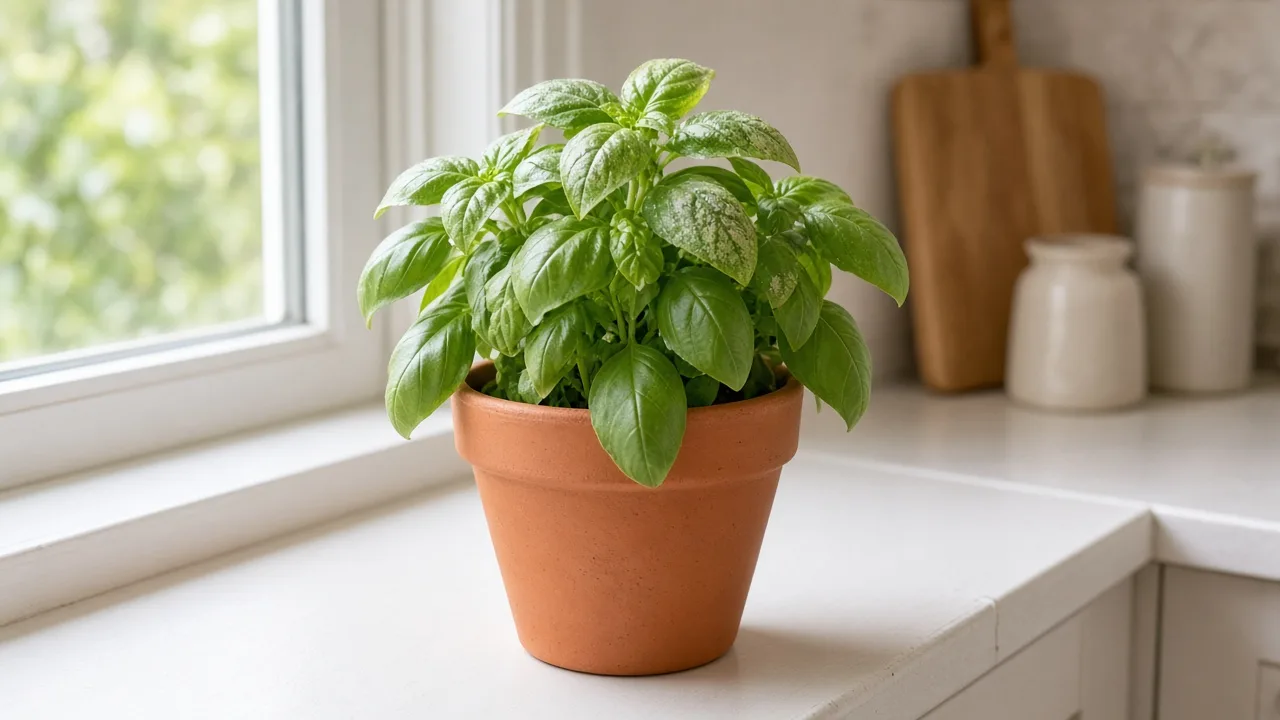
Thrips on Basil: Causes, Checks & Fixes
This guide covers thrips on Basil. See also the general Thrips guide, watering, and light pages for this plant.
Thrips on Basil: Causes, Checks & Fixes
Quick answer
Thrips on basil (Ocimum basilicum) are slender insects less than 1/20 inch long that rasp the outer layer of soft leaves and suck out cell contents. On basil you usually notice silvery or stippled streaks on the tender top growth you harvest first, plus tiny black varnish-like specks of thrips frass on leaf undersides—not sticky honeydew or ragged chew holes.
For general thrips biology and control options, see our thrips guide. On basil, damage clusters on harvest tips and bolting flower spikes—not evenly across woody lower stems—and treatment must stay food-safe because you eat these leaves.
First step: move the pot away from other herbs and shake stems over white paper to confirm thrips before rinsing leaf undersides with water.
When to use this page vs other Basil guides
| Pattern | Read next |
|---|---|
| Silvery streaks + black specks on undersides | This page |
| Sticky shine, soft-bodied clusters on tips | Aphids on Basil |
| Ragged chew + pellet frass, visible larvae | Caterpillars on Basil |
| Serpentine tunnels inside leaf, no through-holes | Leaf miners |
| Fine webbing, pale stippling in dry heat | Spider mites |
| Yellowing from bottom up, wet soil smell | Overwatering or root rot |
What thrips look like on Basil
Thrips damage is easy to overlook on basil until harvest tips look dull or scarred—because silvery streaks can resemble sun scorch or rough handling. When thrips are active, the signature is scraped, silvery tissue with black fecal specks on the underside of young leaves, not the sticky gloss of sap feeders or the ragged chew of caterpillars.
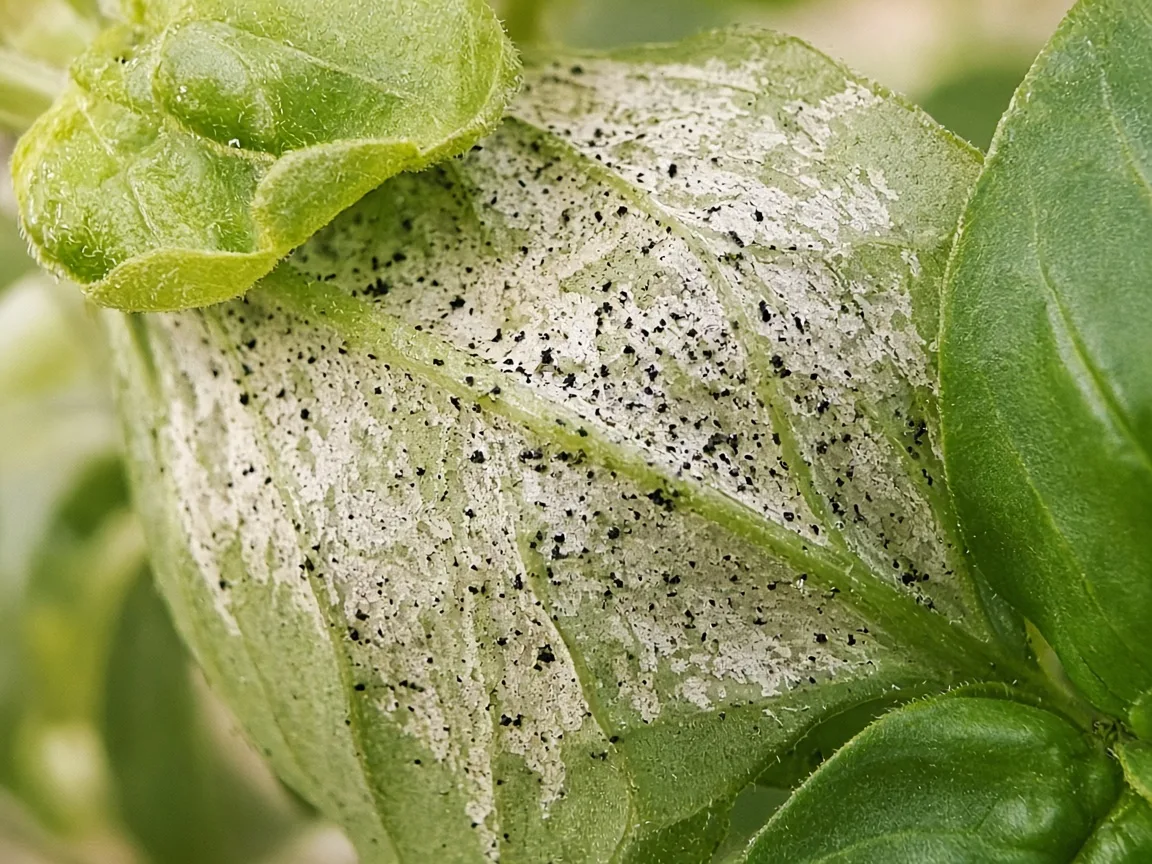
Silvery stippling and tiny black specks on a basil leaf underside—compare with an intact neighbor leaf on the same stem.
Leaf and stem signs:
- Silvery, scabby, or stippled streaks on tender aromatic leaves on the upper half of the plant
- Tiny black varnish-like flecks of thrips excrement on leaf undersides, petioles, or the pot rim below
- Distorted, curled, or papery young leaves when feeding is heavy
- Bronzed or dull-looking harvest tips that no longer look glossy green after rinsing
- Scarring on flower spike buds when the plant starts bolting
Insect signs (when you can see them):
- Slender yellowish to brownish insects about 1/16 inch long with narrow fringed wings folded over the back
- Pale yellow to orangish larvae on leaf undersides—wingless and harder to spot than adults
- Insects that jump or skitter quickly when you disturb a leaf, unlike slow-moving aphids
Basil grows fast in full sun, so damage often shows on top growth while lower, older leaves still look normal. That top-heavy pattern helps separate thrips from root problems, which usually yellow the plant from the bottom up.
Why Basil gets thrips
Basil is a fast-growing Lamiaceae herb that pushes soft new shoots whenever light and water are good. Every harvest pinch and every side branch creates exactly the tender tissue thrips prefer. Western flower thrips and other pest species commonly attack herbaceous plants with soft terminals—basil fits that profile perfectly.
Introduction from outside is the main route on kitchen windowsills. Thrips arrive on nursery seedlings, hitchhike on herbs brought in from a balcony, drift in on cut flowers, or colonize open windows when winged adults float indoors. Skipping quarantine on a new supermarket basil is one of the fastest ways to spread them through a herb collection.
Bolting flower spikes concentrate thrips on soft bud clusters—similar to how aphids colonize spikes, but with silvery scrape marks instead of honeydew.
Nitrogen-rich, fast growth can make matters worse. Basil fed heavily or grown in rich compost produces lush, soft shoots that are easier for thrips to rasp than firm, sun-hardened foliage. That does not mean you should stop feeding a hungry harvest plant—but it explains why thrips often appear when basil looks its most vigorous.
Indoor warmth without predators. Indoor plants lack natural enemies that control thrips outdoors. A few adults on a clean windowsill can multiply through several generations in warm weather before you notice silvery tips.
Harvest-zone silvery streaks: the basil pattern
This is the basil pattern generic thrips pages miss. Damage follows the stems you pinch for cooking, not random old foliage at the soil line:
- Scraping appears on the top two to three node pairs you would harvest first—scanning only leaf tops from across the room misses undersides there
- Leaf veins and petiole joints trap larvae where side shoots branch from the main stem
- Flower spike buds scar early when the plant bolts—check spikes before assuming harvest handling caused dull tips
- Black specks fall onto the saucer or cutting board during harvest—a strong thrips signal when you pinch tips for pesto
Unlike leaf miners, thrips damage stays on the leaf surface with specks outside—not internal bordered tunnels visible when backlit.
Pinch-and-check during regular harvest
Basil owners already touch the plant every few days for pesto and salads. Turn that habit into your best diagnostic tool:
- Each time you pinch a tip, flip the next leaf down and scan the underside for silvery streaks and black specks before you drop it in the bowl
- Shake the stem over white paper after harvest—thrips dislodged onto the sheet confirm active feeding
- Compare stems you picked yesterday with untouched neighbors; sudden dull scarred tips on one stem only suggest thrips, not blunt scissors on holes in leaves
- After balcony season, do one full stem-by-stem underside inspection before resuming normal harvest rhythm
This weekly pinch-and-check catches thrips when a few silvery streaks are still manageable—before several generations scar every harvest-ready tip on a fast-growing pot.
Edible herb treatment: what is safe before cooking
Because you eat basil leaves, physical removal and labeled food-crop sprays beat harsh residual pesticides as the first response:
- Rinse and shake dislodges many thrips before any spray—no harvest waiting period once leaves are washed
- Insecticidal soap labeled for edible herbs can follow rinsing when thrips persist; test one leaf first and read re-entry timing on the label
- Horticultural oil or neem labeled for food crops may help on heavy infestations—coat leaf undersides thoroughly and follow label intervals before cooking
- Avoid homemade dish-detergent mixes on leaves you plan to eat—they can scorch tender basil tissue and leave residue
- Do not apply broad-spectrum systemic insecticides on kitchen-window basil unless the label explicitly allows food-crop use
Basil is non-toxic to cats and dogs, but wash leaves before cooking and keep pets from chewing pesticide-treated foliage until sprays have dried and any label waiting period has passed.
How to confirm the cause
Work through these checks before you spray anything:
- White-paper shake test — Shake foliage over white paper to dislodge thrips. Slender insects and black specks confirm them—not sticky residue from aphids.
- Underside inspection — Use a hand lens or phone macro mode on the top two harvest sets. Thrips scrape from below; tops can look almost normal.
- Frass vs honeydew — Black dry specks mean thrips. Tacky shine means aphids.
- Chew vs scrape — Ragged holes with pellet frass mean caterpillars. Silvery stippling without chew means thrips.
- Backlight test — Internal bordered tunnels confirm leaf miners, not thrips.
- Isolate first — Move basil away from mint, parsley, and other herbs. Thrips walk and drift between containers on the same sill.
- Recent history — Note outdoor time, new purchases, cut flowers, or open windows in the past month.
If you find silvery streaks with black specks and dislodged thrips on white paper, the diagnosis is confirmed. If only sticky clusters appear, switch to the aphids guide.
First fix for Basil
Move the pot away from other herbs and shake stems over white paper to confirm thrips, then rinse leaf undersides thoroughly with lukewarm water.
Hold each stem over the sink and direct water at the underside of every leaf in the harvest zone—especially where side shoots meet the main stem. Thrips feed while hidden on buds and shoot tips, so a quick top-only mist misses most of the colony.
Catch dislodged insects in the drain rather than letting them settle on nearby pots. After rinsing, repeat the white-paper shake: if no thrips fall off and no new black specks appear within 48 hours, you may not need spray yet.
This single physical pass knocks down the active colony and gives you a clean baseline before any insecticide. Do not stack soap spray, heavy pruning, and repotting on the same day.
Step-by-step recovery
After the initial rinse, follow severity:
Days 1–7: Physical control (light silvery streaks on one stem)
- Repeat the rinse-and-shake every two to three days; catch newly hatched larvae before they scar more harvest tips
- Pinch off leaves that are more than half scarred once thrips are gone—basil regrows quickly from lower nodes
- Avoid soaking the root zone during rinses; basil roots rot in wet mix per the watering guide
Days 7–21: Targeted sprays if streaks spread (moderate infestation)
- Apply insecticidal soap labeled for ornamentals and herbs, coating leaf tops and undersides until runoff
- Repeat on label intervals through at least two hatch cycles—thrips eggs hide inside leaf tissue and sprays miss them on the first pass
- Horticultural oil or neem oil labeled for food crops can supplement soap on reachable foliage; test one leaf and wait 48 hours
Heavy infestation (silvery damage across multiple stems, thrips on white paper every shake)
- Pinch and bag only shoots too scarred to harvest
- Treat every herb on the same sill or balcony batch, not just the worst-looking pot
- Hang a bright yellow sticky trap near the pot to monitor flying adults—not as sole control, but to track whether populations are dropping
- Hold fertilizer until new tips emerge without fresh streaks—excess nitrogen can increase thrips populations
Recovery timeline
Judge recovery on clean new harvest tips and frass-free undersides, not old scarred leaves:
- 24–48 hours after first rinse: No new black specks on top leaves; white-paper shake finds zero thrips
- One to two weeks: New tips emerge without silvery streaks—normal pace for basil in full sun and good drainage
- Same season: Several clean harvest cycles confirm the population is broken; continue weekly pinch-and-check after balcony season
Scarred tissue does not turn green again—you will still see old silvery marks on lower foliage. Success means firm new tips you can rinse and eat without fresh damage, not a cosmetic reset of every old streak.
Lookalike symptoms
| What you see | Likely cause | Key difference on basil |
|---|---|---|
| Silvery streaks + black specks on undersides | Thrips (this page) | White-paper shake dislodges slender insects |
| Sticky shine, soft-bodied clusters | Aphids | Honeydew, not dry black specks |
| Ragged chew + pellet frass | Caterpillars | Night inspection reveals worm-like larvae |
| Bordered pale tunnel inside leaf | Leaf miners | Tunnel visible when backlit; no black specks |
| Fine webbing, dusty stippling in dry heat | Spider mites | Webbing on undersides; mites not elongated |
| Clean straight tear, no specks | Mechanical harvest damage | Holes in leaves — no insects, no spread |
What not to do
- Treating harvest tears as thrips. Clean straight cuts with no specks mean holes in leaves routing—not pesticide.
- Inspecting only leaf tops. Thrips feed hidden on undersides and shoot tips—daytime glances from across the room miss the harvest zone.
- Spraying only leaf tops. Most thrips sit on undersides and in leaf axils where side shoots branch.
- Harvesting treated leaves before label intervals. Read soap and oil labels for re-entry timing before cooking.
- Increasing nitrogen while thrips are active. Soft lush shoots are easier for thrips to rasp—hold fertilizer until new growth is clean.
- Increasing watering because leaves look damaged. Basil roots rot in wet mix—follow the watering guide dry-down rhythm instead.
How to prevent thrips next time
- Quarantine new herbs two weeks before placing them beside established basil
- Inspect tips during weekly harvest pinches—the same motion that keeps basil bushy is your best pest check
- Rinse and inspect leaf undersides after balcony summer stays before bringing pots indoors
- Screen windows that stay open at night, especially near herb sills
- Pinch flower spikes early to limit bolting tops where thrips gather
- Space pots so leaves do not touch; airflow dries foliage faster in bright light
- Avoid heavy nitrogen during peak pest season—steady feeding beats lush bursts of soft tissue
Outdoor summer basil often sees natural predators—minute pirate bugs, lacewings, and predatory thrips—that keep populations in check. Bringing plants indoors for cold nights without inspection can reintroduce thrips to a clean windowsill collection.
When to worry
Act the same day if silvery damage spreads across multiple stems within a week, thrips fall onto white paper from every shake, or every herb in the window shows black specks on undersides. Basil grows quickly, and warm indoor conditions let thrips complete several generations in a short time.
You can wait one careful rinse cycle if you see light stippling on one stem and the white-paper test finds only a few insects—basil often outgrows a light hit when caught early.
If two soap cycles and tip pruning fail and colonies keep rebounding, assume a nearby untreated plant or eggs inside leaf tissue is the source. Treat the whole sill together or replace the worst pot before peak harvest season.
Conclusion
Thrips on basil are a harvest-zone, underside-feeding pest—silvery streaks with black specks on tender top leaves mean shake stems over white paper, rinse undersides thoroughly, and tell scrape damage from aphid stickiness or caterpillar chew before you spray. Judge recovery by clean new tips you can harvest, not perfect older foliage on every stem.
Related Basil guides
- Basil overview
- Basil watering
- Basil light
- Basil soil
- Aphids on Basil
- Caterpillars on Basil
- Leaf miners
- Spider mites
- Basil problems
Related tool
Use the Pest Identifier Tool to narrow causes for thrips on this plant before changing multiple variables at once.