Scale Insects on Basil: Causes, Checks & Fixes
Quick answer
Scale insects on Basil look like immobile tan or brown bumps on stems and leaf axils near harvest tips, often with sticky honeydew below. First step: move the pot away from other herbs and dab every visible bump with 70% isopropyl alcohol on a cotton swab.
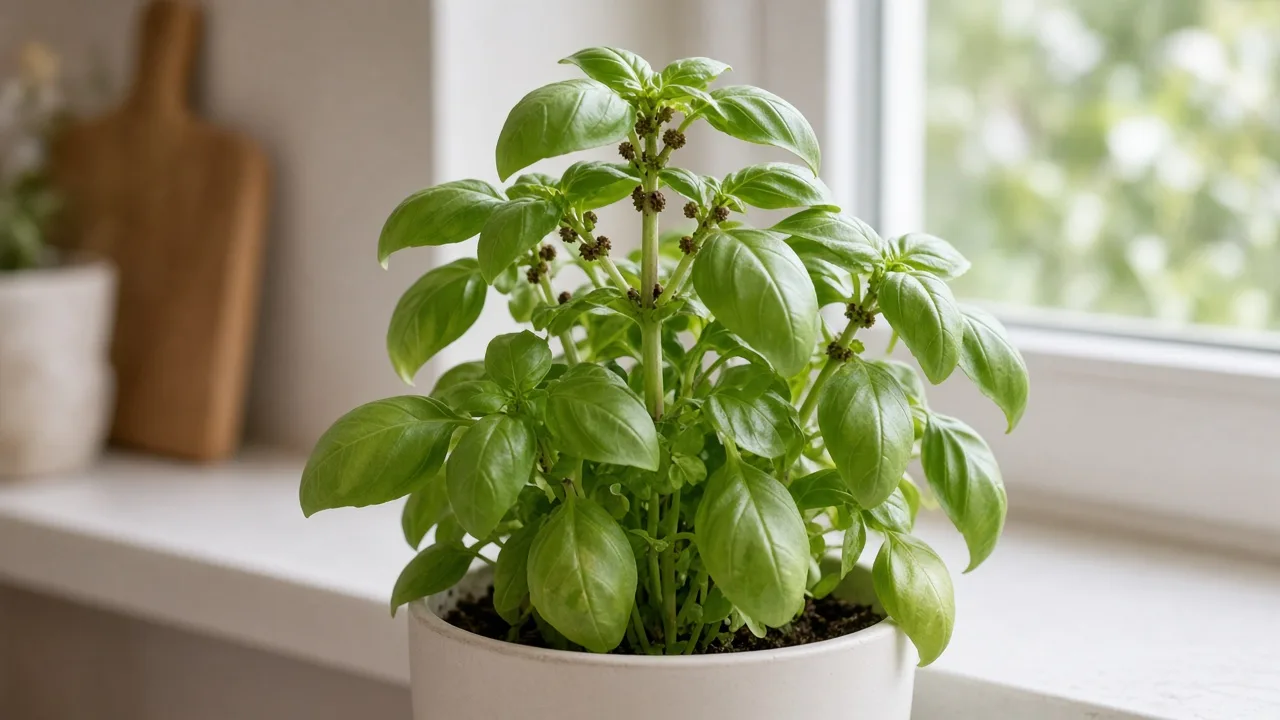
Scale Insects on Basil: Causes, Checks & Fixes
This guide covers scale insects on Basil. See also the general Scale Insects guide, watering, and light pages for this plant.
Scale Insects on Basil: Causes, Checks & Fixes
Quick answer
Scale insects on Basil (Ocimum basilicum) are small, immobile sap feeders protected by a waxy or shell-like cover that look like flat tan or brown bumps glued to square stems, leaf axils, and the undersides of harvest-zone leaves. They pierce tissue, drain sap, and—on soft scale species—leave sticky honeydew that can feed sooty mold on leaves below the infestation.
For how scale life cycles work indoors in general, see our scale insects guide. On basil, the practical pattern is firm disks on the tender shoots you pinch for pesto, sticky shine on lower leaves, and extra caution because you harvest this herb for cooking.
First step: move the pot away from other herbs and dab every visible bump with a cotton swab dipped in 70% isopropyl alcohol—then re-inspect in three days before spraying anything.
When to use this page vs other Basil guides
This page is the pest-first entry for immobile tan or brown bumps on basil stems.
| Pattern | Read next |
|---|---|
| White cottony clusters in leaf axils | Mealybugs on Basil |
| Soft pear-shaped insects on new tips | Aphids on Basil |
| Fine webbing and stippling on leaves | Spider mites on Basil |
| Tiny white insects that fly up when disturbed | Whiteflies on Basil |
| Distorted new leaves without confirmed insects | Distorted leaves on Basil |
| Yellow lower leaves, no bumps or stickiness | Yellow leaves on Basil |
What scale insects look like on Basil
Scale insects are protected by a waxy or shell-like cover that makes adults essentially immobile once they settle. On basil they are easy to mistake for dried sap spots or stem texture until colonies build:
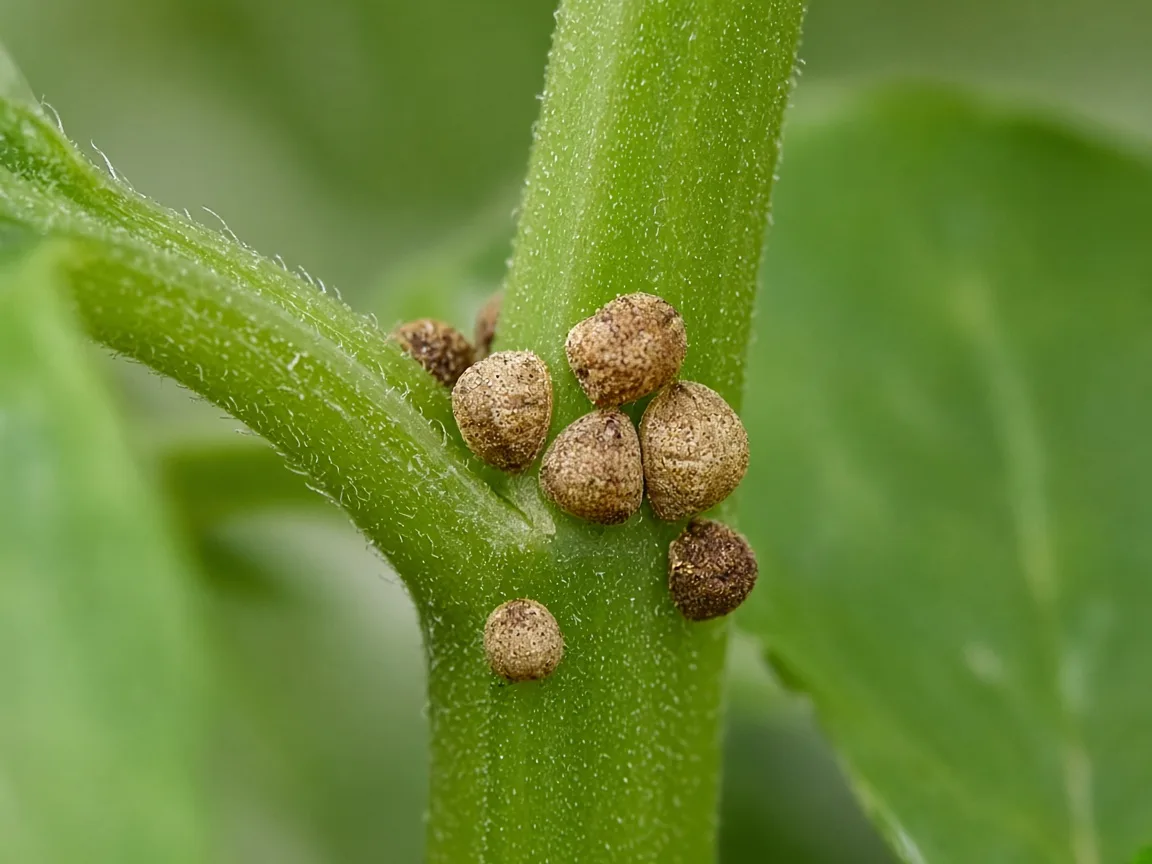
Flat tan scale shells on a square basil stem at a leaf node—compare with firm green tissue above.
- Flat or dome-shaped tan, brown, or bark-colored bumps on square stems, leaf axils, and leaf undersides near harvest tips
- Disks that do not wipe away with a dry cloth—unlike mineral dust or dried water spots
- Sticky shine on leaves below the colony — Honeydew drips from soft scale species onto lower foliage and pot rims
- Black sooty coating on sticky leaves — Fungus growing on dried honeydew, not fungal leaf spot
- Ant trails on the pot rim or saucer — Ants harvest honeydew and protect scale colonies from natural enemies
- Yellowing or stunted new tips — Heavy feeding on the harvest zone while lower leaves still look normal
- Pale yellow to orangish crawlers — Mobile nymphs are tiny and active before shells harden
Basil grows fast in full sun, so damage often shows up as sticky or yellowed top growth while older lower leaves still look fine. That top-heavy pattern helps separate scale from root rot on Basil, which usually yellows the plant from the bottom up.
Where scale hides on harvest shoots and flower spikes
Basil is a fast-growing Lamiaceae herb that keeps pushing soft new tissue whenever you pinch tips or when flower spikes form. Scale settles on exactly that tender growth—not on tough lower stems you rarely touch.
Check these basil-specific hiding spots in order:
- Leaf axils on the top two to three node pairs — Where side shoots branch from the square main stem, right where you harvest
- Undersides of the newest leaves — Flat disks tuck against the midrib and petiole junction
- Flower spike bases — Bolting tops concentrate insects on bud clusters before petals open
- Stem joints below a recent pinch — Fresh cut sites heal slowly; scale often lodges in the scar tissue
- Soil-line stems on leggy indoor plants — Weaker lower growth on leggy basil can host colonies missed during harvest
Unlike woody rosemary or sage, basil stems are soft and square, so even armored scale covers sit flush against the stem face rather than in deep bark crevices. A quick front-on glance at the harvest zone misses most colonies—trace each stem with a lens from soil line to tip.
Why Basil gets scale insects
Basil is an annual herb grown for continuous harvest, which means it offers a year-round supply of tender phloem-rich tissue when kept warm on a windowsill. Every pinch and every side branch creates new settling sites for scale crawlers.
Introduction from outside is the most common route. Scale arrives on supermarket living-herb pots, nursery seedlings, or herbs brought in from a balcony without inspection. Because basil is often grown in groups of pots on one sill, one infested plant spreads crawlers to mint, oregano, and other Lamiaceae neighbors within days.
Ant-tended colonies grow faster than isolated ones. Ants protect scale from predators while harvesting honeydew. If you see ant trails on the saucer, treat the basil—not just the ants—before populations crust entire stems.
Basil-specific stress that makes infestations worse:
- Crowded herb pots with leaves touching and poor airflow between plants
- Shaded or stretched growth from not enough light — soft tissue is easier for crawlers to pierce
- Heavy nitrogen feeding that produces lush, succulent shoots
- Bolting flower spikes that concentrate insects on dense bud clusters
- Overhead watering that keeps dense foliage damp without drying between leaves
Healthy basil in six or more hours of direct sun, harvested weekly, and spaced with airflow can still get scale—but colonies stay smaller and easier to dab off before honeydew spreads.
Soft scale vs armored scale on edible basil stems
Identifying which type you have changes what you see—and what you can spray safely on a kitchen herb.
| Sign | Soft scale (likely on basil) | Armored scale |
|---|---|---|
| Shape | Rounded, convex bumps | Flat, plate-like disks |
| Honeydew | Usually present—sticky leaves below | Usually absent |
| Cover test | Shell is part of the body; flips off with insect | Cover lifts; insect body stays on stem |
| Best spray timing | Soap or oil when crawlers are active | Oil timed to crawler hatch; soap less effective on adults |
On basil, brown soft scale and similar species are common on indoor herbs and produce the sticky residue that attracts ants and sooty mold. Armored species can appear as tiny flat disks along stems; they do not secrete honeydew but still weaken young shoots through sap loss.
Because you eat basil leaves, avoid systemic insecticides unless the label explicitly allows food crops. Contact treatments—alcohol dabbing, labeled insecticidal soap, and horticultural oil—are usually enough when you catch colonies early on a single pot.
How to confirm the cause
Work through these checks in order before you spray anything:
- Trace the harvest zone — Look at stem joints and leaf undersides on the top growth, not just flat leaf surfaces.
- Pry one bump gently — Scale shells lift as a firm dome; mealybugs smear pink beneath cottony wax; dried sap flakes away.
- Touch-test stickiness — Honeydew feels tacky on fingertips. Dry nutrient burn or old water spots do not.
- Watch for ants — Ants climbing stems toward tips strongly suggest scale or aphid honeydew, not fungus gnats alone.
- Compare nearby herbs — Check mint, parsley, and other pots in the same window. Scale often spreads across soft herbs before you notice one bad basil.
- Rule out lookalikes — No immobile bumps? Consider aphids (moving soft bodies), mealybugs (cottony wax), or thrips (silver scarring).
Confirmed diagnosis: immobile tan or brown disks on basil stems plus honeydew, ants, or sooty mold on lower leaves. Suspected only: sticky leaves with no visible bumps—recheck in three days with a lens; crawlers may be settling before shells harden.
First fix for Basil
Move the pot away from other herbs and dab every visible bump with 70% isopropyl alcohol on a cotton swab.
Pour alcohol into a small cup—do not dip directly into the bottle. Press the swab firmly on each disk for five to ten seconds. Alcohol dissolves the waxy cover and kills the insect underneath on contact. Work stem by stem through the harvest zone, including leaf axils and flower spike bases.
Do not apply soap, neem, or horticultural oil the same hour unless alcohol dabbing failed on re-inspection. Stacking treatments before you confirm live scale remains adds stress to a fast-draining herb that may already be heat-stressed on a sunny sill.
After dabbing, let foliage dry in bright indirect light for an hour, then recheck with a lens in three days. Missed disks and newly hatched crawlers are the usual reason a single treatment fails.
Step-by-step recovery
Once alcohol has knocked down visible adults, work through these steps in order:
- Isolate for two weeks — Keep basil away from mint, oregano, and other herbs until you see no new bumps after repeated treatment.
- Pinch heavily infested tips — Drop crusted, blackened, or insect-packed shoots into the trash, not the compost pile indoors. Basil regrows quickly from lower nodes.
- Manage ants on the pot rim — Wipe ant trails and consider a saucer barrier so ants stop protecting surviving scale.
- Apply labeled insecticidal soap — Coat stems and leaf undersides until soap runs off. Soaps kill only insects they touch; missed adults under hard shells survive.
- Repeat every five to seven days — Scale crawlers hatch on a staggered cycle. Two to three repeat applications usually break the generation chain on a single pot.
- Use horticultural oil if soap stalls — Oil smothers crawlers and soft scale when applied thoroughly to stems. Avoid oil in full midday sun on a hot windowsill.
- Resume harvest only after label intervals — Read the product label for re-entry timing before eating treated leaves. When in doubt, rinse leaves thoroughly and wait one extra cycle.
If colonies persist after three treatment rounds, inspect every nearby herb again—reintroduction from an untreated neighbor is more common than treatment failure on basil alone.
Recovery timeline
Within 24–48 hours of thorough alcohol dabbing, you should see fewer live bumps on stems and less fresh honeydew on lower leaves.
One to two weeks of repeated soap or oil treatments is typical before new basil shoots emerge clean. Because basil regrows fast in warm sun, you may already be harvesting lower clean leaves while upper tips finish treatment.
Sticky or yellowed leaves do not return to perfect shape. Judge success by new growth: firm, green tips without fresh bumps or glossy honeydew.
Worsening signs: tan crusts on multiple stems, sooty mold spreading across the plant, stunted new tips that stay deformed after two treatment cycles, or the same sticky shine on every herb on the sill—those mean escalation, not patience.
Lookalike symptoms
- Mealybugs on Basil — White cottony wax in leaf axils; bodies smear pink when crushed, not firm disks.
- Aphids on Basil — Soft pear-shaped insects that move when disturbed; cluster on tips without hard shells.
- Whiteflies on Basil — Tiny white insects that fly up in a cloud when the pot is bumped.
- Spider mites on Basil — Fine webbing under leaves and stippled yellow dots; common when basil is dry, not sticky.
- Dried sap or water spots — Flake away with a fingernail; no ants, no spreading pattern.
- Downy mildew or fungal spots — Fuzzy or patterned lesions without honeydew; more common in cool, damp, poorly ventilated indoor basil.
What not to do
Do not spray homemade dish soap mixes on basil you plan to eat—commercial insecticidal soaps are formulated for plant foliage; harsh detergents scorch leaves.
Do not apply soap or oil in full midday sun on a hot windowsill. Treat in early morning or evening when leaves are cool.
Do not harvest treated leaves until you have checked the product label and rinsed as directed.
Do not ignore ants—they protect scale colonies from predators. Wipe ant trails and treat the basil, not just the saucer.
Do not compost heavily infested tips indoors where crawlers can reinfest other pots.
Do not drench the root zone with systemic insecticides on an edible herb unless the label explicitly allows food-crop use—foliage contact treatments are usually enough for basil scale.
Basil is non-toxic to cats and dogs, but wash leaves before cooking and keep pets from chewing pesticide-treated foliage until sprays have dried and any label waiting period has passed.
How to prevent scale insects next time
Prevention on basil is mostly about speed of detection on a plant you touch every few days for harvest.
- Quarantine new herbs two weeks before placing them beside established basil.
- Inspect stem joints during weekly pinching—the same motion that keeps basil bushy is your best pest check.
- Pinch flower spikes early to limit bolting tops where scale gathers.
- Space pots so leaves do not touch; airflow dries foliage faster on a sunny sill.
- Avoid excess nitrogen that produces soft, scale-friendly shoots; feed at label strength during active growth only.
- Keep basil in full sun per the watering guide rhythm—firm, well-lit growth tolerates minor pest pressure better than shaded, stretched stems.
- Manage ants promptly on pot rims before they farm honeydew and protect scale colonies.
Outdoor summer basil often sees natural predators—lady beetles, lacewings, and parasitic wasps—keep populations in check. Bringing plants indoors for cold nights without inspection can reintroduce scale to a clean windowsill collection.
When to worry
Act the same day if entire stems are crusted with scale, ants farm honeydew on every branch, or every herb in the window shows sticky leaves. Basil grows quickly, and warm indoor conditions let populations spread before you notice one bad pot.
You can wait one careful inspection cycle if you see a dozen bumps on one upper stem after thorough alcohol dabbing—basil often outgrows a light hit when caught early.
If three treatment cycles and tip pruning fail and colonies keep rebounding, assume a nearby untreated plant or hidden crawlers on curled leaf margins is the source. Strip the worst shoots, isolate longer, and inspect the whole collection before replacing the basil entirely.
Conclusion
Scale insects on basil are a harvest-zone problem, not a mystery disease. They settle on the soft square stems and leaf axils this herb keeps producing in sun and rich soil. Confirm them with a lens and sticky-leaf check, dab every visible bump with alcohol first, then follow with labeled insecticidal soap or horticultural oil until new growth comes in clean. Pinch infested spikes, quarantine new herbs, and inspect during regular harvesting—basil regrows fast enough that early action usually saves the pot without heroic measures.