Distorted Leaves on Basil: Causes, Checks & Fixes
Quick answer
Distorted leaves on Basil usually show on the soft harvest tips and flower spikes—puckered, twisted, cupped, or stunted while lower leaves look normal. First step: inspect those newest shoots with a hand lens for aphids, thrips scarring, or gray-purple fuzz under leaves before changing water or fertilizer.
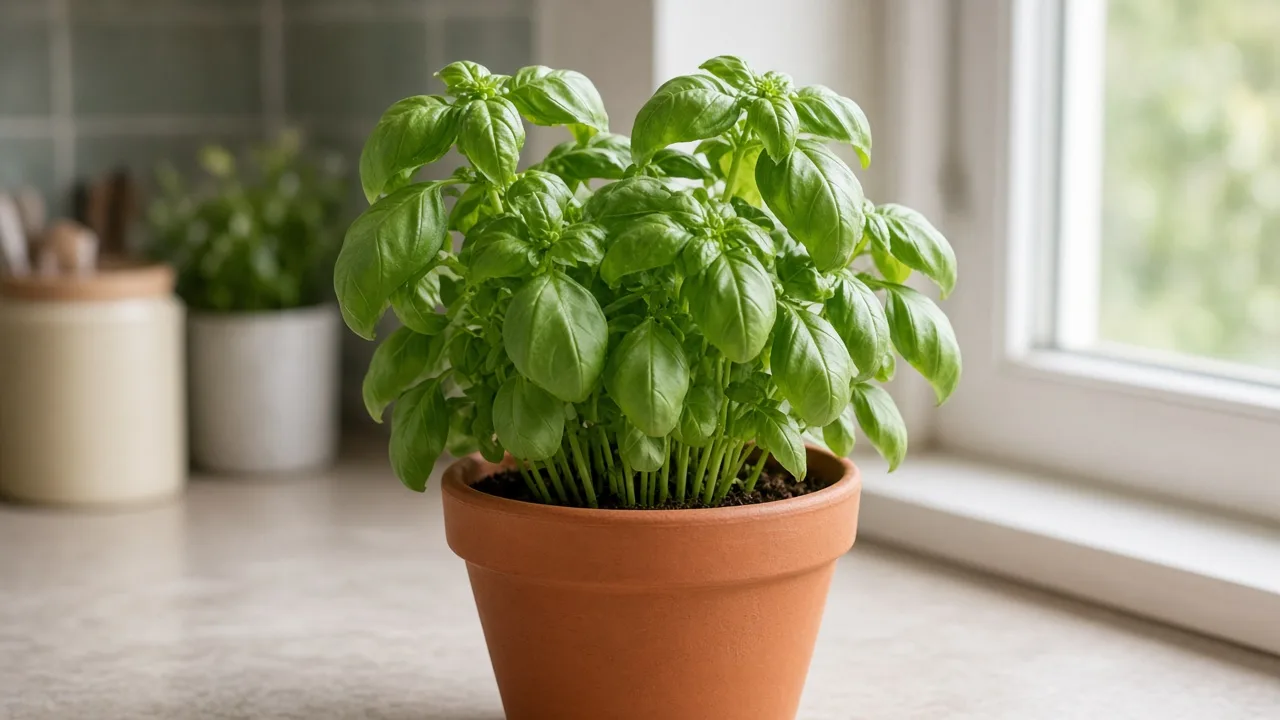
Distorted Leaves on Basil: Causes, Checks & Fixes
This guide covers distorted leaves on Basil. See also the general Distorted Leaves guide, watering, and light pages for this plant.
Distorted Leaves on Basil: Causes, Checks & Fixes
Quick answer
Distorted leaves on Basil (Ocimum basilicum) show on the softest shoots you harvest first—puckered, twisted, cupped, stunted, or asymmetric blades at stem tips and flower spikes while older lower leaves may still look flat and usable. Unlike slow woody houseplants, basil keeps pushing tender tissue whenever light and water are good, so distortion usually targets top growth, not random old foliage.
For how new-leaf warping works across plants in general, see our distorted leaves guide. On basil, the harvest zone is the diagnostic stage—aphids and thrips scar tips while leaves expand, downy mildew curls and yellows with gray-purple fuzz underneath, chill on a cold windowsill twists new blades, and bolting flower spikes concentrate damage on bud clusters.
First step: inspect the top two pinches and any forming flower spike with a hand lens. Look for live insects, silvery scrape marks, sticky honeydew, or gray-purple sporulation on leaf undersides before you change watering, fertilizer, or pot size. Distortion without a confirmed pest or disease pattern often means environmental stress on fast soft growth—not a mystery nutrient deficiency.
This guide covers potted windowsill, balcony, and garden basil. For simple margin cup without deep warping, see curling leaves on Basil. For insect clusters with honeydew, see aphids or thrips. For yellowing from the bottom up, see yellow leaves.
When to use this page vs other Basil guides
| Pattern | Read next |
|---|---|
| Deep twist, puckering, or stunted new tips at harvest zone | Distorted leaves (this page) |
| Margins cup or droop; blade width mostly normal | Curling leaves |
| Pear-shaped insects + sticky honeydew on soft tips | Aphids |
| Silvery streaks, black specks, rasped young tissue | Thrips |
| Yellow lower leaves, gray-purple fuzz underneath | Basil downy mildew pattern — remove infected plants |
| Pale wash on many leaves, normal shape | Pale leaves or not enough light |
| Holes with chewing damage | Holes in leaves |
What distorted leaves look like on Basil
Basil is a fast-growing Lamiaceae herb that produces harvest-ready soft shoots every few days in warm sun. Distortion targets shape and tissue quality on the newest blades while lower leaves you harvested last week may still look fine—a top-heavy pattern that separates pest and tip stress from root rot, which usually yellows from the bottom up.
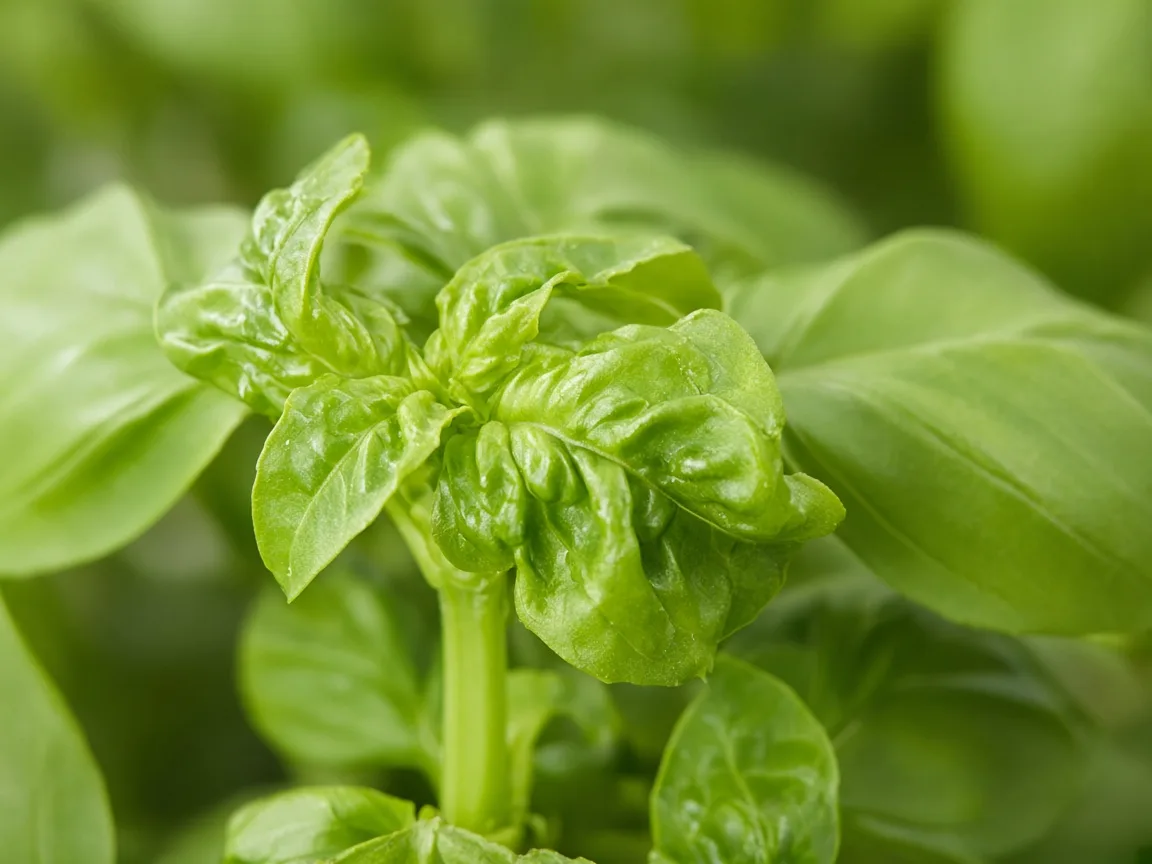
Puckered, asymmetric new basil leaves at the stem tip—compare warped harvest-zone tissue with flatter older leaves lower on the same plant.
Patterns that fit sap-feeding pests (most common indoors):
- Puckered, cupped, or corkscrew-twisted tips on the uppermost leaves you would pinch first
- Stunted, narrow, or lopsided new blades on a side shoot after a harvest cut
- Distortion clustered on flower spike buds when the plant starts bolting
- Sticky glossy honeydew on leaves below the warped tips—aphids, not drought alone
- Silvery streaks or speckled scarring on young tissue with black varnish-like specks—thrips feeding while leaves are still expanding
Patterns that fit basil downy mildew:
- Yellowing that progresses on leaves, often starting lower on the plant, followed by browning
- Leaf curling and wilting combined with gray-purple fuzzy growth on undersides visible with a hand lens
- Symptoms worsening in cool, humid, poorly ventilated conditions—morning dew, overhead watering, or crowded pots on a shaded patio
- Distortion spread across many leaves, not isolated to one harvest tip
Patterns that fit chill and bolting (basil-specific):
- Twisted or crinkled new tips after a cold night below about 10°C (50°F) on a windowsill—basil is tropical and chilling injury shows on soft new growth first
- Warped bud clusters on tall flower stalks during bolting—often alongside smaller, tougher leaves and reduced flavor
- Asymmetric scarring on one side of a thick blade from rough harvesting or pet nibbling—not disease, but can mimic pest distortion until you confirm no insects
What is not classic basil distortion:
- Gentle edge cup only on an otherwise symmetrical blade → curling leaves
- Uniform pale yellow on many open leaves without twist → pale leaves or nitrogen issues
- Round holes with chewing margins → caterpillars or holes in leaves
- Fine webbing and stippled dots → spider mites
Because basil can push new harvestable tips within a week in warm sun, a single warped leaf may sit on the plant until you pinch it. Judge the next tip after your fix, not whether every old twisted blade straightens.
Why Basil gets distorted leaves
Basil distortion is rarely random. The same fast growth that makes basil productive also creates continuous soft tissue that pests and pathogens target.
Sap feeders on the harvest zone
Aphids and thrips prefer tender expanding leaves—exactly the shoots basil keeps producing at stem tips and flower spikes. Every harvest pinch and every new side branch opens fresh tissue before it hardens. Unlike a slow fiddle-leaf fig that might distort one new leaf per month, a productive basil pot offers a weekly buffet of soft tips in full sun.
Nitrogen-rich, fast growth from rich compost or heavy feeding produces lush soft shoots that are easier to pierce than firm sun-hardened foliage. That does not mean you should starve a harvest plant—but it explains why distortion often appears when basil looks its most vigorous.
Downy mildew in humid, cool spells
Basil downy mildew (Peronospora belbahrii) causes yellowing, curling, and wilting with distinctive sporulation on leaf undersides. The pathogen thrives when leaves stay wet six to twelve hours in cool, humid conditions—overhead watering, crowded pots, or damp mornings on a shaded balcony. Sweet green basil varieties are especially susceptible; purple and Thai types show less severe symptoms in field trials.
Spores travel on air currents and can arrive on contaminated seed or transplants, which is why a clean windowsill collection can still develop disease after one infected supermarket pot.
Chill on tropical tissue
Basil grows best around 20–35°C (68–95°F). A cold draft, unheated windowsill night, or early spring planting into cool soil can twist and stunt new tips without any insect present. The damage concentrates on the newest soft blades because mature leaves are tougher.
Bolting and flower spikes
When basil shifts energy to flower and seed production, bud clusters at spike tips often look crowded, twisted, or stunted even without pests. Heavy feeding on those buds by aphids amplifies the warp. Pinching spikes early redirects growth into flat leaf production—a standard harvest practice, not optional decoration.
How to confirm the cause
Work through these checks in order on the top harvest zone before you treat the whole plant:
- Inspect the top two pinches with a hand lens or phone macro mode. Live pear-shaped aphids, slender thrips, or black specks confirm sap feeders.
- Touch-test stickiness on leaves below warped tips. Honeydew feels tacky; drought stress does not.
- Flip suspicious leaves and look for gray-purple fuzz on undersides in humid weather—downy mildew, not thrips alone.
- Recall last night’s temperature if distortion appeared overnight on an otherwise clean plant with no insects—chill injury fits a sudden cold snap.
- Check flower spikes if the plant is bolting. Distortion concentrated on buds suggests spike feeding or bolting stress, not root failure.
- Compare lower leaves on the same stem. Pest distortion stays top-heavy; downy mildew often involves multiple leaves including lower ones.
Confirmed pest diagnosis: live insects or thrips scarring on tender tips plus matching distortion pattern. Confirmed downy mildew: yellowing/curling with visible underside sporulation in humid conditions. Suspected chill: sudden tip warp after cold exposure with no insects and no underside fuzz.
First fix for Basil
Inspect the top harvest tips and flower spikes with a hand lens before changing water, fertilizer, or pot size.
Hold the stem steady and examine the newest leaves, leaf axils, and any bud clusters at 10× magnification. If you see aphids, move the pot away from other herbs and blast tips with a strong water stream aimed at undersides—same first step as our aphids on Basil workflow. If you see silvery streaks and black specks without round aphids, treat as thrips per thrips on Basil after the lens check.
If undersides show gray-purple fuzz and yellowing is spreading, do not try to nurse the plant with extra fertilizer. Harvest any clean leaves you can use immediately, bag and discard symptomatic plants, and sanitize hands and scissors before touching healthy pots—downy mildew has no reliable cure for home gardeners once established.
If the lens shows no insects and no sporulation after a cold night, move basil to a warmer bright spot and wait for the next tip. Do not repot, prune heavily, and fertilize on the same day.
Step-by-step recovery
After the first lens inspection, follow the path that matches your diagnosis:
If pests are confirmed
- Isolate the pot from mint, parsley, and other window herbs for two weeks.
- Water-blast tips and undersides until insects rinse off; let foliage dry in bright indirect light.
- Pinch off badly twisted, sticky, or insect-packed shoots into the trash—not the indoor compost pile.
- Apply labeled insecticidal soap only if live pests remain after rinsing; coat undersides until runoff. Repeat every five to seven days.
- Remove infested flower spikes if bolting; they concentrate pests.
- Recheck with the lens before each repeat treatment.
If downy mildew is confirmed
- Harvest clean leaves from lightly affected plants if any remain usable.
- Remove and bag all symptomatic plants; do not compost infected tissue indoors.
- Space remaining pots for airflow; switch to base watering so foliage dries quickly.
- Plan resistant varieties (Eleonora, Rutgers DMR lines) for the next sowing if disease recurs in your climate.
- Avoid overhead misting on basil foliage during cool humid weeks.
If chill or bolting caused distortion
- Move to full sun with night temperatures above 15°C (59°F) when possible.
- Pinch warped tips and any flower spikes to redirect energy into flat leaf shoots.
- Resume normal watering per our basil watering guide—lift the pot; lighter weight means time to water.
- Wait one week for the next top pinch before judging recovery.
Recovery timeline
Within 48 hours of a pest water blast, you should see fewer live insects on tips and no fresh honeydew.
One to two weeks is typical before new pinches emerge flat and symmetric after pest treatment or chill correction. Basil regrows fast in warm sun—you may already be harvesting lower clean leaves while upper tips finish recovering.
Warped or puckered blades do not flatten back. Success means the next one or two harvest tips open with normal shape, color, and flavor.
Worsening signs: distortion spreading to every new shoot despite treatment, gray-purple fuzz appearing on more leaves, winged aphids on multiple stems, or entire pots collapsing with soft stems—those mean escalation or replacement, not patience.
Lookalike symptoms
| What you see | Likely cause | Check |
|---|---|---|
| Top tips puckered with sticky shine | Aphids | Lens on soft shoots; honeydew below |
| Silvery streaks, black specks, no honeydew | Thrips | Shake stem over white paper |
| Yellow + gray-purple leaf undersides | Downy mildew | Underside fuzz in humid weather |
| Edge cup only, symmetrical blade | Curling leaves | Pot weight; midday droop |
| Sudden tip warp after cold night | Chill injury | No insects; warmth restores next tips |
| Twisted bud clusters on tall spike | Bolting + possible pests | Pinch spike; inspect buds |
| Fine webbing, stippled dots | Spider mites | Underside webbing when dry |
What not to do
Do not fertilize a warped basil before confirming pests or disease—soft nitrogen-driven growth can worsen aphid-friendly tissue.
Do not spray homemade dish soap on leaves you plan to eat; use labeled insecticidal soap formulated for foliage.
Do not compost downy-mildew-infected basil indoors where spores can spread to clean pots.
Do not assume distortion means repotting—basil roots are shallow and fast; unneeded repotting on a stressed harvest plant stacks shock on top of the real problem.
Do not ignore ants on the saucer—they protect aphid colonies feeding on your harvest tips.
Do not treat every warp with fungicide when a hand lens shows aphids instead of underside sporulation.
Basil is non-toxic to cats and dogs, but wash leaves before cooking and keep pets from chewing pesticide-treated foliage until sprays have dried.
How to prevent distorted leaves next time
Prevention on basil rides on the same weekly pinching that keeps the plant bushy:
- Inspect tips during every harvest—your best pest check is the motion you already do for flavor.
- Quarantine new herb pots two weeks before placing them beside established basil.
- Keep six or more hours of direct sun and space pots so leaves do not touch—airflow dries foliage faster.
- Pinch flower spikes early to limit bolting tops where pests and warp concentrate.
- Water at the soil line in humid weather so leaves dry quickly; avoid evening overhead sprays when nights are cool.
- Choose downy-mildew-tolerant varieties if disease recurs in your area—purple, Thai, and lemon basils show less severe symptoms in NC State trials.
- Bring outdoor pots in for cold nights before temperatures drop below 10°C (50°F).
Outdoor summer basil often benefits from natural predators—lady beetles and lacewings knock back aphids. Inspect before moving plants indoors for winter so you do not import pests into a clean windowsill.
When to worry
Act the same day if gray-purple fuzz spreads to multiple plants, every new tip stays warped after two treatment cycles, or downy mildew appears in a shared herb collection—remove sources before spores spread on humid air.
You can wait one careful lens check if one twisted tip appears after a single cold night and the next warm-day growth looks cleaner.
If pest treatment and tip pinching fail and distortion keeps returning on every new shoot, assume a nearby untreated herb or infected seed/transplant is the source. Sometimes replacing the pot with a fresh sowing is faster than nursing exhausted woody stems—basil is an annual harvest crop, not a lifelong houseplant.
Conclusion
Distorted leaves on basil are a harvest-zone problem first. Aphids and thrips scar soft tips while leaves expand; downy mildew curls and yellows with underside fuzz in humid cool weather; chill and bolting warp tips without insects. Inspect the top pinches with a hand lens before changing water or fertilizer, treat the confirmed cause, pinch off badly warped shoots, and judge recovery by the next clean tips—not whether old twisted blades ever flatten.