Curling Leaves on Basil: Causes, Checks & Fixes
Quick answer
Curling leaves on Basil usually mean water stress, heat, pests on tender harvest tips, or downy mildew—not a missing fertilizer problem. First step: lift the pot and check whether the top 2–3 cm of mix is dry or staying wet before you water, move, or spray.
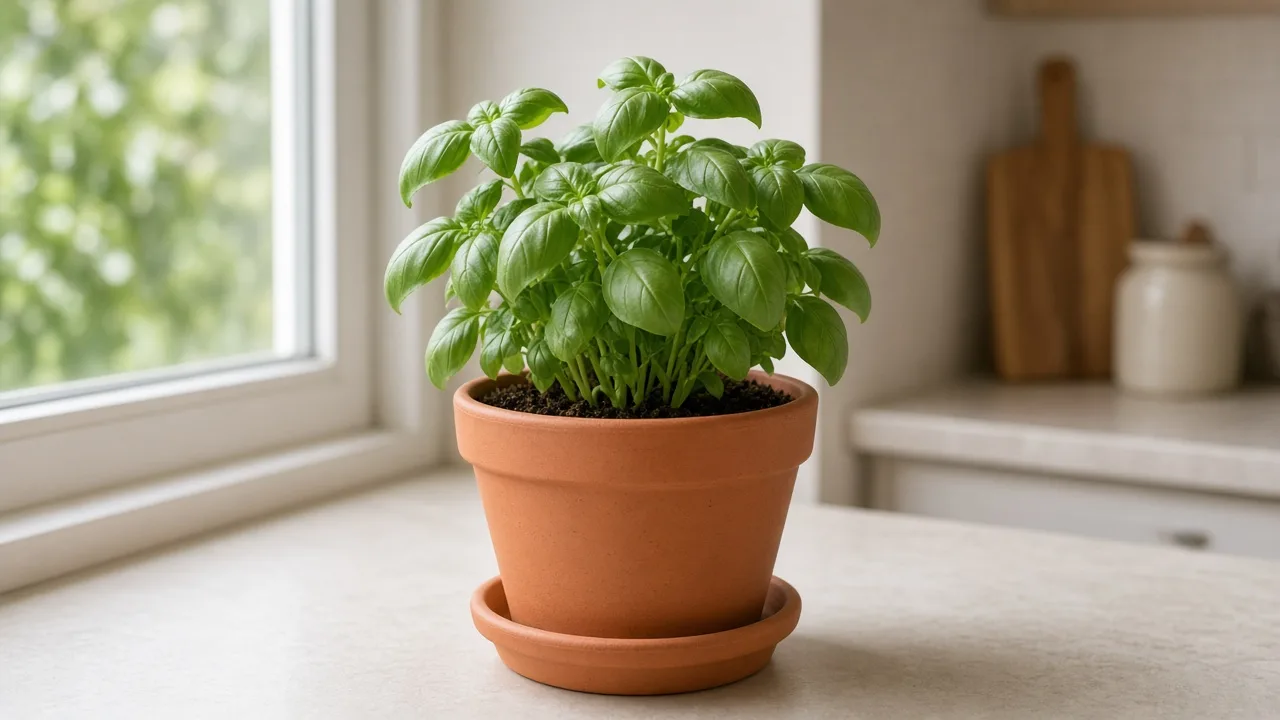
Curling Leaves on Basil: Causes, Checks & Fixes
This guide covers curling leaves on Basil. See also the general Curling Leaves guide, watering, and light pages for this plant.
Curling Leaves on Basil: Causes, Checks & Fixes
Quick answer
Curling leaves on basil (Ocimum basilicum) are usually a moisture, heat, or pest signal on soft aromatic foliage you harvest from the top—not a random cosmetic flaw. Basil grows best in full sun with evenly moist, well-draining soil, and its thin leaves react fast when that balance slips on a kitchen windowsill or balcony pot.
For how leaf curl works as a general protective stress response, see our curling leaves guide. On basil, read the harvest tips you pinch first, then decide whether the curl is thirst, heat, sap feeders, or downy mildew—not generic houseplant advice.
First step: lift the pot and check whether the top 2–3 cm of mix is dry or staying wet before you water, move, or spray.
When to use this page vs other Basil guides
| Pattern | Read next |
|---|---|
| Cupped or rolled harvest tips, midday droop, light dry pot | This page |
| Heavy wet pot, yellow lower leaves, sour smell | Overwatering or root rot |
| Crispy edges, very light pot, soil pulls from rim | Underwatering |
| Whole plant limp, not just curled margins | Wilting or drooping leaves |
| Sticky clusters on soft shoots | Aphids on Basil |
| Silvery streaks, black specks on new tips | Thrips on Basil |
| Fine webbing on undersides in dry air | Spider mites on Basil |
| Yellow between veins, gray fuzz underneath | Downy mildew section below; see also black spots |
| Pale stretched stems, small pale new leaves | Not enough light |
| Twisted puckered new growth without cupping | Distorted leaves |
What curling leaves look like on Basil
Healthy sweet basil carries broad, slightly cupped blades with a glossy green surface. Stress curl is sharper and spreads in patterns that map to specific causes:
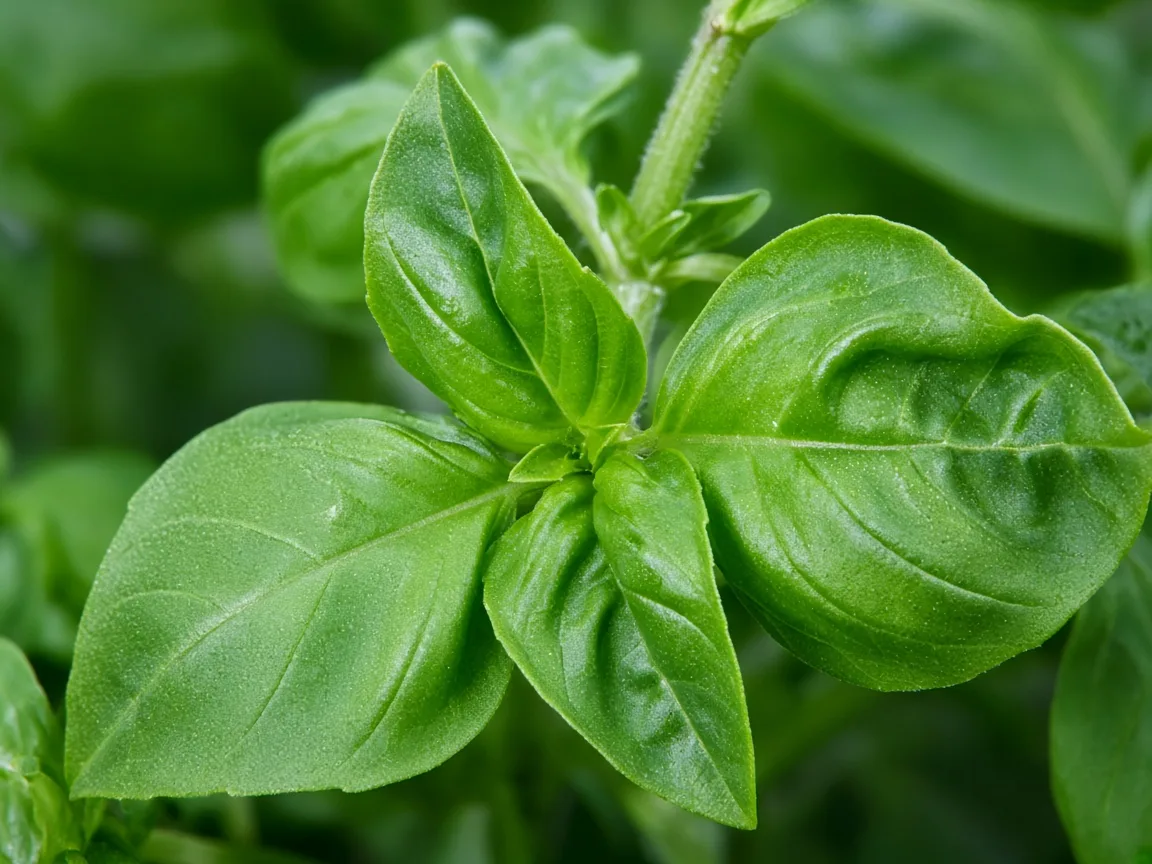
Upward-cupped basil leaf margins on tender harvest growth—compare with flatter neighbors on the same stem after watering or shade correction.
Upward margin cup (heat or drought):
- Leaf edges roll upward and inward, sometimes called a taco shape on harvest tips
- Tissue feels thinner at the margin; the pot may feel noticeably light
- Often appears on the sun-facing side of a balcony pot during afternoon heat
- Midday droop on tips that recover after evening watering points to thirst, not disease
Downward wilt-cup (overwatering or root failure):
- Whole blades curl downward and feel limp even when soil looks damp on top
- Lower leaves yellow while the mix stays heavy for days
- Stem base may darken on chronically wet basil soil in dim light
Pest-warped curl:
- Tips look wrinkled, twisted, or leathery with stippling or sticky shine
- Damage concentrates on the soft shoots you harvest, not woody lower stems
- Aphids cluster on tender tips; spider mites leave fine webbing in dry winter air
Downy mildew curl:
- Yellow patches between major veins spread across blades
- Grayish-purple fuzzy coating on leaf undersides—a key sign not seen with simple drought
- Infected tissue browns and the plant can collapse in warm humid weather
Natural basil leaf curve vs stress curl
Before you treat, know that a healthy basil leaf is not perfectly flat. Mature Genovese-type leaves often show a gentle inward cup along the outer edge—a normal shape, not a crisis. Stress curl is different: margins roll sharply, tissue feels papery or limp, and the pattern spreads to multiple harvest tips within days.
Compare a suspect leaf to an untouched neighbor on the same stem. If only one blade looks odd while the rest stay glossy and firm, suspect localized heat or a single pest cluster. If every tip you would pinch for pesto looks cupped, start with pot weight and basil watering rhythm.
Reading curl on harvest tips vs woody lower stems
Basil is grown for continuous tip harvest, and that growth habit changes how curl shows up. Soft shoots at the top of each stem—the tissue you pinch for kitchen use—react first to drought, heat, and sap feeders because they transpire fastest in full sun. Woody lower stems on an aging or bolting plant may hold curled, leathery leaves even after you fix watering.
When diagnosing:
- Check the top two nodes you would harvest before worrying about yellowing lower leaves.
- Pinch-test firmness — thirsty tips droop by midday but stems stay green and firm; rotting plants feel soft at the soil line on wet mix.
- Follow the spread — curl moving down the stem from tips within a week often means pests or mildew, not a single missed watering.
This tip-first pattern is different from rubbery houseplant foliage or banana paddle folds—you are reading an annual herb pushing soft regrowth after every pinch.
Bolting, flower spikes, and end-of-season curl
Once basil starts flowering, leaf quality drops fast. Flower spikes steal energy from harvest foliage, stems turn woody, and remaining leaves often curl, pucker, and lose flavor even when watering looks fine. This is normal senescence on an annual herb—not the same as sudden environmental curl on a young bushy plant.
If you see vertical flower stalks with small white blooms, pinch them back immediately and read basil pruning for how to restart bushy tips. Leaves on heavily bolted plants rarely flatten again; start fresh seed or a cutting if flavor matters more than saving old wood.
Why Basil gets curling leaves
Underwatering and midday thirst
Basil leaves curl downward when cells lose turgor from insufficient moisture. On a sunny windowsill, a fast-growing pot can go from fine at breakfast to cupped by afternoon—especially in terra-cotta or small containers that dry quickly. Lift the pot: a light container with dry top 2–3 cm confirms thirst before you soak.
Overwatering and failing roots
RHS notes basil needs free-draining conditions and warns against overwatering seedlings and container plants. Chronic wet mix suffocates roots on this herb; damaged roots cannot move water, so leaves curl and yellow even though soil feels damp. Dim kitchens plus heavy watering are a common indoor combo—overlap with overwatering on Basil.
Heat and intense sun
Leaf edges roll upward to reduce exposed surface area during heat waves and hot afternoon sun. Basil wants full sun, but container roots overheat on a blazing balcony railing or dark pot. Curl on the sun-facing side only, with firm stems and otherwise normal color, points to heat stress—not disease.
Cold drafts and chill
Basil is intolerant of frost. Exposure below about 10°C (50°F)—an AC vent, winter window glass, or cool night after outdoor display—can cup and bronze leaves within a day. Chill damage looks different from drought: tissue may darken and feel thin without a light dry pot.
Sap-sucking pests on tender tips
Aphids, spider mites, thrips, and whiteflies concentrate on soft new basil shoots because the tissue is easy to pierce and rich in sap. Feeding distorts growth so tips look wrinkled or curled before obvious holes appear. Sticky residue, stippling, or fine webbing on harvest tips beats guessing about humidity.
Downy mildew
Basil downy mildew causes yellowing between veins and gray-purple sporangia on undersides, with leaves that curl downward as tissue fails. It spreads in warm humid weather and can collapse a pot quickly. MBG recommends resistant varieties, removing infected plants, and increasing airflow—not home-gardener fungicide sprays for this disease.
Nutrient stress (less common than water)
Older lower leaves yellowing between veins with curl may suggest nitrogen shortage on a hungry container—but do not fertilize a stressed basil until watering and light are stable. Over-strong feed can burn tender tips and mimic curl. Fix the root zone first; see basil fertilizer only after new tips look healthy for two weeks.
How to confirm the cause
Work through these checks in order:
- Pot weight and top 2–3 cm moisture — Light and dry = thirst. Heavy and wet = hold water.
- Which leaves curl — Harvest tips only with light pot = underwatering. Lower yellow leaves on wet mix = overwatering. Gray fuzz underneath = downy mildew.
- Timing and placement — Afternoon curl on sun-facing leaves = heat. Curl after a cold night near glass = chill.
- Underside inspection — Sticky aphids, webbing, or stippling = pests before environmental fixes.
- Flower spikes present — Woody stems with blooms = bolting senescence, not a watering chart problem.
- New growth test — After one corrected watering or shade move, watch the next tips for two to three days.
The first fix to try
Lift the pot. If the top 2–3 cm is dry and the container feels light, water deeply once until excess drains from the bottom—then wait.
Do not fertilize, repot, and spray on the same day. Basil is an edible herb; every treatment touches leaves you may eat. One clear correction lets you read the plant’s response on the next harvest tips.
If the pot is heavy and wet, skip watering for several days, improve airflow, and confirm drainage holes are open. If gray-purple fuzz appears under leaves, remove affected foliage and isolate the pot—mildew spreads fast in humid kitchens.
Step-by-step recovery
For drought curl:
- Water until excess drains; empty the saucer.
- Move off the hottest afternoon surface if roots were baking.
- Pinch the worst cupped tips only after the plant firms up—basil regrows fast from nodes.
- Resume basil watering when the top 2–3 cm dries, not on a rigid calendar.
For heat curl:
- Shift to morning sun with afternoon shade during heat waves.
- Mulch the pot surface or group containers to slow root heating.
- Keep soil evenly moist without saturation—heat plus drought doubles stress.
For pest curl:
- Rinse harvest tips under lukewarm water to knock off aphids.
- Inspect undersides daily for a week; isolate from other herbs.
- If webbing persists, see spider mites on Basil before reaching for sprays on edible foliage.
For downy mildew:
- Remove and discard infected leaves; do not compost them on-site.
- Increase spacing and airflow between pots.
- Replace severely affected plants; consider resistant cultivars next season.
- Avoid overhead watering that keeps foliage wet overnight.
For bolting curl:
- Pinch all flower spikes back to the first healthy node pair.
- Harvest aggressively to push new soft tips.
- If stems are woody and flavor is gone, restart from seed or cuttings.
Recovery timeline
| Severity | What to expect |
|---|---|
| Mild thirst cup on a few tips | Often relaxes within 24–72 hours after one proper watering |
| One hot afternoon cup | New tips look flat within 3–5 days with shade adjustment |
| Pest damage on harvest zone | Feeding stops within 1–2 weeks; warped leaves stay marked |
| Downy mildew early catch | Spread halts after removal; new clean tips in 1–2 weeks if caught early |
| Bolting woody plant | Old curled leaves do not recover; judge by fresh bushy regrowth after pinching |
Recovery means clean new harvest tips and stable pot weight—not every old blade returning perfectly flat.
Lookalike symptoms on Basil
| What you see | Likely cause | Page |
|---|---|---|
| Upward cup, light pot, midday droop | Underwatering | Underwatering |
| Downward limp curl, wet heavy pot | Overwatering / root failure | Overwatering |
| Yellow between veins, gray underside fuzz | Downy mildew | This page (mildew section) |
| Sticky tips, ants on pot | Aphids | Aphids |
| Silvery streaks on new leaves | Thrips | Thrips |
| Woody stems, white flower spikes | Bolting | Pruning |
| Pale small leaves, long gaps between nodes | Low light | Not enough light |
Mistakes to avoid
- Watering because leaves look dry while the pot stays heavy—roots may already be failing.
- Fertilizing cupped basil before confirming moisture and light; burned tips curl worse.
- Spraying pesticides on harvest day without reading labels for edible herbs.
- Ignoring gray fuzz under leaves and treating only for spider mites.
- Saving a fully bolted woody plant when fresh seed will outperform it in flavor and form.
- Stacking repot, prune, and spray on the same stressed pot.
How to prevent curling next time
Match care to how basil actually grows in your home:
- Place pots where six or more hours of direct sun is realistic most days.
- Water when the top 2–3 cm dries; lift the pot until you learn the weight rhythm.
- Pinch flower spikes weekly during harvest season to keep soft tips coming.
- Scout leaf undersides during every harvest pass—pests stay small if caught early.
- Use well-draining mix with perlite and pots with open drainage—basil rots fast in soggy peat.
- During heat waves, give afternoon shade without moving the plant daily.
- If downy mildew has hit before, start resistant cultivars and space pots for airflow.
Related Basil guides
- Basil overview — full care hub for this herb
- Basil watering — dry-down depth and summer rhythm
- Basil light — sun placement for windowsills and balconies
- Basil problems hub — all symptom pages for this plant
- Yellow leaves on Basil — when curl pairs with bottom-up yellowing
- Slow growth on Basil — when curl comes with stalled harvest regrowth
Use this page when margins cup or roll on harvest-tip foliage and you need to separate thirst, heat, pests, and mildew. Use underwatering or overwatering when pot weight and soil moisture already tell a clear story. Use aphids or thrips when sticky residue or silvery streaks appear on soft shoots.
Related tool
Use the Plant Problem Diagnosis Tool to narrow causes for curling leaves on this plant before changing multiple variables at once.