Iron Deficiency on Bird of Paradise: Causes, Checks & Fixes
Quick answer
Iron deficiency on Bird of Paradise shows as pale or yellow new paddle-shaped leaves with darker green veins (interveinal chlorosis) on the newest leaf emerging from the central clump during active summer growth, while older lower paddles may stay deep green. First step: confirm the vein pattern is on the newest expanding paddle—not uniform yellowing of lowest leaves on wet soil—then check whether alkaline tap water, saturated rhizome mix, or skipped micronutrients blocked iron uptake before one chelated iron drench.
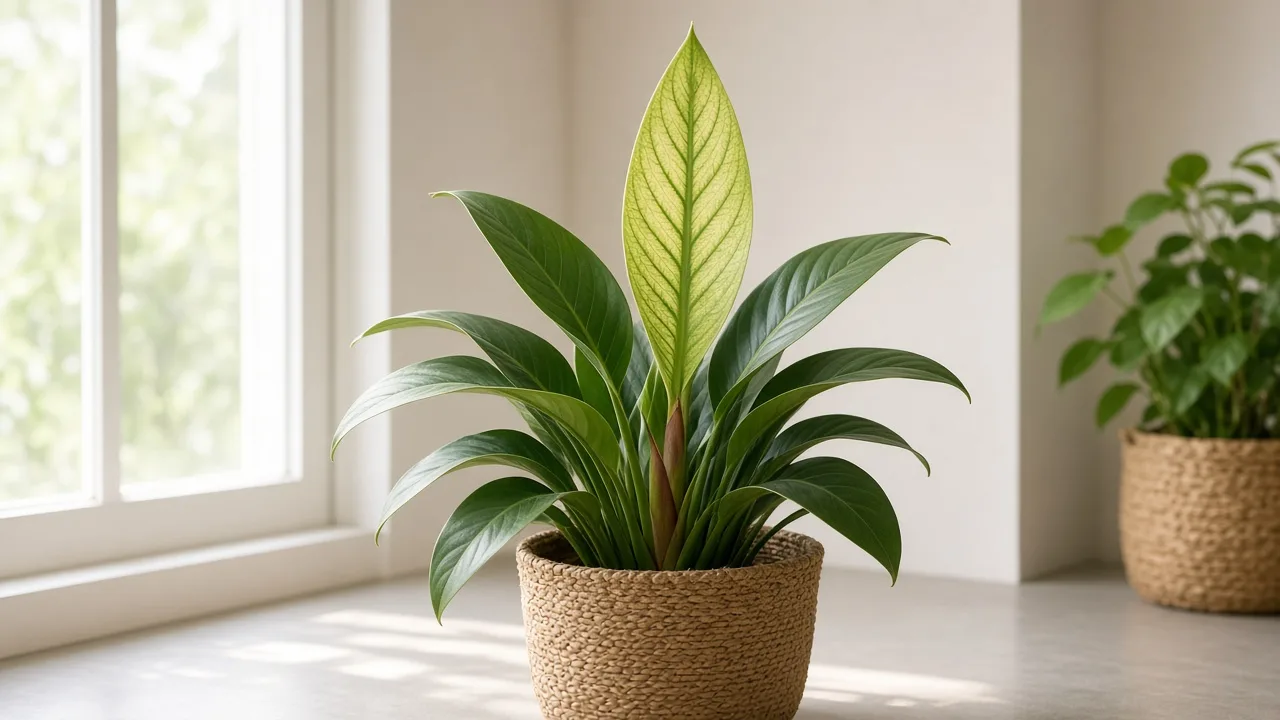
Iron Deficiency on Bird of Paradise: Causes, Checks & Fixes
This guide covers iron deficiency on Bird of Paradise. See also the general Iron Deficiency guide, watering, and light pages for this plant.
Iron Deficiency on Bird of Paradise: Causes, Checks & Fixes
Quick answer
Iron deficiency on Bird of Paradise (Strelitzia reginae) shows as pale or yellow new paddle-shaped leaves with darker green veins (interveinal chlorosis) on the newest leaf emerging from the central clump during active growth, while older lower paddles may stay deep green. Iron is immobile in plants, so chlorosis appears on young expanding tissue first—not on the lowest old leaves the way nitrogen deficiency does.
See our iron deficiency guide for general chlorosis mechanics. On Bird of Paradise, inspect the upright paddle still opening from the crown—veins stay green while tissue between them yellows on the newest blade above firm rhizome tissue.
First step: confirm new-growth interveinal chlorosis with green veins during active bright-season extension, then check whether alkaline tap water, waterlogged rhizome mix, or depleted fertile soil blocked iron uptake before applying chelated iron.
When to use this page vs other Bird of Paradise guides
| Pattern | Read next |
|---|---|
| New center paddle yellow with green veins | Iron deficiency (this page) |
| Lowest paddles pale uniformly; no vein pattern | Nitrogen deficiency |
| Whole plant washed-out in a dim corner | Pale leaves or not enough light |
| Interveinal yellowing on older mid-stem paddles | Magnesium deficiency |
| Yellow lower leaves, wet heavy pot, soft rhizome | Overwatering or root rot |
| General yellowing without clear vein pattern | Yellow leaves |
| Brown crispy tips in dry heated air | Brown tips or low humidity |
What iron deficiency looks like on Bird of Paradise
Healthy Strelitzia pushes large paddle-shaped leaves on thick petioles from a tight central clump when light and water match its tropical appetite. Iron stress breaks that pattern at the active crown flush, not across every paddle at once.
Typical signs:
- Pale or lime-yellow new paddles from the center with veins remaining darker green
- Successively paler new leaves from the same crown if untreated—two or three pale openers in a row during a summer growth spurt
- Older lower paddles may stay deep green while only the newest center leaf looks chlorotic
- Smaller or narrower new blades when chlorosis is severe on a plant pushing rapid extension in direct sun
- Firm rhizome at the soil line if roots are functional—soft spongy tissue on sour wet mix points to overwatering instead
Not iron deficiency:
- Uniform pale lowest paddles first — nitrogen deficiency
- Washed-out green across many leaves with long bare petioles — pale leaves or not enough light
- Interveinal yellowing on oldest mid-stem paddles — magnesium deficiency
- Limp paddles on a light dry pot — underwatering
- All leaves yellow on persistently wet soil — root rot overlap
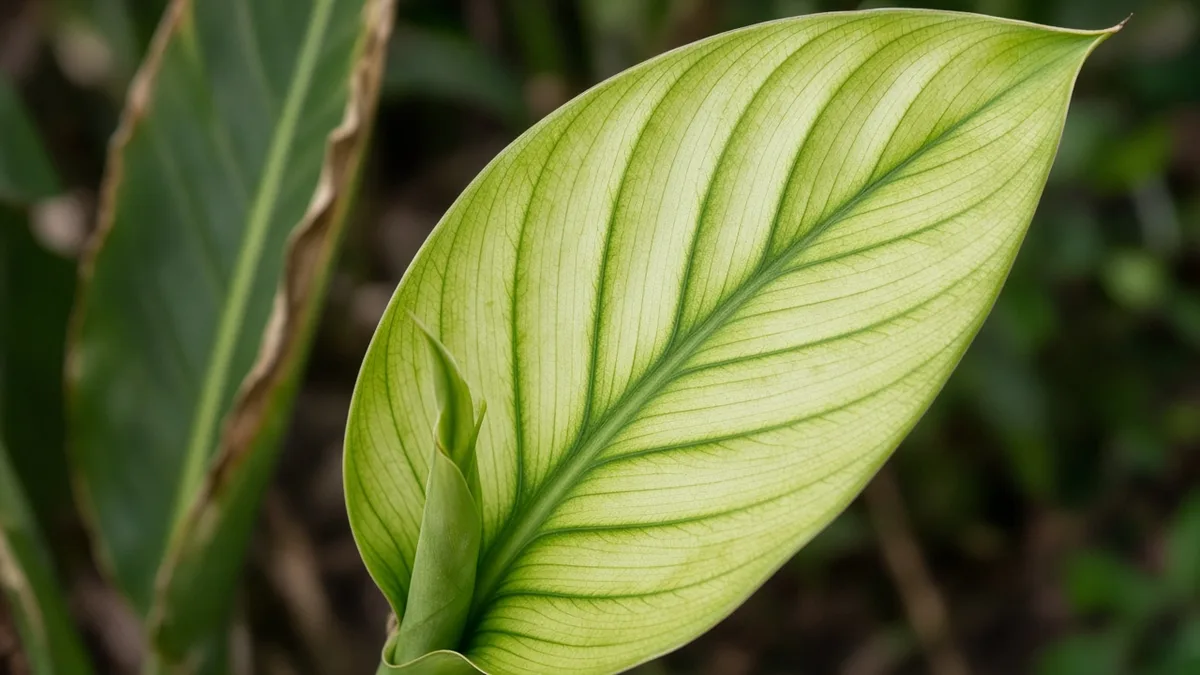
New paddle emerging from the Bird of Paradise crown: pale yellow-green tissue between dark green veins while older paddles lower on the clump stay normal—classic iron chlorosis on expanding tropical foliage.
The classic symptom of iron deficiency is interveinal chlorosis where leaf tissue yellows while veins stay green. RHS notes iron deficiency affects the youngest leaves first, unlike magnesium problems that tend to start on older foliage. Younger leaves of iron-deficient plants show the most intense chlorosis as they unfold—on a floor Strelitzia, that pattern is easiest to read on the single paddle still opening at the crown.
Why Bird of Paradise gets iron deficiency
Bird of Paradise is a clumping perennial with underground rhizomes that wants fertile, well-drained soil, generous water in growth season, and bright light including some direct sun. Iron chlorosis often results when roots cannot absorb iron even when it is present in fertilizer—high pH, waterlogged mix around the rhizome, salt crust, or exhausted potting soil block uptake while the crown still tries to push new paddles.
Bird of Paradise–specific causes:
- Alkaline or hard tap water in large floor pots — Repeated irrigation with high-pH water raises container pH over time and locks iron chemically; high pH makes iron unavailable to plants even when you feed occasionally. Strelitzia tolerates pH 6.0–7.5 in theory, but lime-heavy tap and chalky cachepots drift alkaline faster than small houseplants.
- Wet rhizome zone in oversized decorative pots — Symptoms can be made worse in heavy, poorly drained soils. A heavy pot that never lightens between drinks suffocates feeder roots even when the top 5 cm felt dry—chlorosis pairs with fungus gnats or lower-leaf yellowing from overwatering.
- Salt buildup from summer feeding and tap minerals — NC State recommends fertilizing regularly in spring and summer on actively growing Strelitzia; without occasional plain-water flushes, white crust on the pot rim injures roots and blocks micronutrients.
- Nitrogen-heavy feeding without micronutrients — Owners pushing large paddle growth with high-nitrogen formulas may skip chelated iron if labels lack complete micronutrients—see the Bird of Paradise fertilizer guide.
- Misread nitrogen deficiency — Old paddles yellow first with nitrogen; iron hits new crown paddles with green veins.
Do not diagnose iron deficiency on sour wet soil with a soft rhizome—that is root failure from chronic saturation until you unpot and see mostly firm cream-colored roots.
Central crown paddle flush: where Strelitzia shows iron first
Iron stress on Bird of Paradise concentrates on the single upright paddle still opening from the center of the clump—a pattern that would be nonsense on a trailing pothos node or a fern frond crown. Veins remain green while the expanding blade between them yellows before the paddle fully hardens off.
That crown-only chlorosis distinguishes iron from nitrogen, which starts on the lowest mature paddles on the outer ring. It also differs from normal juvenile color: a brand-new paddle is briefly lime green for a few days, then deepens. Worry when every new center paddle stays yellow-green with dark veins for weeks after hardening.
Because Strelitzia paddles are large and architectural, one chlorotic center leaf is visible from across the room—use that single blade as your diagnostic anchor before changing fertilizer, mix, or pot size.
Rhizome zone, floor pots, and the dry-down illusion
The active growing crown is where Strelitzia invests the most new tissue—and where iron demand peaks during summer direct-sun growth. Uptake fails when the rhizome and thick roots below sit in stagnant mix.
Oversized pot trap: Many Bird of Paradise specimens live in heavy 30–40 cm decorative containers with excess wet soil volume. The surface may pass the top 5 cm dry check from the watering guide while the rhizome core stays saturated—chlorosis at the crown with a never-lightening pot is often wet soil failure, not simple iron starvation.
Summer water + winter stall: RHS recommends plentiful water while keeping compost moist but not saturated in active growth, then allowing compost to get fairly dry between waterings when growth slows. Iron drenches on dormant winter roots rarely fix pale spring paddles if the real issue was autumn overwatering on a cold windowsill—cross-check light and seasonal feed pauses.
Depleted fertile mix: Strelitzia is described as wanting fertile loamy well-drained soil. After two or three years in the same organic-rich mix, iron and other micronutrients deplete even when nitrogen still greens older paddles—repot timing matters before stacking chelated iron on exhausted substrate.
How to confirm the cause
Work through this checklist before iron drenches, repotting, and fertilizer changes on the same week:
- New vs old paddle pattern — Chlorosis on newest center paddle with green veins; older lower paddles still green.
- Rhizome squeeze test — Firm rhizome at soil line supports micronutrient fixes; spongy tissue needs drainage first.
- Soil moisture at 5 cm depth — Wet days after watering on a heavy floor pot?
- Salt crust — White rim suggests flush before iron.
- Complete fertilizer history — Chlorosis despite feeding points to uptake block, not starvation.
- Magnesium cross-check — Yellowing on older mid-stem paddles with green veins lower down suggests magnesium deficiency instead.
- Light cross-check — Very dim rooms slow recovery even after iron; see not enough light if petioles stretch and paddles stay small.
If soil is wet throughout, the rhizome softens, and roots are mostly mushy, treat as confirmed overwatering or root rot overlapping with chlorosis—not a mild iron-only case.
First fix for Bird of Paradise
Let the top 5 cm of mix dry between drinks on a firm rhizome, then apply one chelated iron drench at label rate for houseplants only if roots are healthy and the plant is in active growth.
Applying a chelated iron product should correct iron chlorosis when uptake—not total starvation—is the issue. Do not iron-feed waterlogged roots on a heavy wet pot; excessively wet soils reduce iron availability. One corrected watering rhythm plus one iron application is the first fix—not repotting, division, and triple fertilizer the same day.
Step-by-step recovery
- Adjust watering for pot size and season per the watering guide; empty cachepot standing water after each drink.
- Flush soil if white salt crust rings the pot rim—leach salts before micronutrient drenches.
- Apply chelated iron once at label rate during spring or summer growth; repeat only per label if new center paddles still chlorotic after three weeks.
- Repot into fresh well-drained fertile mix if roots fill the pot and old mix has compacted—see soil for perlite-rich ratios.
- Use complete balanced fertilizer with micronutrients during active growth per the fertilizer guide—not nitrogen-only feeds.
- Monitor the next two center paddles for greener tissue between veins.
Do not foliar-spray iron on hot sunny windows when paddles are still soft from unfurling; foliar applications should not be made when the temperature is over 85°F because the chemical can burn foliage.
Recovery timeline
The paddle currently chlorotic rarely re-greens fully. The next one or two new center leaves after corrected care usually show improvement within three to five weeks. Severe root damage on a large floor specimen may take a full bright season before paddles regain normal size.
Judge recovery by unstreaked green between veins on new center paddles, not by old chlorotic blades darkening again. If three successive new center paddles stay pale despite healthy roots and one chelated iron cycle, reassess pH, compaction, and whether yellow leaves from multiple causes overlap.
Lookalike symptoms
| Pattern | Likely cause |
|---|---|
| New yellow center paddle, green veins | Iron deficiency (this page) |
| Old lower paddles pale first, small new leaves | Nitrogen deficiency |
| Older mid-stem paddles with interveinal yellow | Magnesium deficiency |
| All paddles yellow, wet heavy pot | Overwatering |
| Washed-out green, long bare petioles | Not enough light |
| Tip burn after heavy feeding | Flush salts; review fertilizer rate |
Mistakes to avoid
- Iron before drainage — Chelated iron on waterlogged rhizomes wastes product and delays the real fix.
- Nitrogen-only fertilizer — Large Strelitzia pushing summer paddles needs complete micronutrients during growth.
- Repot + iron + full-strength feed same week — Stack one change at a time on a stressed clump.
- Assuming lime-green new paddles are always iron — Normal juvenile color deepens within days; chlorosis persists with green veins.
- Feeding dormant winter plants — Roots absorb little iron when growth stalls; fix spring paddles in spring.
How to prevent it next time
- Feed with complete liquid or slow-release fertilizer including iron and other micronutrients during the RHS-recommended active growth window.
- Flush fertile mix occasionally with plain water during the feeding season to limit salt buildup from tap water and fertilizer.
- Match watering to dry-down at 5 cm depth; never leave rhizomes in stagnant saucer water.
- Use lower-alkalinity water when hard tap repeatedly crusts the pot rim.
- Repot when roots exhaust depleted mix in oversized decorative pots—see repotting for division timing.
- Keep bright light realistic; iron fixes fail in dim corners even with perfect drenches.
Related Bird of Paradise guides
- Overview
- Problems hub
- Watering
- Soil
- Light
- Fertilizer
- Nitrogen deficiency
- Magnesium deficiency
- Pale leaves
- Overwatering
Scope note: Use this page when new center paddles show green-vein yellowing during active bright-season growth. Use pale leaves for whole-plant wash-out in weak light, nitrogen deficiency when oldest lower paddles pale first, and overwatering when the rhizome softens on wet mix—regardless of leaf color.