Pale Leaves on Bird of Paradise: Light, Soil & Nutrient
Quick answer
Pale leaves on Bird of Paradise look washed-out or yellow-green instead of the stiff gray-green paddles healthy clumps show. First step: compare the newest unfurling spear with a mature fan on the same plant, then check whether direct sun hits the blades and whether the top 2 inches of mix are wet or dry.
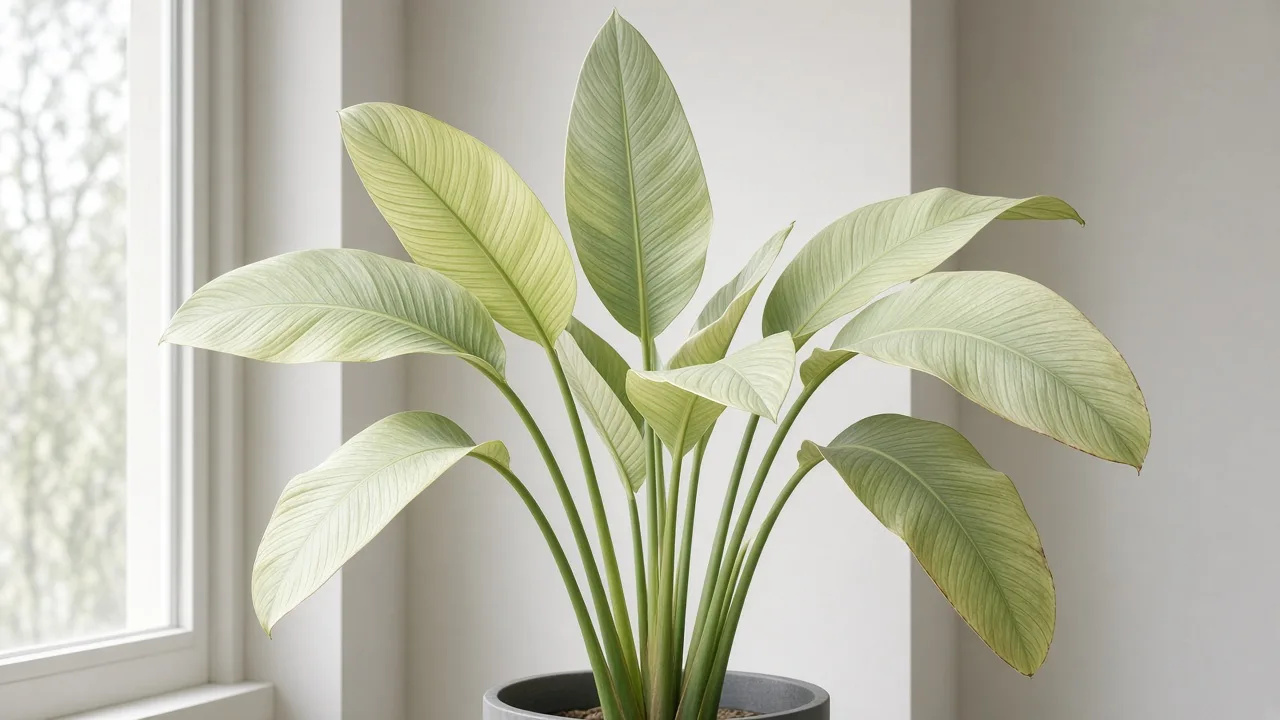
Pale Leaves on Bird of Paradise: Causes, Checks & Fixes
This guide covers pale leaves on Bird of Paradise. See also the general Pale Leaves guide, watering, and light pages for this plant.
Pale Leaves on Bird of Paradise: Causes, Checks & Fixes
Quick answer
Pale leaves on Bird of Paradise (Strelitzia reginae or S. nicolai) lose the deep gray-green colour healthy fans show on stiff, leathery paddle blades. Instead, foliage looks washed-out, lime-green, or thin yellow-green across one or more fans on long petioles. The clump may still stand upright, but new leaf spears emerge smaller and paler than mature growth from brighter months.
First step: compare the newest spear unfurling from the center with a mature paddle on the same plant, then check direct sun on the blades and moisture in the top 2 inches of mix. Uniform pale new growth in a dim corner points to light before fertilizer. Older outer fans fading evenly while the center still pushes small pale spears suggests nitrogen loss or exhausted soil. Green veins on pale new blades with firm roots often means iron lockout—not more general feed.
For how chlorosis works on houseplants in general, see our pale leaves hub. On bird of paradise, pale wash almost always ties to insufficient direct sun, the light–watering trap, nutrient loss in large pots, or spider mite stippling on tender new paddles—not a one-size-fits-all “feed it” fix.
When to use this page vs other Bird of Paradise guides
- Not enough light — long petioles, lean toward windows, uniformly pale new spears
- Yellow leaves — clear yellowing, often with wet soil, drought curl, or aging outer fans
- Leggy growth — tall sparse clump with small pale paddles far from the window
- Nitrogen deficiency — oldest outer paddles fade first while the clump looks thin
- Iron deficiency — newest spears pale between dark green veins
- Magnesium deficiency — marbled or banded pale areas between veins on mature blades
- Overwatering — heavy pot, pale wash before limp yellow fans and soft rhizome
- Spider mites — dull pale stippling and fine webbing on leaf undersides
- Light guide — how much direct sun this species needs after you diagnose
What pale leaves look like on Bird of Paradise
Healthy Strelitzia paddles are stiff, concave, grayish- or bluish-green with a pale midrib—Wisconsin Horticulture describes that leathery fan architecture on clumping plants with fleshy rhizomes. Pale leaves break that colour depth in recognizable patterns:
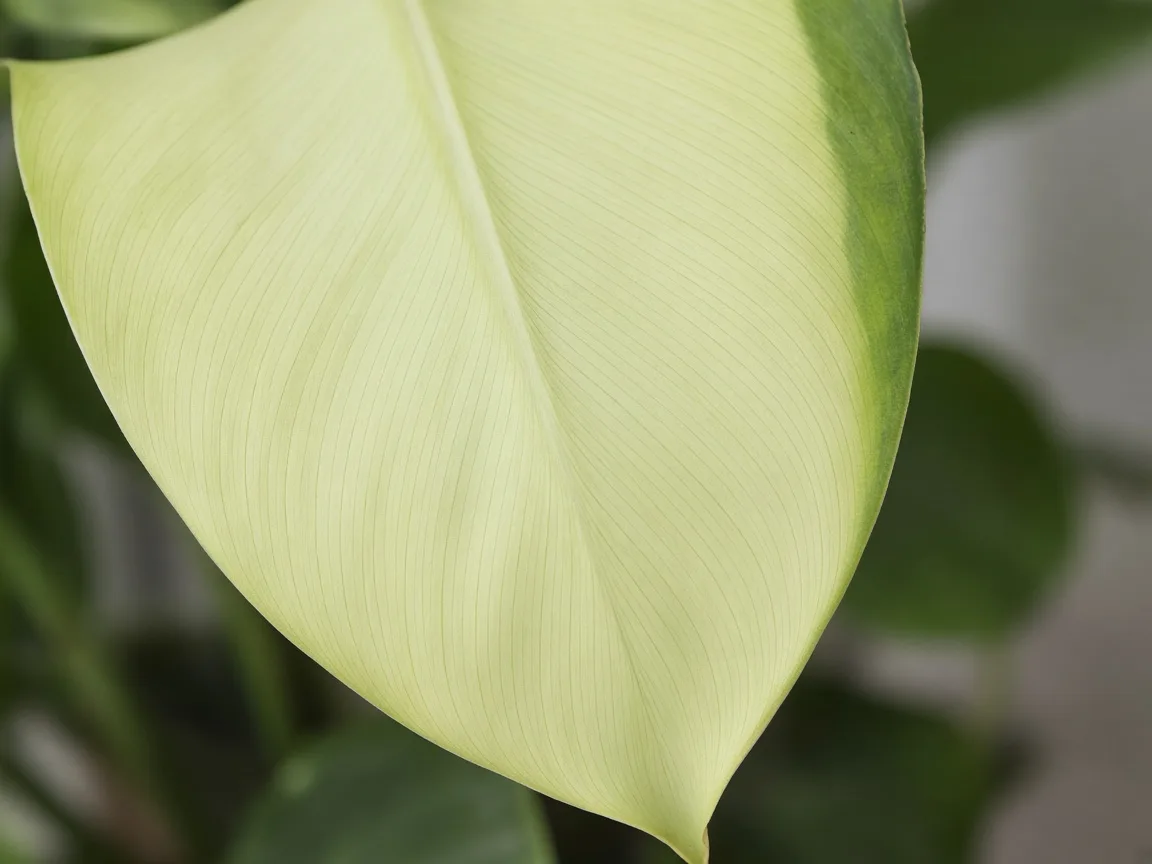
Washed-out yellow-green paddle tissue beside deeper gray-green on the same fan—compare blade colour on new and mature leaves before you change watering or feed.
Low-light paleness (most common indoors):
- Most fans show a uniform yellow-green or gray-green wash, not crisp brown scorch
- New spears emerge lighter and smaller than paddles from last summer outdoors
- Petioles stretch and the clump leans toward the brightest window
- Mix stays damp 10+ days in warm weather because photosynthesis and transpiration are too slow
Light–watering trap paleness:
- Same washed-out look as low light, but soil is wet at depth while you followed a “reasonable” schedule
- Outer fans may feel limp before they turn fully yellow—see overwatering
- Often paired with fungus gnats or a sour smell when roots lose oxygen in stale mix
Nitrogen paleness:
- Older outer paddles fade evenly toward lime-green while newer growth stays small
- Whole clump looks thin despite years in the same large pot
- Mobile nutrients such as nitrogen show on lower, older leaves first on many plants—including houseplant fans
Iron paleness:
- Newest spear blades turn pale yellow-green between dark green veins
- Older fans may still look relatively deep green
- Common after alkaline tap water, cold wet roots, or repotting into high-pH mix—see iron deficiency
Spider mite paleness:
- Patchy dull or silvery stippling on paddles, often starting on the newest unfurling spear
- NC State lists spider mites among pests to monitor on Strelitzia
- Fine webbing on undersides; dust-like specks when you wipe the blade
Sun shock bleaching (not low light):
- Pale or bleached patches on the window-facing side within days of a sudden move into harsh midday sun
- Distinct from slow months of fade—follows a placement change, not chronic dim conditions
- Acclimate gradually when moving indoors plants to stronger outdoor sun
Fan spears and paddle blades: where to look first
Bird of paradise is a slow-growing, clump-forming perennial—new leaf spears emerge from the center of the flattened fan, while the outermost paddles are oldest. That geometry matters for pale leaves.
- Center spears tell you about current light, water, and nutrients hitting active growth
- One fading outer paddle over months with firm green inner fans is often normal senescence, not a crisis—pale wash on a single old fan is lower urgency than pale on every fan
- Multiple fans paling together within weeks means environment or roots are failing now
Strelitzia reginae typically reaches 3–4 feet indoors; S. nicolai grows taller with larger paddles and higher water demand—but the spear-vs-outer-fan comparison works for both.
Why Bird of Paradise gets pale leaves
Insufficient direct sun
This species is built for full sun—NC State lists six or more hours of direct sunlight daily as the preferred condition. In a north room or six feet from glass, large paddles cannot maintain chlorophyll. Leaves shift from gray-green to washed-out yellow-green over weeks. Growth slows; spears stay small.
Wisconsin Horticulture notes that insufficient light is one of the most common reasons mature Strelitzia fail to thrive indoors and recommends as much winter light as possible. Pale foliage is often the first visible sign before full yellowing—see not enough light when petioles lean and pots stay wet.
The light–watering trap
Low light slows water use. The same watering rhythm that worked in a south window keeps mix wet too long in a dim corner. Roots lose oxygen; chronic wet mix damages fine roots and can show as chlorosis on lower leaves, and excess moisture in soil reduces oxygen available to roots before blades turn fully yellow. The plant looks pale and “overwatered” even though you did not change the calendar—fix light and dry-down timing together via watering and light.
Nutrient depletion in large pots
Bird of paradise is a heavy feeder in active growth when light is adequate. Years in the same fertile mix without repotting or feed can leave older paddles pale and new spears stunted. Match any feed to fertilizer guidance—never feed a plant in soggy soil.
Iron and magnesium lockout
High-pH or cold, wet root zones limit micronutrient uptake. New spears show interveinal pale patterns—route to iron deficiency or magnesium deficiency rather than blasting nitrogen.
Pests and dust
Spider mites dull paddle surfaces; broad indoor leaves also collect dust that blocks light. A pale clump near a heating vent may also reflect low humidity stress on leaf edges, though full wash is still usually light or roots.
How to confirm the cause
Work in this order so you do not treat the wrong problem:
- Spear comparison — Is the newest unfurling paddle paler than a mature fan on the same plant? Uniform pale new growth → light first.
- Sun check at midday — Hold your hand at blade height. A sharp shadow means direct sun is reaching the plant; a fuzzy gray shadow means “bright room” is not enough for long-term colour.
- Soil moisture — Finger into the top 2 inches near the pot edge. Wet and heavy for days → pause watering and improve light/drainage before feed. Dusty dry → pale may be drought stress—see underwatering.
- Vein pattern — Pale between green veins on new spears only → iron; even fade on oldest outer fans → nitrogen.
- Undersides — Stippling, webbing, or moving specks → mites before you assume nutrients.
- Rhizome firmness — Soft base with wet soil → escalate toward root rot.
The first fix to try
Compare center spear colour to a mature paddle, then move the pot so direct sun falls on the blades for several hours daily (or add a grow light)—without repotting or fertilizing on the same day.
If the plant lived in deep shade for months, acclimate over 7–14 days—do not jump straight into unfiltered midsummer south glass. If soil is wet and heavy, skip the next scheduled watering until the top 2 inches dry while you improve light. That single pairing—brighter direct sun + honest dry-down—fixes more indoor pale bird of paradise than fertilizer ever will.
Only after light and moisture look sane should you branch to cause-specific steps below.
Step-by-step recovery by cause
Low light / light–watering trap: Move within one to two feet of your brightest south or west window, or use a grow light for 12–14 hours. Water when the top 2 inches dry—not on a fixed calendar. Wipe paddles monthly. Expect greener new spears in 3–6 weeks; old pale blades may never deepen.
Overwatering / root stress: Stop watering until the top half of the mix dries in a bright spot. Confirm drainage holes and empty saucers. If fans stay limp and soil smells sour, inspect roots—root rot rescue is separate from simple pale wash.
Nitrogen loss: After one dry-down cycle in adequate light, one half-strength balanced feed in spring or summer, then watch the next spear size and colour. Repeat monthly at most during active growth—see nitrogen deficiency.
Iron lockout: Address water quality and root warmth; chelated iron only when the interveinal pattern is clear on new spears.
Spider mites: Rinse undersides, isolate, and treat per the spider mites guide—pale stippling spreads fast on large tender spears.
Recovery timeline
Judge progress by new spears, not old paddle colour.
- Light correction: Deeper green, stiffer new paddles within 3–6 weeks; chronically dim plants may need a full growing season
- Watering correction: Firmer fans and greener unfurling spears within 2–4 weeks after soil rhythm stabilizes
- Nitrogen: improved spear size over 3–6 weeks after appropriate feed in good light
- Iron: new spears can green within 4–8 weeks once uptake improves
- Mites: clean new tissue in 2–3 weeks after control; stippled areas stay dull
Fully pale paddle tissue does not re-green. Remove spent outer fans once mostly faded to reduce pest hiding spots.
Lookalike symptoms
| What you see | Likely cause | First move |
|---|---|---|
| Uniform pale yellow-green on most fans, lean toward window | Low light | Direct sun or grow light; dry-down watering |
| Pale fans, wet heavy pot, limp petioles | Light–watering / root stress | Stop watering; brighten; check roots if sour |
| Oldest outer paddles pale, thin clump | Nitrogen / exhausted soil | Light OK first, then measured feed |
| New spears pale between green veins | Iron lockout | Water quality; chelated iron if pattern holds |
| Silvery stippling, webs underneath | Spider mites | Rinse; isolate; treat |
| Bleach patches after sudden sun move | Sun shock | Filter light; re-acclimate |
| One outer paddle slowly paling | Normal aging | Trim when mostly spent |
What not to do
- Do not fertilize pale bird of paradise in wet, heavy soil—salts stress roots that already lack oxygen
- Do not assume “indirect bright” is enough—this is a full-sun species indoors for long-term paddle colour
- Do not increase watering because leaves look faded—limp pale fans with wet mix often mean damaged roots, not thirst
- Do not move a shade-grown clump into harsh unfiltered midsummer sun in one day
- Do not repot and feed and prune the same week on a stressed clump—change one variable, then watch the next spear
How to prevent pale leaves next time
- Place the plant where direct sun hits paddles for several hours daily, or supplement with a grow light—full sun is the preferred cultural condition
- Water when the top 2 inches of mix dry; use well-draining soil and pots with drainage
- Fertilize lightly in spring and summer only when light is adequate and soil is not waterlogged
- Wipe dust from broad blades monthly; inspect new spears for mites
- In winter, water less when growth slows—keep Strelitzia drier in winter after active-season watering
When to worry
Treat pale foliage as urgent if:
- Several fans pale within two weeks with wet, sour soil or soft rhizome tissue
- Newest center spears stay pale and stall while older fans collapse
- Pale wash spreads inward with fungus gnats and no improvement after light and dry-down fixes
Lower urgency: one outer paddle slowly losing colour over months with firm green inner spears—that is routine turnover on a healthy clump. Full species context: Bird of Paradise overview and the problems hub.
Related Bird of Paradise guides
- Overview — clumping growth and indoor expectations
- Problems hub — full symptom index
- Watering — top 2-inch dry-down rhythm
- Light — direct sun indoors
- Fertilizer — when to feed heavy paddles
Related tool
Use the Plant Problem Diagnosis Tool to narrow causes for pale leaves on this plant before changing multiple variables at once.