Holes in Leaves on Bird's Nest Fern: Causes, Checks & Fixes
Quick answer
Holes in Bird's Nest Fern strap fronds are chew or tear damage—fern caterpillars, slugs, thrips, leaf miners, or fragile-frond snags—not crown rot or a nutrient mystery. First step: inspect the central unfurling crozier and outer frond undersides at dusk with a flashlight before spraying.
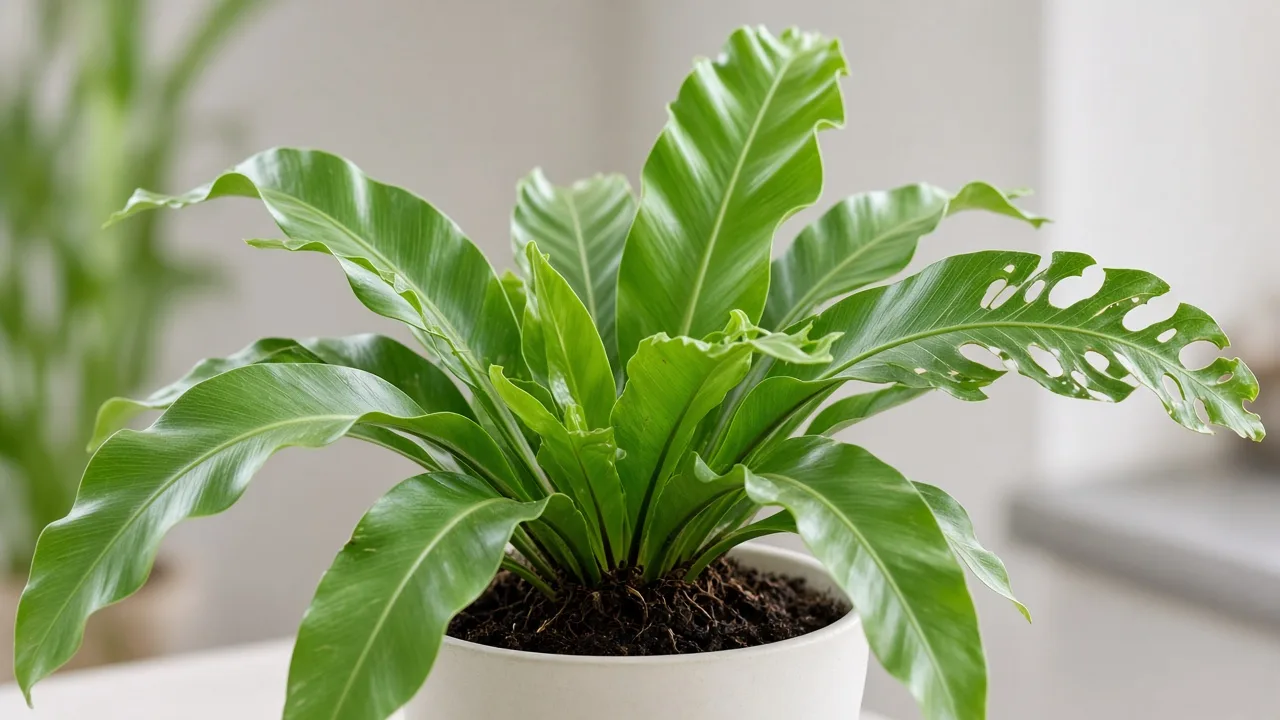
Holes in Leaves on Bird's Nest Fern: Causes, Checks & Fixes
This guide covers holes in leaves on Bird's Nest Fern. See also the general Holes in Leaves guide, watering, and light pages for this plant.
Holes in Leaves on Bird's Nest Fern: Causes, Checks & Fixes
Quick answer
Holes in Bird’s Nest Fern (Asplenium nidus) almost always mean tissue was removed or torn—fern caterpillars, slugs, thrips rasping, leaf miners, or mechanical breaks on fragile strap fronds—not a generic “stress” pattern or crown rot. For how chewing pests and mechanical tears work in general, see our holes in leaves guide. On this rosette fern, the decisive clue is usually on the central unfurling crozier and the undersides of the broadest outer fronds, not on lower old blades alone.
First step: inspect the nest center and frond undersides at dusk with a flashlight—before you change watering, fertilizer, or reach for oil sprays.
Indoor bird’s nest ferns more often show scale, mealybugs, and humidity stress than chronic hole damage, so new holes usually trace to nursery hitchhikers, patio time, open windows, or rough handling—not months of silent indoor feeding.
When to use this page vs other Bird’s Nest Fern guides
| Pattern | Read next |
|---|---|
| Ragged chew + pellet frass + larvae | Caterpillars |
| Pale winding trails inside the blade when backlit | Leaf miners |
| Silvery streaks, black specks, stippling without full holes | Thrips |
| Sticky honeydew on new growth | Aphids |
| Round black spots with yellow halos, not chew | Black spots |
| Fine webbing and stippling on undersides | Spider mites |
| One clean tear after moving pot or misting | This page (mechanical section) |
| Soft mushy crown, sour soil, wilt without frass | Overwatering or root rot |
What holes look like on Bird’s Nest Fern
Healthy bird’s nest ferns form a central rosette “nest” of undivided, wavy strap fronds—unlike feathery Boston or maidenhair ferns. Hole problems break that sculptural look in predictable ways when you know which tissue was damaged.
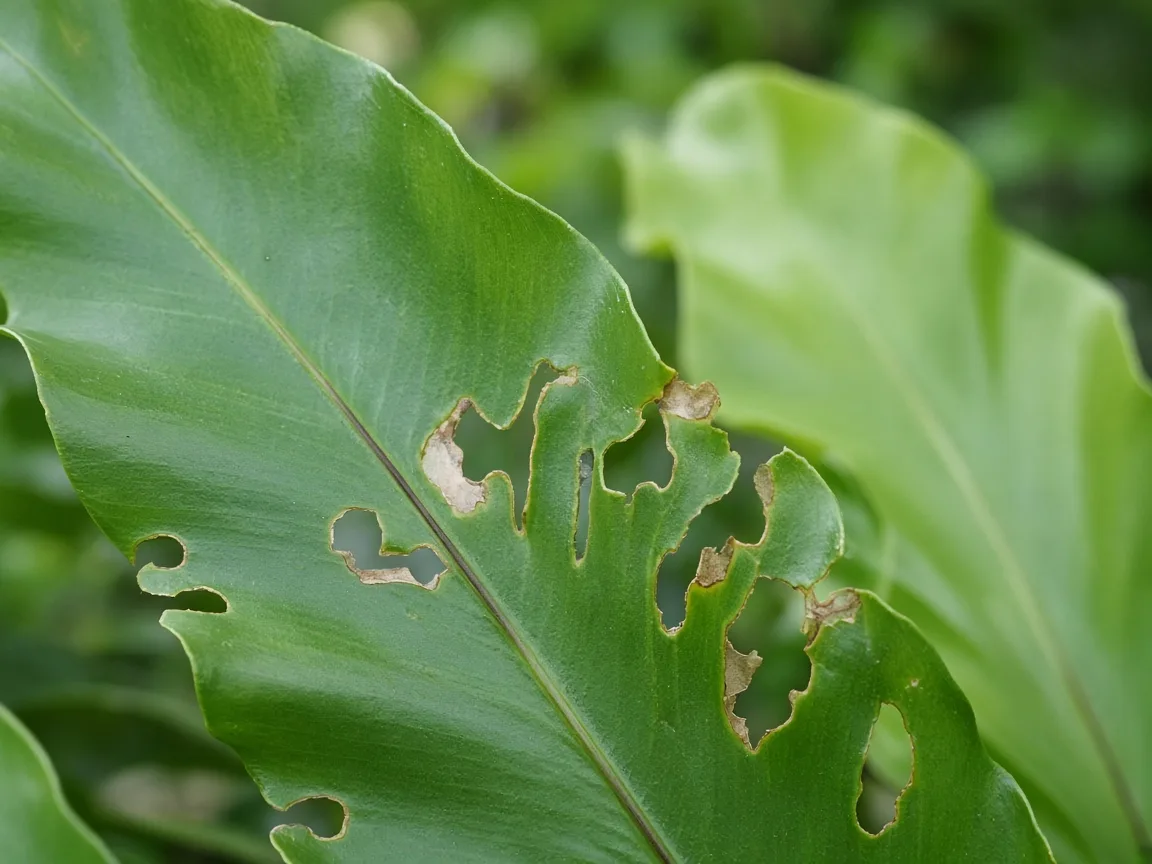
Irregular ragged holes through one wavy Asplenium frond—compare with an intact neighbor blade on the same rosette before you spray.
| Cause | Hole pattern on strap fronds | Extra signs | First fix on Bird’s Nest Fern |
|---|---|---|---|
| Fern caterpillars | Large irregular holes and notched margins | Pellet frass on fronds or pot rim; larvae at dusk | Hand-pick from nest—see caterpillars |
| Slugs and snails | Irregular edge tears, often overnight | Silvery slime on pot rim or frond base; listed pests on Asplenium | Handpick after dark on floor-level or patio pots |
| Thrips | Pale rasped patches that tear into small holes | Silvery scars, black specks; no frass pellets | Rinse undersides; route to thrips |
| Leaf miners | No open holes—tunnels inside when backlit | Serpentine trails between frond surfaces | Leaf miners guide |
| Mechanical snag | One-time clean tear on one frond | No spread, no frass; after moving or misting | Relieve pressure; no pesticide |
| Pet or child chew | Crushed or torn mid-frond | Tooth marks, scattered soil; plant is non-toxic but not edible | Move plant; repair is cosmetic |
Nest-center crozier vs outer frond holes (Bird’s Nest Fern only)
Asplenium nidus pushes all new growth from the central nest. That geometry changes where holes matter:
- Chew on the unfurling crozier stops the next sculptural frond before it opens—treat as urgent and inspect at night for fern caterpillars hiding in the crown or on the soil surface.
- Holes only on older outer strap fronds while the center stays clean often means past feeding or one mechanical tear—mark the newest holed blade and watch for five days before spraying.
- Mushy brown tissue in the nest center without ragged chew is crown rot from water poured into the rosette—not a leaf chewer. Do not confuse it with holes.
Match height on the rosette before you drench the soil for a foliage pest.
Backlight test on undivided strap fronds (Bird’s Nest Fern only)
Bird’s nest fronds are single broad blades, not divided leaflets—so a quick backlight separates miners from chewers faster than on lacy ferns:
- Open holes with torn edges visible from both upper and lower surfaces mean caterpillars, slugs, thrips, or mechanical damage—stay on this page or open caterpillars.
- Pale winding trails with intact outer skin and no full-thickness bite mean leaf miners—surface sprays will not reach larvae inside tissue.
- Silvery rasping without pellet frass points to thrips or spider mites before you assume a chewing insect.
Hold the frond toward a window or phone light—the leathery blade is thick enough to show internal tunnels clearly.
Fragile fronds, misting, and handling tears (Bird’s Nest Fern only)
NC State notes fragile foliage that should be handled gently and warns against harsh chemical insecticides on this fern. Mechanical holes appear when:
- A fresh wavy frond catches on a cachepot rim, tag, or neighboring plant while you rotate the pot
- Heavy misting or pet brushing snaps the broad blade along a crease, leaving one clean hole with no frass line
- Repotting wedges an outer frond against the pot lip until it tears—common right after repotting if the rosette is crowded
Mechanical damage does not spread to the next frond over a week. If new holes keep opening on the softest emerging crozier without you touching the plant, return to pest inspection—not trellis-style adjustments (this fern does not climb).
Why Bird’s Nest Fern gets holes in leaves
Soft croziers in a humid rosette. When light and warmth are good, the nest pushes tender strap fronds from the center. Night feeders target that soft tissue—one warm week can notch every emerging blade while lower fronds look untouched.
Nursery and patio hitchhikers. Pests arrive on purchased or outdoor plants and keep feeding indoors where predators are absent—typical after patio summering or mixing a new fern into a collection.
Fern caterpillars on commercial ferns. Greenhouse fern crops—including bird’s nest types in mixed fern displays—see foliage-feeding caterpillars that hide by day. Eggs laid on undersides can hatch weeks after purchase; warm rooms speed development.
Slugs at the humid soil line. Slugs and snails are listed pests on Asplenium nidus. They are rare on high shelves but common on floor pots, bathroom ledges, and plants brought in from damp patios.
What usually does not cause holes. Scale and mealybugs cause yellowing and honeydew, not punched-out strap tissue. Brown tips and low humidity crisp edges without ragged through-holes. Overfertilizing deforms fronds with burnt margins—see fertilizer—rather than insect-style chew.
How to confirm the cause
Work through these checks in order:
- Backlight one damaged strap frond — Open hole vs internal tunnel (leaf miners) vs silvery thrips scarring.
- Nest center first — Inspect the unfurling crozier and soil surface where caterpillars hide by day.
- Frass vs slime vs specks — Pellets suggest caterpillars; slime at night suggests slugs; silvery scars suggest thrips.
- Night pass — Inspect at night with a flashlight when chew marks are fresh but no larva showed in daylight.
- History — Note outdoor time, new purchases, open windows, recent misting, or watering changes poured into the crown.
- Sap-feeder cross-check — Wax bumps or sticky residue without chew points to scale insects or mealybugs, not foliage holes.
- Spread test — Mark one holed frond with a string tag; if new holes appear on the central crozier within five days, active feeding continues.
First fix for Bird’s Nest Fern
Classify the hole pattern on the highest-priority frond—the central crozier if damaged, otherwise the newest holed outer strap—before any spray or fertilizer. Write one label: caterpillar chew, internal tunnels, slug tear, thrips rasp, mechanical tear, or unclear.
If you labeled caterpillar chew (ragged holes plus frass), your next action is hand-pick larvae at dusk from the nest and pot rim—full steps live on caterpillars on Bird’s Nest Fern. If you labeled internal tunnels, switch to leaf miners. If you labeled mechanical tear on a single frond with no spread, stop misting into the crown and give the rosette clearance from pot edges.
Do not fertilize, repot, and spray on the same day while the cause is still unknown.
Step-by-step recovery by cause
Fern caterpillar chew (ragged holes + frass)
Follow caterpillars on Bird’s Nest Fern: isolate from other ferns, hand-pick at dusk, then Bt only if new holes continue. Avoid heavy horticultural oils on day one—fragile fronds burn easily.
Slugs and snails on humid pots
Handpick after dark, dry the pot rim, and lift the pot to check the saucer. Outdoor summer specimens need a separate quarantine before joining indoor collections.
Thrips rasping that opens small holes
Rinse frond undersides with plain water and route to thrips if silvery scars and black specks accompany tears. Thrips rarely leave pellet frass like caterpillars.
Leaf miners inside strap blades
Remove the worst mined fronds at the base once you confirm tunnels—do not pull living croziers. Miner sprays are a secondary step on the dedicated leaf miners page.
Mechanical handling tears
Rotate the pot for clearance, pad sharp cachepot edges, and remove only the torn blade if it blocks new growth. No pesticide is needed when spread stops.
Recovery timeline
Judge progress by clean unfurling croziers and frass-free fronds, not by old holey blades at the rosette skirt.
- Within one week: Correct identification should stop new holes on the marked frond if you removed larvae or relieved a snag
- Three to six weeks: Expect a full new strap frond when watering and light stay steady—bird’s nest ferns grow slowly
- Chewed mature fronds: Permanent cosmetic holes—trim only after the nest pushes enough clean tissue above the damage
Whole-rosette collapse with soft crown and sour mix is not a holes-in-leaves recovery path—inspect root rot first.
Lookalike symptoms
| What you see | Likely cause | Page |
|---|---|---|
| Internal tunnels when backlit | Leaf miners | Leaf miners |
| Pellet frass + larvae | Caterpillars | Caterpillars |
| Round black spots with halos | Fungal leaf spot | Black spots |
| Crispy brown edges, no through-holes | Dry air or salts | Brown tips or low humidity |
| Pale washed-out fronds | Too much sun or nutrients | Pale leaves or not enough light |
Mistakes to avoid
- Pouring pesticides or fertilizer into the nest center — Water and treatments belong at the soil edge; crown pooling worsens overwatering damage
- Treating leaf miners like chewers — Open-hole sprays do not reach larvae inside serpentine tunnels
- Heavy oil sprays on fragile fronds — NC State cautions against harsh chemicals on this species; confirm pests first
- Fertilizing first — Nutrients do not close holes; confirm pests or mechanical cause before feeding
- Ignoring one mechanical tear — A single snag is harmless; spreading crozier damage is not
How to prevent holes next time
- Quarantine new ferns two to three weeks before mixing them with established plants
- Scout the nest weekly during warm humid growth—croziers soft-open quickly under good soil moisture
- Screen open windows at night in warm months when moths are active
- Water around the pot edge, never into the central rosette, per your watering rhythm
- Handle wavy fronds gently when misting or moving; this epiphytic rosette does not tolerate rough brushing
- Rinse outer fronds after patio season before bringing plants indoors
Related Bird’s Nest Fern guides
Use this page when you see open holes or notches through strap fronds and need to separate chew, miners, slugs, thrips, and handling tears before treatment. Open caterpillars when frass and larvae confirm chewers; leaf miners for internal tunnels; thrips for silvery rasping. For culture that keeps the rosette resilient, start with the Bird’s Nest Fern overview and problems hub.
Related tool
Use the Plant Problem Diagnosis Tool to narrow causes for holes in leaves on this plant before changing multiple variables at once.