Whiteflies on Bougainvillea: Bract & Underside Checks
Quick answer
Whiteflies on Bougainvillea lift in a white cloud from the undersides of true green leaves and soft bract stalks when you disturb the vine—often with sticky honeydew on bracts or patio tiles below. First step: move the plant away from neighbors and wash every reachable leaf underside and bract joint with a strong water stream before adding traps or sprays.
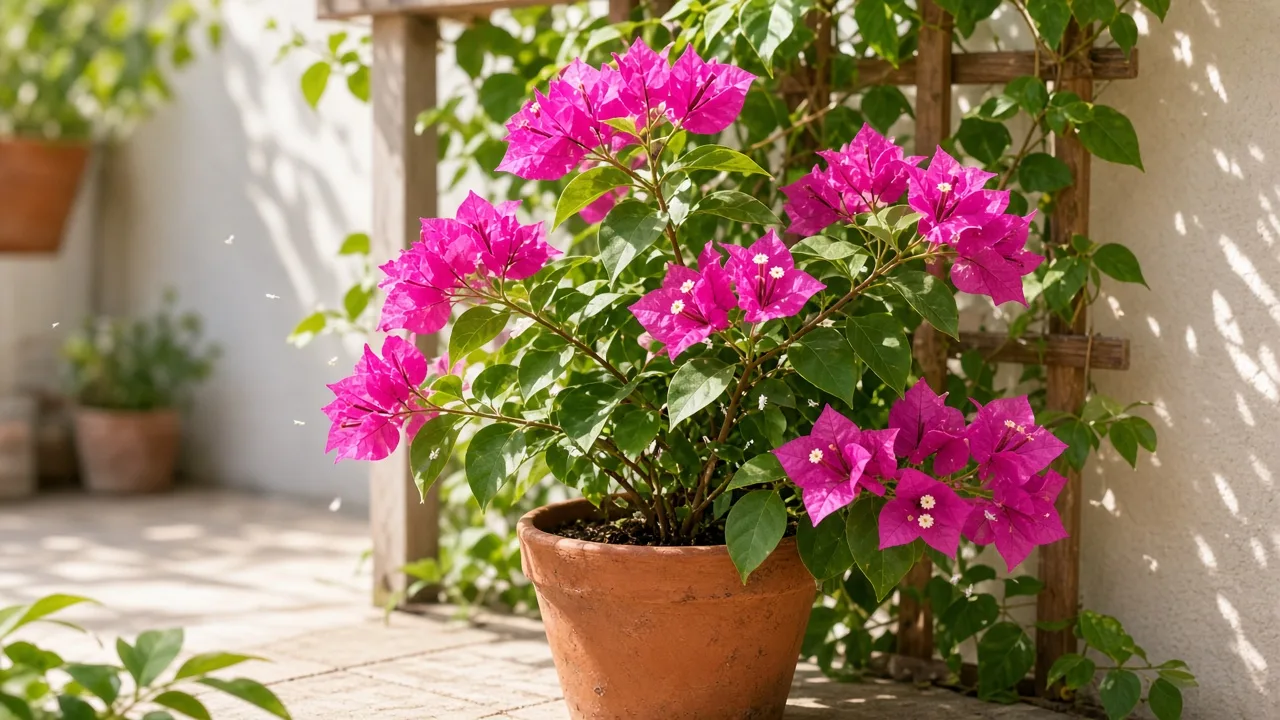
Whiteflies on Bougainvillea: Causes, Checks & Fixes
This guide covers whiteflies on Bougainvillea. See also the general Whiteflies guide, watering, and light pages for this plant.
Whiteflies on Bougainvillea: Causes, Checks & Fixes
Quick answer
Whiteflies are tiny, sap-sucking insects that fly around plants when disturbed. On Bougainvillea (Bougainvillea spp.), adults look like miniature white moths resting on the undersides of true green leaves and on soft tissue behind the papery colored bracts. Brush a cane and a white cloud rises before insects resettle in thorny axils. Immobile nymphs look like flat pale disks glued to the same surfaces; nymphs cause most feeding damage even though flying adults get your attention.
For general whitefly biology, honeydew, and why ants complicate control, see our whiteflies pest guide. On bougainvillea, the practical pattern is clouds from interior leaf undersides on a scrambling vine, sticky honeydew dulling bract color, and nymph disks hiding behind bract clusters you admire from the front.
First step: move the plant away from neighbors and wash every reachable leaf underside and bract joint with a strong water stream.
When to use this page vs other Bougainvillea guides
This page is the pest-first entry when tiny white insects fly from leaves or bract stalks.
| Pattern | Read next |
|---|---|
| Soft pear-shaped insects on new cane tips, no flying cloud | Aphids |
| White cottony tufts in thorny leaf axils | Mealybugs |
| Hard brown bumps on woody canes | Scale insects |
| Fine stippling and webbing in dry indoor air | Spider mites |
| Black coating that wipes off with sticky residue | Black spots (sooty mold from honeydew) |
| Yellow leaves with wet heavy soil, no insects | Overwatering or yellow leaves |
What whiteflies look like on Bougainvillea
Most people notice bougainvillea for its bracts—the long-lasting papery “flowers.” Whiteflies feed on the small true green leaves and soft bract stalks, not on the showy bract faces. That mismatch is why infestations hide until you walk past and trigger a cloud.
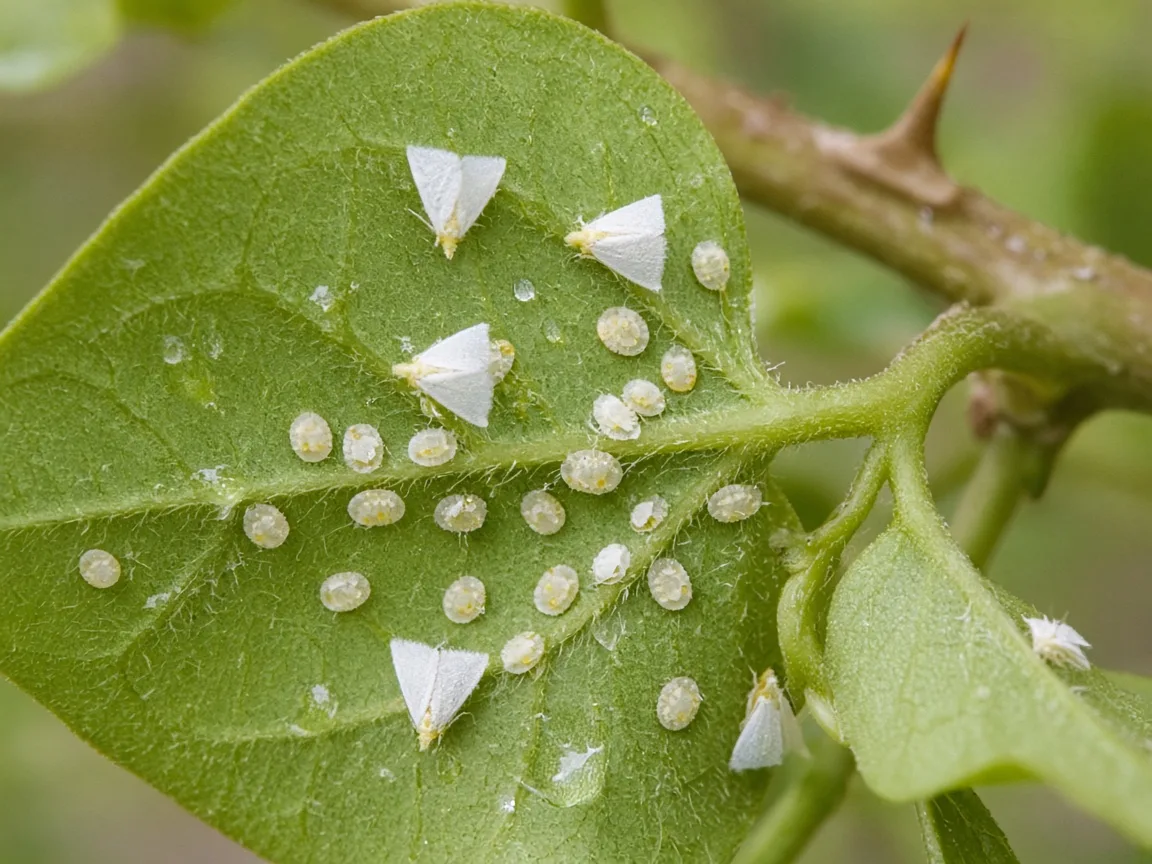
Tiny white adults and flat pale nymph disks on a leaf underside—easy to miss if you only admire bracts from the front.
Typical signs:
- A sudden white cloud when you water, move the pot, or brush thorny stems
- Tiny moth-like adults, about 1/16 inch long, resting on leaf undersides and bract joints
- Flat, oval, pale nymph disks glued to the same surfaces after crawlers settle
- Sticky, shiny honeydew on bracts, true leaves, pot rims, or patio tiles below a wall-trained vine
- Black sooty mold on honeydew-coated bracts and leaves, dulling color before peak display
- Yellowing, silvering, or leaf drop when nymph populations are heavy—while woody lower canes may still feel firm
Bougainvillea’s climbing habit and thorns mean damage concentrates on interior leaves trapped between scrambling stems. Outdoor vines in full sun per the light guide may carry small colonies without ruining a bloom flush; sheltered balcony pots and vines moved indoors for frost protection face fewer natural enemies and can build to bract-damaging levels before you spot them.
The white-paper cloud test on thorny canes
Wear gloves and use this check on bougainvillea because the useful tissue sits where thorns and bracts block your view:
- Hold white paper under a leafy cane section—not only under bracts.
- Tap the stem once with a gloved hand or a stick.
- Adults fly up, drift, and resettle on undersides or bract stalks.
- Look at the paper for tiny white specks that walked before you disturbed them again.
No cloud plus no nymph disks points to lookalikes in the table below—not whiteflies.
Honeydew and follow-on problems: Whiteflies excrete sugary honeydew as they feed. On bougainvillea, one sticky bract cluster can coat the whole color flush and attract ants that protect whiteflies from natural enemies. The same honeydew chain appears on our aphids guide—confirm flying adults and flat nymphs before you copy another pest’s first fix.
Why Bougainvillea gets whiteflies
Bougainvillea is a fast-growing tropical vine that pushes soft new canes in warm weather—exactly where whiteflies lay eggs on leaf undersides. Under glass or on sheltered patios, check growing tips and leaf undersides weekly for whitefly, mealybug, aphids, and spider mite because warmth lets sap feeders multiply faster than on open, windy wall plantings.
Common introduction routes:
- New nursery vines brought home without quarantine
- Moving outdoor pots indoors for frost protection without rinsing foliage first
- Winged adults drifting from hibiscus, ixora, citrus, or other honeydew hosts on a shared trellis
- Greenhouse whitefly hitchhiking on overwintered specimens—related species breed year-round indoors
Cultural factors that make bougainvillea more vulnerable:
- Dense thorny branching that limits airflow and hides colonies inside the canopy
- Sheltered balcony placement where predators reach vines less easily than in open garden beds
- Heavy nitrogen feeding producing soft shoots—and excess nitrogen already favors leaves over bracts on bougainvillea per the overview
- Ant highways on trellis wires and saucers that protect whiteflies from lady beetles and lacewings
On outdoor bougainvillea in full sun for best bloom, predators and parasites often keep numbers low if you have not recently sprayed broad-spectrum products—outbreaks often follow disruption of natural enemies, which also explains leaf miner flares after whitefly sprays on the same vine.
How to confirm the cause
Work through these checks before spraying anything:
- Follow thorny stems to soft tissue - Adults and nymphs cluster on leaf undersides, bract stalks, and new cane tips—not on woody lower framework.
- Run the cloud test - Flying white adults that resettle on undersides confirm whiteflies; scale and mealybugs stay put.
- Look for nymph disks - Immobile oval nymphs on undersides cause most damage even when adult numbers look modest.
- Check for honeydew - A shiny tacky film on bracts, leaves, or the pot rim supports whiteflies even if insect numbers look small.
- Watch for ants - Ants on trellis wires or saucers strongly suggest honeydew producers above—whiteflies, aphids, or scale.
- Scan neighbors - Whiteflies spread to other soft-leaved plants on the same patio; check anything sharing a trellis or bench.
If you find only a handful of whiteflies on one outdoor shoot and no honeydew yet, a thorough rinse—or waiting for predators—may be enough. If bract stalks are coated, honeydew is present, or ants are active on a container vine, plan on repeated contact treatments.
First fix for Bougainvillea
Move the plant away from others and rinse whiteflies off with a strong, direct water stream.
Relocate the pot or isolate the trellis section from neighboring plants. Spray or hose every infested leaf underside, bract stalk, and thorny axil until adults dislodge and nymph disks are knocked loose where water reaches. Established patio vines can take a firm jet; container plants do fine with a shower wand. UC IPM recommends hosing adults off plants with a strong stream of water as a core management tactic before heavier chemistry.
Wear gloves for thorns. Aim water at undersides, not only at bract faces. Let foliage dry in sun the same day—bougainvillea tolerates dry conditions but wet interior pockets plus existing honeydew can invite sooty mold on bract clusters.
This single step removes most flying adults, washes away honeydew, and exposes survivors for any follow-up spray. Do not jump straight to oil or soap on a vine you have not rinsed first—you will miss hidden colonies behind bracts and inside curled young leaves.
Step-by-step recovery
After the initial rinse, work in this order:
- Prune only if necessary - Snip off a cane tip or bract cluster that is completely coated and past saving. Bag and discard it; do not compost active infestations near other pots. Use shears, not bare fingers, on thorny stems.
- Add yellow sticky traps if needed - Traps monitor and catch adults near the vine; they supplement rinses but rarely finish the job alone on heavy infestations.
- Apply contact treatment if insects remain - Once the plant is dry and not heat-stressed, spray insecticidal soap or horticultural oil labeled for ornamental plants. Coat leaf undersides, bract stalks, and thorny axils until runoff. These products kill only insects directly wetted.
- Repeat on a schedule - Re-treat every five to seven days for three to four cycles to catch nymphs that hatch after each pass. One spray rarely clears an established colony indoors.
- Disrupt ants - If ants are tending whiteflies, set sticky barriers on pot rims or move outdoor pots away from ant trails so natural enemies can reach whiteflies.
- Hold the nitrogen - Pause high-nitrogen feeds until the infestation is gone. Resume potassium-forward feeding once new growth looks clean and the next bract flush approaches per the fertilizer guide.
- Inspect weekly - Bougainvillea replaces soft shoots quickly in warm weather; new tender tips are your early-warning system.
For moderate outdoor infestations that persist after repeated soap or oil passes, parasites and predators often reduce colonies when broad-spectrum sprays have not wiped them out. On indoor or overwintered vines where predators are absent, the water-and-soap path is the reliable default.
Recovery timeline
Expect visible improvement within one to two rinse or spray cycles if you hit undersides consistently.
- Days 1–3: Most flying adults knocked down after a thorough rinse; honeydew may still feel sticky until wiped.
- Week 1: Eggs and nymphs hatch on a staggered schedule—one rinse rarely finishes the job.
- Weeks 2–3: With repeated rinses or soaps every five to seven days, adult flights should shrink.
- Week 4+: Call the vine clear when two weekly checks find zero live adults and no fresh nymph disks on new cane tips.
What can recover: New bract clusters and cane tips that emerge after treatment should open with normal color. Honeydew washes off; sooty mold fades once stickiness stops.
What may not recover: Bracts or leaves that already yellowed, silvered, or dulled from heavy feeding often stay cosmetically marked but still photosynthesize until the plant sheds them.
Signs treatment is working: Smaller clouds at each tap test, no fresh honeydew on new tissue, ants disappearing, clean new cane tips on the next flush.
Signs the problem is worsening: Flights from additional interior leaves, sooty mold spreading despite wiping, or whiteflies on drainage-side neighbor pots after rinses.
Lookalike symptoms
- Aphids on Bougainvillea - Soft pear-shaped insects on new cane tips and bract clusters; rinse-first like whiteflies but no flat nymph disks on every underside.
- Mealybugs on Bougainvillea - White cottony masses in thorny leaf axils; require alcohol dabs, not water rinse alone.
- Scale insects - Hard or waxy immobile bumps on woody canes; honeydew possible but no flying cloud.
- Spider mites on Bougainvillea - Fine stippling and webbing on leaf undersides in dry indoor air; insects are microscopic dots, not moth-like adults.
- Thrips on Bougainvillea - Silvery scrape marks and distorted young bracts; adults are slender, not white flying moths.
- Powdery mildew - White dry fungal dust on leaf tops; wipes off without sticky residue.
- Water stress - Wilting with dry soil and no insects on new growth points to culture per the watering guide, not whiteflies.
What not to do
Do not spray oil or soap on a wilted, heat-stressed vine in midday sun—use soaps or oils when temperatures are under 90°F to prevent possible burn on leaves and bract stalks. Work in early morning or evening on outdoor plants.
Do not use dish detergent mixed at home; improper soaps burn leaves. Use products labeled for plants.
Do not assume one treatment finished the job. Repeat applications may be necessary because nymphs keep hatching on warm vines.
Do not fertilize heavily with nitrogen while fighting an infestation—soft nitrogen-rich shoots invite reinfestation and steal energy from bract color.
Do not ignore ants. Until ant tending stops, predator insects struggle to control whiteflies.
Do not reach for broad-spectrum insecticides first—they disrupt predators and can accelerate resistance, and may flare leaf miners on the same plant.
Avoid broad-spectrum insecticides on outdoor vines when bees visit open bracts during warm bloom periods.
Bougainvillea care cross-check
Whiteflies exploit introduction and shelter more than they cause cultural failure, but stable care speeds recovery:
- Light - Bougainvillea needs full sun for best bloom. Weak light produces soft stretched shoots that stay vulnerable after treatment—see the light guide.
- Water - Let the top few centimeters of mix dry between waterings per the watering guide. Overwatered roots weaken the plant; chronically wet mix plus honeydew invites sooty mold in bract clusters.
- Soil - Excellent drainage keeps roots firm while you rinse repeatedly—see the soil guide.
- Fertilizer - Hold feeding until new growth looks clean. High-nitrogen products push leaves, not bracts.
- Airflow - Space pots on balconies so thorny axils dry after rinsing; crowded wall plantings trap humid pockets where sooty mold spreads.
- Season - Weekly tip checks during spring and summer elongation catch infestations before bract clusters set for the next color flush.
How to prevent whiteflies next time
- Quarantine new vines for two weeks before placing near other plants
- Rinse foliage when bringing outdoor pots indoors for frost protection
- Inspect weekly during warm growth—earlier is easier than treating coated bract tips
- Avoid excess nitrogen; switch to potassium-forward feeding as bract season approaches
- Encourage predators outdoors by tolerating small outdoor colonies and avoiding broad sprays that kill lady beetles, lacewings, and parasitic wasps
- Control ants on trellis wires and saucers if they appear repeatedly on stems
Bougainvillea is mildly toxic to cats and dogs if ingested; keep treated vines out of pet reach until sprays dry, and use gloves around thorns and sap—not because whitefly treatment itself is unusually hazardous, but because this plant’s physical and chemical traits warrant careful handling.
When to worry
Most whitefly problems on Bougainvillea are manageable with isolation, rinsing, and repeated contact sprays. Escalate if:
- Bract loss is widespread despite three to four weeks of consistent treatment
- Sooty mold keeps spreading because honeydew production has not stopped
- Whiteflies appear on multiple plants in your patio collection after overwintering indoors
- The vine is severely weakened going into winter protection with sticky canes and few firm new tips
An established Bougainvillea with woody lower framework and clean new cane tips after treatment should recover fully. A vine that loses most of its bract flush may still leaf out but miss the main color window for that season—prevention at the first cloud from interior leaves is worth the effort.
Conclusion
Whiteflies on Bougainvillea succeed because this fast-growing, thorny vine hides pests on leaf undersides and bract stalks while you admire color from the front. Confirm flying adults with nymph disks and honeydew, isolate the plant, and rinse before you spray. Repeat weekly treatments until new cane tips and bract clusters come in clean, control ants that protect colonies, and judge success by fresh bract color on the next flush—not old sticky foliage. Full sun, dry-between-waterings rhythm, and weekly underside checks keep the next outbreak visible while it is still small.
Related Bougainvillea guides
Use this page when you see flying white insects and flat nymph disks on leaf undersides or bract stalks.
- Overview — species profile, growth habit, and care anchors
- Watering — dry-down checks during recovery rinses
- Light — full-sun context for outdoor predator support
- Soil — drainage baseline while foliage stays wet from treatment
- Problems hub — full list of Bougainvillea issue guides
- Aphids — rinse-first on tender new cane tips without flying adults
- Black spots — sooty mold and fungal leaf spot when honeydew dulls bracts
Related tool
Use the Pest Identifier Tool to narrow causes for whiteflies on this plant before changing multiple variables at once.