Thrips on Bougainvillea: Causes, Checks & Fixes
Quick answer
Thrips on bougainvillea leave silvery scarring and black frass specks on new cane tips, green leaves, and papery bracts—often after nursery stock or patio pots move indoors. First step: isolate the vine and shake a suspect shoot over white paper to confirm slender moving insects before any spray.
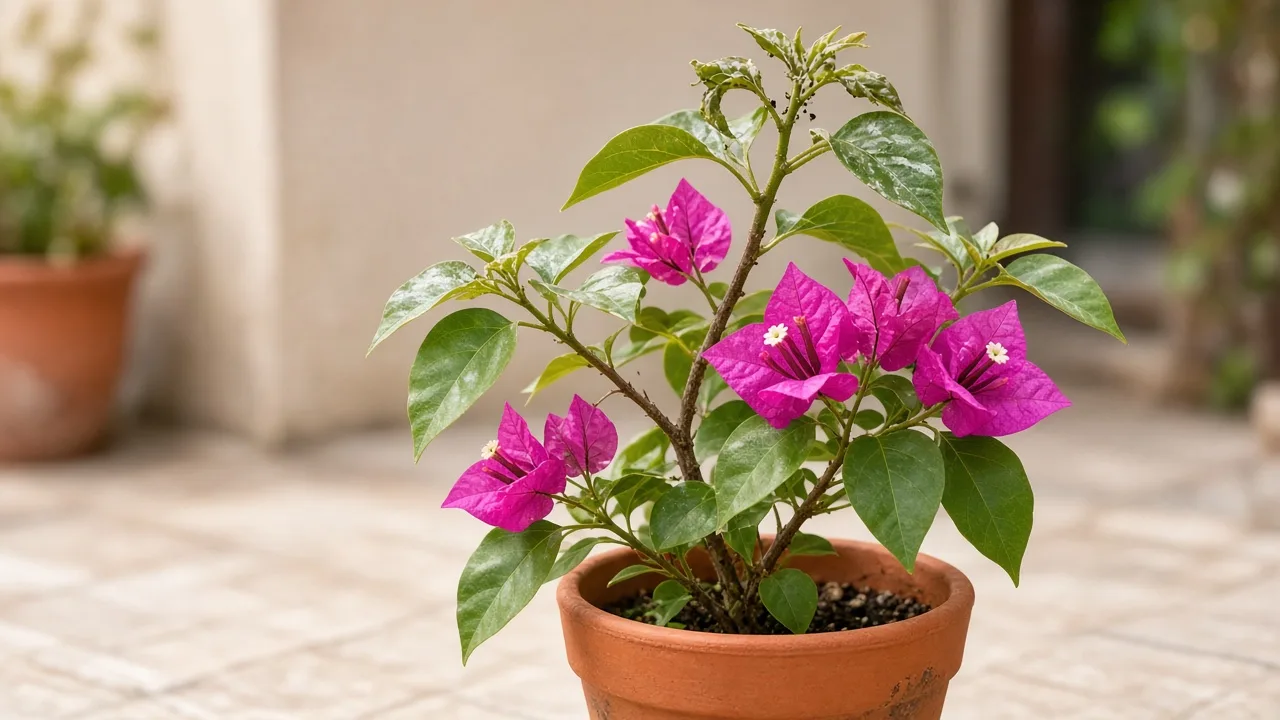
Thrips on Bougainvillea: Causes, Checks & Fixes
This guide covers thrips on Bougainvillea. See also the general Thrips guide, watering, and light pages for this plant.
Thrips on Bougainvillea: Causes, Checks & Fixes
Quick answer
Thrips on bougainvillea show up as silvery or bronze scarring on the upper surfaces of young leaves and papery bracts, often dotted with tiny black frass specks where the insects fed. The vine’s showiest tissue—soft cane tips, bract clusters, and flower buds—is exactly where thrips concentrate, so damage can dull a color flush before you notice insects on woody lower branches.
First step: isolate the plant and shake a suspect shoot tip or bract cluster over white paper. Slender thrips dislodged onto paper confirm the diagnosis; only then plan repeated contact sprays. For how thrips feed and scar tissue in general, see the thrips pest guide. On bougainvillea, the telltale pattern is silvered new growth and black specks on thorny, fast-flushing wood—not generic “stressed houseplant” leaf drop.
Do not fix suspected thrips by watering more. Bougainvillea roots want sharp drainage and dry-down intervals; soggy mix in a dim winter room is far more dangerous than dry foliage above the pot.
When to use this page vs other Bougainvillea guides
Use this page when you see silvery streaks, black frass dots, or twisted soft shoot tips on new cane growth or bracts—especially with slender insects on a white-paper shake test.
| What you see | Start here | Also check |
|---|---|---|
| Silver scarring + black specks on new cane tips | This page | Distorted leaves if growth stays puckered after pests are gone |
| Fine stippling + silk at thorny axils, no frass streaks | Spider mites | — |
| Sticky honeydew + soft insects on bract stalks | Aphids | — |
| One leaf rolled into a tube with chew inside | Caterpillars | — |
| Entire papery bracts drop intact after bloom | Bud drop or normal senescence | Not thrips if no prior silvering |
| Yellow leaves on heavy, wet pot in shade | Overwatering | — |
For baseline culture while you treat pests, start with the Bougainvillea overview and the problems hub.
What thrips look like on Bougainvillea
Thrips are minute, slender insects—often under 2 mm long—with fringed wings folded along the back at rest. They puncture surface cells and suck contents, which creates stippling that matures into silvery or scabby discoloration on leaves, bracts, and fruit-like tissue on other plants. Feeding is usually accompanied by black varnish-like frass flecks.
On bougainvillea you are diagnosing damage on two different leaf types: small true green leaves and the papery, colored bracts that provide most of the display. Thrips can scar both.
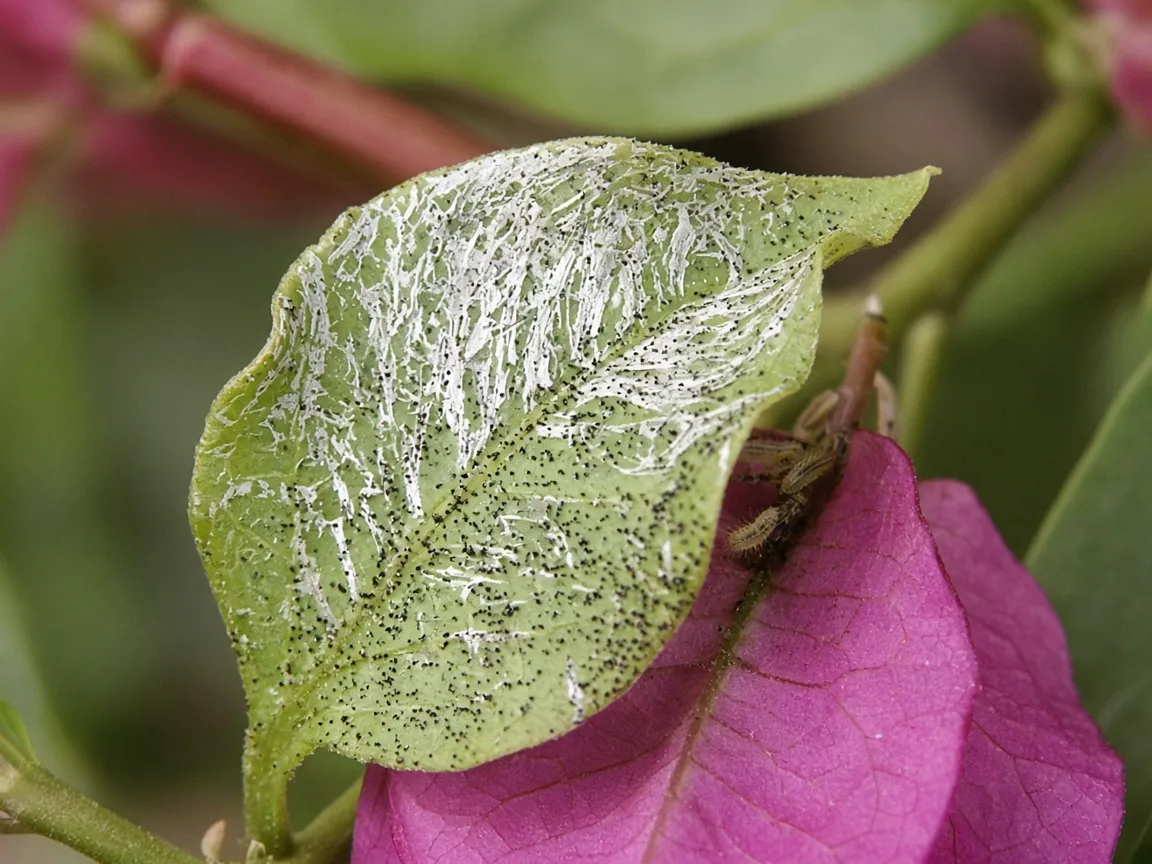
Silvery thrips scarring and black frass specks on bougainvillea new growth—compare with an unscarred bract on the same vine.
Typical signs on this species:
- Silvery-white or bronze streaks on the upper side of young green leaves and on colored bracts—RHS describes this mottling pattern on many garden and glasshouse plants
- Black specks scattered across scarred areas (insect excrement), not removable by wiping like sooty mold
- Twisted, puckered, or stunted shoot tips when thrips feed in developing bud and tip tissue
- Scarred bract edges that look faded or “chalky” before the bract would naturally age
- Slender pale or dark insects visible with a hand lens on bract bases, flower buds, or leaf undersides
- Premature bract or bud drop only after scarring appears—not whole intact bracts senescing evenly after peak color
Bougainvillea’s thorny, woody architecture hides colonies on interior branches. Outward-facing bracts may look fine while soft tissue one node back is already silvered.
Where thrips hide on thorny Bougainvillea wood
This is not a flat rosette houseplant. Inspection order matters:
- Elongating cane apex—the softest leaves and bracts on the current flush
- Bract clusters behind the showiest color—especially where bracts overlap and stay partly shaded
- Flower and bract buds before they open—thrips feed inside protected shoot tips where sprays miss on the first pass
- Thorny stem axils on lateral shoots that grew after your last pruning pass
- Lower interior branches on wall-trained vines—still green but less sun-exposed, often first stop when a patio pot moves indoors
Wear thick gloves and eye protection. UF/IFAS notes sharp thorns on many cultivars; chasing thrips into interior wood without protection leads to punctures, not better diagnosis.
Why Bougainvillea gets thrips
Bougainvillea is a sun-loving, fast-growing climber that pushes repeated soft flushes of bracts and leaves during warm weather. Each flush offers fresh tissue thrips can rasp. Common introduction and flare paths:
New nursery stock or gifted cuttings. Thrips hitchhike on buds and bracts. A vine that looked clean at purchase can silver within two weeks on your full-sun patio.
Patio-to-indoor winter storage. Vines moved inside before frost often sit near glass with reduced airflow and mixed houseplant neighbors—exactly when greenhouse and flower thrips species spread on ornamental hosts.
Bloom-driven soft growth. Heavy feeding or warm weather can push extra tender shoot tips. Thrips damage concentrates there rather than on hardened lower canes.
Crowded containers on a trellis. Adults are weak fliers but move plant to plant on a crowded bench or balcony rail.
Drought-stressed but not dead roots. Bougainvillea tolerates dry soil; severe root stress weakens new tips. Thrips are not caused by underwatering, but a vine already struggling after root rot recovery is slower to outgrow scarred bracts.
Bract silvering vs normal bract drop
After a strong color flush, bougainvillea naturally sheds aging papery bracts. That rhythm confuses thrips diagnosis.
Normal post-bloom drop: entire bracts dry and fall with even color fade, no prior silver streaks, and no black frass specks on the blade. Woody stems stay firm; the next flush starts clean.
Thrips damage: silver or bronze scarring while bracts are still attached, black dots on the scarred surface, and sometimes distorted bract shape or buds that never open. You may see insects on a shake test from the same cluster.
If only lower green leaves yellow on a heavy, wet pot, suspect overwatering before thrips—thrips rarely yellow entire mature leaves without upper-surface scarring.
Lookalike symptoms to rule out
| Pattern | Likely cause | Key check |
|---|---|---|
| Silver upper surface + black specks on new tips | Thrips | White-paper shake; lens on bract base |
| Fine yellow stippling + silk threads at axils | Spider mites | Tap test shows moving dots; webbing |
| Sticky leaves + soft pear-shaped clusters | Aphids | Honeydew on pot rim; ants on stems |
| Ragged holes or chewed leaf margins | Caterpillars | Frass pellets; rolled leaf tubes |
| Pale tunnels inside leaf blade | Leaf miners | Mine has dark frass line inside |
| Crisp brown bracts after sudden hot glass move | Sun scorch | Window-side only; no insects |
| Uniform inward cup on several open leaves, dry pot | Underwatering | Soak recovery; no frass |
How to confirm the cause
Work through these checks before buying sprays:
- White-paper shake test. Clip or hold a suspect bract cluster or young shoot over white paper and tap or shake firmly. Thrips dislodged onto paper are easier to see than on magenta bracts.
- Hand lens on the newest cane tip. Look for slender insects, scarred cells, and black frass alongside—not just uniform wilting.
- Map the damage. Record whether silvering is on bracts, green leaves, or both and whether it tracks one soft flush or random older wood.
- Pot weight and moisture. Lift the container. A light, dry pot with scarred tips still fits thrips. A soggy, heavy pot with yellow lower leaves needs drainage correction first per soil and watering guidance—not foliar pesticide stacking.
- Neighbor audit. Inspect adjacent patio pots or overwintering bench mates; thrips often arrive on multiple bougainvillea at once after a shared move indoors.
Confirmed: silver upper-surface scarring with black specks and/or insects on shake test. Suspected only: vague “off” bract color without specks or insects—recheck in three days before treating the whole collection.
The first fix to try
Isolate and shake-test one soft shoot. Move the vine away from other plants. Over white paper, shake the youngest bract cluster or cane tip you can reach safely with gloves. If thrips appear, proceed to a thorough water rinse of all soft growth—bract bases, leaf undersides, and shoot tips—using lukewarm water outdoors or in a shower with the pot wrapped to contain soil.
That single sequence:
- Confirms you are not treating curling leaves from drought or caterpillar rolls
- Physically removes some adults and larvae through washing
- Avoids stacking chemicals before you know the pest
Let foliage dry in bright indirect light for the rest of the day. Hold your normal soak-and-dry watering—do not increase moisture because bracts look dull.
Step-by-step recovery
After isolation and the first rinse, use this order over the next three to four weeks:
Same day or next morning: If shake tests still show insects or scarring spreads on new tips, apply insecticidal soap or horticultural oil labeled for thrips on ornamentals. Coat bract bases, bud clusters, leaf undersides, and shoot tips until the solution barely drips. UC IPM lists soaps and oils as contact options; spinosad can be more effective on protected tissue when label allows—avoid applying spinosad to open flowers visited by bees.
Every 5–7 days: Repeat contact sprays at least three times. Thrips lay eggs in plant tissue; one application rarely clears a flush.
Between sprays: Re-run paper shake tests on the same cane tip to track live counts. Remove one heavily scarred bract cluster if it harbors dense insects; bag and discard—do not strip the whole vine.
Optional monitoring: A blue or yellow sticky trap above the pot helps catch flying adults indoors; UC IPM suggests traps for detection, not as the sole treatment outdoors on a large wall vine.
Escalation: If silvering advances through three timed spray cycles, contact your local extension office for species-specific options. Systemic products on edible-adjacent patios may be restricted—follow label and local rules.
Recovery timeline
Days 1–3: Shake tests show fewer live thrips after the first rinse; new scarred tissue should not expand beyond the current soft flush.
Week 1–2: With three timed contact sprays, new shoot tips stay green and unscarred even if old bracts remain chalky.
Weeks 3–6: Continue weekly checks. Thrips life cycles can overlap stages; persistence matters more than a single “clean” day.
Next bract flush: Judge success by bracts that open with full color and no fresh silver streaks. Old scarred bracts remain cosmetic only.
Winter-stored vines: Growth may pause until spring even after thrips are gone. Firm woody stems and normal dry-down weight mean the plant is still viable.
Mistakes to avoid
Watering more when bracts look dull. Thrips scar tissue; they do not signal root drought. Wet mix on a bougainvillea in low winter light invites rot.
One-and-done spraying. Eggs inside tips hatch on a staggered schedule—plan three cycles minimum.
Treating only the colorful bract face. Insects sit at bases, buds, and undersides on thorny wood.
Spraying in harsh midday sun through glass. Soaps and oils on wet papery bracts can burn. Treat early morning or evening.
Confusing thrips with bloom senescence. Whole bracts dropping evenly after peak color is normal; silver streaks while attached are not.
Bare-handed work on thorny canes. Thorns and sap exposure are preventable with gloves and careful branch positioning.
How to prevent thrips next time
- Quarantine new vines two weeks; shake-test soft tips before placing them on a shared trellis.
- Inspect weekly during warm growth—cane apex and bract bases first.
- Rinse foliage when moving pots indoors for frost; check bench neighbors the same day.
- Avoid crowding multiple bougainvillea on one windowsill without airflow between thorny branches.
- Hold feeding discipline per the fertilizer guide—soft, nitrogen-heavy flushes are easier for thrips to scar.
- Keep culture strong: six or more hours of direct sun outdoors and well-draining mix so the vine replaces scarred tissue quickly after treatment.
When to worry
Treat as urgent when:
- Silver scarring reaches multiple cane tips within a week despite rinsing
- Bract buds fail to open before a planned display season
- Several overwintering patio vines show the same shake-test pattern
- New spring laterals emerge already scarred before hardening off
Lower urgency when damage is on one interior branch, woody stems are firm, and shake tests improve after the first rinse and isolation. Monitor seven days before adding sprays to the whole collection.
Mature bougainvillea with firm wood rarely dies from thrips alone, but repeated scarring on every flush can weaken bloom for a season. Fix pests first; keep roots on soak-and-dry rhythm.
Related Bougainvillea guides
Thrips sit alongside other sap feeders on fast-flushing wood. Compare aphids, whiteflies, scale insects, and spider mites if symptoms overlap. For puckered growth that persists after insects are gone, read distorted leaves and curling leaves. Chewing damage with holes points to caterpillars or holes in leaves instead of this rasping pattern.
Conclusion
Thrips on bougainvillea scar soft cane tips, bracts, and buds with silvery streaks and black frass specks—easy to miss on thorny lower wood until a color flush looks chalky. Isolate, confirm with a white-paper shake test, rinse soft growth thoroughly, then repeat contact sprays on a 5–7 day schedule while keeping the pot on normal dry-down watering. Judge recovery by clean new bracts and shoot tips, not by repaired old tissue, and inspect interior branches through the first month after any patio-to-indoor move.
Related tool
Use the Pest Identifier Tool to narrow causes for thrips on this plant before changing multiple variables at once.