Curling Leaves on Bougainvillea: Causes, Checks & Fixes
Quick answer
Curling leaves on bougainvillea usually mean drought cupping in a hot patio pot, sap feeders on new growth, spider mites after a dry indoor winter, or a leaftier caterpillar rolling one leaf shut—not thirst and wet soil at the same time. First step: finger-test the top 3–5 cm of mix and unroll one suspicious curled leaf looking for black frass or a hidden caterpillar.
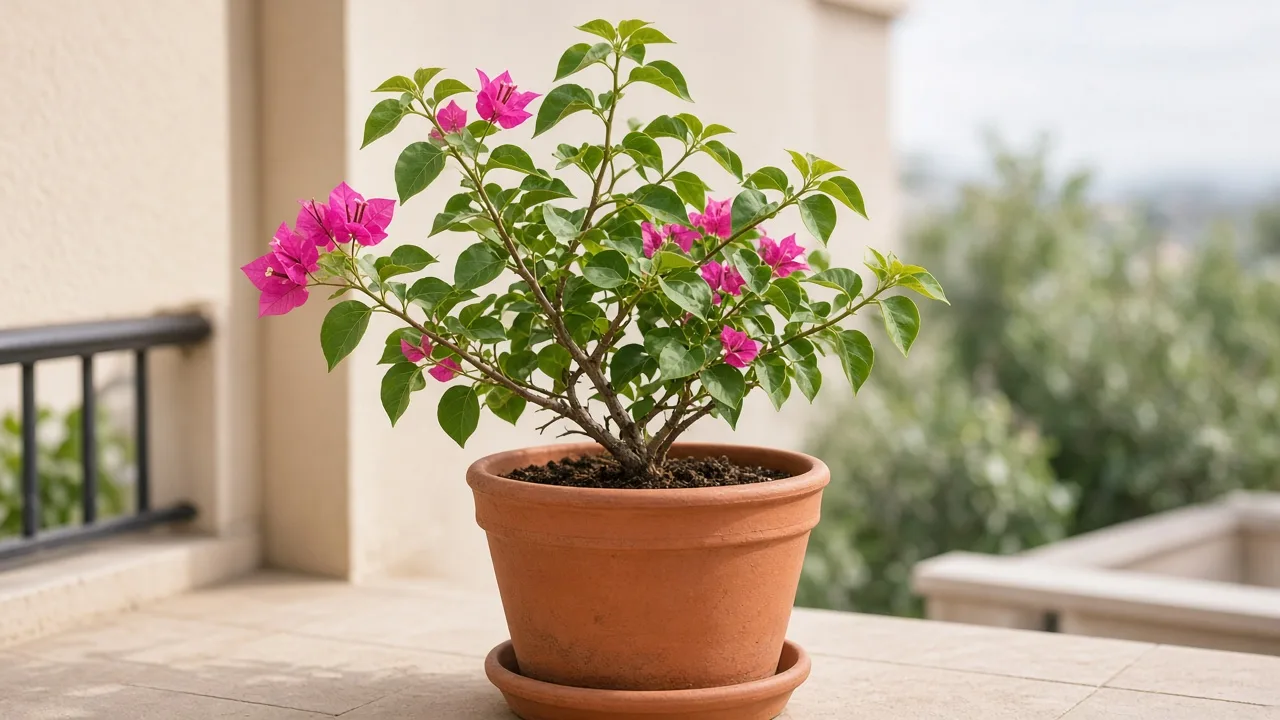
Curling Leaves on Bougainvillea: Causes, Checks & Fixes
This guide covers curling leaves on Bougainvillea. See also the general Curling Leaves guide, watering, and light pages for this plant.
Curling Leaves on Bougainvillea: Causes, Checks & Fixes
Quick answer
Curling leaves on bougainvillea show up when thin true leaves roll inward along the margin, twist at soft shoot tips, or—on one branch—a single leaf sews shut into a silk-lined tube. This woody, thorny subtropical vine from South America evolved for full sun, fast drainage, and dry periods between soaks—so the curl pattern on your plant usually separates canopy thirst in heat from wet-root stress, sap feeders on new growth, or host-specific caterpillars that roll leaves.
First step: press your finger into the top 3–5 cm of mix and lift the pot, then unroll one curled leaf. A light, dry container with inward cup on several open leaves → one deep soak per the watering guide, not daily splashes. A heavy, wet pot with curl plus yellow lower leaves → stop watering and read overwatering before you add more moisture. One leaf rolled into a tube with black specks inside → caterpillar, not drought. Sticky soft tips → aphids or thrips before any broad spray.
For how leaf curl works across houseplants, see our curling leaves hub. On bougainvillea, read bracts separately from true leaves, check thorny axils after every patio-to-indoor move, and never assume curl means “water more” when the pot is already heavy.
When to use this page vs other Bougainvillea guides
- Underwatering — light pot, dry 3–5 cm layer, crisp inward cup before wilt
- Overwatering — heavy wet pot, yellow lower leaves, curl with limp hang on saturated mix
- Wilting — soft acute collapse across branches, not just margin roll
- Drooping leaves — downward petiole angle; drought cup often comes first on dry patio pots
- Spider mites or aphids — stippling, webbing, or sticky twisted tips on new wood
- Distorted leaves — severe thrips or chemical injury when curl looks puckered, not cupped
- Not enough light — pale stretchy growth indoors, not classic summer drought cup
- Bougainvillea overview — species hub, bracts, and baseline light and soil needs
What curling leaves look like on Bougainvillea
Healthy bougainvillea holds small oval green true leaves on thorny woody stems, with papery colorful bracts providing most of the show. Curling affects the green blades first; bracts may fade separately after a bloom flush without the same inward cup.
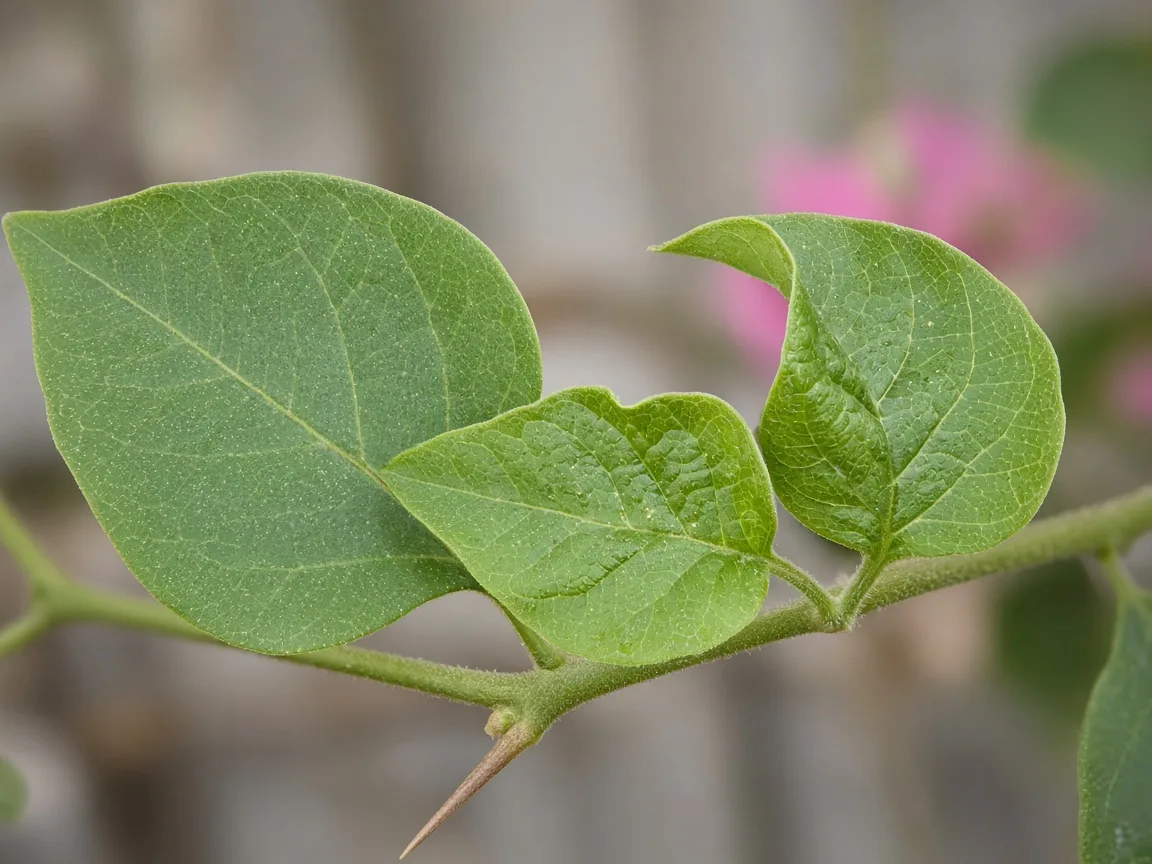
Inward-cupped true leaves on bougainvillea — compare curled tissue with flat older leaves on the same thorny stem.
Patterns you can ignore:
- One or two older interior leaves with a slight edge curve while shoot tips stay firm and green
- Seasonal leaf shed after a bract flush or winter semi-dormancy—the RHS notes container plants overwintered frost-free with relatively dry compost will drop leaves
Problem curl you should act on:
- Inward margin cup on multiple open leaves, often starting on sun-exposed sides
- Twisted or puckered soft tips on the newest wood between bract clusters
- A single leaf rolled lengthwise and held shut with fine silk—often with black frass specks visible at the seam
- Crispy curled margins after reflected heat from a south wall or hot glass
- Fine stippling plus subtle cup on lower leaves after a dry heated indoor winter
Curling vs wilting vs drooping
| Symptom | What you see | Typical pot clue | First branch |
|---|---|---|---|
| Curling leaves | Margins roll inward; blade may still feel fairly firm early | Dry light pot OR wet heavy pot | 3–5 cm moisture + unroll one leaf |
| Drooping leaves | Petioles hang; posture sags | Often same moisture extremes | See drooping leaves |
| Wilting | Soft limp collapse on multiple branches | Very dry or very wet | See wilting |
On bougainvillea in peak summer sun, inward curl often appears before full wilt when a small container dries out in an afternoon—catching cup early prevents the limp canopy that follows.
Rolled leaves from leaftier caterpillars vs drought cup
Bougainvillea hosts host-specific caterpillars that roll a single leaf shut rather than cup the whole canopy. This distinction saves you from drowning a dry vine—or ignoring a chewing pest.
Caterpillar roll signs:
- One leaf (occasionally two) folded into a tube, stitched with silk
- Black frass specks on the leaf seam or on the pot rim below—caterpillar droppings, not mite stippling
- Damage concentrated on tender new leaves after a growth flush; bracts usually stay intact
- Unrolling the leaf often reveals a small green or brown caterpillar inside
Drought cup signs:
- Many leaves on the same shoot cup inward without silk seams
- Pot feels light; top 3–5 cm of mix is dusty dry
- No frass specks; spiders may occupy a curl but without chewing or black droppings
- Recovery within days after one deep soak that drains fully
Bougainvillea loopers chew lace-like holes more often than they roll leaves; leaftiers are the usual “sewn shut” culprit. Treat confirmed caterpillars with Bacillus thuringiensis (BT) on tender foliage per label directions—not horticultural oil alone, which does not control caterpillars the way it helps soft-bodied aphids.
Bract flush stress vs true leaf curl
After heavy flowering, bougainvillea may shed bracts and some true leaves as it resets—a seasonal rhythm, not always a crisis. Stress curl is different:
- Bract drop only with firm green true leaves → often post-bloom senescence; watch the next dry-down cycle on the watering guide
- True leaves cup while bracts still look papery and bright → moisture or heat stress on the foliage factory
- Mass curl on new wood right after you pushed high-nitrogen feed → soft vegetative flush; UF/IFAS advises going easy on fertilizer because too much nitrogen encourages leaves instead of blooms
Do not confuse faded bracts with cupped green leaves—fix the true-leaf pattern first.
Patio-to-indoor winter curl on thorny wood
Container bougainvillea that thrived on a sunny patio often shows cupped lower leaves within weeks of moving into a heated, low-humidity room for frost protection. Roots stay on a reduced winter soak schedule—appropriate for a drought-tolerant vine—but the canopy air becomes extremely dry, which favors spider mites on leaf undersides and thorny axils.
Winter-move curl checklist:
- Inspect lower leaves and bract bases with a magnifier—stippling and fine webbing mean mites, not thirst
- Confirm the pot is not staying wet in dim light; soggy winter soil curls leaves through root stress (overwatering)
- Place the plant in the brightest frost-free window you have; weak winter light slows transpiration and worsens wet-soil curl
- Wear gloves—sharp thorns make underside inspection painful without protection
Why Bougainvillea leaves curl
Underwatering and heat in full sun
UF/IFAS Gardening Solutions states bougainvillea performs better when soil is left a little dry—but “dry” means between deep soaks, not desiccated roots in a small black nursery pot on a 38 °C (100 °F) patio. Thin true leaves cup inward to reduce water loss when the top 3–5 cm has been dry too long while sun and reflected heat pull moisture from blades faster than roots can supply it.
Overwatering and root oxygen loss
Constantly wet mix is the wrong fix for curled leaves. Saturated roots cannot hydrate foliage efficiently—leaves may cup or yellow while the pot stays heavy. This vine does not tolerate waterlogged conditions. Pair curl with sour smell, fungus gnats, or lush leaves and no bracts when irrigation is too generous.
Aphids and thrips on soft tips
Sucking insects cluster on the newest leaves and stems between bract clusters, causing twist, puckering, and sticky honeydew. Aphids are a common cause of deformed tender growth on stressed garden plants in warm weather. If tips curl with gloss or black sooty mold below, inspect pests before changing watering.
Spider mites in dry canopy air
Mites are barely visible and thrive in warm, dry conditions—exactly what heated winter rooms provide. Early damage shows stippling with subtle cup on lower interior leaves while upper bracts still look fine.
Heat, reflected sun, and chemical injury
Intense sun on leaves that were recently shaded, or hot surfaces beside the pot, can scorch and curl margins within days. Strong pesticide or fertilizer sprays on tender flush can pucker new leaves—review any product applied in the last two weeks before re-treating.
Lookalike symptoms to rule out
| Pattern | Most likely cause | Key check |
|---|---|---|
| Many leaves cup inward; light dry pot | Underwatering / heat | Deep soak once; see underwatering |
| Curl + yellow lower leaves; heavy wet pot | Overwatering / root stress | Stop watering; drainage holes open |
| One silk-shut leaf with black specks | Leaftier caterpillar | Unroll leaf; BT if confirmed |
| Sticky twisted soft tips | Aphids | Undersides of newest wood |
| Stippling + fine webbing at thorns | Spider mites | White-paper tap test; see spider mites |
| Puckered new leaves, silvery scars | Thrips | Magnifier on growth tips |
| Pale stretchy stems, wet pot in shade | Not enough light | Less than 5–6 hours direct sun |
How to confirm the cause (ordered inspection)
-
Finger test at 3–5 cm — Cool damp soil days after watering supports overwatering branch. Dusty dry layer supports drought—do not assume thirst if the pot is still heavy from a recent soak.
-
Pot weight — Lift the container. Light with cupped leaves → underwatering. Heavy with cup and yellow lowers → root stress.
-
Unroll one curled leaf — Silk + frass + caterpillar → pest roll. No insect → environmental cup.
-
Newest tips — Sticky residue or clustered dots → aphids/thrips. Stippling on undersides → mites.
-
Sun and heat history — Recent move to hotter glass, new wall reflection, or travel neglect on a small pot.
-
Bract vs true leaf — Confirm you are judging green blades, not fading papery bracts alone.
Wear gloves for close work on thorny stems.
First fix for Bougainvillea
Match one action to what you confirmed—do not soak, spray, and repot the same day.
-
Dry light pot with inward cup on open leaves → One deep soak at the sink until water runs from drainage holes; drain fully before returning to full sun. Resume soak-and-dry rhythm—this is the most common correct first fix on summer patio containers.
-
Heavy wet pot with curl and yellow lowers → Stop watering until the top 3–5 cm dries and the pot lightens. If decline continues, inspect roots per root rot.
-
Caterpillar inside a rolled leaf → Remove the rolled leaf or treat with BT on tender foliage per label; do not increase watering.
-
Sticky aphids on soft tips → Rinse shoot tips with a firm lukewarm stream, then treat remaining colonies per the aphids guide if they persist.
-
Stippling and webbing after indoor move → Isolate and rinse undersides and thorny axils before soap or oil; see spider mites.
-
One or two slightly cupped old leaves on firm wood → No emergency fix—monitor the next dry-down cycle.
Step-by-step recovery by confirmed cause
Drought cup in summer containers
Water deeply once, ensure fast-draining mix with open drainage holes, and move extremely small pots out of the hottest afternoon reflection if margins crisp repeatedly. Expect firmer new tips within one to two weeks; older cupped leaves may stay curved.
Wet-soil root stress
Let mix dry to your usual finger-test depth, empty saucers, and verify automatic irrigation is not flooding the pot. Recovery is slower—two to four weeks of stable dry-down before judging new growth.
Caterpillar rolls
Hand-pick rolled leaves on young plants or apply BT to tender flush. Established vines tolerate cosmetic leaf loss; bougainvillea replaces foliage several times a year. Do not use oil expecting caterpillar control.
Mites and aphids
Repeat rinses every few days, then labeled insecticidal soap or horticultural oil on undersides if live pests remain—never on wilted midday foliage in blazing sun. Hold fertilizer until new leaves open clean for two weeks.
Recovery timeline and success signs
| Severity | What improves first | Typical timeline |
|---|---|---|
| Single dry spell on firm wood | Leaves relax; pot weight stable after soak | 3–7 days |
| Repeated underwatering in small pots | New tips firm; less cup on fresh flush | 1–2 weeks |
| Overwatering without rot | Yellowing stops spreading; mix dries predictably | 2–4 weeks |
| Mite or aphid outbreak | Stippling stops on new growth; tap test fewer specks | 2–3 weeks with repeated treatment |
| Caterpillar rolls only | New leaves open flat; fewer sewn leaves | 1–2 growth flushes |
Worsening signs: soft stems at the base, curl climbing to every new tip on a wet pot, blackening shoot tips after frost, or webbing spanning multiple branches weekly.
Mistakes to avoid
-
Watering on calendar days without a 3–5 cm finger test—bougainvillea in full sun can need soaks twice a week in August and once every ten days in a cool spring.
-
Soaking because leaves curl while soil is already wet—roots need oxygen, not more moisture.
-
High-nitrogen fertilizer on a cupped stressed vine—encourages soft leaves without fixing roots or pests (UF/IFAS).
-
Misting leaves instead of fixing soil or pests—does not replace soak-and-dry for this sun lover.
-
Pruning half the canopy the same day you spray and repot—change one variable so you can read the plant’s response.
How to prevent curling next time
Match culture to this vine’s biology: full sun, excellent drainage, and deep watering only when the top 3–5 cm dries. Size pots for the canopy—oversized containers stay wet in the center. After repotting, expect one to two weeks of adjustment curl; keep care boring.
Before frost, acclimate patio plants to the brightest indoor spot and inspect thorny axils weekly through the first month inside. Rinse foliage during active outdoor growth to knock off early mite colonies. Use bloom-appropriate feed from the fertilizer guide rather than repeated high-nitrogen bursts.
Related Bougainvillea guides
- Bougainvillea overview — bracts, thorns, and full-sun biology
- Bougainvillea problems hub — all common issues on this species
- Watering — finger depth, pot weight, seasonal cuts
- Light — minimum direct sun for healthy foliage
- Soil — drainage and pH for containers
- Underwatering — dry pot + crisp cup
- Overwatering — wet pot + root stress curl
- Aphids — sticky twisted tips
- Spider mites — winter indoor stippling