Distorted Leaves on Bougainvillea: Thrips & Cane-Tip Checks
Quick answer
Distorted leaves on Bougainvillea are puckered, twisted, cupped, or asymmetric small oval blades—usually on the newest thorny cane tips and bract stalks, not mature woody growth lower on the vine. First step: isolate the plant and inspect the softest expanding leaf behind the bract cluster with a magnifier, or tap it over white paper for thrips, before changing water or repotting.
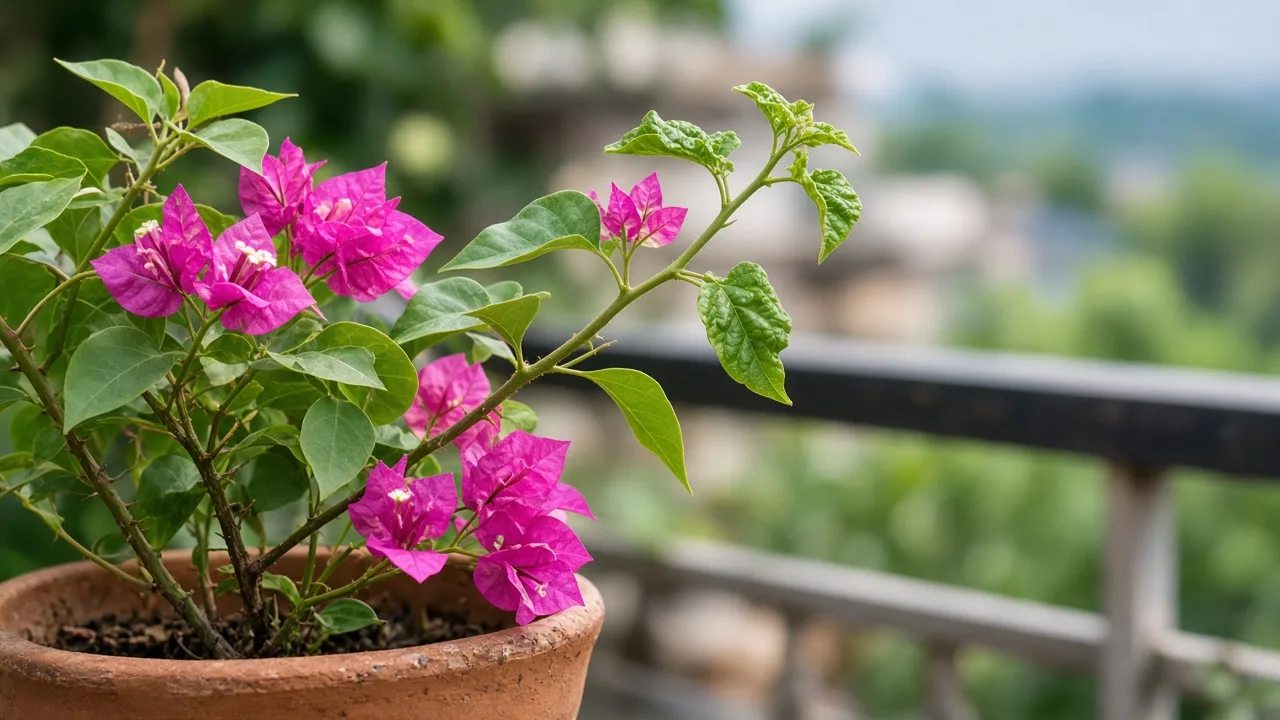
Distorted Leaves on Bougainvillea: Causes, Checks & Fixes
This guide covers distorted leaves on Bougainvillea. See also the general Distorted Leaves guide, watering, and light pages for this plant.
Distorted Leaves on Bougainvillea: Causes, Checks & Fixes
Quick answer
Distorted leaves on Bougainvillea are puckered, twisted, cupped, or asymmetric small oval blades—almost always on the newest thorny cane tips and bract stalks, not random mature woody canes lower on the trellis. For general distortion mechanics, see our distorted leaves guide. On Bougainvillea, thrips and aphid scarring on soft new leaves behind colorful bract clusters are the most common urgent causes; spider mites on overwintered patio pots and excess nitrogen soft shoots are the main mimics.
First step: isolate the plant and magnify the softest expanding leaf at the cane tip behind the bract cluster. Tap that leaf over white paper for moving specks and look for silver streaks or sticky honeydew before soaking, fertilizing, or repotting.
Route to curling leaves for lengthwise cupping on open dry blades, and thrips when silver scarring is confirmed.
When to use this page vs other Bougainvillea guides
| Pattern | Start here | Or route to… |
|---|---|---|
| Twist, puckering, silver scars on new cane tips | This page | Thrips |
| Lengthwise cup on dry, light pot | Curling leaves | Underwatering |
| Soft pear-shaped insects, honeydew on bracts | Aphids | Scale insects |
| Cottony wax in thorny leaf axils | Mealybugs | Aphids |
| Fine stippling, webbing on new flush | Spider mites | Low humidity |
| Yellow blades, soggy mix, no silver streaks | Overwatering | Root rot |
| Pale flat leaves, not twist | Pale leaves | Not enough light |
What distorted leaves look like on Bougainvillea
Bougainvillea is a fast-growing tropical vine for full sun and well-drained soil that pushes long thorny canes tipped with small true leaves and showy papery bracts. Healthy new blades emerge as a soft roll at the elongating cane tip beside swelling bract clusters. Distortion breaks that pattern:
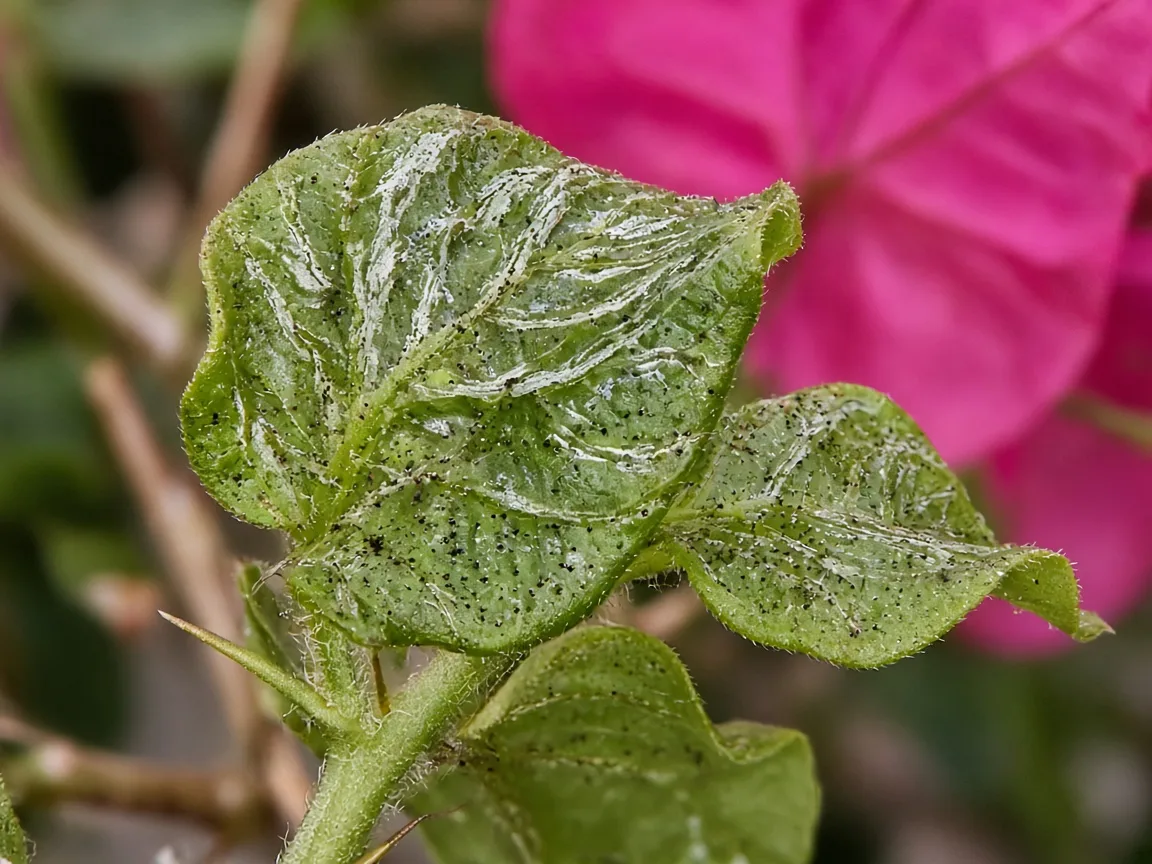
Twisted puckered new leaf behind a bract cluster—magnify the softest expanding blade before repotting or feeding.
Thrips scarring on new flush:
- Silvery-white discolouration and tiny black excrement spots along small oval leaves and bract stalks
- Distorted growth when thrips feed on developing tissues at the shoot tip—damage locks in as the blade opens
- Moving specks when you shake the softest new leaf over white paper; see also our thrips guide
Aphid distortion:
- Rippled, cupped, or asymmetric half-blade on the newest unfurling leaf only
- Clusters on tender shoot tips and leaf undersides with sticky honeydew dulling bract color
- Curled leaves from aphid feeding while older woody canes stay unchanged—full aphid workflow on aphids
Spider mite ripple in dry heat:
- Fine pale stippling with slight rippling on tender new growth after overwintering indoors or on a dry balcony
- Webbing tucked where overlapping small leaves meet at the cane tip
Excess nitrogen soft shoots:
- Too much nitrogen encourages leaves instead of blooms, producing unusually soft elongated tips that crinkle or look misshapen without silver streaks or insects
- Often follows a heavy feed right before a growth surge—see the fertilizer guide
Not distortion: Bougainvillea does not fold like prayer plants. Persistent twist on new growth is stress—not a daily rhythm. Old sun-scorched leaves may look crinkled but the pattern is random on mature canes, not confined to the active tip.
The bract-adjacent soft-growth window (Bougainvillea only)
Color on bougainvillea comes from long-lasting bracts that outshine the tiny true flowers. The diagnostic zone is the soft leaf roll tucked directly behind a swelling bract cluster on an elongating thorny cane. Aphids, thrips, and mites hide in that joint while damage shows first on the newest blade. Owners who scan only open leaves halfway down a woody trellis miss silver thrips streaks on the tightest unopened tip—the place where the next bract flush is decided.
Why Bougainvillea cane tips distort
Sap feeders target soft cane tips. Aphids are occasional problems on bougainvillea and colonize the same tender tips described on the aphids page. Their feeding scars expanding tissue before leaves harden.
Thrips rasp developing tips. Thrips feeding on shoot tips causes distorted growth that ripples as small leaves open. Western flower thrips and related species are common on container vines moved indoors for frost protection.
Dry indoor air stiffens unfurling tissue. Bougainvillea prefers full sun and relatively dry soil between waterings, but a cane tip dragged against a trellis wire or neighbor bract during expansion in stagnant indoor air can kink permanently without pest signs.
Mites concentrate on new flush. Warm, dry overwintering rooms favor stippling and slight ripple on the softest shoots—distinct from thrips silver streaks if you magnify.
Culture pushes soft shoots. Overwatered roots in poor light produce weak tips that look twisted or thin; pair with overwatering checks when mix stays wet and lower leaves yellow.
Thorn-belt pest scan along elongating canes
Work from the active growing point backward on each suspect cane:
- Bract cluster first - Peel back the outermost papery bract slightly with gloved fingers and look at the soft leaf roll behind it.
- Underside of the youngest open leaf - Sap feeders cluster on tender shoot tips.
- Thorny leaf axils - Mealybugs and scale hide where small leaves meet thorny stems; distortion may accompany mealybugs even when the tip looks clean.
- Tap test - Shake the softest leaf over white paper; thrips are easier to spot on paper than on glossy bracts.
- Honeydew sheen - Sticky film on bracts or patio tiles below supports aphids even when insect counts look low.
Wear gloves—many cultivars have sharp thorns.
How to confirm the cause
| Clue | Points to | Next step |
|---|---|---|
| Silver streaks + black specks on new tip | Thrips | Isolate; see thrips treatment path |
| Soft pear-shaped insects + honeydew | Aphids | Rinse cane tips; follow aphids page |
| Cottony wax in axils | Mealybugs | Alcohol dab on clusters; mealybugs |
| Stippling + webbing, dry pot | Mites | Rinse + repeat; spider mites |
| No pests, one kinked leaf, dry indoor move | Physical snag | Humidity/airflow; no spray |
| Soft tips + wet mix + yellow lower leaves | Root stress | Dry-down per watering |
| Recent heavy nitrogen feed, no insects | Soft growth | Hold feed; fertilizer timing |
Confirmed pests beat culture guesses—treat insects before repotting unless roots are clearly failing.
First fix for Bougainvillea
Isolate the vine and inspect the softest expanding leaf behind the nearest bract cluster with a magnifier (or tap it over white paper).
Move the pot away from neighbors or drape a section of trellis. Identify thrips streaks, aphid clusters, or mite stippling before you change watering, repot, or spray. If insects are confirmed, your next action is the species-specific rinse or contact treatment on the linked pest page—not a bundled rescue day.
If the scan is clean and only one leaf shows a dry-air kink after an indoor move, skip pesticide. Improve airflow around the cane tip and return the plant to full sun once nights stay frost-free.
Step-by-step recovery
After the first inspection:
- Treat the confirmed pest - Aphids: strong rinse then soap per aphids. Thrips: repeat contact sprays per thrips. Mites: rinse undersides per spider mites.
- Prune only destroyed tips - Snip coated bract clusters or cane tips that are mostly scarred; bag debris away from patio pots.
- Hold nitrogen - Pause feeds until new tips look flat; excess nitrogen pushes leaves over bracts.
- Dry-down if mix was wet - Let the top few centimeters dry per the watering guide before the next drink.
- Inspect weekly - New soft shoots are your early-warning system during spring and summer elongation.
Do not repot on day one unless roots are mushy or mix is sour—see root rot.
Pre-bloom flush: distortion vs bract color show
Bougainvillea sets its display on the current cane tip flush. Distortion that scars leaves beside swelling bracts often means the upcoming color window will be smaller or duller even after pests are gone—bract tissue that opened twisted does not re-expand. Success is clean new cane tips with normal bract swelling on the next cycle after treatment, not reshaping last month’s warped cluster. That timing link is why pest checks at the bract-adjacent soft leaf matter more on this vine than on broad-leaf houseplants.
Recovery timeline
48–72 hours after a thorough rinse or first contact spray, live insect counts on the tip should drop. One to two weeks of repeat treatments usually stabilizes moderate thrips or aphid scarring.
Judge improvement by:
- Flat new small leaves emerging behind bract clusters
- No fresh silver streaks on the newest blade
- Bract color brightening on the next flush, not sticky honeydew
Old twisted leaves will not flatten—trim for appearance once the vine is insect-free. Worsening signs: Distortion on every new tip for multiple weeks after treatment, mosaic-like mottling with no insects (possible virus—remove the plant to protect neighbors), or soft stems at the soil line on wet mix.
Lookalike symptoms
| What you see | Likely issue | Page |
|---|---|---|
| Lengthwise cup, dry pot | Drought curl | Curling leaves |
| Silver + black specks on tip | Thrips | Thrips |
| Honeydew on bracts | Aphids | Aphids |
| Stippling + webbing | Mites | Spider mites |
| Yellow + wet mix | Water stress | Overwatering |
| Soft tips after heavy feed | Nitrogen push | Fertilizer |
Mistakes to avoid
- Do not pull open a stuck leaf roll by hand—you will tear soft tissue permanently.
- Do not fertilize distorted tips hoping blades will flatten.
- Do not stop after one pest rinse—aphids reproduce quickly and thrips hide in bract joints.
- Do not shade the vine hoping leaves toughen—bougainvillea needs full sun for firm growth and blooms.
- Do not confuse cup curl with twist—see curling leaves for drought cupping.
Bougainvillea care cross-check
- Light - Full sun drives firm tips and bract color; weak light produces soft stretched shoots that stay vulnerable after pests are gone—see light.
- Water - Perform better when soil is left a little dry; chronically wet mix weakens tips—see soil.
- Feed - Hold nitrogen until new growth looks clean; resume potassium-forward feeding as bract season approaches.
How to prevent distorted leaves next time
Quarantine new vines two weeks. Inspect cane tips and bract clusters weekly during warm elongation. Keep full sun and sharp drainage so tips harden quickly. Rinse foliage when moving pots indoors for frost. Treat pests on a repeat schedule, not a single pass. Avoid heavy nitrogen right before a growth surge.
When to worry
Urgent if every new cane tip distorts for multiple weeks after treatment, stems soften at the base on wet mix, or mosaic mottling spreads with no insects. One rippled tip after a known thrips or aphid exposure is treatable if caught at the soft-leaf stage.
Related Bougainvillea guides
Conclusion
Distorted Bougainvillea leaves are permanent once unfurled—protect the next cane-tip flush behind the bract clusters. Magnify the softest new blade, isolate if thrips or aphids are present, and correct culture if wet mix or heavy nitrogen softened the shoot. Success is flat new leaves and clean bract color on the following flush, not reshaping old twisted tissue.