Best Soil for Calathea Musaica: Mix, Drainage & pH
Best Soil for Calathea Musaica: Mix, Drainage & pH
Best Soil for Calathea Musaica: Mix, Drainage & pH
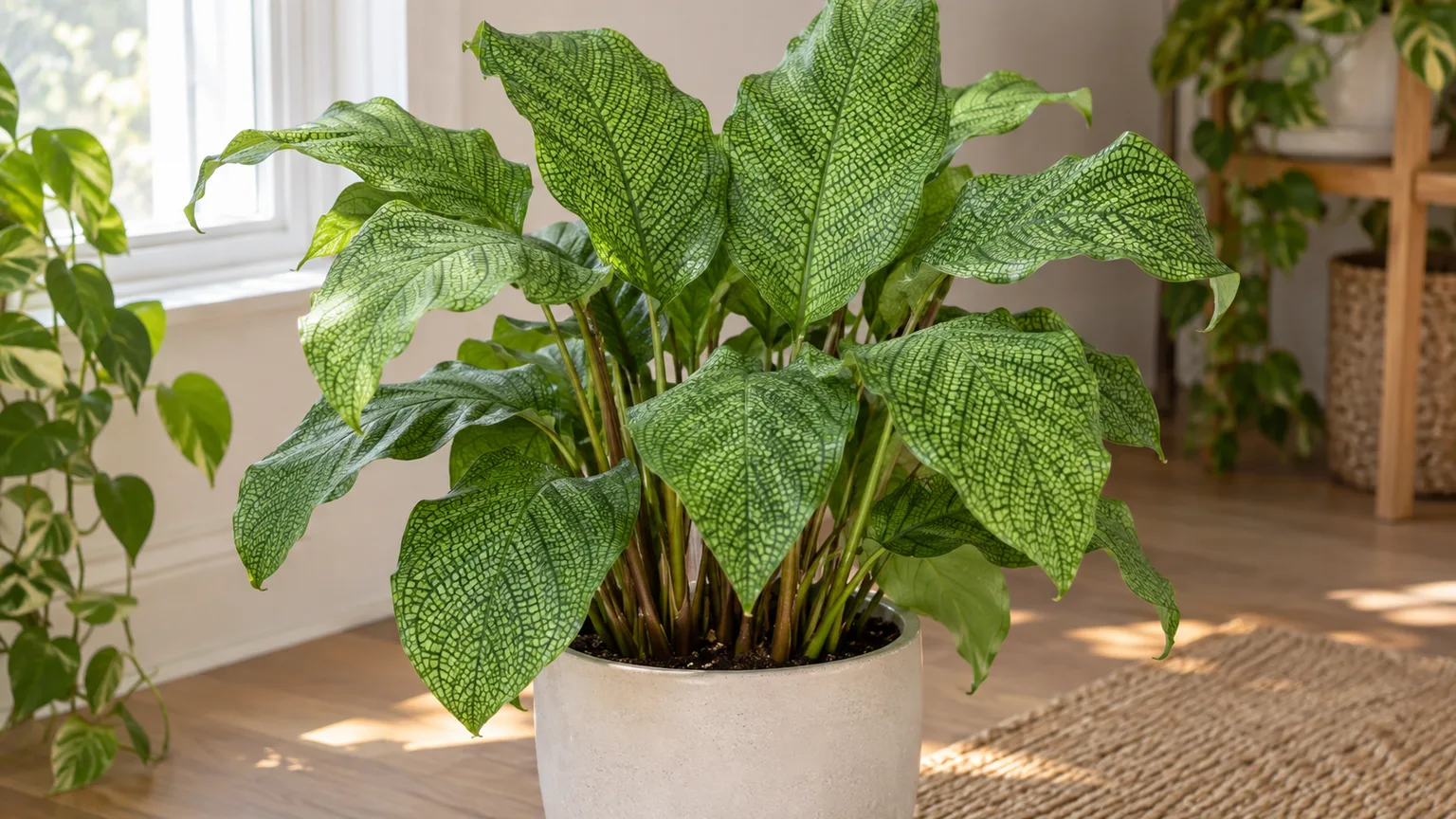
Calathea Musaica — the Network or Mosaic Calathea sold as Goeppertia kegeljanii — does not want “rich garden soil.” It wants a light, airy, moisture-retentive potting mix that drains fast enough for fine prayer-plant roots to breathe yet holds enough water that the compact clump is not swinging between bone-dry and waterlogged every few days. Get that balance wrong and the damage shows on the mosaic grid long before you think to check roots: pale halos on new lines, brown edges on an unfurling spear, or yellowing on older leaves while the mix at the bottom stays sour and wet.
This guide covers what soil for Calathea Musaica actually means in a home pot — ideal ingredients, DIY ratios, store-bought shortcuts, pH and mineral sensitivity, drainage tests, pot pairing, and repot timing — with the species-specific biology that generic calathea articles skip.
The Short Answer: What Soil Calathea Musaica Needs
Use a peat- or coco-coir-based mix amended with perlite and fine orchid bark so the root zone stays evenly moist but never swampy. NC State Extension recommends moist, well-drained potting mix with acidic to neutral pH, explicitly advising growers to incorporate perlite or vermiculite for drainage on Goeppertia kegeljanii. The RHS Network profile lists moist but well-drained or well-drained compost under glass — the same dual requirement.
A dependable starting recipe by volume: 2 parts peat moss or coconut coir, 1 part perlite or pumice, 1 part fine orchid bark, plus a small handful of worm castings per quart if you want slow organic nutrients. Water when the top 2 cm begins to dry — soil choice and Calathea Musaica watering rhythm are linked — and always use a pot with a drainage hole. If new mosaic leaves open with pale spots while moisture looks fine, suspect mineral buildup in the mix from hard tap water before you chase humidity alone.
Why Musaica Soil Differs From Other Calatheas
Network Calathea shares the broad Marantaceae root profile with pinstripe, rattlesnake, and orbifolia types — fine roots, steady moisture, high humidity — but Musaica’s compact 1–2 foot clump and intricate leaf pattern change how soil mistakes surface. A large striped calathea may hide a dense mix for months. Musaica’s small heart-shaped leaves with a painted fishnet grid show water-quality and oxygen stress on every unfurl, often as pale halos or torn edges on the pattern itself.
You are not building soil for a drought-tolerant succulent or a moisture-loving fern. You are recreating a thin, organic, fast-draining rainforest floor layer around rhizomes that spread horizontally in a tight pot — a setup where consistency matters more than any single brand name.
Mosaic Pattern and Root-Zone Stress
The mosaic is not decorative wallpaper; it is a stress map. Fluoride and salt buildup from tap water and fertilizer concentrate in a dense, slow-draining mix faster than in an airy blend that flushes with each thorough watering. NC State Extension notes that fluoride in tap water can cause brown leaf edges on this species — a foliage symptom rooted in what the roots take up from the substrate over time.
When the mix stays wet too long, oxygen drops, fine roots die, and the plant cannot move water evenly even though the pot feels heavy. That produces curling or drooping mosaic leaves with wet soil — a pattern that sends growers toward more water when the real fix is airier mix and better drainage, paired with correct Calathea Musaica light so the pot dries on a healthy cycle.
Rhizome Habit in Compact Pots
Musaica grows as an upright, clumping evergreen from a rhizomatous root system, reaching roughly 1–2 feet tall and wide indoors per NC State Extension. Rhizomes spread through the upper root zone rather than diving deep like a tree. That means oversized deep pots often hold extra wet mix around unused soil while the rhizome ball dries unevenly — a common path to bottom rot and top drought stress at once.
Snug pots are fine; swimming-pool pots are not. Match container depth to the rhizome mass, not to how tall you wish the plant would grow this season.
What the Mix Must Do Underground
A Calathea Musaica potting mix has four jobs, and a failure on any one eventually scars the mosaic. It must anchor the clump, retain moderate moisture between waterings, drain excess water in seconds, and maintain air pockets around fine roots. Think of the blend as a sponge with holes — not a brick and not a swamp.
After you water thoroughly, runoff should leave the drainage hole promptly. What remains should feel evenly damp through the root ball, not wet at the bottom and dusty on top. The RHS calathea growing guide describes the target as free-draining, moisture-retentive, peat-free compost — language that applies directly when you repot Musaica every few years in spring.
If your mix behaves like mud after watering or like dust two days later, fix the recipe before you adjust Calathea Musaica fertilizer or buy a bigger humidifier.
Core Ingredients for Network Prayer Plant Mix
Think in functions, not product names. Every ingredient should hold moisture, create drainage, add structure, or supply slow nutrients.
Peat Moss or Coconut Coir
Sphagnum peat moss is the classic prayer-plant base: lightweight, evenly moisture-retentive, and familiar to fine roots. Coconut coir is the usual peat alternative — slightly more neutral pH, good rewetting, and a solid choice if peat sourcing concerns you. Either can be 40–50% of a DIY mix by volume.
Moisten dry peat or coir before blending. Dry peat can repel the first watering, letting water run down the pot sides while the rhizome ball stays dry — a setup that looks like underwatering when the real problem is failure to saturate a hydrophobic root zone.
Perlite and Fine Orchid Bark
Perlite or pumice create permanent air pockets. NC State Extension specifically recommends perlite or vermiculite mixed into the potting medium for Goeppertia kegeljanii. Aim for 20–30% perlite or pumice in a standard home recipe; push higher in humid rooms or plastic pots that dry slowly.
Fine orchid bark or pine bark fines add chunkier pores that resist compaction as peat and coir break down over 18–24 months. 10–20% bark by volume mimics the decomposed forest debris Musaica roots encounter in Brazilian rainforest understory habitat. Be cautious with long-fiber sphagnum as the dominant base — it can stay wetter than beginners expect in deep pots.
DIY Recipes That Work in Real Homes
Mix by volume with a scoop, pre-moisten the base, blend in a tub, and run the drainage test below before potting a prized Network plant.
Standard Starter Blend
- 2 parts peat moss or coconut coir
- 1 part perlite or pumice
- 1 part fine orchid bark or pine bark fines
- Small handful of worm castings per quart (optional)
That is roughly 50% base, 25% perlite, 25% bark — a texture that should feel springy, drain in a few seconds, and stay lightly moist for several days in a correctly sized pot. A simpler minimum is 2 parts coir or peat plus 1 part perlite; add bark when you notice compaction or surface pooling.
Dry-Air vs Humid-Room Adjustments
In dry, heated rooms where small Musaica pots lose moisture quickly, nudge the base to 55% and keep perlite near 25%. In humid bathrooms or plastic pots that stay wet longer, drop the base to 40%, push perlite to 30%, and use 20–30% bark. Recovering from root stress? Use a temporary rescue blend: 2 parts perlite, 1 part bark, 1 part coir — no heavy compost until new firm mosaic leaves appear.
Store-Bought Mixes Worth Using
Regular all-purpose potting soil alone is too dense for Musaica in indoor containers. Lighten it 1 : 1 : 1 with perlite and fine bark, then run a drainage test.
African violet mix, tropical houseplant mix, or aroid blend bags are sensible shortcuts — the same category NC State recommends for related Goeppertia species with African violet or peat-based blends. Even quality bags often need 30–40% extra perlite or bark if they look dark and fine with only a few white specks.
Cactus mix alone dries too fast for Musaica. Blend 1 part cactus mix to 2 parts coir, then add perlite until the texture feels open. Never use garden soil indoors — it compacts, carries pathogens, and behaves unpredictably in pots.
The RHS suggests houseplant compost or multi-purpose compost with about ten percent potting grit by volume — a workable store-bought starting point if you adjust for your room’s humidity.
pH, Minerals, and Tap-Water Buildup
Musaica tolerates acidic to neutral soil. NC State Extension lists acid (<6.0) through neutral (6.0–8.0) for Goeppertia kegeljanii; most indoor growers land near 6.0–7.5 with quality peat- or coir-based mixes without obsessive testing.
What matters daily is mineral sensitivity. Dense, slow-draining mix plus hard tap water concentrates salts at the roots; the mosaic shows it as pale halos or crisp margins on new growth. If you see white crust on the soil surface or margin burn despite adequate humidity, flush the pot with rainwater, distilled, or filtered water until it runs freely, or refresh the mix at Calathea Musaica repotting rather than feeding harder.
Soil and water work as one system on this species. An airy mix that flushes cleanly reduces salt buildup; a swampy mix amplifies it — even if you switch water sources later.
Drainage Testing Before You Pot
Fill a small nursery pot with moistened blend, water thoroughly, and time runoff. A good Musaica mix drains in roughly 3 to 8 seconds. Surface pooling beyond ten seconds means add perlite or bark and retest. Drainage under two seconds with a gritty feel may dry too fast unless you water frequently.
Squeeze a moist handful: it should hold briefly, then crumble. A sticky clump means too little aeration; a mix that will not hold together means too much perlite for Musaica’s moisture needs unless you are compensating with a tighter watering check.
Once potted, after watering to runoff, saucer water should appear within a minute — not ten. If the bottom stays soggy while the top dries, the mix has stratified or compacted and needs refresh even if the plant has not outgrown the pot.
Pot Choice for Compact Clumps
Drainage holes are non-negotiable. No mix compensates for a sealed bottom. Decorative cachepots work only when the inner nursery pot drains freely and you empty the saucer after every watering.
Choose a pot only 1–2 inches (2.5–5 cm) wider than the rhizome ball at repot — Musaica prefers being slightly snug rather than swimming in empty wet mix. Avoid shallow bowl pots that dry the rhizome zone too fast and tip compact clumps. Terracotta helps heavy waterers; plastic suits dry rooms; glazed ceramic sits between. Match material to your mix and habits, not just aesthetics.
When to Refresh Soil or Repot
Repot when roots circle drainage holes, the mix dries in under three days because the root mass filled the pot, the soil smells sour or compacts, or you are recovering from root damage and need fresh airy substrate. Refresh the mix every 2–3 years even without upsizing — peat, coir, and bark decompose and collapse pore space.
Spring and early summer are the best windows, aligning with Calathea Musaica propagation by division. Avoid repotting a severely stressed plant unless bad soil is clearly the cause. Water 24 hours before repotting, loosen the outer root ball rather than stripping all old mix, and skip fertilizer for 4–6 weeks after — fresh mix and castings usually carry enough nutrients while roots heal.
Soil Mistakes That Scar New Leaves First
The most repeated error is dense, unamended potting soil in an oversized decorative pot — roots suffocate slowly while yellow leaves send you toward more water. Gravel at the pot bottom does not improve drainage; it raises the water table. Repotting, relocating, and feeding the same week stacks stress variables you cannot read on the mosaic.
Hydrophobic old mix that channels water down the sides while the center stays dry needs full refresh, not top-dressing. Self-watering pots can work with airy mix and healthy roots but fail fast with heavy substrate on a plant already struggling with wet feet.
Watch the leading unfurl, not only older blades. Pattern damage on old leaves is often cosmetic; pale or torn lines on the newest leaf mean today’s root zone or water chemistry is wrong — start with mix drainage and water quality before chasing another variable.
Conclusion
The best soil for Calathea Musaica is a balanced, peat- or coir-based mix with generous perlite and fine bark — moist enough for fine prayer-plant roots, airy enough to flush minerals and oxygenate the rhizome zone. Species guidance from NC State and the RHS Network profile both point to moist, well-drained compost, not waterlogged peat bricks.
Run the drainage test, keep pots only slightly larger than the clump, refresh mix every few years, and treat water quality as part of soil performance. Get the substrate right and the mosaic pattern becomes a reliable health gauge instead of a permanent apology for swampy mix — making Calathea Musaica overview humidity and watering advice much easier to calibrate.
When to use this page vs other Calathea Musaica guides
- Calathea Musaica overview — Start here for whole-plant context, pet safety, and how Musaica differs from other calatheas.
- Calathea Musaica watering — Use when the mix feels right but leaves still curl or crisp; watering rhythm and soil dryness checks live there.
- Calathea Musaica light — Use when mosaic bleaching or slow drying suggests placement, not substrate, is driving stress.
- Calathea Musaica repotting — Escalate here for step-by-step division and pot-up timing once you have chosen a mix from this page.