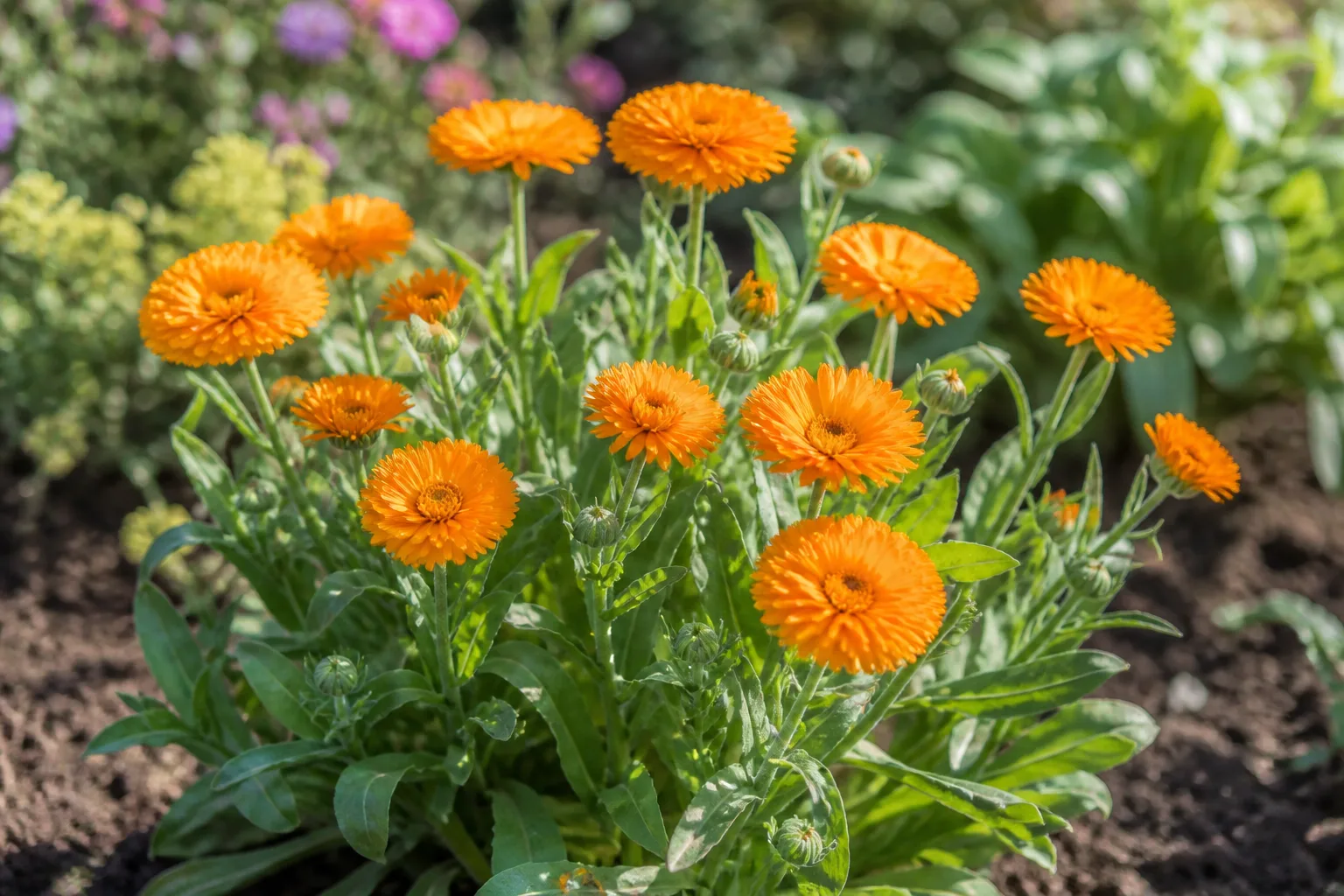
Calendula officinalis is called pot marigold, but it is different from Tagetes marigolds. Check the botanical name because their care and edible use are not interchangeable.
Is calendula a perennial?
It is usually grown as an annual, though it may act as a short-lived biennial in mild climates. It can also self-sow if some seed heads mature.
Does calendula need full sun?
Full sun encourages flowering, and calendula also tolerates partial shade. In hot regions, light afternoon shade can help it through warmer weather.
Can you eat calendula flowers?
Wisconsin Extension describes Calendula officinalis petals and leaves as edible. Confirm the plant identity and use flowers that have not been treated with pesticides; do not confuse it with another plant sold as a marigold.
Why does calendula stop blooming in summer?
Calendula is adapted to cool-season growing and may languish during prolonged heat. Grow it in the cooler part of the year, keep the soil draining well, and allow it to resume when conditions cool.
How often should I water Calendula?
Keep seedlings and newly planted calendula evenly moist while they establish. For established plants, water when the upper inch of soil begins to dry, then let excess drain away. The plant prefers moderate moisture and well-drained soil; do not leave a container standing in water. In practice, water check the soil instead of following a fixed calendar. Containers and plants growing in windy, dry weather may need more frequent checks than an in-ground bed. Water the root zone when the surface layer has started to dry. Feel the top inch of soil. If it is still damp, wait and check again; if it has begun to dry, water thoroughly and allow the pot or bed to drain. Calendula is a cool-season flower. Check containers more often during dry spells, but do not try to compensate for hot-weather stress by keeping the roots constantly wet. In warm climates, grow it in the cooler season and give it light afternoon shade when summer heat arrives.
What light does Calendula need?
Calendula grows best in full sun for the most flowers. It also tolerates Partial shade, Bright afternoon shade in hot-summer climates. Avoid deep shade and prolonged hot weather.
Written by Sai AnanthLead content writer at LeafyPixels. B.Pharmacy graduate from Andhra University with a background in pharmacognosy, turned indoor gardening writer after a long-time plant hobby became a research-led resource for home growers.View Sai Ananth's profile · Reviewed by LeafyPixels Review Board
This Calendula problems problem guide was researched and written by Sai AnanthLead content writer at LeafyPixels. B.Pharmacy graduate from Andhra University with a background in pharmacognosy, turned indoor gardening writer after a long-time plant hobby became a research-led resource for home growers.View Sai Ananth's profile. Problems symptoms on Calendula, lookalike causes, and step-by-step fixes are cross-checked against extension pest, disease, and care references before publication.
We prioritize sources that hold up under scrutiny:
University cooperative extension bulletins and fact sheets (Penn State, Clemson, UMD, NC State, and similar programs)
Botanical garden and horticultural society publications
Peer-reviewed plant science and veterinary toxicology references where pet safety matters (including ASPCA Animal Poison Control)
Established reference works on indoor plant culture
The LeafyPixels editorial team then reviews the draft for clarity, step-by-step usefulness, and fit with real apartment and home conditions-not ideal greenhouse setups. When guidance changes materially, we update the page and note the revision date.
Harvest to Table — How to Grow Pot Marigolds (Calendula) (n.d.) Practical notes on cool-season timing, cultivar size differences, container use, seed starting, and hot-climate shade. [Online]. Available at: https://harvesttotable.com/how-to-grow-pot-marigolds-calendula/ (Accessed: 1 March 2024).
NC State Extension Gardener Plant Toolbox — Calendula officinalis (n.d.) Botanical identity, Mediterranean origin, annual habit, mature size, light, soil tolerance, drainage, edible petals, pollinators, and cat and dog tags. [Online]. Available at: https://plants.ces.ncsu.edu/plants/calendula-officinalis/ (Accessed: 1 March 2024).
Royal Horticultural Society — Calendula officinalis (n.d.) Annual or biennial habit, mature size, full sun and partial shade, free-draining soil, drought resistance, deadheading, and aphids. [Online]. Available at: https://www.rhs.org.uk/plants/62350/calendula-officinalis/details (Accessed: 1 March 2024).
UF/IFAS Extension — Calendula officinalis (n.d.) Cool-season annual habit, Mediterranean origin, container and cut-flower use, edible flowers when not treated with pesticides, and warm-climate planting season. [Online]. Available at: https://ask.ifas.ufl.edu/publication/FP087 (Accessed: 1 March 2024).
University of Wisconsin–Madison Extension — Calendula, Calendula officinalis (n.d.) Difference from Tagetes, annual habit, seed growing, sun and soil, moderate watering, heat response, flowering, deadheading, self-sowing, edible parts, and cultivars. [Online]. Available at: https://hort.extension.wisc.edu/articles/calendula-calendula-officinalis/ (Accessed: 1 March 2024).