Ctenanthe burle-marxii Care Guide: Light, Water & Humidity
Ctenanthe burle-marxii
Fishbone prayer plant care: bright indirect light, high humidity (at least 60%), filtered water, moist well-draining soil, division propagation. Pet safe.
Ctenanthe burle-marxii Care Guide: Light, Water & Humidity
Start with wateringThe most common care mistake for Ctenanthe Burle-MarxiiWatering guide →Ctenanthe Burle-Marxii care essentials
Light
bright indirect light with tolerance for lower indirect light
Water
Keep evenly moist but not waterlogged; water when the top inch of mix begins to dry. Use filtered, rainwater, or rested tap water if tips brown.
Soil
Moisture-retentive but well-draining peat-based or coco coir mix.
Humidity
high humidity — at least 60% is a practical baseline for Marantaceae foliage indoors
Temperature
65–75°F (18–24°C); avoid cold drafts
Fertilizer
Feed lightly during active growth. uk/plants/5026/ctenanthe-burle-marxii/details) at half strength with balanced liquid fertilizer and stop if the plant is stressed, newly repotted, or not actively growing.
About Ctenanthe Burle-Marxii
Ctenanthe Burle-Marxii has a upright growth habit.
| Detail | Information |
|---|---|
| Growth habit | Upright |
| Scientific name | Ctenanthe burle-marxii |
Ctenanthe burle-marxii Care Guide: Light, Water & Humidity
What Is Ctenanthe burle-marxii?
Burle-Marxii at a glance: Ctenanthe burle-marxii — the fishbone or never-never prayer plant with silver fishbone stripes on olive-green leaves. Foliage: compact elliptical leaves with herringbone silver patterning and wine-red undersides; stays smaller than most calatheas. Humidity: high humidity — at least 60%; fishbone pattern stays sharp when air stays moist. Water: filtered or rested tap water — mineral deposits dull the silver fishbone tracery over time. Difficulty: moderate — often slightly easier than calathea but still Marantaceae-sensitive.
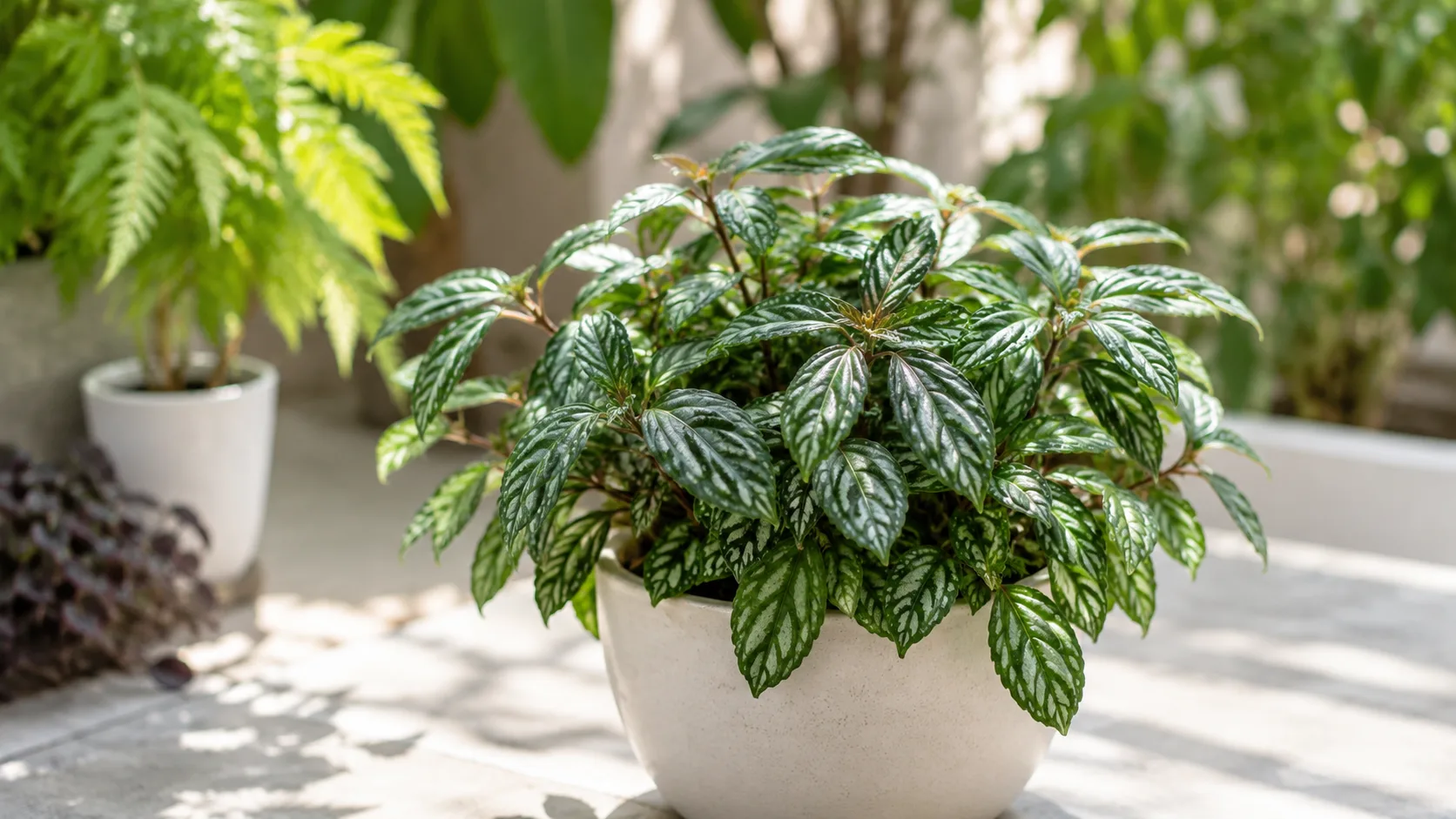
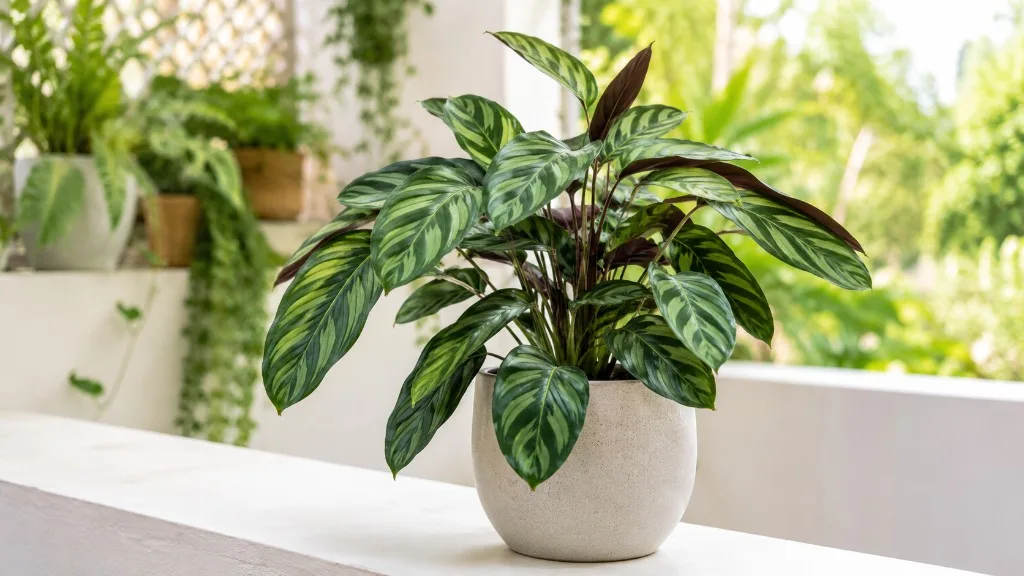
Ctenanthe burle-marxii (pronounced ten-AN-thee bur-lee MARX-ee-eye) is a compact tropical foliage plant in the Marantaceae family — the same group that includes prayer plants (Maranta), Calathea / Goeppertia, and Stromanthe. Retailers sell it as fishbone prayer plant, never never plant, or under Proven Winners Sweet Dreams® Burle-Marxii and Amagris labels. The draw is entirely foliar: pale green oval leaves marked with dark green herringbone stripes, with burgundy or wine-red undersides that show when leaves lift at night.
Indoors, C. burle-marxii typically stays 6 to 12 inches (15 to 30 cm) tall — a strong desk or shelf plant — though the RHS notes mature plants can reach about 60 cm in ideal conservatory conditions. Growth is moderate and clumping; it is not a trailer. If your tag names a taller never-never type such as Ctenanthe oppenheimiana or C. lubbersiana, expect a larger plant with different watering speed even though shops group them under similar common names.
The honest summary for home growers: Ctenanthe burle-marxii rewards steady moisture, filtered light, and real humidity — and it punishes dry air, mineral-heavy tap water, and watering swings. It is generally more forgiving than the fussiest Calatheas, but it still belongs in the humidity-aware foliage category, not with pothos or snake plants on a forget-to-water shelf.
Fishbone prayer plant at a glance
Night leaf folding is normal nyctinasty: leaves stand more upright after dark and flatten by morning. That movement is a family trait, not a distress signal. Daytime curling, gray-green stiff leaves, or crisp margins on a light pot point to thirst, low humidity, cold drafts, or too much direct sun — a different diagnosis entirely.
Pattern contrast is a live humidity gauge. When relative humidity stays low for long stretches, the silver fishbone tracery can look dull and leaf edges brown even if you water on schedule. Fixing humidity and water chemistry usually matters more than repotting or extra fertilizer.
Botanical background and the prayer plant family
Ctenanthe burle-marxii evolved in the understory of tropical rainforests in Brazil, per RHS plant range data. There it receives filtered light, constant warmth, and humidity that rarely dips to heated-home winter levels. Roots sit in loose, organic soil that stays lightly moist but drains freely after rain. Every indoor decision — window placement, watering depth, humidifier use — is an attempt to approximate that floor, not a sunny windowsill in a dry apartment.
The genus name Ctenanthe comes from Greek ktenos (comb) and anthera (anther), referring to comb-like structures on the flower — blooms are insignificant indoors, but the etymology explains why botanists grouped these plants separately from Calathea. Related Ctenanthe species share rhizomatous clumping growth and patterned leaves; care overlaps at the family level even when mature size does not.
How Ctenanthe burle-marxii differs from Calathea
Compared with broad-leaved Calathea / Goeppertia cultivars, C. burle-marxii is usually smaller, more upright, and somewhat more tolerant of a missed watering. It still reacts to tap-water salts and dry air — often on leaf margins before stems fail — but it does not always collapse as dramatically as the most delicate pinstripe or white-fusion calatheas. Compared with trailing Maranta leuconeura, Ctenanthe burle-marxii grows more upright with narrower, rhythmic striping and is propagated mainly by division, not water-rooted stem cuttings.
None of that makes it a beginner plant in a dry room with hard tap water. It means the care model is Marantaceae prayer-plant care, tuned to a compact fishbone species, not generic foliage care copied from a calathea blog written for a four-foot floor plant.
Best growing conditions for Ctenanthe burle-marxii
Four variables decide most outcomes: light, water, soil, and temperature with humidity. Align those and feeding, repotting, and propagation become straightforward. Misalign one — especially water or humidity — and leaf edges report the problem within days.
Light requirements
Medium to bright indirect light suits Ctenanthe burle-marxii best. Think of the bright glow on a wall near a window, not the sunbeam on the floor. The RHS lists partial shade with east- or west-facing sheltered exposure; indoors that translates to an east window or a few feet back from south or west glass with sheer filtering. Midday direct sun bleaches pale fishbone markings and scorches leaf tissue within hours.
Read new growth for feedback. Compact internodes, firm emerging leaves, and crisp pattern contrast mean light is probably right. Longer stems, smaller new leaves, and fading contrast mean more brightness is needed. Bleached patches or brown crispy spots on the sun-facing side mean softer exposure or slower acclimation over one to two weeks. For deeper detail, see the Ctenanthe burle-marxii light guide.
Lower light is survivable — which is why fishbone ctenanthe appears on pet-safe low-light lists — but growth slows, pots dry more slowly, and pattern contrast softens. Reduce watering to match slower metabolism and watch for fungus gnats in cool, constantly damp mix.
Temperature and humidity
Aim for stable room temperatures between 60 and 85°F (15 and 29°C), with the most comfortable band around 65 to 80°F (18 to 27°C). NC State Extension notes genus intolerance to temperatures below 60°F, cold drafts, and direct heat vents. Cold damage shows as dark translucent patches; heat plus dry air produces crispy margins and upward curling.
Humidity is not optional for long-term beauty. Aim for high humidity — at least 60% — for the cleanest leaf edges in dry-home winters. In heated winter air below that baseline, expect brown tips and spider mite pressure even when watering is correct. A humidifier near the plant is the most reliable fix; pebble trays and grouping raise ambient moisture modestly. Misting helps dust removal if you wipe afterward but does not replace structural humidity in heated winter air. A simple hygrometer removes guesswork.
Soil and drainage
Use a moisture-retentive but well-draining peat- or coco-based mix amended with perlite, orchid bark, or pumice so water moves through in seconds rather than pooling. The RHS specifies moist but well-drained loam for the species. A workable home blend is roughly two parts quality houseplant mix, one part perlite, and one part orchid bark — adjust bark upward if the pot stays wet too long.
Always use a container with a drainage hole. Decorative cachepots are fine only if you empty runoff after every watering. Oversized pots keep excess mix wet around small rootballs and are a common silent killer. For mix recipes and pH notes, see the Ctenanthe burle-marxii soil guide.
Water quality and fishbone foliage
Ctenanthe burle-marxii is sensitive to chlorine, fluoride, and hard-water minerals that accumulate in mix and burn leaf edges over time. NC State Extension recommends distilled or filtered water when tap water causes brown tips. Filtered, distilled, or rainwater is ideal; if you use tap water, let it sit overnight so temperature stabilizes and some minerals settle. Mineral damage often appears months after you start — uniform margin burn on old and new leaves alike, not isolated sun scorch patches.
Misting alone rarely holds humidity long enough to protect the fishbone pattern. Pair better water with a humidifier or grouped tropical placement. If new leaves open with brown edges while soil moisture looks correct, switch water sources before changing your watering schedule.
How to water Ctenanthe burle-marxii
The general rule is keep soil consistently moist but never waterlogged. Water when the top 1 to 2 inches (2.5 to 5 cm) of mix feels dry and the pot has moderate weight — the same depth check Garden Design recommends for Ctenanthe. In bright, warm, actively growing conditions that often means every five to ten days for a small pot, but your calendar should trigger a check, not a blind pour.
Water thoroughly until a small amount runs from the drainage hole, then empty the saucer. Use room-temperature water. Link every decision to light and pot size: a plant moved closer to a window drinks faster; a freshly repotted plant dries more slowly until roots explore new volume.
Watering rhythm and seasonal adjustments
During spring and summer, the root zone should feel like a wrung-out sponge most of the time — moist through the middle, not wet mud. Daytime wilting or leaves that stay folded open on a light, dry pot point to underwatering. Yellowing lower leaves on a heavy, wet pot point the opposite direction.
In cooler, dimmer months, growth slows and mix retains moisture longer. Stretch intervals, pause fertilizer, and resist summer watering rhythms in October through February low light — the most common winter failure mode. Heating systems drop humidity while the soil surface dries faster, so check depth moisture, not just top color.
The single most damaging mistake is watering on a fixed weekly schedule without checking the pot. Second: letting the plant sit in a full saucer. Third: alternating drought and flood, which destroys fine roots and produces chronic edge burn.
How to feed Ctenanthe burle-marxii
Ctenanthe burle-marxii is a light to moderate feeder during active growth. Apply a balanced water-soluble fertilizer diluted to half label strength once a month from spring through early fall, matching RHS indoor cultivation guidance for monthly feeding spring through summer. Pour on already-moist soil so nutrients distribute without burning dry roots.
Hold fertilizer during late fall and winter, after major repotting until new growth appears, and while the plant recovers from root damage. Overfeeding produces salt buildup and brown tips that mimic tap-water burn. If margins crisp despite good moisture and humidity, flush the pot with plain water at two to three times pot volume and pause feeding for six to eight weeks. See the dedicated fertilizer guide for dilution examples.
Repotting and root health
Repot roughly every two to three years, or when roots circle drainage holes, water runs straight through without soaking in, or the plant dries out within a day despite a previously normal rhythm. The RHS suggests annual repotting in late spring for conservatory specimens; most indoor fishbone plants tolerate a slower cycle unless clearly rootbound.
Best timing is spring or early summer as active growth resumes. Choose a pot only one size larger — about 2 inches (5 cm) wider than the current rootball. Oversized pots hold excess wet mix and trigger rot after repotting. Use fresh, well-draining tropical mix, maintain the same planting depth, water lightly for the first week, and skip fertilizer until new leaves open.
Propagation by division
The most reliable home method is division during repotting. Ctenanthe burle-marxii forms clumps with multiple shoots from a shared root mass; separating those shoots gives new plants with roots attached — far easier than rooting lone leaves.
Water the parent one day before dividing. Tease apart natural clumps with fingers, using a clean knife only where rhizomes resist gentle pulling. Each division needs at least one healthy shoot, several roots, and a viable growth point. Pot into small, well-draining containers slightly larger than the root mass. Keep divisions in bright indirect light, high humidity (at least 60%), and evenly moist — not soggy — mix for several weeks. Resume normal care when new leaves open without marginal browning. Step-by-step timing lives in the propagation guide.
Common Ctenanthe burle-marxii problems
Most problems are environmental, not mysterious disease. Leaves report water, humidity, light, and water chemistry long before stems collapse. Work through causes in that order.
Yellow leaves, brown tips, and pests
Yellow leaves often mean overwatering, especially in low light or an oversized pot where mix stays wet at depth. Brown tips and crispy margins usually point to low humidity, underwatering cycles, salt or mineral buildup, or cold drafts. If tips appear on older and new leaves alike in winter, humidity and water quality are prime suspects. If only sun-facing patches brown, light is too strong.
Daytime curling with dry pot weight signals thirst or low humidity. Night folding without daytime curl is nyctinasty — no fix required. Watch for spider mites in dry air (fine webbing, stippling), mealybugs in leaf axils, and aphids on tender new growth. Fungus gnats indicate surface moisture staying wet too long — let the top layer dry slightly more between drinks.
Is Ctenanthe burle-marxii safe for pets?
Ctenanthe burle-marxii is widely considered non-toxic to cats and dogs and appears on pet-safe plant lists with other Marantaceae foliage. The ASPCA lists prayer plants in Marantaceae as non-toxic to cats, dogs, and horses; Ctenanthe is commonly grouped with them as low-risk, though it is not always individually listed in the ASPCA database.
Any plant material can cause mild gastrointestinal upset if a pet eats enough, even when not poisonous. Practical guidance: discourage chronic nibbling, watch for vomiting or diarrhea after known chewing, and contact your veterinarian or the ASPCA Animal Poison Control Center if symptoms persist.
Conclusion
Ctenanthe burle-marxii is a compact Marantaceae foliage plant from Brazilian rainforest understory that wants filtered bright light, evenly moist well-draining soil, and high humidity (at least 60%) in typical heated homes. It is more forgiving than many Calatheas but still sensitive to dry air, tap-water minerals, and watering swings. Night leaf folding is normal nyctinasty; daytime curl and crisp margins call for water, humidity, or light adjustments.
Check pot moisture at depth before every watering, use filtered or rested water if margins brown despite good humidity, divide during spring repotting when you want more plants, and feed lightly only in active growth. Get those basics right and the fishbone prayer plant becomes a long-lived, patterned, pet-friendly accent worth a place in a serious foliage collection.
When to use this page vs other Ctenanthe burle-marxii guides
- Ctenanthe burle-marxii hub — Canonical species page; care topics branch from here.
- Topic guides — Use watering, light, soil, fertilizer, repotting, propagation, and pruning when you need depth on one variable.
Related Ctenanthe burle-marxii guides
How to care for Ctenanthe Burle-Marxii?
How much light does Ctenanthe Burle-Marxii need?
bright indirect light with tolerance for lower indirect light
- bright indirect light with tolerance for lower indirect light - bright indirect light with tolerance for lower indirect light.
When should you water Ctenanthe Burle-Marxii?
Keep evenly moist but not waterlogged; water when the top inch of mix begins to dry. Use filtered, rainwater, or rested tap water if tips brown.
- Check top 2 inches - Keep evenly moist but not waterlogged; water when the top inch of mix begins to dry.
- Drain excess water - Keep evenly moist but not waterlogged; water when the top inch of mix begins to dry.
What soil works best for Ctenanthe Burle-Marxii?
Moisture-retentive but well-draining peat-based or coco coir mix.
- Well-draining mix - Moisture-retentive but well-draining peat-based or coco coir mix.
Grower notes for Ctenanthe Burle-Marxii
What makes Ctenanthe Burle-Marxii different
Ctenanthe Burle-Marxii — the Fishbone Prayer Plant — is a compact Marantaceae perennial with oblong pale-green leaves marked by dark green fishbone bands and purple undersides. It stays smaller and more rhythmic in leaf shape than many broad round Calatheas, and it often tolerates home conditions slightly better than the most delicate prayer-plant types. It is still a humidity-aware foliage plant, not a low-maintenance low-light option.
Ctenanthe Burle-Marxii water note
Use filtered, rain, or rested water if your tap water leaves mineral crusts on pots. Ctenanthe Burle-Marxii leaf edges tell the truth about water quality and dry air, so repeated brown tips should change your routine. Keep the mix lightly moist, then let the top layer begin to dry before watering again. Airflow matters because a damp crowded crown invites spotting.
What matters most with Ctenanthe Burle-Marxii
Ctenanthe Burle-Marxii is part of the fussy foliage group where leaf movement, crisping, and humidity stress can look dramatic before the plant is truly lost. Judge the newest rolled leaves and root moisture before reacting to every old edge mark. In practice, the care checkpoint is simple: bright indirect light with tolerance for lower indirect light. Pair that with moisture-retentive but well-draining peat-based or coco coir mix, and avoid changing water, pot size, and placement all at once.
Best placement in a real home
Ctenanthe Burle-Marxii belongs where bright indirect light is realistic for most of the day, not only where the pot looks good. Keep evenly moist but not waterlogged; water when the top inch of mix begins to dry. If the pot stays wet longer than expected, move the plant into better light or reassess the mix before watering again. Humidity target: high humidity — at least 60% is a practical baseline for Marantaceae foliage indoors. Temperature comfort zone: 65–75°F (18–24°C); avoid cold drafts.
Before you buy this plant
Choose Ctenanthe Burle-Marxii with firm new growth, clean leaf undersides, and soil that does not smell sour or feel compacted. Be cautious if you see brown tips, sticky residue, collapsed crowns, or a pot that is wet in poor light. Cosmetic old-leaf damage is less worrying than weak roots or active pests.
First month after bringing it home
Do not repot Ctenanthe Burle-Marxii on day one unless the mix is failing or pests are obvious. Quarantine it, learn how fast the pot dries, and keep care boring while it adjusts. Watch especially for brown tips and curling leaves. If problems appear, correct the condition first rather than stacking fertilizer, repotting, and pruning together.
Is it pet safe?
Ctenanthe Burle-Marxii is generally considered pet safe.
Watering Ctenanthe Burle-Marxii
Keep evenly moist but not waterlogged; water when the top inch of mix begins to dry. Use filtered, rainwater, or rested tap water if tips brown.
Soil & potting for Ctenanthe Burle-Marxii
Moisture-retentive but well-draining peat-based or coco coir mix.
Humidity & temperature for Ctenanthe Burle-Marxii
Ctenanthe Burle-Marxii prefers high humidity — at least 60% is a practical baseline for Marantaceae foliage indoors, though normal home humidity is usually fine. Keep temperatures around 65–75°F (18–24°C); avoid cold drafts.
| Detail | Information |
|---|---|
| Humidity | high humidity — at least 60% is a practical baseline for Marantaceae foliage indoors - normal home humidity is fine. |
| Ideal temperature | 65–75°F (18–24°C); avoid cold drafts |
Fertilizer & pruning for Ctenanthe Burle-Marxii
Use feed lightly during active growth. uk/plants/5026/ctenanthe-burle-marxii/details) at half strength with balanced liquid fertilizer and stop if the plant is stressed, newly repotted, or not actively growing. for Ctenanthe Burle-Marxii.
| Detail | Information |
|---|---|
| Fertilizer type | Feed lightly during active growth. uk/plants/5026/ctenanthe-burle-marxii/details) at half strength with balanced liquid fertilizer and stop if the plant is stressed, newly repotted, or not actively growing. |
Common problems on Ctenanthe Burle-Marxii
Yellow Leaves
MediumLikely cause: Common on this plant type; confirm with recent watering, light, and root checks.
Quick fix: Inspect the plant and correct the most likely care stressor before stacking treatments.
Full fix guide →Brown Tips
MediumLikely cause: Common on this plant type; confirm with recent watering, light, and root checks.
Quick fix: Inspect the plant and correct the most likely care stressor before stacking treatments.
Full fix guide →Root Rot
MediumLikely cause: Common on this plant type; confirm with recent watering, light, and root checks.
Quick fix: Inspect the plant and correct the most likely care stressor before stacking treatments.
Full fix guide →Overwatering
MediumLikely cause: Common on this plant type; confirm with recent watering, light, and root checks.
Quick fix: Inspect the plant and correct the most likely care stressor before stacking treatments.
Full fix guide →Underwatering
MediumLikely cause: Common on this plant type; confirm with recent watering, light, and root checks.
Quick fix: Inspect the plant and correct the most likely care stressor before stacking treatments.
Full fix guide →Spider Mites
MediumLikely cause: Common on this plant type; confirm with recent watering, light, and root checks.
Quick fix: Inspect the plant and correct the most likely care stressor before stacking treatments.
Full fix guide →Mealybugs
MediumLikely cause: Common on this plant type; confirm with recent watering, light, and root checks.
Quick fix: Inspect the plant and correct the most likely care stressor before stacking treatments.
Full fix guide →Aphids
MediumLikely cause: Common on this plant type; confirm with recent watering, light, and root checks.
Quick fix: Inspect the plant and correct the most likely care stressor before stacking treatments.
Full fix guide →Leggy Growth
MediumLikely cause: Common on this plant type; confirm with recent watering, light, and root checks.
Quick fix: Inspect the plant and correct the most likely care stressor before stacking treatments.
Full fix guide →Slow Growth
MediumLikely cause: Common on this plant type; confirm with recent watering, light, and root checks.
Quick fix: Inspect the plant and correct the most likely care stressor before stacking treatments.
Full fix guide →Wilting
MediumLikely cause: Common on this plant type; confirm with recent watering, light, and root checks.
Quick fix: Inspect the plant and correct the most likely care stressor before stacking treatments.
Full fix guide →Drooping Leaves
MediumLikely cause: Common on this plant type; confirm with recent watering, light, and root checks.
Quick fix: Inspect the plant and correct the most likely care stressor before stacking treatments.
Full fix guide →Low Humidity
MediumLikely cause: Common on this plant type; confirm with recent watering, light, and root checks.
Quick fix: Inspect the plant and correct the most likely care stressor before stacking treatments.
Full fix guide →Not Enough Light
MediumLikely cause: Common on this plant type; confirm with recent watering, light, and root checks.
Quick fix: Inspect the plant and correct the most likely care stressor before stacking treatments.
Full fix guide →Fungus Gnats
MediumLikely cause: Common on this plant type; confirm with recent watering, light, and root checks.
Quick fix: Inspect the plant and correct the most likely care stressor before stacking treatments.
Full fix guide →Mold on Soil
MediumLikely cause: Common on this plant type; confirm with recent watering, light, and root checks.
Quick fix: Inspect the plant and correct the most likely care stressor before stacking treatments.
Full fix guide →