Potassium Deficiency on Dieffenbachia: Brown Margins
Quick answer
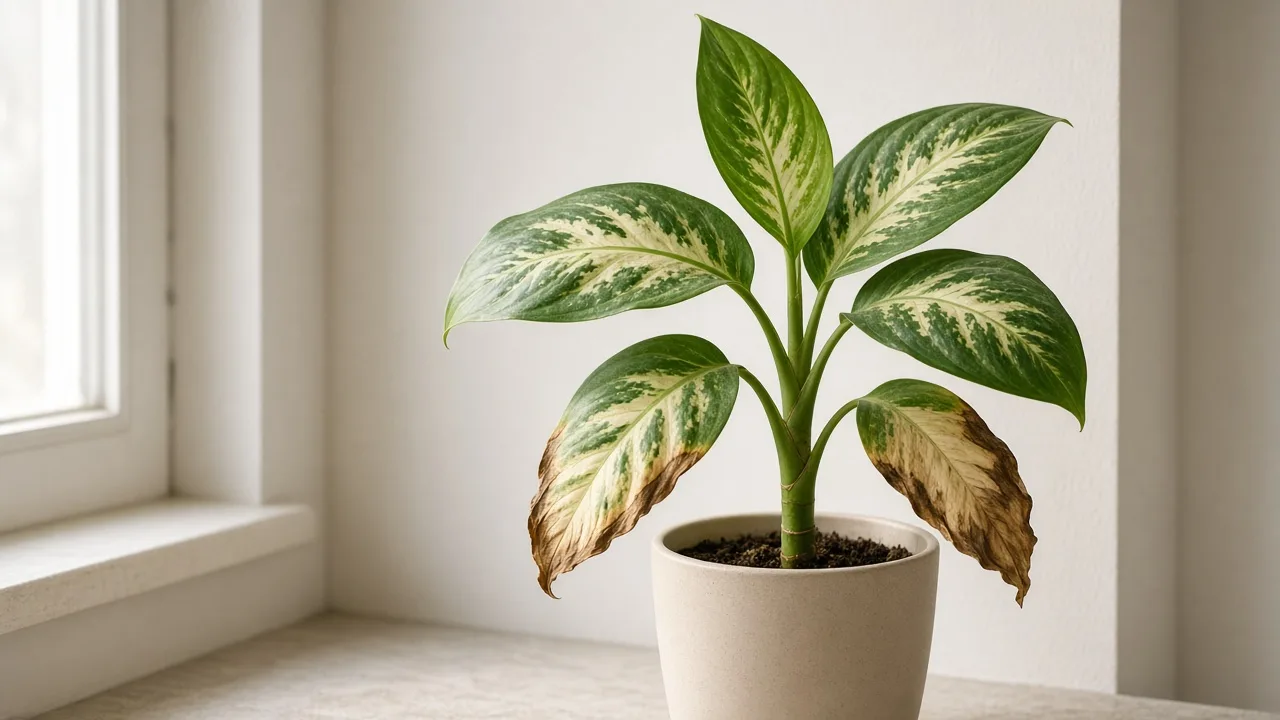
Potassium deficiency on Dieffenbachia shows as dry brown scorch along the outer margins of older lower leaves along the upright cane, while new blades at the growing tip may still look acceptable. First step: read the N-P-K on your fertilizer label and inspect several lowest mature leaves together—not the calendar alone.
Potassium Deficiency on Dieffenbachia: Causes, Checks & Fixes
This guide covers potassium deficiency on Dieffenbachia. See also the general Potassium Deficiency guide, watering, and light pages for this plant.
Potassium Deficiency on Dieffenbachia: Causes, Checks & Fixes
Quick answer
Potassium deficiency on Dieffenbachia (dumb cane) shows as dry brown scorch along the outer margins of older lower leaves on the upright cane, while new blades at the growing tip may still look acceptable for weeks. Potassium is very mobile in plants, and deficiency symptoms show up first on lower leaves as flecking or mottling on the margins, with prolonged shortage leading to necrosis along the edges.
For how mobile nutrients behave in general, see our potassium deficiency guide. On dumb cane, read the broad patterned blades on the lowest visible cane section—crisp edge burn there with a firm stem differs from brown tips from uneven watering or magnesium deficiency (yellow between green veins on old leaves).
First step: read your fertilizer label for potassium (K) and inspect several lowest mature leaves together.
Wear gloves when inspecting or trimming foliage. Dieffenbachia sap can irritate skin; keep dropped leaves away from pets and children.
When to use this page vs other Dieffenbachia guides
| Pattern | Read next |
|---|---|
| Crisp brown scorch on outer margins of several old lower leaves | Potassium deficiency (this page) |
| Yellow between green veins on oldest lower leaves | Magnesium deficiency |
| Uniform pale wash on oldest leaves, smaller new blades | Nitrogen deficiency |
| Yellow new tip leaves with green veins on older foliage | Iron deficiency |
| Brown tips only, mid-blade dry spots without full margin band | Brown tips |
| One bottom leaf yellowing slowly, firm cane | Normal aging — yellow leaves |
| Soft cane, wet heavy pot, widespread yellow lower leaves | Overwatering |
What potassium deficiency looks like on Dieffenbachia
Dumb cane carries large, variegated leaves on thick petioles along a vertical cane. Potassium deficiency on mature foliage typically begins with chlorosis at the margins, then necrotic brown scorch on the leaf edges—easy to spot on those wide blades once you compare the lowest leaves to foliage near the growing tip.
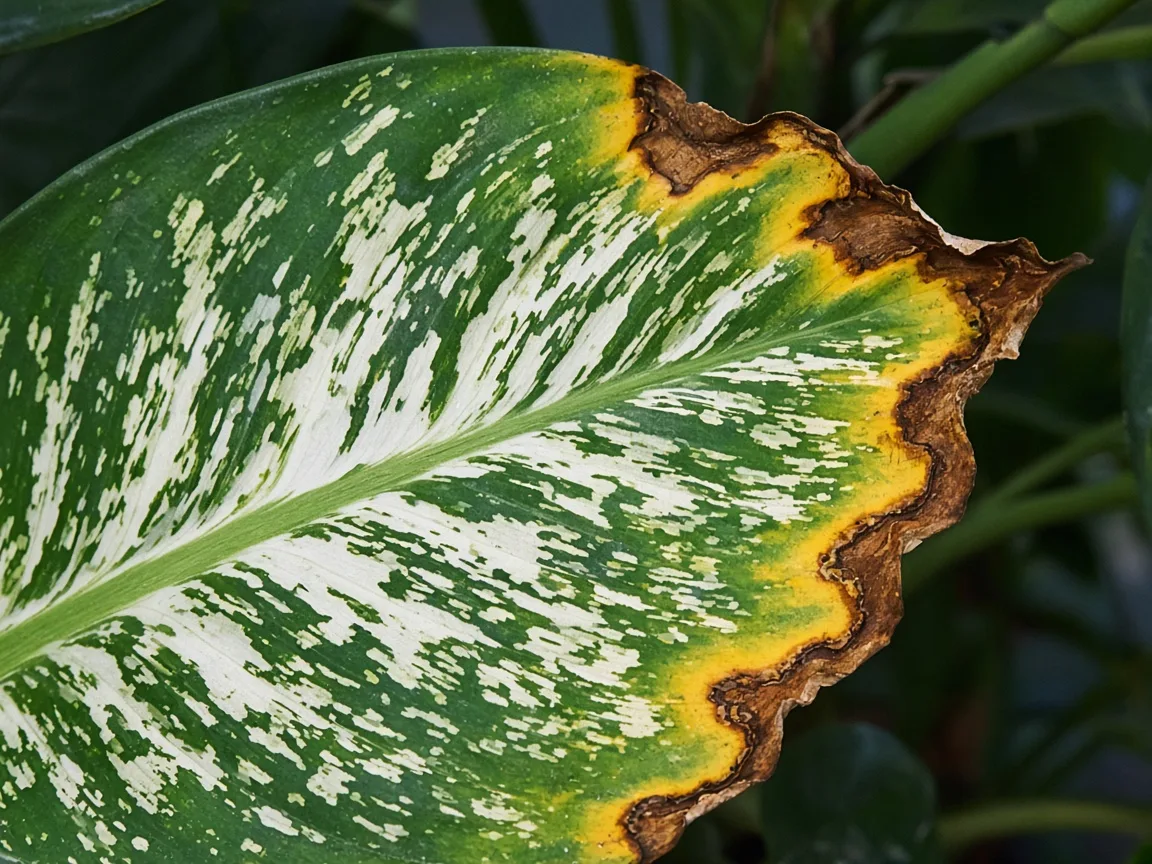
Dry brown necrosis along the outer margin of an older dumb cane leaf, with greener tissue still visible toward the midrib and cane tip.
Typical pattern:
- Crisp brown or tan scorch along the outer margins of the oldest lower leaves on the lowest cane section
- Yellow or pale band sometimes visible just inside the burned edge before tissue turns fully necrotic
- New leaves at the cane tip may stay green and patterned longer because the plant moves mobile potassium upward
- Several lower blades affected at once during active growth—not one spent leaf every few months
- Firm cane at the soil line unlike mushy overwatering damage
- Petioles may feel slightly weaker than expected on an evenly watered plant
What it does not look like:
- Yellow between dark green veins on lower leaves — magnesium deficiency
- Uniform pale yellow-green across entire old leaves including veins — nitrogen deficiency
- Green veins on new unfurling leaves at the tip — iron deficiency
- Isolated dry tips without a continuous margin band on old blades — brown tips or fluoride in tap water
- Curled leaves with brown edges from excess fertilizer right after a heavy feed — salt burn, not simple depletion
Why Dieffenbachia gets potassium deficiency
Dieffenbachia grows moderately to fast indoors and draws potassium from container mix every time you water deeply. Each drainage flush carries dissolved minerals out of the pot. After one to two years in the same perlite-amended mix without repotting, available potassium can drop even when the cane still pushes new patterned leaves at the tip.
Dumb-cane-specific causes:
- Nitrogen-heavy fertilizer with modest K — Pushes large new blades while older leaves along the cane scorch at the margins, a classic mobile-nutrient pattern.
- Skipped feeding on “easy” houseplants — Months without any complete fertilizer in bright offices depletes K faster than in dim corners where growth is slow.
- Salt crust on the soil surface — Synthetic feed at too-high strength plus hard tap water leaves white deposits; excess fertilizer can curl leaves with brown edges in a pattern that mimics deficiency while roots struggle.
- Blocked uptake from overwatering — Saturated mix keeps roots anaerobic; potassium will not absorb through a soft cane on wet soil.
- Confusion with normal lower-leaf drop — The lowest leaves may yellow and droop as part of normal growth; potassium affects multiple lower blades with margin scorch, not one leaf fading slowly at a time.
Broad variegated blades and where scorch shows first
On cultivars like ‘Camille’ or ‘Tropic Snow’, cream or white sectors along the leaf edge can mask early chlorosis until the margin turns crisp brown. Compare symmetric scorch on both sides of the midrib on the same lower leaf—uneven brown tips from dry pockets in the mix often hit one corner first.
Because potassium is mobile, damage concentrates on lowest attached leaves while mid-cane foliage may still look acceptable. A tall three-foot cane can hold perfect green at the tip while the bottom third shows papery brown margins on broad blades. Walk the cane from the soil line upward before assuming the problem is only on new growth.
Cane architecture vs normal senescence
Unlike rosette houseplants, dumb cane sheds from the bottom of the cane upward as it ages. Potassium deficiency also hits lowest leaves first, which is why owners confuse the two. Senescence is usually one leaf every few months on firm cane with appropriate dry-down; potassium scorches several lower blades at once with dry margin necrosis during active growth.
Check leaves on the lowest visible cane section before mid-cane foliage. If interveinal yellowing appears only on the newest unfurling leaf at the tip, switch to the iron deficiency guide. Firm cane with scorched lower margins and green upper growth is the classic potassium picture on upright Dieffenbachia.
How to confirm
- Leaf age pattern — Scorched lower mature margins with relatively healthy new tips strongly suggest mobile nutrient shortage, including potassium. Widespread uniform yellowing of entire old leaves points more toward nitrogen deficiency.
- Fertilizer label — Read the N-P-K ratio on the last product used. Confirm the middle or third number lists adequate potassium (K) or potash, not nitrogen alone.
- Feeding history — Note how often you fed during the last spring and summer on this fast-growing cane.
- Salt crust check — White crystalline deposits on the soil surface suggest salt stress that mimics or worsens marginal burn. Sour smell points to root rot, not simple deficiency.
- Soil moisture at one inch — Clemson HGIC recommends letting soil dry to the touch to a depth of one inch before watering; chronic wet mix blocks uptake even when potassium is present.
- Cane firmness — Solid stem at soil line vs soft base on soggy mix.
- Margin vs interveinal — Edge necrosis on old blades vs yellow between veins (magnesium).
First fix
Read the fertilizer N-P-K label and stop any nitrogen-heavy feed until you confirm potassium is supplied.
Photograph the label panel, note the last application date, and set high-first-number products aside. You are not starving the plant; you are stopping the imbalance that keeps pulling mobile potassium away from older leaves along the cane.
Do not repot on day one unless the mix smells sour or roots are clearly rotting. Do not flush or fertilize until you have confirmed the label and leaf pattern—blind feeding before diagnosis can add salts to an already crusted pot.
Step-by-step recovery
- Flush salts if crust is visible — Move the pot to a sink. Run lukewarm water slowly through the mix until water flows freely from drainage holes for several minutes. Let the pot drain fully and empty the saucer. Hold all fertilizer for four to six weeks after a heavy flush, matching UF/IFAS advice to flush accumulated salts when leaves curl with brown edges.
- Switch to complete balanced feed — During active growth, use a balanced houseplant fertilizer at half label strength with meaningful potassium in the N-P-K. Severe potassium deficiency can show brown spots, yellow edges, or brown veins on older leaves; adequate K without excess nitrogen matches what container dumb cane typically needs.
- Water on dumb cane’s normal rhythm — Allow the top inch to dry before watering again. Even moisture helps roots take up potassium after salts are leached.
- Repot if soil is exhausted — If roots circle the pot and the plant has not been repotted in two or more years, move it in spring into fresh draining soil. Do not fertilize for two weeks after repotting while roots settle.
- Trim damaged lower leaves — Once new growth shows clean margins, remove the worst scorched foliage with gloves. Those burned edges will not revert to green.
- Improve light if growth is weak — Move to medium or bright indirect light so new blades can use the potassium you supply. Dumb cane in dim corners will not fully recover even with perfect fertilizer.
Skip random Epsom salt unless you also see classic magnesium interveinal yellowing on older leaves.
Recovery timeline
Expect no change on already scorched margins—that tissue is dead. Within three to six weeks of corrected feeding and salt management during the growing season, the next one or two unfurling leaves at the cane tip should emerge with intact edges if potassium was the main issue.
If marginal burn keeps climbing to new leaves despite a complete low-salt feeding program, reassess for root rot, chronic overwatering in low light, or magnesium deficiency rather than potassium alone.
Lookalike symptoms
| Pattern | Likely cause |
|---|---|
| Brown scorch on outer margins of several old lower leaves | Potassium deficiency (this page) |
| Yellow between green veins on old lower leaves | Magnesium deficiency |
| Uniform pale oldest lower leaves | Nitrogen deficiency |
| Yellow new tip leaves, green veins on older foliage | Iron deficiency |
| Brown tips only, uneven on one side | Brown tips |
| Curled leaves with brown edges right after heavy feed | Fertilizer salt burn — flush per UF/IFAS |
| Soft cane, wet heavy pot | Overwatering |
Mistakes to avoid
Do not treat every yellow leaf as potassium deficiency—wet soil and low light are more common on dumb cane. Do not stack repot, heavy prune, and double fertilizer on the same week. Do not add more nitrogen hoping for greener margins when old leaves already scorch at the edges.
How to prevent it next time
Feed with complete balanced fertilizer during the growing season, flush salts mid-season if you use synthetic feed on hard tap water, and refresh mix at repotting intervals. Inspect lower cane leaves monthly during fast growth so margin scorch is caught before it climbs the stem.
Related Dieffenbachia guides
- Dieffenbachia overview
- Dieffenbachia fertilizer
- Magnesium deficiency
- Nitrogen deficiency
- Dieffenbachia problems hub
Related tool
Use the Fertilizer Dilution Calculator to narrow causes for potassium deficiency on this plant before changing multiple variables at once.