Dracaena Warneckii Fertilizer Guide
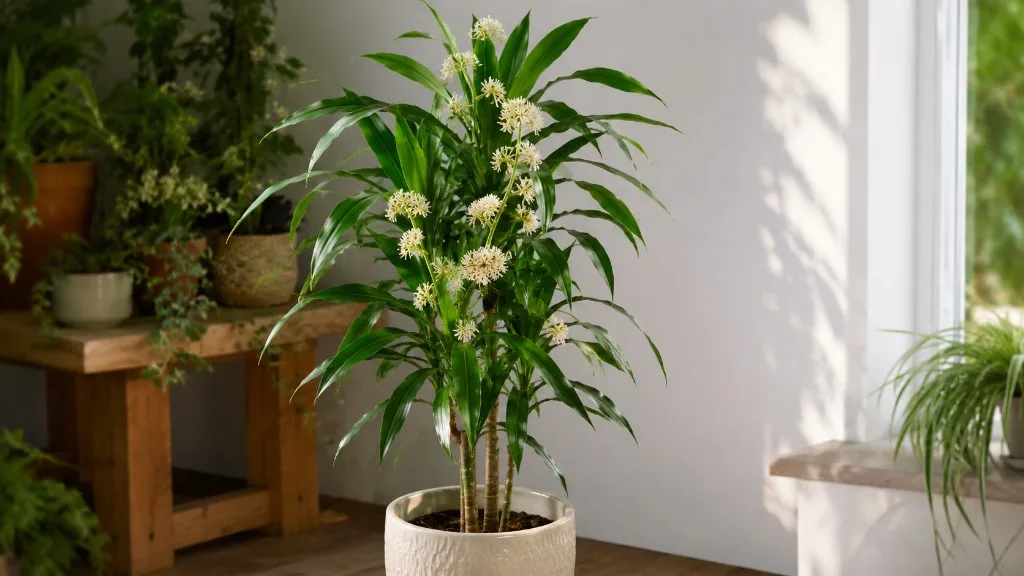
Dracaena Warneckii Fertilizer Guide
Dracaena Warneckii Fertilizer Guide
About this guide: Dracaena deremensis ‘Warneckii’ is the classic white-striped dracaena with gray-green leaves banded in cream or white. It is one of the most common office dracaenas because it tolerates moderate light and irregular watering better than fussy tropicals — but chronic overwatering and fluoridated tap water still produce the familiar brown-tip pattern. Match care to other deremensis forms: airy mix, dry-down between drinks, filtered water when tips burn.
A Dracaena Warneckii that develops crispy brown margins right after you start feeding is not being dramatic — it is reacting to dose, timing, or fluoride in the water-and-fertilizer stack. Dracaena Warneckii fertilizer should be a light, seasonal supplement for this slow-growing deremensis cultivar, not a year-round growth booster. The white stripes on each strap leaf mean less total chlorophyll than solid-green Janet Craig forms, so the plant converts nutrients on a slower clock — especially in the moderate office light where Warneckii often lives.
The right approach is straightforward: use a dilute balanced liquid fertilizer during active spring and summer growth only, always on moist soil, and treat fluoride sensitivity as a hard constraint. University extension sources document Dracaena deremensis among the most fluoride-reactive indoor foliage plants. Combined with municipal tap water and perlite-heavy mixes, even modest feeding can push brown tips onto the cream leaf margins that make Warneckii recognizable. The sections below cover when to feed, what formula to choose, how Warneckii differs from faster dracaenas, and how to recover when salts or fluoride get ahead of you.
Why Warneckii Needs Light Fertilizer, Not Heavy Feeding
Dracaena deremensis ‘Warneckii’ grows as a sparsely branched shrub with arching, sword-shaped leaves — typically grey-green with narrow white or cream bands along each margin. The RHS lists this cultivar as Dracaena fragrans (Deremensis Group) ‘Warneckei’, with synonyms including D. deremensis ‘Warneckii’, and notes moist but well-drained conditions in bright indirect light. Indoors, most specimens reach roughly 1–1.5 m (3–5 ft) over years, not months. That pace tells you how much food the roots can use at once.
Unlike fast-growing pothos or philodendron, Warneckii evolved as an understory plant in tropical Africa where forest soils are thin and nutrients sparse. Nitrogen, phosphorus, and potassium in potting mix deplete as you water, and a balanced top-up during active growth keeps strap leaves firm and green-grey without pushing soft, weak foliage. Excess fertilizer does not speed cane extension meaningfully — it accumulates as soluble salts, stresses roots, and shows up as burned tips on the very white margins that define the cultivar.
Clemson HGIC warns that leaf tips and margins may burn or yellow when dracaenas are fertilized too heavily. For Warneckii, that warning is especially visible: damage often appears first on the pale stripe at the leaf edge, not across the whole blade. The goal is steady maintenance nutrition during the months when new leaves unfurl from the rosette — not maximum growth rate. Many owners blame underwatering on Dracaena Warneckii or low humidity when the real trigger is salt or fluoride buildup from feeding on the wrong schedule.
When to Fertilize Dracaena Warneckii: Growing Season Only
Dracaena Warneckii fertilizer belongs in the growing season only — roughly spring through late summer in temperate climates, or April through October as the RHS feeding window describes for dracaenas generally. During this window, longer days and warmer roots support new leaf production at the crown. Outside it, growth slows even in warm rooms, and unused fertilizer concentrates in the potting mix.
Before every feeding, confirm active growth: a new strap leaf emerging from the center rosette, visible lengthening at the leaf tip, or a firm cane pushing height. If your Warneckii has not produced new foliage in six weeks or more, skip the feed regardless of the calendar. Office plants in dim corners may barely grow through winter; feeding them because it is June still adds salts they cannot process.
Spring and Summer Feeding Window
| Month | Action | Notes |
|---|---|---|
| March | Observe only | Wait for first new leaf before feeding |
| April | First half-strength feed if new growth appears | Moist soil; balanced liquid only |
| May–July | Feed every 4–6 weeks | Peak season; leach soil monthly with plain water |
| August | Last feed or stretch to 6-week intervals | Slow if new leaves stop |
| September–February | No fertilizer | Dormancy; follow watering guide dry-down rules |
In spring, resist feeding the moment days lengthen. Warneckii roots wake before top growth is obvious, but fertilizer applied before a visible new leaf adds salts the plant is not yet using. Wait until a fresh strap leaf appears, then apply one half-strength dose.
Why to Pause in Fall and Winter
From late autumn through early spring, stop fertilizing Warneckii entirely in typical indoor conditions. Shorter photoperiod reduces metabolic activity even when the thermostat stays high. Fertilizer applied during dormancy does not vanish — it raises the salt index of the soil and often produces tip burn weeks later, which sends growers chasing humidity fixes while the cause was a November feeding.
If your Warneckii sits in a bright sunroom and pushes new leaves through winter, one light quarter-strength feed mid-season may be justified. For the standard office or living-room plant under moderate Dracaena Warneckii light, the answer is still no. Resume in early spring when the first new leaf of the season appears, starting at half strength before returning to a normal interval over two to three weeks.
Best Fertilizer Type for Dracaena Warneckii
The best dracaena warneckii fertilizer is a dilute balanced liquid applied to moist soil during active growth. Liquid formulas dissolve evenly through the root zone and let you control dose — critical for a salt-sensitive cultivar in a container. Clemson HGIC recommends feeding dracaenas with liquid foliage plant fertilizer once a month during spring and summer; time-release pellets are optional but harder to calibrate in small pots.
Avoid slow-release granules in 15–20 cm (6–8 inch) office pots unless you understand their release curve. One spring application can supply months of nutrients Warneckii does not need, and temperature swings alter breakdown rate unpredictably. For most home growers, half-strength liquid on a clear schedule is simpler and safer.
NPK Ratios That Work for Striped Dracaena
These ratios perform well when diluted to half the label strength:
- 10-10-10 — widely available balanced houseplant liquid
- 20-20-20 — same balance at higher concentration; cut to half strength or more
- 3-1-2 or 5-5-5 — slightly nitrogen-leaning options for foliage rosettes
Warneckii rarely flowers indoors, so high-phosphorus bloom boosters (10-30-20 and similar) add phosphorus and salts without benefit. Micronutrients in quality houseplant fertilizers cover iron and manganese needs at trace levels. If new leaves show interveinal yellowing despite correct watering and light, rule out overwatering on Dracaena Warneckii and fluoride injury before assuming a deficiency — both mimic nutrient stress on deremensis leaves.
Always mix to half label strength for Warneckii, and consider quarter strength for newly repotted plants or any specimen already showing tip burn. Full-strength container fertilizer targets faster species and will burn Warneckii roots over repeated applications.
Fluoride Sensitivity on White-Margined Leaves
Dracaena deremensis cultivars including Warneckii are documented as highly fluoride-sensitive. The Pacific Northwest Pest Management Handbooks state that both D. deremensis and D. fragrans are very sensitive to fluoride toxicity, that fluoride is an accumulative poison concentrating at leaf margins through the transpiration stream, and that excessive drying between waterings can worsen brown tips — especially if the plant is fertilized too much.
Fluoride reaches Warneckii from three main sources: fluoridated municipal tap water (often near 1 ppm), potting mixes with perlite, and fertilizers containing superphosphate. Michigan State University Extension notes that single superphosphates in fertilizer are a significant fluoride source for sensitive crops including dracaena, and recommends monitoring soluble salts while avoiding over-fertilization.
Clemson HGIC adds practical guardrails: keep soil pH between 6.0 and 6.5, avoid potting soils with a very high percentage of perlite, and do not use fertilizer containing superphosphate because it often carries high fluorine levels. On Warneckii, fluoride and salt burn look similar — brown, necrotic tips and margins — but fluoride damage is cumulative and largely irreversible on old tissue. New leaves tell you whether your water, mix, and feeding changes worked; trim old brown edges for appearance only.
How Often to Fertilize Dracaena Warneckii
During active growth, fertilize Warneckii every four to six weeks at half strength, aligning with Clemson’s monthly spring-and-summer guidance and the slower metabolism of a moderate-light office plant. Calibrate to your room:
- Every 4 weeks — Warneckii in bright indirect light actively pushing multiple new leaves
- Every 5–6 weeks — standard office or living-room moderate light
- Every 6–8 weeks — large pot, root-bound plant, or dim placement with minimal new growth
- Not at all — fall through early spring, or anytime the plant shows stress
Quarter-strength every watering can work for experienced growers who flush soil monthly, but in small pots it raises salt buildup risk because fertilizer enters more often. A clear monthly-or-so schedule with plain water between feedings is easier to manage and easier to diagnose when tips brown after a specific date.
After repotting Dracaena Warneckii into fresh mix, wait four to six weeks before fertilizing. Commercial blends often include starter nutrients, and cut or disturbed roots need time to heal before handling a nutrient load. Feeding too soon after repot is a common cause of post-transplant leaf drop on cane dracaenas.
Step-by-Step: How to Feed Warneckii Safely
Follow this sequence every feeding to minimize root burn on Warneckii:
Check season and growth. Confirm spring-to-late-summer timing and visible new leaf production. If either fails, skip.
Verify soil moisture. Never fertilize dry soil. Water with plain low-fluoride water the day before, or feed immediately after a regular watering when mix is evenly moist.
Mix at half strength. Measure with the product label, then halve the dose. Use a dedicated spoon or syringe.
Apply to soil only. Pour slowly over the mix until drainage runs clear, as with normal watering. Foliar feeding is unnecessary and can spot strap leaves.
Empty the saucer. Do not let the plant sit in fertilizer runoff.
Record the date. Prevents accidental double-feeding, which hurts Warneckii more than a skipped month.
Once per month during the feeding season, replace one watering with a thorough plain-water flush — three slow passes letting excess drain fully each time. MSU Extension recommends leaching when soluble salts are high; for Warneckii, monthly leaching during feeding months is preventive, not optional.
Signs Your Warneckii Is Getting the Right Amount
Correct dracaena warneckii fertilizer timing shows up as steady, proportional growth — not dramatic spurts. New strap leaves emerge full-sized for the cultivar, with crisp white margins and grey-green centers. The rosette stays symmetrical without oversized soft leaves that indicate excess nitrogen. Soil surface stays free of white crystalline crust, and the pot does not smell sour from salt-stressed roots in wet mix.
Perhaps the best indicator is consistency: your Warneckii adds a predictable number of leaves each growing season, loses lower leaves at a normal slow rate, and does not develop fresh tip burn within two weeks of feeding. If the last feed was six weeks ago and foliage looks stable, you are on track.
Signs of Over-Fertilizing and Fluoride Damage
Over-fertilizing overlaps with fluoride toxicity and drought stress on Warneckii — diagnosis requires the full care picture from watering, light, and soil guides.
Salt and over-feeding signals:
- Brown crispy tips appearing soon after a feed
- White or yellow crust on the soil surface
- Yellow lower leaves while margins burn
- Sudden leaf drop without pest pressure
- Stunted new leaves that emerge small or twisted
Fluoride accumulation signals:
- Gradual tip burn worsening over months, not overnight after one dose
- Damage concentrated on white leaf margins while the green center stays sound longer
- Symptoms persisting despite reduced feeding, especially with fluoridated tap water
- Sister plants (spider plant, lily) showing similar margin necrosis in the same room
Existing damaged tissue does not recover. New growth comes in clean once you fix the source. See brown tips on Dracaena Warneckii when margin burn is the main symptom after you adjust feeding and water.
How to Flush Warneckii After Over-Feeding
If you suspect over-fertilizing, act quickly:
- Stop feeding immediately.
- Flush three times with plain room-temperature water low in fluoride — until free drainage each time, waiting thirty minutes between passes for severe cases.
- Empty saucers completely after each flush.
- Hold fertilizer four to six weeks, resuming at half strength only when new growth appears.
- Keep moderate indirect light — avoid harsh direct sun on stressed foliage.
Badly burned roots may need one to two leaf cycles to recover. Pale new growth from root damage is not hunger; adding fertilizer worsens the injury. If crust covers much of the soil surface and flushing fails twice, repot into fresh well-draining mix in spring — see the repotting guide — rather than stacking another stress in winter.
How Warneckii Feeding Differs From Other Dracaenas
All dracaenas share lean feeding logic, but Warneckii has a specific profile worth separating from generic advice:
Versus corn plant (Dracaena fragrans) — Corn plants in bright rooms may use fertilizer slightly faster and produce thicker canes. Warneckii in moderate office light typically needs the leaner end of the 4–6 week range. Both are fluoride-sensitive; neither tolerates superphosphate well.
Versus dragon tree (Dracaena marginata) — Marginata is an even slower feeder with narrower leaves that show damage quickly. Warneckii sits between marginata and corn plant in appetite — not as lean as marginata, but still far below pothos-level hunger.
Versus solid-green Janet Craig (D. deremensis) — Same species group and similar fluoride sensitivity per PNW Handbooks. Warneckii’s white stripes mean less chlorophyll per leaf area; in dim light it may need brighter placement to use nutrients efficiently, but not more fertilizer. Fix light before increasing dose.
Versus Song of India (Dracaena reflexa) — Different growth habit and brighter light demand. Do not copy Song of India feeding schedules onto a shaded Warneckii.
The label on the pot is a starting point. New leaf size, cane firmness, and how fast the pot dries in your actual room are the final authority.
Fertilizer and Water Quality for Warneckii
Fertilizer does not exist apart from the water you mix and apply it with. For Warneckii, that combination matters enormously.
Tap Water, Fluoride, and Fertilizer Salts Combined
Municipal tap water in many regions carries added fluoride near 1 ppm. Warneckii accumulates fluoride with each irrigation, and fertilizer salts add to total dissolved minerals in the root zone. A plant tolerating tap water alone may tip-burn when feeding pushes the combined load past its threshold — especially on white margins where necrosis shows first.
Chlorine dissipates if water sits overnight. Fluoride does not evaporate from standing water. For sensitive Warneckii, use distilled, reverse-osmosis, or collected rainwater for both watering and fertilizer mixing, as the RHS advises for dracaenas. Hard water adds calcium and magnesium that contribute to alkalinity and crust over time.
When flushing salts, use the same low-fluoride source you use for routine care. Flushing with fluoridated tap water removes some fertilizer salts but replaces them with fluoride — a partial fix at best on deremensis cultivars.
When NOT to Fertilize Dracaena Warneckii
Hold off entirely when:
- Soil is dry — water first, feed later
- Recent repot within four to six weeks
- Active stress — widespread yellowing, drooping, pests, or no new growth
- Fall, winter, or early spring dormancy in typical indoor light
- White salt crust visible on the soil surface
- Fed within three weeks and the plant already looks off
- Sour-smelling root ball or weeks-wet mix — fix root rot on Dracaena Warneckii before adding nutrients
Fertilizer is not medicine. It will not revive a struggling Warneckii and can accelerate decline when roots are compromised. Stabilize light, water, and drainage first.
Common Dracaena Warneckii Fertilizer Mistakes
Feeding at full label strength — Warneckii needs half strength minimum.
Calendar feeding without checking growth — a November reminder hurts dormancy plants.
Bloom boosters indoors — Warneckii does not need flowering support; extra phosphorus adds salts.
Ignoring fluoride in water and fertilizer — years of tip burn blamed on humidity when fluoride is the cause.
Slow-release pellets in small office pots — unpredictable release causes salt spikes.
Micro-dosing every watering without flushing — salts still accumulate.
Double-feeding after a missed month — one skip is safe; two doses to catch up is not.
Feeding dim Warneckii on a bright-light schedule — moderate light means slower uptake; keep intervals at 5–6 weeks or longer.
How Fertilizer Connects to Light, Water, and Soil
Fertilizer works only when the rest of the stack supports uptake. Warneckii in bright indirect light photosynthesizes efficiently and uses a modest feed well. The same plant in a dim corner metabolizes slowly — it needs less food and accumulates salts faster if fed on a bright-room schedule.
Dracaena Warneckii watering is equally critical. Overwatered roots in soggy mix cannot absorb nutrients; fertilizer in anaerobic soil worsens decline. Underwatered roots cannot take up nutrients even when present. Stable moisture before feeding is the prerequisite.
Soil composition affects salt retention and fluoride exposure. Chunky bark-perlite blends drain well but perlite can contribute fluoride — the trade-off Clemson flags for deremensis. Match feeding frequency to your specific mix, pot size, and light, not a generic blog calendar.
Think of fertilizer as the last layer: correct light, correct water, appropriate airy mix, then light seasonal feeding. Skip any layer below and fertilizer becomes a liability on striped leaves.
Conclusion
Dracaena Warneckii fertilizer demands restraint. Use a dilute balanced liquid — 10-10-10 or 20-20-20 at half strength — every four to six weeks during the growing season only, from spring through late summer. Pause completely in fall and winter for typical indoor plants, never feed dry or stressed Warneckii, and flush soil monthly with plain low-fluoride water during feeding months.
Pay special attention to fluoride sensitivity on white-margined deremensis leaves: avoid superphosphate fertilizers, limit perlite-heavy mixes when tips persist, keep pH near 6.0–6.5, and use filtered or rainwater when possible. Brown tips from over-feeding or fluoride are common but preventable; old damage will not heal — only clean new growth confirms the fix.
When in doubt, skip a feeding. Warneckii survives missed nutrients far better than excess. Watch for new strap leaves at the rosette, keep salts leached, and let the plant’s actual growth — not the calendar — set your schedule. For whole-plant context, start with the Dracaena Warneckii overview.
When to use this page vs other Dracaena Warneckii guides
- Dracaena Warneckii overview — Start here for whole-plant context before deep-diving feeding.
- Dracaena Warneckii watering — Use when brown tips may be fluoride from tap water rather than fertilizer dose.
- Dracaena Warneckii light — Use when growth is slow despite feeding; dim light limits nutrient use.
- Dracaena Warneckii problems hub — Jump to symptom-specific fix guides when feeding changes do not resolve the issue.