Dracaena Warneckii Underwatering: Light Pot & Dry Stripe
Quick answer
Underwatering on Dracaena Warneckii shows as a light pot, dry mix 2 inches down, limp arching gray-green strap leaves with dull white stripes, and sometimes crispy cream margins—not yellow lowers on heavy wet soil. First step: one thorough soak until water drains, then empty the saucer; do not fertilize or repot until the cane perks within 24–48 hours.
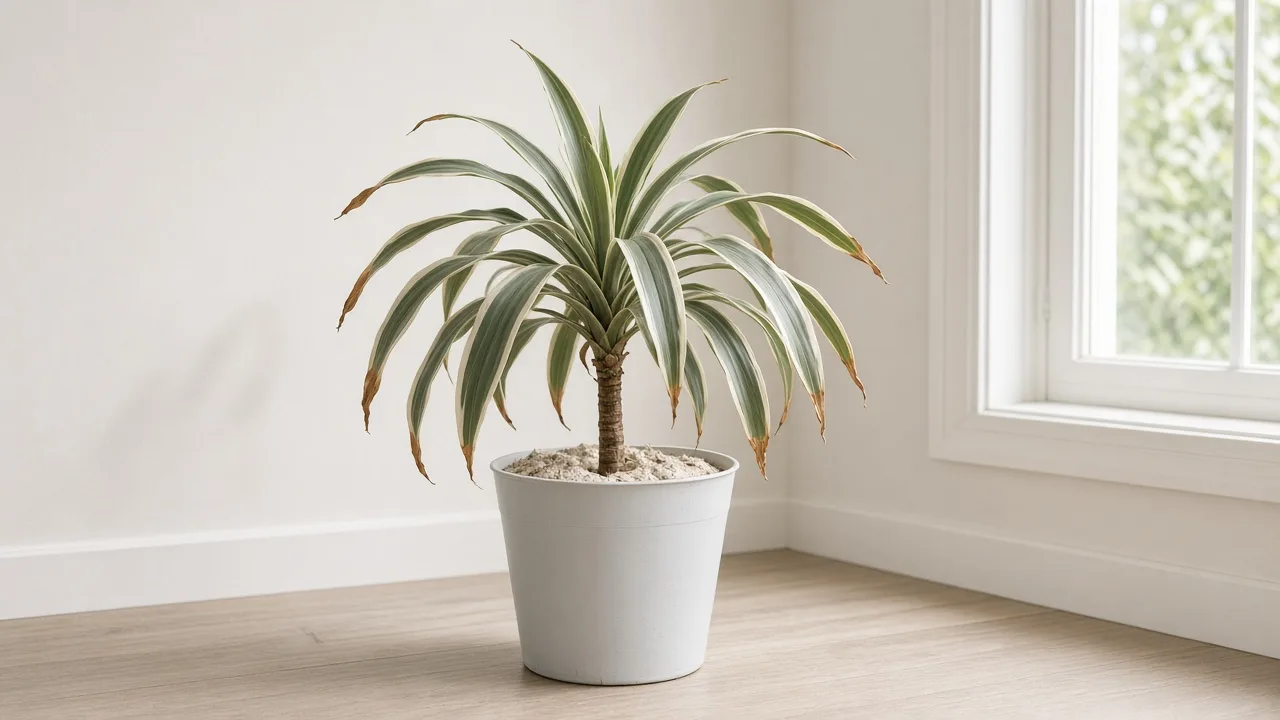
Underwatering on Dracaena Warneckii: Causes, Checks & Fixes
This guide covers underwatering on Dracaena Warneckii. See also the general Underwatering guide, watering, and light pages for this plant.
Underwatering on Dracaena Warneckii: Causes, Checks & Fixes
Quick answer
Dracaena deremensis ‘Warneckii’ — the gray-green strap-leaf dracaena with cream or white edge stripes — forgives a late drink better than chronic wet soil, but it is not a succulent. The woody cane stores some moisture, so underwatering can look subtle for a week: arching blades lose snap, white stripe bands look dull, and the pot feels hollow before lower leaves yellow.
For how chronic dryness stresses roots and leaves in general, see our underwatering guide. On Warneckii, the pattern is a light pot, dusty dry mix 2 inches down, limp arching striped blades, and sometimes crispy cream margins—not several soft yellow lowers on cool damp soil.
First step: one thorough soak until a little water drains from the bottom, then empty the saucer within 30 minutes. Do not fertilize, repot, or prune half the cane until you know whether firm wood and crisp new white bands return within 24–48 hours.
When to use this page vs other Dracaena Warneckii guides
| Pattern | Read next |
|---|---|
| Light pot, dry 2 inches, limp stripes (this page) | Stay here |
| Heavy wet pot, yellow lowers, soft cane risk | Overwatering |
| Mushy cane, sour mix, stem flop | Root rot |
| Brown tips only, mid-dry mix, firm cane | Brown tips — often fluoride or dry air |
| Whole plant limp, dry-or-wet unclear | Wilting or drooping leaves |
| Pale washed-out growth in dim room | Not enough light |
| Slow growth after long drought | Slow growth |
| Long-term rhythm after thirst is fixed | Watering guide |
| Cluster navigation | Overview and problems hub |
What underwatering looks like on Dracaena Warneckii
Warneckii hides thirst behind stiff strap foliage longer than a peace lily, because architectural cane wood and thick leaves buffer the first dry days. Once fine roots desiccate, the signature white-striped rosette at each cane tip loses turgor together.
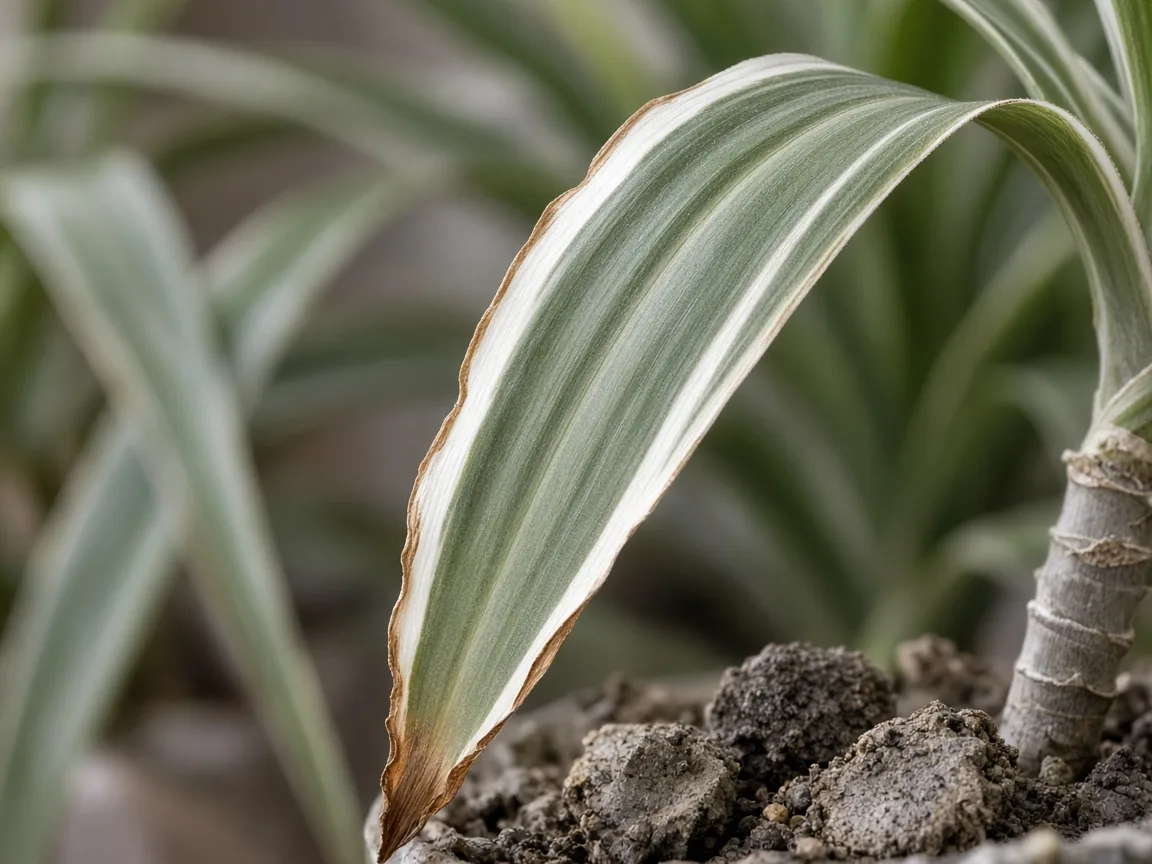
Thirst on Warneckii—arching blade with lost snap and dry peat at the gray cane; compare with crisp white-banded leaves after a full soak.
Early thirst shows subtly dull stripe contrast, blades hanging lower than their usual graceful arch, and mix that looks pale or dusty in the top 2 inches while the pot feels lighter than after your last full drink. New tip growth may pause without obvious pest damage.
Established drought brings limp gray-green straps across multiple tiers, narrowed or slightly curled leaf edges, and soil that is crumbly dry at a 2-inch depth and often at the drainage hole. Cafe Planta notes that underwatering prevents enough moisture uptake, so Warneckii leaves droop as a stress response.
Advanced dry-down includes widespread limp blades, brown crispy margins on older leaves (sometimes overlapping with low humidity or fluoride), and stalled new striped leaves at the crown because the plant lacks water to expand them. Water poured from above may run straight through hydrophobic peat while the core stays dry.
What underwatering is not: sour-smelling wet mix, yellow lower leaves on a heavy pot, fungus gnats over constantly damp soil (overwatering), or a squishy cane at the soil line (root rot).
Bare cane shedding vs drought limp (Warneckii-specific)
Mature Warneckii often shows bare gray cane below a rosette of striped straps — normal as lower leaves senesce. One bottom blade fading slowly on firm wood and a lightening pot can be age, not thirst.
Use this split:
- Normal shed: one or two lowers fade over weeks; upper white stripes stay crisp; mix dries on your usual watering rhythm before the next soak.
- Underwatering: multiple straps limp at once, pot is very light, skewer is dry 2 inches down, and newest striped leaves look dull or thin while the cane still feels hard like bamboo.
When the pattern is ambiguous, trust pot weight and a depth probe over leaf count alone.
Why deremensis Warneckii still gets underwatered indoors
NC State recommends keeping Warneckii soil moist during the growing season but cutting back on water in winter, with drainage holes and sensitivity to fluorides and salt buildup. That “moist” target is not a wet sponge — but it also means Warneckii is closer to Janet Craig deremensis habits than to corn plant (D. fragrans), which PNW handbooks say should dry out because it is easily overwatered. Warneckii owners who treat every dracaena like a drought-hardy dragon tree can withhold drinks too long.
UF/IFAS FP183 lists ‘Warneckii’ with moderate drought tolerance in outdoor shade — indoors, low light slows water use while forced-air heat pulls moisture from strap leaves, so the same calendar that worked in summer leaves a lobby plant chronically dry by February.
Common indoor triggers:
- Calendar skipping — the watering guide calls for checking when the top 2 inches of mix are dry, not ignoring the pot for a month because “dracaenas are easy.”
- Fear after overwatering — one soggy episode leads to weeks without a soak; roots die back and the plant wilts even after you finally water until you rehydrate the whole ball.
- Hydrophobic peat — dry mix shrinks from the pot wall; surface water runs down the sides. See the first-fix section for a proper soak.
- Heat and vents — leaves lose water faster near radiators and dry winter air; pair corrected watering with stable placement per the light guide.
Cream stripes vs fluoride tip burn (dry-air lookalike)
Warneckii owners often blame underwatering when the real issue is fluoride or salt burn on white margins. PNW handbooks document fluoride toxicity on Dracaena deremensis and note that excessive drying between waterings can also lead to brown tips and margins, especially with heavy feeding — so margin burn can stack with true thirst.
| Clue | Underwatering | Fluoride / water quality |
|---|---|---|
| Leaf zone | Whole blades limp, dull stripes | Tips and cream margins necrotic brown |
| Soil | Light pot, dry 2 inches | Often mid-dry; pot weight normal |
| Cane | Firm | Usually firm |
| New growth | Thin, limp straps on dry mix | New leaf may show edge burn while crown is upright |
If tips are crisp brown but the pot is not light and lowers are not limp on dusty mix, switch to rainwater or filtered water per the brown tips page before you soak on a wet schedule.
How to confirm underwatering before you repot
Work through these checks in order:
- Pot weight — lift today; compare to memory after your last full drink. A floor Warneckii that feels hollow for days strongly suggests drought.
- Top-2-inch skewer test — RHS advises watering only when the top 5 cm (2 in) feels dry; LeafyPixels uses the same depth for Warneckii. Crumbly dry skewer with limp stripes = underwatering likely. Cool, dark, clinging crumbs on yellow lowers = overwatering.
- Cane pinch — Benji’s notes that a soft cane points to overwatering; firm bamboo-like wood with dry mix supports thirst.
- Arch pattern — multiple straps lose their crisp arch together on dry soil; one old lower fading on firm cane may be senescence only.
- Drainage hole feel — mix at the bottom as dry as the surface on a light pot confirms deep drought, not just a dry crust.
The first fix to try
One thorough soak until a little water runs from drainage holes, then empty every saucer or cachepot within 30 minutes. Use room-temperature rainwater, distilled, or filtered water if fluoride edge burn is part of the picture — RHS warns that fluoride in tap water can damage dracaena foliage.
If water races through dry, shrunken peat without wetting the core:
- Set the nursery pot in a basin of water for 20–30 minutes so the mix wicks upward, then lift and drain fully.
- Or water in two passes ten minutes apart until the ball feels heavy and evenly moist.
Move the pot to bright indirect light (not hot sun) so roots can take up water — see Dracaena Warneckii light for placement.
Do not fertilize, repot, or remove half the cane during the first rehydration week — you need to read whether arching blades firm up and white bands brighten.
Step-by-step recovery if limp leaves persist
If straps stay limp 48 hours after a proper soak on still-dry mix:
- Scratch the surface — if peat is hydrophobic, top-dress is not enough; repeat bottom soak or pierce the root ball gently with a chopstick while watering.
- Inspect roots only if cane stays firm but leaves never perk — trim only black mushy roots; leave firm white or tan roots. Repot into fresh airy mix from the soil guide if the ball was desert-dry for months.
- Hold fertilizer until a new striped leaf opens with crisp white bands for two weeks.
- Rule out pests if blades look stippled with fine webbing — see spider mites when dry soil is not the driver.
Severe root loss from long drought may require cane-cut salvage — rare for underwatering alone if wood stayed firm.
Recovery timeline
| Severity | What to expect |
|---|---|
| Mild (light pot, slight droop, firm cane) | 24–48 hours after one good soak; stripes look sharper within 1–2 weeks. |
| Moderate (multiple limp straps, dry throughout, firm wood) | 1–2 watering cycles to stabilize; new white-banded leaves in 2–4 weeks in warm bright conditions. |
| Advanced (hydrophobic ball, stalled crown, some root dieback) | 3–6 weeks after repeated soaks and possible repot; older crispy margins stay brown. |
Damaged brown tissue on strap leaves will not re-green. Recovery is re-arching blades + clean new striped growth.
Lookalike symptoms on Warneckii
| What you see | More likely cause | Next page |
|---|---|---|
| Crisp brown tips on cream margins, mid-dry mix, firm cane | Fluoride, low humidity | Brown tips |
| Yellow lowers on heavy wet soil | Saturation | Overwatering |
| Wilting + wet mix + mushy base | Advanced rot | Root rot |
| Pale washed-out growth in dim room | Light stress | Not enough light |
| Leggy pale growth, dry soil | Light + thirst combo | Leggy growth |
Mistakes that make underwatering worse
- Teacup sips daily — moist surface, dry core; use one deep soak when the top 2 inches are dry.
- Soaking a mushy cane — firm wood first; soft base means stop and read root rot.
- Feeding a limp plant — RHS lists dying leaves among signs of over- and underwatering; stabilize moisture before fertilizer.
- Repotting into a huge pot to “hold more water” — extra dry peat around a thick cane delays rewetting.
- Blaming thirst when only margins burn — switch water source before you increase frequency.
How to prevent underwatering next time
Align with the Dracaena Warneckii watering guide: check the top 2 inches on a schedule, water on moisture, not calendar. In winter, do not confuse slower growth with “never water” — light offices still dry peat over 14–21 days.
Use rainwater or filtered water to avoid stacking fluoride margin burn on top of drought stress. Keep a well-draining mix from the soil guide so rewetting after a dry spell is reliable. After a vacation dry-out, expect one or two corrective soaks before the cane looks office-crisp again.
Related Dracaena Warneckii guides
- Overview — whole-plant context and buying checks
- Watering — top-2-inch dry-down rhythm and seasonal shifts
- Soil — perlite and bark ratios for cane roots
- Problems hub — all symptom pages for this species
Conclusion
Underwatering on Dracaena Warneckii is a top-2-inch dry-down and pot-weight problem masked by arching striped foliage and normal lower-leaf shedding on bare cane. One thorough soak, drained saucers, and firm wood are the first fix — not repotting, feed, or cane cuts. Crisp new white-banded leaves are the recovery signal; old crispy margins will not re-green, and that is normal once moisture rhythm stabilizes.
Related tool
Use the Plant Watering Calculator to narrow causes for underwatering on this plant before changing multiple variables at once.