Caterpillars on Dracaena: Night Checks & Hand-Pick Fixes
Quick answer
Caterpillars on Dracaena chew irregular holes in strap-like leaves and leave dark frass pellets, often on the newest growth at each cane crown. First step: isolate the plant and inspect at night with a flashlight, then hand-pick every caterpillar you find before treating remaining foliage.
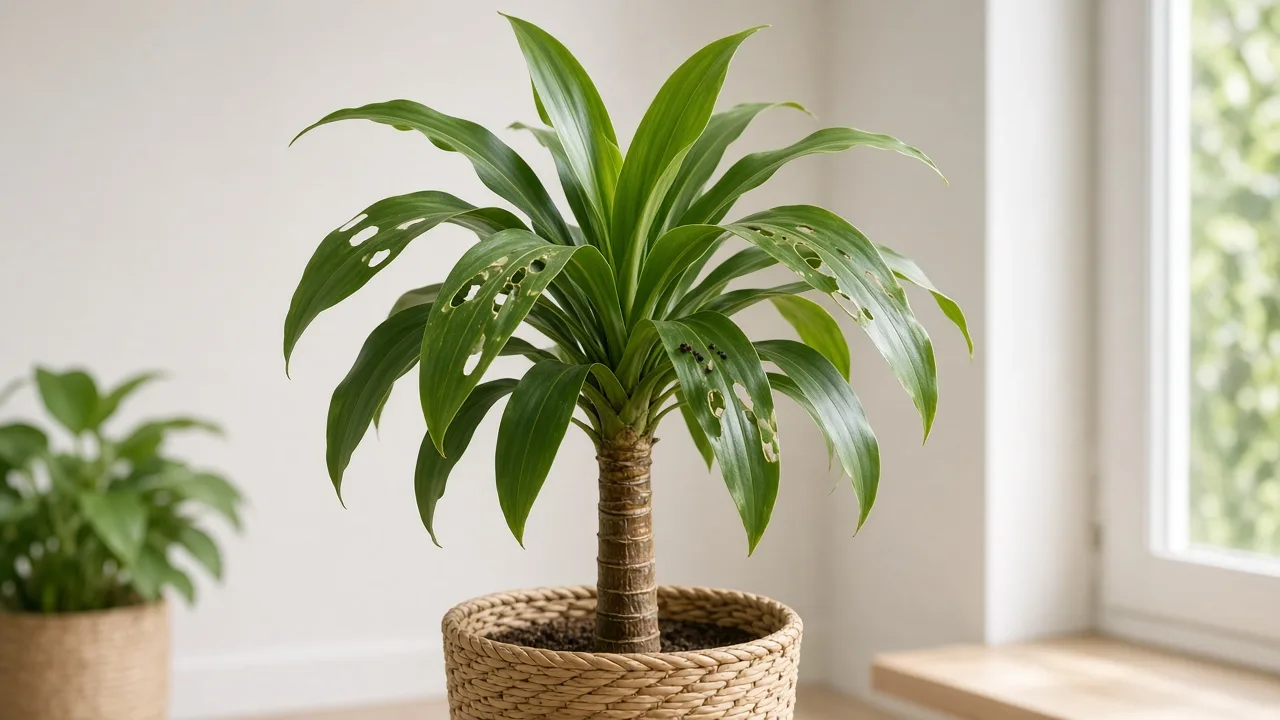
Caterpillars on Dracaena: Causes, Checks & Fixes
This guide covers caterpillars on Dracaena. See also the general Caterpillars guide, watering, and light pages for this plant.
Caterpillars on Dracaena: Causes, Checks & Fixes
Quick answer
Caterpillars on Dracaena (Dracaena fragrans and related cane types) chew irregular holes through broad, strap-like leaves and leave dark pellet-like frass on foliage or soil below. Indoor cases usually trace to hitchhiking larvae after patio season, nursery stock, or a moth that laid eggs near an open window. For general caterpillar biology and life cycle, see our caterpillars guide. On Dracaena, pests often hide in the tight rosette at each cane crown, along leaf bases where straps wrap the stem, and on lower arching blades—places a quick top-down glance misses.
First step: Isolate the plant and inspect at night with a flashlight, then hand-pick every caterpillar into soapy water before treating remaining foliage.
When to use this page vs other Dracaena guides
| Pattern | Read next |
|---|---|
| Ragged holes + dark frass pellets | Caterpillars (this page) |
| Enclosed pale tunnel inside a leaf | Leaf miners |
| Silvery streaks, tiny black specks | Thrips |
| Fine yellow stippling + webbing | Spider mites |
| Cottony wax in leaf axils | Mealybugs |
| Clean tears, no frass (pet access) | Holes in leaves |
| Brown tips only, no chew signs | Brown tips |
| Uniform yellow leaves, wet soil | Overwatering |
What caterpillars look like on Dracaena
Corn plant and mass cane Dracaena grow as stacked cane sections with broad strap leaves radiating from each crown. Caterpillar damage shows up as ragged chewing on the softest tissue—usually the newest leaves emerging from the top crown and tender blades on lower cane sections that arch downward.
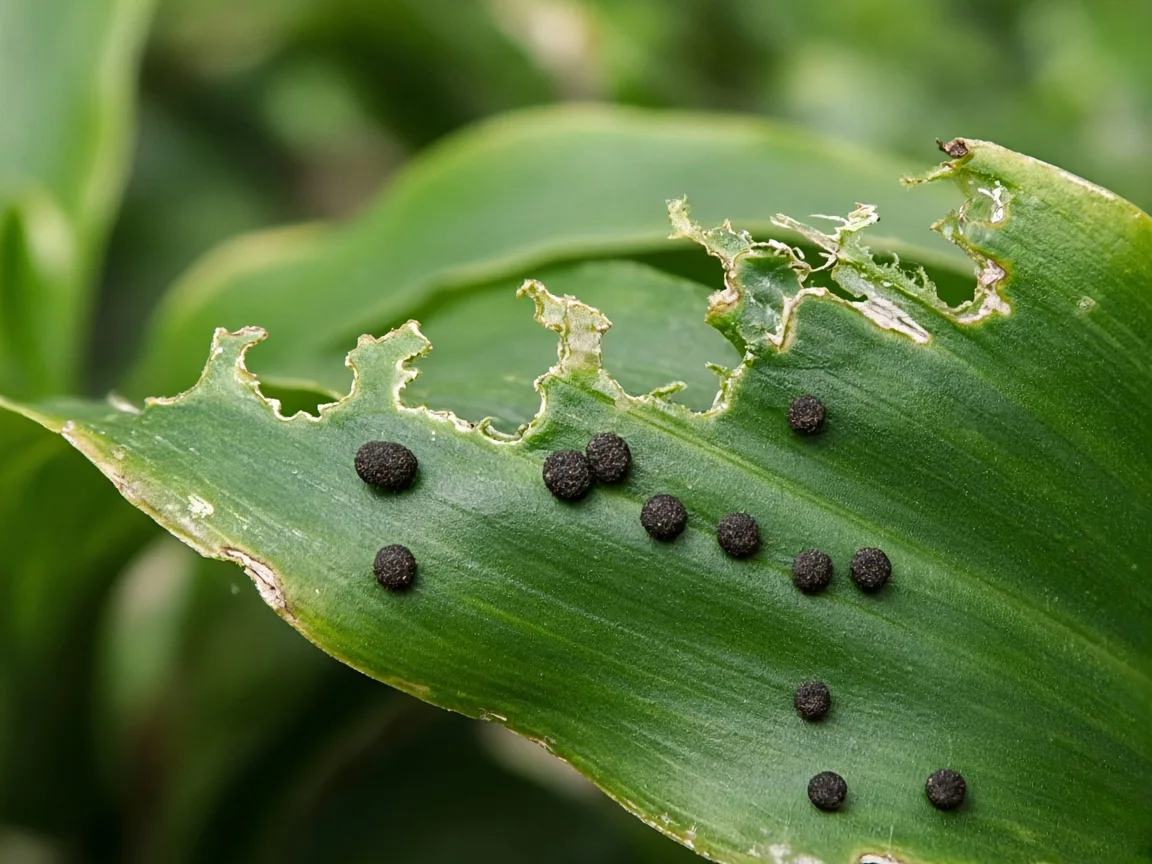
Ragged chew margin and pellet-like frass on arching Dracaena strap foliage—compare with undamaged lower leaves on the same cane section.
Typical signs:
- Irregular holes chewed through leaf blades, often starting at margins on tender new growth
- Dark frass pellets (caterpillar droppings) on leaves, in crown rosettes, or on the pot rim and shelf below
- Visible larvae tucked along leaf bases, under arching blades, or inside the tight crown at a stem tip
- Progressive damage across several strap leaves on one cane section over a few days—not a single old tear
- Chewed crown tips when a larva strips the newest unfurling leaf before it fully opens
Caterpillars are butterfly and moth larvae ranging from pinhead-sized hatchlings to larger worms. Colors vary—green, brown, or striped—and many blend into Dracaena’s solid green or variegated strap foliage until frass accumulates.
Unlike spider mites, caterpillars do not cause fine stippling or silk webbing. Unlike mealybugs, they leave no cottony wax clusters. Unlike leaf miners, damage is open chewing on the leaf surface, not a pale tunnel inside the blade.
Why Dracaena gets caterpillars
Dracaena is not a preferred caterpillar host the way outdoor vegetables are, but caterpillars in houseplants are not a usual occurrence—when they appear, a generalist moth or butterfly larva is feeding on accessible strap foliage.
Dracaena-specific risk factors:
- Stacked cane architecture — Multi-stem mass cane pots carry several independent crown rosettes. One larva on the top section can go unnoticed while a second feeds on a lower cane.
- Sheltered crown and leaf bases — Strap leaves emerge in a tight rosette at each stem tip. Larvae tuck into the crown and along the arch where blades meet the cane—zones quick care checks skip.
- Upright placement — Floor pots put attractive foliage at waist height but hide leaf backs and crown tissue unless you bend blades aside for inspection.
- Outdoor summer placement — Dracaena tolerates shaded patios; houseplants pick up pests when grown outside temporarily and adults enter through open windows when brought back indoors.
- Nursery hitchhikers — Eggs may arrive on leaf undersides or in potting media used to pot the plant.
- Warm indoor rooms — Without outdoor predators, a single egg hatch can produce continuous feeding through winter.
- Crowded shelf placement — Larvae walk between pots on shared watering days when arching leaves touch neighbors.
Unlike sap feeders, caterpillars do not build up slowly over months. You usually find one to a few larvae causing sudden, obvious chew damage.
Stacked cane crowns: where Dracaena hides caterpillars
Corn plant Dracaena (Dracaena fragrans) grows as stacked cane sections with strap leaves radiating from each crown. Pests shelter in the tight rosette at the stem tip and along the arch where leaves bend downward. Lower yellowing leaves are normal aging—but ragged chew margins with frass on multiple cane sections signal active feeding, not dormancy.
Work systematically during treatment: start at the highest crown, peel back each strap leaf at its base, then move down the cane to the next section. A single rushed pass over visible leaf tops misses larvae tucked where blades wrap the woody stem.
On multi-cane mass plantings, isolate and inspect every stem. Treating only the visibly damaged crown leaves a larva on a lower cane to restart feeding within days.
Strap leaves and arch points: reading chew patterns
Dracaena strap leaves are long, narrow, and arch downward from each crown. Caterpillars prefer the softest tissue—the unfurling tip at the crown and the tender margin on newly expanded blades. Chew holes often start at the leaf edge and progress inward, leaving jagged margins that look nothing like the crisp brown tips caused by fluoride in tap water.
The arch point—where a strap leaf bends from horizontal to vertical—is a common hiding spot. Larvae rest along the underside of the curve during the day and feed at night. Run your fingers gently along this bend while inspecting with a flashlight.
If damage is limited to one or two lower leaves while crown growth stays clean, the infestation may be recent. Fresh holes appearing on crown tips despite handpicking means eggs or larvae remain in hidden crevices or potting media.
Pet chew vs caterpillars on toxic Dracaena
Dracaena is toxic to cats and dogs. Pets sometimes nibble accessible strap leaves, but pet chew marks are usually clean tears without frass pellets. Caterpillar damage pairs ragged holes with dark droppings on leaves or soil below.
If you find frass, treat as caterpillars regardless of pet access. If you find clean tears only, check pet placement before spraying pesticides on a plant that may not have insects. Wear gloves when hand-picking—Dracaena sap can irritate skin on sensitive people.
How to confirm the cause
- Isolate the plant before handling others on the same shelf.
- Follow fresh damage — New holes appearing over two to three days point to active chewing, not an old snag.
- Hunt frass — Dark spots on leaves are often frass from caterpillar feeding. Pellets plus ragged holes strongly confirm caterpillars.
- Inspect every cane crown — Use bright light on leaf bases, crown rosettes, and arch points where larvae hide.
- Night check — Many caterpillars feed more openly after dark. A flashlight pass reveals larvae missed by daytime inspection.
- Shake test — Hold white paper under arching leaves and tap each cane. Caterpillars drop as slow-moving worms; thrips jump quickly.
- Check neighbors — Inspect pots on the same shelf, especially when arching leaves touch.
- Rule out fluoride browning — Uniform brown tips without chew holes or frass point to brown tips, not caterpillars.
- Rule out overwatering — Uniform yellow lower leaves with wet soil and no pest signs suggest overwatering.
If you find a live larva plus frass on Dracaena foliage, caterpillars are confirmed.
First fix for Dracaena
Move the plant away from others, then hand-pick every caterpillar into a cup of soapy water.
Work systematically through each cane crown, along every strap leaf base, and down arching blades on all stem sections. Larvae often cling to the underside of long straps where solid green foliage camouflages them. After handpicking, shake the plant over a sheet of white paper to dislodge any worms you missed.
Wipe frass off leaves with a damp cloth so you can spot fresh pellets if feeding continues. This single step resolves most indoor Dracaena cases because populations rarely exceed a few individuals.
Do not reach for broad-spectrum sprays before confirming larvae are still present. Do not fertilize a pest-hit plant hoping to push replacement growth—tender new crown leaves attract the next generation faster.
Step-by-step recovery
After the initial handpick:
- Re-inspect nightly for three to five days — One missed egg can hatch into a new feeder within days.
- Apply Bacillus thuringiensis kurstaki (Bt) if larvae persist or you find multiple worms. B.t.k. targets moth and butterfly larvae when they eat treated foliage. Coat leaf tops and undersides thoroughly, including crown tips on every cane section. Repeat per label intervals—Bt is not absorbed into leaves, so multiple applications may be needed until feeding stops.
- Trim badly shredded strap leaves only after insects are gone. Dracaena does not branch from leaf cuts; remove individual damaged blades at the base rather than topping entire cane sections unless a crown is fully stripped.
- Repot if you suspect eggs in soil — Replace old potting media, rinse roots gently, and repot in fresh mix per the soil guide. Seal discarded soil in a bag and discard outdoors.
- Hold isolation until no new holes or frass appear for at least two weeks before returning the plant to a shared display.
If one cane section is heavily stripped but others carry clean crowns, you can treat each stem independently while monitoring the whole pot. Severe damage on all sections with eggs suspected in soil may warrant salvaging the healthiest cane via stem cutting per the Dracaena overview after pests are eliminated.
Recovery timeline
Hand removal shows results within a day when you catch larvae early. A Bt course typically takes one to two weeks with label-interval repeats. Chewed strap leaves stay torn permanently; judge recovery by clean new blades emerging from each crown and firm canes—not by old blemished foliage regaining shape.
Dracaena in bright indirect light per the light guide often outpaces light caterpillar damage once insects are gone. New crown leaves within two to four weeks signal success.
Mistakes to avoid
- Do not assume one caterpillar means the problem is over—eggs may remain in potting media or on hidden leaves.
- Do not inspect only the top crown on a multi-cane mass plant. Lower cane sections hide larvae on arching strap leaves.
- Do not return an isolated plant after a single daytime glance. Night inspection catches larvae that hide along narrow blades by day.
- Do not confuse fluoride brown tips with caterpillar holes—brown tips lack frass and follow a different pattern per the brown tips guide.
- Do not stack repotting, heavy pruning, and pesticide on the same day. Hand-pick first, confirm active pests, then escalate one treatment at a time.
Prevention
- Quarantine new plants two to three weeks before placing near existing Dracaena.
- Rinse and inspect patio plants thoroughly before winter bring-in.
- Screen windows and doors that stay open at night near plant shelves.
- Inspect each cane crown weekly during spring and summer when moth activity peaks.
- Separate arching leaves from neighboring pots during treatment so strap blades do not bridge pests between containers.
- Keep baseline care steady — consistent watering per the watering guide and adequate light reduce stress that masks early pest signs.
When to worry
Escalate when:
- Fresh holes appear daily despite handpicking
- Multiple larvae are visible on one cane or across several stem sections
- Frass accumulates on several strap leaves and the pot rim
- New crown growth stalls because tips are stripped bare
- Damage reappears within days after two Bt cycles
A single caterpillar after a patio summer is not a lost cause—isolate, hand-pick, and re-inspect. Consider salvaging the healthiest cane via cutting only when every section is fully stripped, soil may harbor eggs, and repeated treatment failed.
Related Dracaena guides
- Dracaena overview
- Dracaena watering
- Dracaena light
- Spider Mites
- Mealybugs
- Holes in leaves
- Brown Tips
- Overwatering
- Dracaena problems hub
Conclusion
Caterpillars on Dracaena are uncommon indoors but unmistakable when frass and ragged chew holes appear on strap leaves or cane crowns. Isolate, inspect at night, and hand-pick every larva before reaching for sprays. The plant recovers through clean crown growth once feeding stops—focus on multi-cane blind spots, arch-point hiding zones, and blocking moths at windows to keep caterpillars from returning.