Magnesium Deficiency on Dracaena: Causes, Checks & Fixes
Quick answer
Magnesium deficiency on dracaena shows as yellow tissue between dark green veins on older lower strap leaves while new crown growth may look normal. First step: confirm interveinal chlorosis on older foliage—not brown tips from fluoride alone.
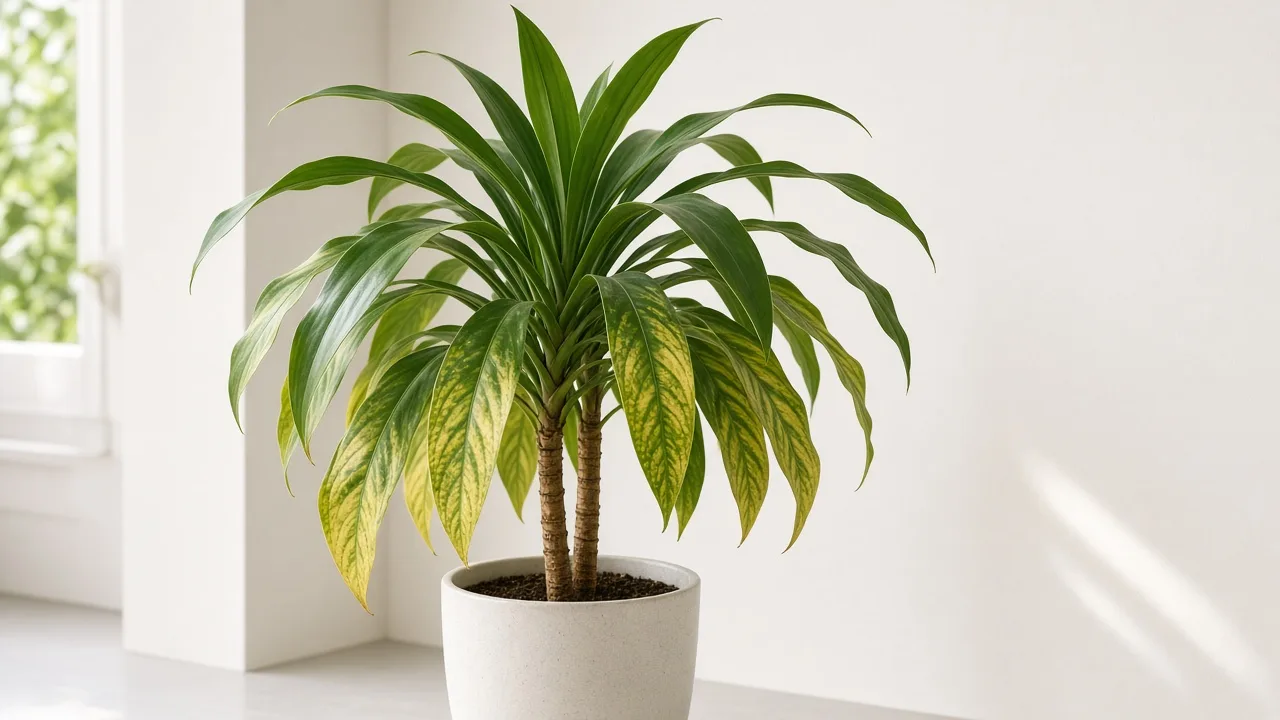
Magnesium Deficiency on Dracaena: Causes, Checks & Fixes
This guide covers magnesium deficiency on Dracaena. See also the general Magnesium Deficiency guide, watering, and light pages for this plant.
Magnesium Deficiency on Dracaena: Causes, Checks & Fixes
Quick answer
Magnesium deficiency on dracaena (Dracaena fragrans and related cane types) shows as yellow tissue between dark green veins on older lower strap leaves. Magnesium is highly mobile in plants, so deficiency symptoms appear first on lower leaves while the crown may still push new foliage.
See our magnesium deficiency guide and the magnesium deficiency symptom hub. On cane dracaena, inspect the oldest strap leaves on the lowest cane section—interveinal yellowing there is classic magnesium before iron, which hits new crown leaves.
First step: confirm interveinal chlorosis on older lower strap leaves, not brown tips alone.
Why dracaena gets magnesium deficiency
Dracaena is sensitive to fluoride and often under-fed while sitting in the same pot for years. Nitrogen-heavy fertilizer without micronutrients depletes magnesium. Long strap leaves on lower cane sections show interveinal chlorosis when magnesium runs low.
Dracaena-specific causes:
- Nitrogen-heavy feed without micronutrients — Lower straps chlorose between veins while the plant still pushes cane height.
- Years in the same depleted mix — Dracaena grows slowly and can live two or more years without repotting; old mix loses magnesium to repeated watering.
- Blocked uptake from overwatering — Overwatering on wet mix keeps roots anaerobic and unable to absorb magnesium even when it is present.
- Confusion with brown tips — Fluoride can yellow or scorch leaf tips and margins while magnesium banding sits in the mid-blade between veins on lower straps.
- Confusion with nitrogen deficiency — Uniform pale lower leaves without a vein pattern point to nitrogen, not magnesium.
What magnesium deficiency looks like on dracaena
Typical signs:
- Yellow or pale green between dark green veins on older lower strap leaves
- Veins stay relatively green on long strap blades
- New crown leaves may look normal in early stages
- Firm cane unlike soft overwatered dracaena
- Striped cultivars like ‘Massangeana’ show banding between veins on lower leaves
Not magnesium deficiency:
- Brown tips only — brown tips / fluoride
- Uniform pale lower leaves — nitrogen deficiency
- Margin scorch — potassium deficiency
- Soft cane on wet soil — overwatering
- New crown leaves yellow with green veins — iron deficiency
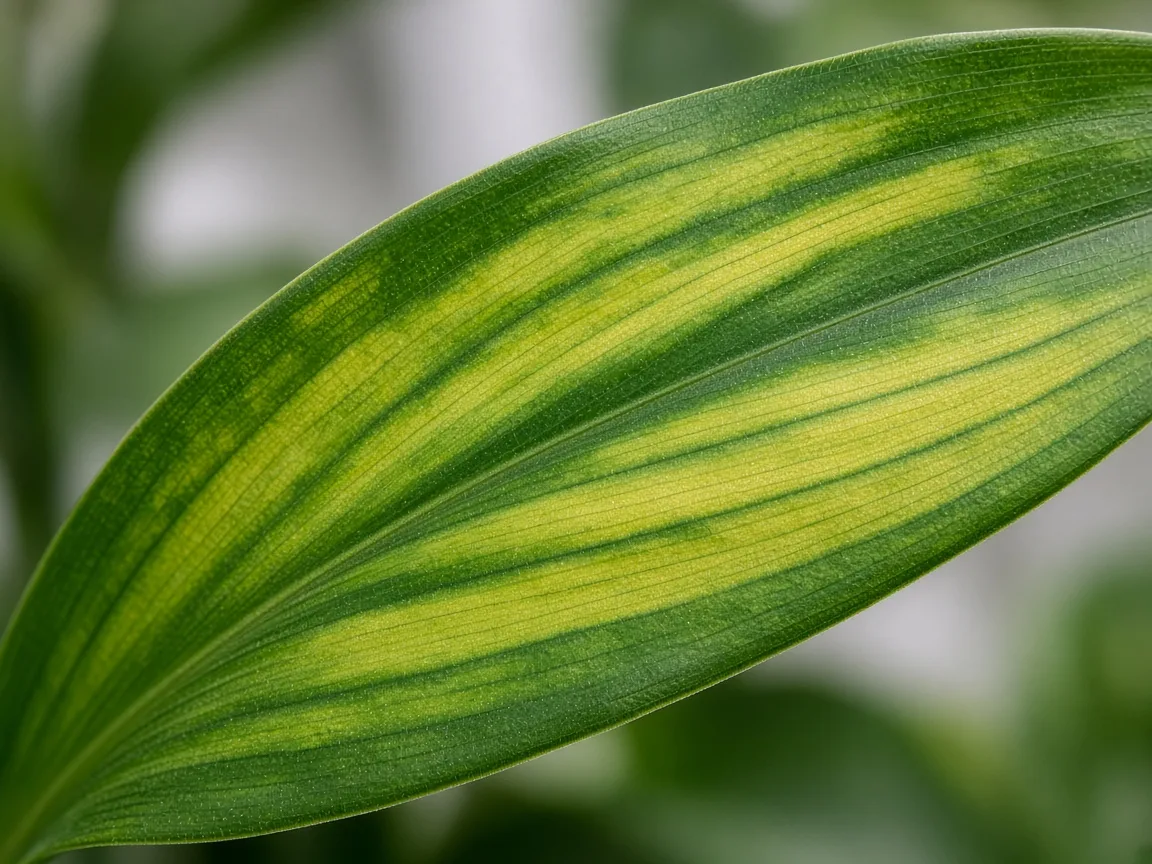
Interveinal chlorosis on a lower dracaena strap leaf—veins stay green while tissue between them yellows.
How to confirm
- Vein pattern on lower strap leaves — interveinal chlorosis on the oldest foliage, not the newest crown leaf alone.
- Tip burn separate — fluoride tips plus interveinal mid-blade yellow supports magnesium as a second issue.
- Fertilizer label — complete micronutrient mix vs nitrogen-only products.
- Cane firmness — firm tan cane vs soft, collapsing base on wet soil.
- Mix age — same pot and mix two or more years without refresh.
- Uniform pale vs interveinal — nitrogen vs magnesium.
First fix
One soil drench with Epsom salt at 1 tablespoon per gallon of water, or one half-strength dose of complete fertilizer containing magnesium—after confirming firm cane and appropriate dry-down.
Do not drench a soggy pot. Let the top 2 inches of mix dry first per the watering guide, then apply solution until a small amount drains from the bottom.
Step-by-step recovery
- Switch to complete balanced fertilizer with micronutrients through active growth per the fertilizer guide.
- Repeat Epsom drench once after three weeks if interveinal yellowing persists—never weekly on a slow-growing cane plant.
- Consider filtered water for fluoride tip burn separately from magnesium correction.
- Repot into fresh mix if roots are compacted and chlorosis persists after two treatments.
- Monitor new crown strap leaves for clean green without interveinal banding.
Recovery timeline
Four to eight weeks for healthy new crown leaves. Older chlorotic strap leaves rarely fully re-green.
Interveinal chlorosis on long strap leaves
Dracaena’s long strap leaves display magnesium deficiency clearly—dark green veins run the length of the blade while yellow fills the spaces between on oldest lower cane leaves. Because magnesium is mobile, the plant strips it from mature straps to supply newer crown growth, so the lowest leaves fail first.
That pattern differs from iron chlorosis on the newest unfurling strap leaf at the crown, where veins stay dark green on pale new tissue. Fluoride brown tips affect the apex only; magnesium banding sits in the mid-blade between veins on lower straps—a pattern corn plant owners often miss when focusing only on tip burn.
Both fluoride stress and magnesium deficiency can coexist on tap-water dracaena—address water quality and complete micronutrient feeds together.
Epsom salt dosing on slow cane plants
Dracaena is not a heavy feeder, so magnesium correction should stay conservative. One tablespoon of Epsom salt per gallon of water, applied as a single soil drench after the top 2 inches of mix dry, is usually enough for a first pass. Repeating once after three weeks is reasonable on a firm cane; weekly drenches on soggy mix risk salt buildup without fixing uptake. If two careful treatments fail and roots are compacted, fresh soil resets the root zone faster than chasing more magnesium in depleted peat.
Cane architecture and where symptoms start
Unlike bushy floor plants, dracaena grows as stacked cane sections with strap leaves spiraling from each node. Magnesium deficiency almost always appears on leaves attached to the lowest visible cane before it climbs to mid-cane foliage. A plant with three cane sections may show perfect green on the top crown while the bottom third looks marbled.
Check leaves at the soil line first, then work upward. If only the top crown is yellow between veins, suspect iron or manganese on new growth rather than magnesium. Firm cane with yellow lower straps and green upper growth is the classic magnesium picture on mass cane and corn plant cultivars.
Lookalike symptoms
| Pattern | Likely cause |
|---|---|
| Old straps yellow between green veins | Magnesium deficiency (this page) |
| Tips brown only | Brown tips |
| Uniform pale lower leaves | Nitrogen deficiency |
| Margin scorch | Potassium deficiency |
| New crown leaves yellow, green veins | Iron deficiency |
| Soft cane, wet soil | Overwatering |
When to use this page vs other Dracaena guides
Use this page when older lower strap leaves show yellow between green veins. Use iron deficiency when new crown leaves chlorose with green veins. Use nitrogen deficiency when old leaves pale uniformly without a vein pattern. Use brown tips when damage is limited to leaf apex and margins from fluoride or dry air.
Related Dracaena guides
Related tool
Use the Fertilizer Dilution Calculator to narrow causes for magnesium deficiency on this plant before changing multiple variables at once.