Potassium Deficiency on Dracaena: Causes, Checks & Fixes
Quick answer
Potassium deficiency on dracaena shows as brown or scorched margins and yellowing edges on older strap leaves, sometimes with brown spots that resemble disease. First step: confirm marginal scorch on older foliage—not fluoride tip burn confined to apexes alone.
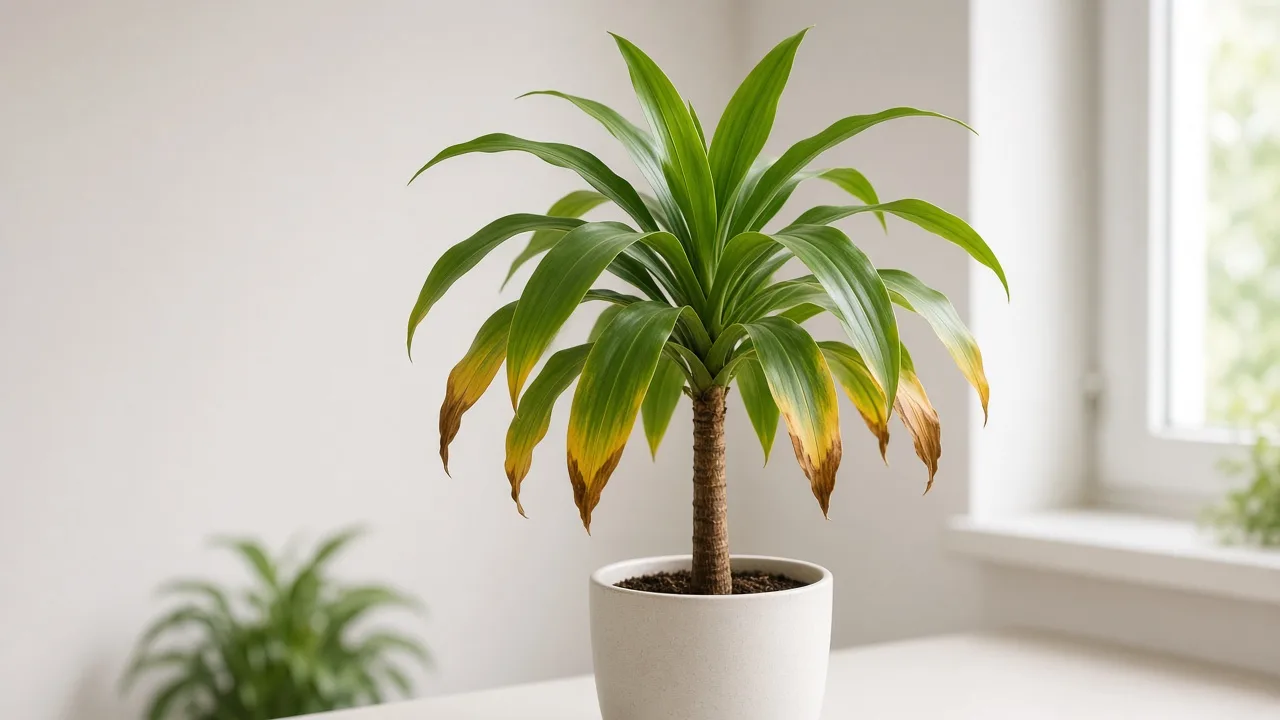
Potassium Deficiency on Dracaena: Causes, Checks & Fixes
This guide covers potassium deficiency on Dracaena. See also the general Potassium Deficiency guide, watering, and light pages for this plant.
Potassium Deficiency on Dracaena: Causes, Checks & Fixes
Quick answer
Potassium deficiency on dracaena (Dracaena fragrans) shows as brown or scorched margins and yellowing edges on older strap leaves. Potassium is mobile, so symptoms appear on mature foliage first—often as marginal scorch before the crown is affected.
See our potassium deficiency guide and the potassium deficiency symptom hub. On cane dracaena, inspect outer margins of the oldest lower strap leaves—edge scorch there differs from brown tips confined to leaf apexes from fluoride.
First step: confirm marginal scorch on older strap leaves, not tip-only fluoride burn.
Why dracaena gets potassium deficiency
Dracaena in regularly watered indoor containers leaches potassium over time, especially with incomplete fertilizer. Long-lived cane plants in the same pot for years show marginal scorch on lower straps while owners focus on fluoride tip burn at the opposite end of each leaf.
Dracaena-specific causes:
- Leaching from regular watering — Per the watering guide, each flush carries soluble potassium out of the root zone.
- Incomplete fertilizer — High-nitrogen feeds without adequate potassium on the label.
- Depleted old mix — Same pot two or more years without refresh.
- Salt and fluoride buildup — Brown tips from tap water compound stress on fluoride-sensitive cane plants.
- Confusion with tip burn — Tips only vs full margin scorch on long straps.
What potassium deficiency looks like on dracaena
Potassium deficiency in broadleaves turns tips and margins brown on older leaves first.
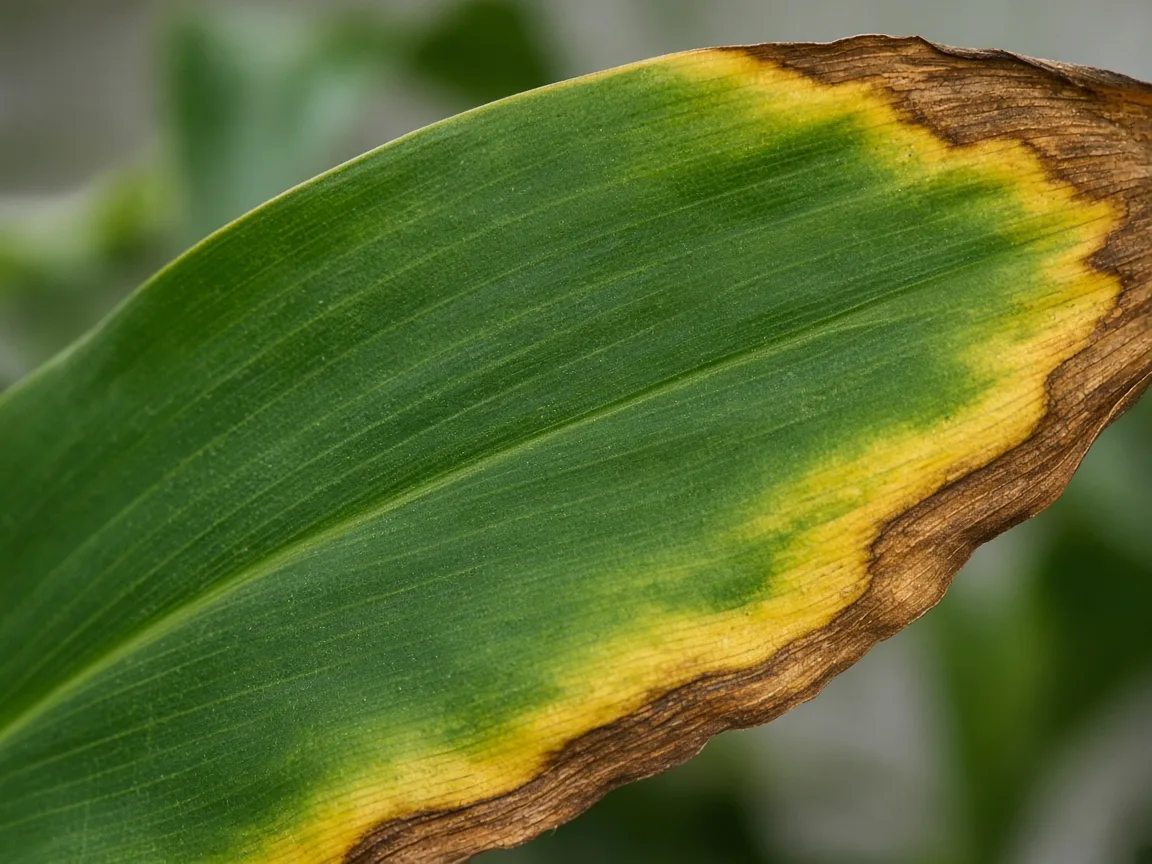
Marginal scorch on lower cane strap leaves—inspect the full outer edge, not just the leaf tip.
Typical signs:
- Yellowing or browning along margins of older lower strap leaves
- Scorched or crisp brown leaf edges on long straps
- Mottled yellow patches on mature leaves before edges die
- Necrotic spots on margins in advanced cases
- New crown leaves may look normal until deficiency advances
Not potassium deficiency:
- Brown tips only, margins clean — brown tips
- Yellow between veins — magnesium deficiency
- Uniform pale lower leaves — nitrogen deficiency
- Soft cane on wet soil — overwatering
How to confirm
- Margin vs tip pattern — full edge scorch vs tip-only brown.
- Leaf age — older lower straps first; crown leaves still clean in early stages.
- Fertilizer completeness — potassium (K) listed on the label, not nitrogen alone.
- Both tip and margin issues — fluoride tips plus margin scorch on lower leaves supports potassium on the same plant.
- Cane firmness — firm cane at soil line vs soft mushy tissue from root rot.
- Salt crust — white rim on pot; flush before feeding.
First fix
One half-strength application of complete balanced fertilizer containing potassium, after confirming firm cane and appropriate dry-down.
Per the dracaena fertilizer guide. Do not heavy-feed waterlogged mix—potassium uptake depends on healthy roots.
Step-by-step recovery
- Monthly half-strength complete feeds through active growth; pause in winter.
- Flush salts if white crust appears on the soil rim.
- Use filtered water if fluoride tips also present—address both issues separately.
- Repot into fresh mix if roots are compacted and scorch persists after two feeds.
- Monitor new crown strap leaves for clean margins.
Recovery timeline
Four to eight weeks for new leaves without marginal scorch. Old burned edges do not heal—judge progress by crown foliage, not lower straps.
Margin scorch vs fluoride tips on strap leaves
Dracaena fluoride sensitivity burns leaf tips—a well-known corn plant issue—while potassium deficiency scorches the outer margins of older lower strap leaves, sometimes with mottled yellow between veins before edges die. NC State notes dracaena is sensitive to fluorides and built-up salts, so tap-water corn plants often show tip burn first. Both can coexist: check lower leaf margins, not only apex brown tips, when diagnosing nutrition.
Long strap leaves make marginal scorch visually distinct from tip-only burn when you inspect the full blade length from base to apex.
When scorch climbs the cane from bottom straps upward
On a vertical cane dracaena, potassium moves from old tissue to new growth. The lowest strap leaves scorch first, then symptoms step upward as the plant cannibalizes mobile potassium for crown leaves. That bottom-up margin pattern on a tree-like cane differs from uniform lower-leaf yellowing in nitrogen deficiency or interveinal chlorosis in magnesium deficiency.
If scorch reaches mid-cane straps while the crown still looks clean, feeding is overdue but the plant is usually salvageable. If new crown leaves emerge with scorched margins, deficiency is advanced—confirm roots are firm before increasing feed strength.
Tap-water corn plants with stacked nutrition problems
Corn plant owners often run fluoride tip burn from tap water alongside potassium depletion in old mix. Gardening Know How notes fluoride can yellow tips and edges, which overlaps visually with marginal scorch. The diagnostic split: fluoride usually limits damage to apexes while potassium scorches the full outer margin on older straps.
Stacked problems need stacked fixes—filtered water for tips, complete fertilizer for margins—not one heavy feed that adds salts to an already stressed root zone.
When to flush before you feed
If white crust rings the pot or fluoride salts have built up from tap water, flush the mix with plain room-temperature water until runoff clears before adding potassium through fertilizer. A half-strength complete feed on firm cane after flushing is safer than a rescue dose on waterlogged roots. Judge progress on new crown strap leaves with clean margins, not on old scorched edges that will never heal.
Lookalike symptoms
| Pattern | Likely cause |
|---|---|
| Old strap margins scorched | Potassium deficiency (this page) |
| Tips brown, margins cleaner | Brown tips |
| Yellow between veins | Magnesium deficiency |
| Uniform pale lower leaves | Nitrogen deficiency |
| Soft cane, wet soil | Overwatering |
Mass cane and corn plant cultivars
Striped cultivars like ‘Massangeana’ and ‘Lemon Lime’ show marginal scorch on lower straps the same way green corn plants do—the yellow banding does not protect edges from potassium loss. On multi-cane specimens, compare margins on the lowest cane section only before assuming every strap on the plant shares the same nutrition status. A firm top crown with scorched bottom straps is the classic potassium picture on tree-form dracaena sold as floor plants.
Related Dracaena guides
- Dracaena overview — placement, watering rhythm, and fluoride sensitivity basics
- Dracaena fertilizer — when and how to feed without salt buildup
- Brown tips — tip-only fluoride burn vs margin scorch on this page
- Magnesium deficiency — interveinal yellow between veins, not edge scorch
- Dracaena problems hub — full symptom index for cane plants