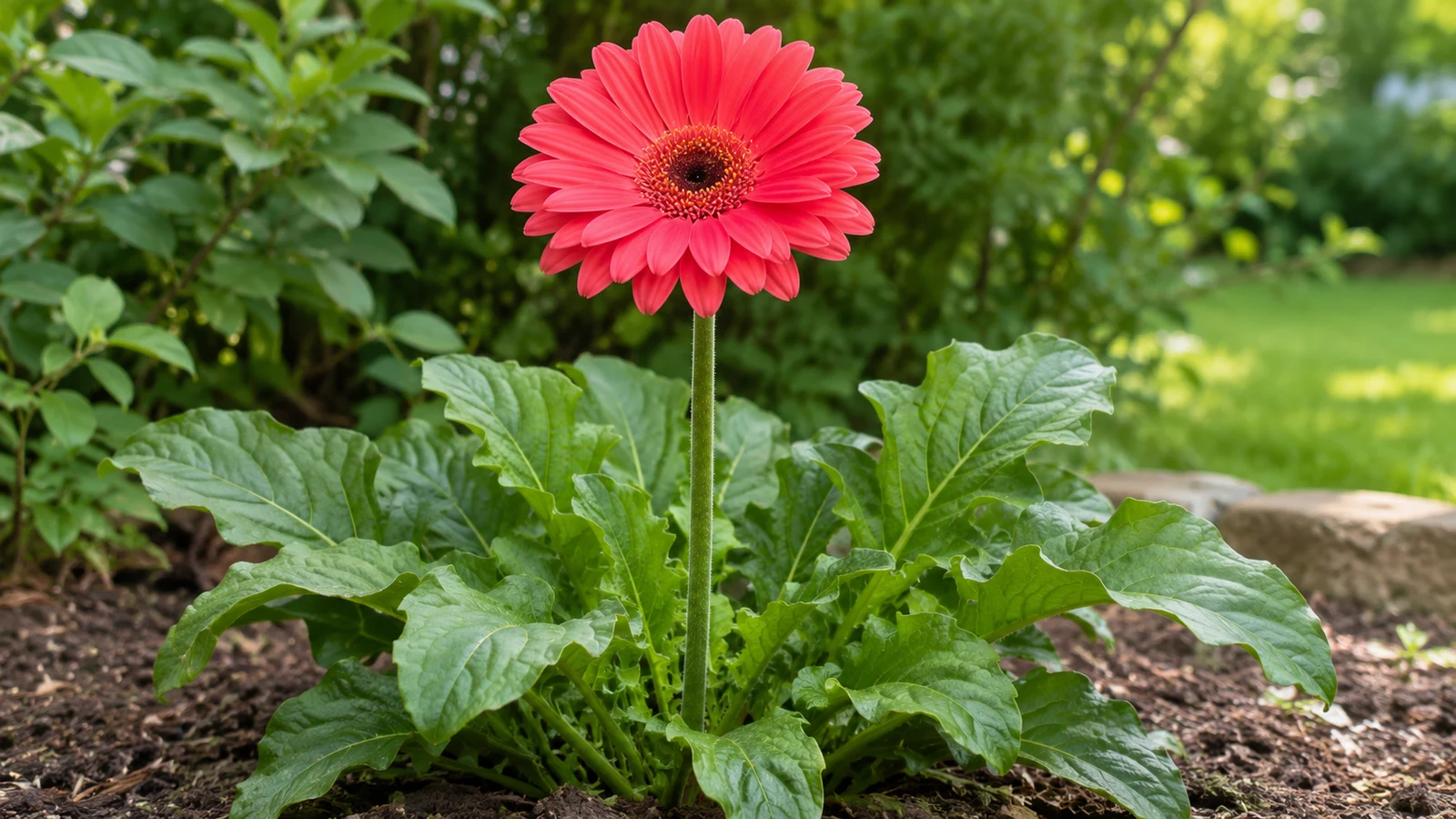
Browse general houseplant problems or use our diagnosis tool for Gerbera Daisy.
Gerbera Daisy problems
Use the guides below to diagnose and fix common issues on Gerbera Daisy. Each problem page explains why it happens on this species and what to do first.
Gerbera jamesonii is an herbaceous perennial, but most cultivated gerberas are tender. They are often grown as summer bedding or moved to a frost-free place in cold-winter regions. Only selected hardy cultivars should be left outdoors year-round.
How much sun does a Gerbera Daisy need?
Give it full sun in mild weather for good flowering. In hot climates, morning sun with light afternoon shade helps protect it from intense heat. Indoors, choose a bright position but avoid scorching sun through glass.
How often should I water a Gerbera Daisy?
Check the top inch or two of soil and water when it begins to dry. Keep the mix lightly moist during active growth, water the soil rather than the crown, and let excess drain away. Reduce watering during cool winter conditions.
What soil is best for Gerbera daisies?
Use fertile, organic-rich soil or potting mix that drains freely. Keep the crown at or just above the soil surface and avoid beds or pots that stay saturated, as prolonged wetness encourages rot.
Can I grow a Gerbera Daisy indoors?
Yes. Grow it in a bright room, conservatory, or greenhouse with good ventilation. RHS guidance says indoor gerberas prefer warm but not hot conditions, and flowering may pause when temperatures are too cold or hot.
Are Gerbera daisies safe for pets?
ASPCA lists Gerbera jamesonii as non-toxic to cats, dogs, and horses. That does not confirm safety for rabbits or birds, and eating any plant can still cause stomach upset. Discourage chewing and seek veterinary advice if an animal eats a large amount or becomes unwell.
What light does Gerbera Daisy need?
Gerbera Daisy grows best in full sun in mild conditions; morning sun with afternoon shade in hot climates. It also tolerates Partial shade, Bright indoor light. Avoid deep shade and intense reflected afternoon heat; hot direct sun through a window can scorch indoor plants.
How this Gerbera Daisy problems guide is reviewed?
Written by Sai AnanthLead content writer at LeafyPixels. B.Pharmacy graduate from Andhra University with a background in pharmacognosy, turned indoor gardening writer after a long-time plant hobby became a research-led resource for home growers.View Sai Ananth's profile · Reviewed by LeafyPixels Review Board
This Gerbera Daisy problems problem guide was researched and written by Sai AnanthLead content writer at LeafyPixels. B.Pharmacy graduate from Andhra University with a background in pharmacognosy, turned indoor gardening writer after a long-time plant hobby became a research-led resource for home growers.View Sai Ananth's profile. Problems symptoms on Gerbera Daisy, lookalike causes, and step-by-step fixes are cross-checked against extension pest, disease, and care references before publication.
We prioritize sources that hold up under scrutiny:
University cooperative extension bulletins and fact sheets (Penn State, Clemson, UMD, NC State, and similar programs)
Botanical garden and horticultural society publications
Peer-reviewed plant science and veterinary toxicology references where pet safety matters (including ASPCA Animal Poison Control)
Established reference works on indoor plant culture
The LeafyPixels editorial team then reviews the draft for clarity, step-by-step usefulness, and fit with real apartment and home conditions-not ideal greenhouse setups. When guidance changes materially, we update the page and note the revision date.
Royal Horticultural Society — Gerbera jamesonii Plant Profile (n.d.) Scientific identity, family, clump-forming habit, flower description, size, full-sun position, soil drainage, and deadheading. [Online]. Available at: https://www.rhs.org.uk/plants/70682/gerbera-jamesonii/details (Accessed: 1 March 2024).
Royal Horticultural Society — How to Grow Gerberas (n.d.) Light, indoor temperatures, tender versus hardy cultivars, planting, crown height, watering, drainage, pest and disease prevention, and propagation. [Online]. Available at: https://www.rhs.org.uk/plants/gerbera/growing-guide (Accessed: 1 March 2024).
Stauffers of Kissel Hill — A Guide to Gerbera Daisy Care (n.d.) Seed starting, seedling establishment, dividing mature plants, and seasonal outdoor planting. [Online]. Available at: https://www.skh.com/blog/a-guide-to-gerbera-daisy-care/ (Accessed: 1 March 2024).
The Spruce — How to Grow and Care for Gerbera Daisy (n.d.) Cultivated hybrids, native area, mature size, light, watering, soil pH guidance, seed flowering timeline, and seasonal care. [Online]. Available at: https://www.thespruce.com/gerber-daises-4121360 (Accessed: 1 March 2024).