Hawaiian Pothos Watering Guide: Schedule and Soil Checks
Hawaiian Pothos Watering Guide: Schedule and Soil Checks
Hawaiian Pothos Watering Guide: Schedule and Soil Checks
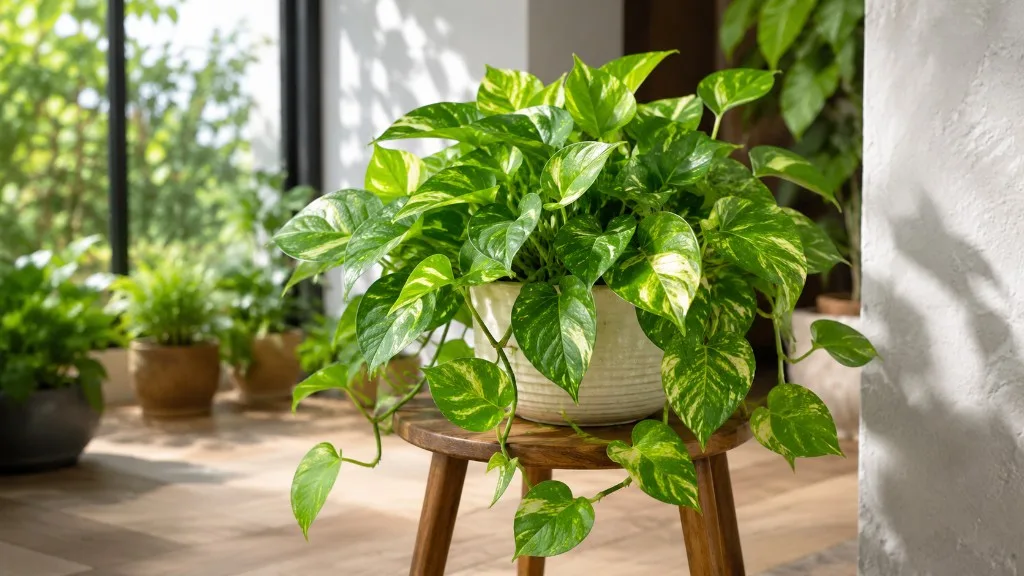
Hawaiian Pothos (Epipremnum aureum ‘Hawaiian’) looks thirsty the moment you bring it home — wide heart-shaped leaves splashed in gold and green, trailing stems that suggest a rainforest vine. That visual cue misleads growers. Like all pothos, Hawaiian stores water in thick stems and succulent-style tissue, and its roots need air between drinks more than they need constant moisture. Water it on autopilot and you get yellow lower leaves, fungus gnats, and quiet root rot on Hawaiian Pothos. The routine that works is simpler than the calendar apps suggest: check whether the top half of the potting mix has dried, water thoroughly when it has, drain completely, and adjust for how much light your particular plant is using. This guide is built for the cultivar’s larger leaves and bolder variegation — not generic pothos advice with a name swapped in.
Cultivar note: Hawaiian Pothos (Epipremnum aureum ‘Hawaiian’) — large heart-shaped leaves with golden-yellow and green marbling. Place in bright indirect light for yellow-green variegation; water when top half dry; large leaves use water faster in bright light.
Why Hawaiian Pothos Water Needs Differ From Golden Pothos
Hawaiian Pothos is not a separate species. It is a golden-variegated cultivar of Epipremnum aureum with noticeably larger leaves than standard golden pothos. Leaf area matters for watering because transpiration scales with foliage surface — a Hawaiian Pothos in a bright east window pulls moisture from soil faster than a compact golden pothos in the same pot size. NC State Extension describes Hawaiian Pothos as preferring bright indirect light while tolerating low light for survival, which directly changes how quickly the root zone dries. (NC State Extension)
The biology underneath is the same aroid water strategy Wisconsin Extension summarizes for all pothos: a well-aerated growing medium and watering when the soil surface dries, with slight dry-down between sessions. (Wisconsin Horticulture) The Royal Horticultural Society advises letting the top 2 cm of compost dry before watering and warns that wet compost rots roots. (RHS Growing Guide) For Hawaiian’s bigger leaves in strong indirect light, many growers find the practical trigger is closer to half the pot depth dry — not just the top inch — because the larger canopy depletes moisture through the full root ball more evenly in active growth.
Hawaiian also sends the classic pothos droop-and-recover signal when genuinely dry. Leaves soften and hang; a thorough soak perks them up within hours. The same droop appears during overwatering on Hawaiian Pothos when roots fail, but adding water does not fix it. Pair droop with a soil probe every time — droop alone is not a watering permission slip.
How Much Water Hawaiian Pothos Actually Uses
How much per session matters less than how completely you rewet the mix. Pour slowly until water exits the drainage holes, pause thirty seconds, and add a little more if the first pass ran through dry pockets. Half-cups every few days keep the surface damp while the center stays dry — the plant droops, you sip more water, and roots never get a coherent drink.
Clemson HGIC recommends watering pothos when the top 1.5 to 2 inches of soil have dried. For Hawaiian Pothos in a six-inch pot under bright indirect light, that depth often aligns with the top third to half of the mix drying — roughly 4–5 cm at the pot edge before you water. Volume varies with pot diameter and root mass; watch for free drainage, not a measuring cup.
Large Leaves and Faster Transpiration in Bright Light
A Hawaiian Pothos trained on a moss pole with mature six-inch leaves transpires more aggressively than a young golden pothos in a four-inch nursery pot. UF IFAS Extension notes that interior pothos does better grown “a little on the dry side” and that light levels of 150 foot-candles or more maintain leaf size and variegation color. (UF IFAS Extension) More light and larger leaves increase water demand without changing the rule: dry-down first, then a full soak. If your Hawaiian Pothos light placement is strong, expect shorter intervals. If variegation is fading and growth is sparse, suspect too little light before you assume the plant wants more water.
The Top-Half Dry Rule for Hawaiian Pothos
The most reliable trigger is to water when the top 1.5 to 2 inches of soil have dried — or let the top 2 cm of compost dry per RHS guidance. For Hawaiian’s larger canopy in bright indirect light, probe to mid-pot depth (roughly 4–5 cm); if only the surface is dry while the center stays cool and damp, wait another day.
Penn State Extension’s blunt guidance applies to all pothos cultivars: water when the soil is dry, and pothos is better kept too dry than too wet. (Penn State Extension) Hawaiian’s forgiveness does not extend to weeks of saturated soil in a dim corner — that combination yellows leaves faster than honest drought.
Finger Test, Chopstick Probe, and Pot Weight
The finger test at 4–5 cm depth catches most decisions. A wooden chopstick inserted to mid-pot, left sixty seconds, and pulled out shows damp cling versus dry wood more reliably than glancing at surface color — peat-based mixes often look pale on top while the center stays wet.
The pot weight test is the upgrade move. Lift the pot right after a thorough watering and notice the heft. Lift it every few days. A dramatically lighter pot plus dry upper half equals water. A heavy pot plus wilted leaves equals root trouble, not thirst. Hawaiian Pothos wilting on wet soil is the emergency stop — verify drainage before you pour again.
How Often to Water Hawaiian Pothos Indoors
Calendar ranges are starting guesses, not commands. For Hawaiian Pothos in bright indirect light, expect roughly every 7–10 days in summer and every 14–21 days in winter, always confirmed by the top-half dry check. Low-light placements stretch winter intervals further — three weeks between drinks in a cool north room is normal when the mix is genuinely dry at depth.
Check your plant twice a week during active growth to learn its rhythm, not to water by default. After fourteen days in the same spot, you will know whether your Hawaiian behaves like a weekly plant or a biweekly one. Indoor humidity between 30 and 50 percent suits pothos; the RHS notes epipremnums do not need tropical humidity levels. (RHS Growing Guide) Do not compensate for dry air by keeping soil constantly wet.
Wisconsin Extension lists 70–90 °F (21–32 °C) as the ideal active-growth range. (Wisconsin Horticulture) Cooler winter rooms slow metabolism and extend wet periods even when the plant still looks green — reduce frequency when temperatures drop below 65 °F (18 °C).
Seasonal Watering Adjustments
Spring resumes faster growth as light strengthens. Top-half dry may return every 7–10 days for bright-window plants — good timing for Hawaiian Pothos repotting if roots are circling.
Summer peak demand can shorten intervals to 6–10 days in warm bright rooms. Heat increases evaporation; it does not suspend the need for drainage.
Fall cooling slows dry-down. Stretch intervals and verify with probes — overwatering risk rises as evaporation drops.
Winter in cool dim rooms may mean 14–21 days or longer between sessions. Reduce frequency, not thoroughness: when you water, water fully until drainage appears. The RHS warns that overwatering, especially in winter, can rot roots. (RHS Plant Guide)
Active Summer Growth vs Winter Slowdown
Summer failures cluster at extremes: forgetting a hanging basket in a hot window, or watering every Sunday while Tuesday’s session left the mix wet. Midday wilt that recovers by evening without watering may be heat stress alone — still probe soil before assuming thirst.
Winter kindness kills more Hawaiian Pothos than winter neglect. Summer frequency in a cool dim room keeps soil wet for weeks. Roots lose oxygen, leaves yellow from the bottom up, and growers add more water because the plant “looks sad.” A pot that dried in seven July days may need eighteen January days. Adjust by check, not memory.
Watering Hawaiian Pothos by Light Level
Light is the hidden dial on your schedule. Hawaiian Pothos tolerates low light for survival, but low light means slower water use and higher overwatering risk. Clemson HGIC ties best variegation and growth to bright indirect light — and bright light increases appetite proportionally. (Clemson HGIC)
In bright indirect light, expect the shorter end: 7–10 days in warm months. Medium indirect often lands at 7–10 summer / 10–14 winter. Low light stretches toward 14–21 days in cool months — drought is less likely than soggy soil. If you moved Hawaiian from a bright shelf to a dim hall, change the watering rhythm the same week you change placement, not a month later when yellow leaves appear.
Pot Size, Material, and Growth Stage
A four-inch nursery Hawaiian dries fast — sometimes every five to seven days in summer sun. A ten-inch floor pot buffers longer. Clemson HGIC notes small pots need more frequent checks and that oversized pots with excess wet mix around sparse roots trigger rot. (Clemson HGIC)
Terracotta breathes and shortens dry-down. Plastic and glazed ceramic hold moisture longer — dangerous paired with low light. After repotting into a larger container, expect slower dry-down until roots fill the volume; keep the top-half rule, even if that means waiting longer than your old schedule.
Fresh soil-rooted cuttings need evenly moist — not soggy — mix while roots establish. Mature vines with dense root balls can flip from too wet to too dry within days in small pots; that instability signals repotting, not more frequent blind watering.
Top Watering vs Bottom Watering
Both methods work with drainage holes and emptied saucers afterward. Top watering flushes mineral salts from tap water and Hawaiian Pothos fertilizer residue — aim at soil, not leaves. Bottom watering draws moisture up through holes over 10–30 minutes and helps rewet hydrophobic mix that repels surface pours. After either method, confirm the upper half is moist and pour off standing saucer water within thirty minutes.
Signs You Are Overwatering Hawaiian Pothos
Overwatering is the most common kill method because Hawaiian looks thirsty while roots drown.
Wilting on wet soil is the hallmark — damaged roots cannot transport water. Yellow lower leaves while mix stays damp point to chronic saturation. Wisconsin Extension links yellowing and marginal blackening to overwatering, underwatering, or salt buildup — pattern matters. (Wisconsin Horticulture)
Soft stems at the soil line, mushy brown roots, and sour-smelling mix suggest advanced rot. Fungus gnats mean the surface stays wet too long. Pause watering, improve airflow, let the upper half dry, and inspect roots if decline continues. Recovery is possible with firm white roots; severe rot may require propagation from healthy stems above damage.
Signs Hawaiian Pothos Is Thirsty or Underwatered
Thirst is usually clearer than overwatering. Droop that resolves within hours after a full soak is classic drought stress. Dry soil pulling from pot walls lets water run down sides without wetting the center — rewater in two passes ten minutes apart or bottom-water until the surface darkens.
Crispy brown edges on large Hawaiian leaves follow repeated boom-bust cycles. Healthy plants tolerate two to three summer weeks or four to six cool winter weeks without serious harm, though growth stalls. Rehydrate very dry pots with drain-then-repeat passes, not one splash.
If wilting persists into the next morning on wet soil, troubleshoot underwatering versus root failure — the fix differs completely.
Soil Mix and Drainage as Hidden Watering Factors
Watering skill cannot fix dense, collapsed mix. Hawaiian Pothos wants well-draining standard potting mix with perlite or bark for structure. Wisconsin Extension recommends a well-aerated medium. (Wisconsin Horticulture) Target substrate pH around 6.0–6.5; normal indoor mix is close enough. See the Hawaiian Pothos soil guide for mix ratios.
Drainage holes are non-negotiable. Cachepots that trap runoff recreate overwatering despite careful attention. If mix dries in two to three days every time, upsize one pot size or move back from hot glass. If mix stays wet beyond ten days in a warm room, suspect low light, oversized pot, or dense media before watering on schedule again.
Moss Poles, Hanging Baskets, and Trailing Forms
Hanging baskets dry one to two days faster than floor pots in the same room — check them on their own rhythm. A damp moss pole gives aerial roots attachment points; the RHS recommends keeping poles moist for climbing stems. (RHS Growing Guide) The pole does not replace pot watering — soggy container mix plus a wet pole doubles water stress.
Long trailing Hawaiian vines transpire heavily in warm bright conditions. If the top dries fast but a skewer shows wet lower roots in an oversized pot, wait for true mid-pot dry-down before soaking again.
Common Hawaiian Pothos Watering Mistakes
Calendar watering without soil checks tops the list — Sunday is a reminder, not permission. Leaving saucer water re-saturates roots within hours. Cachepots that never get drained are silent killers. Misting leaves when soil is dry glistens foliage while roots thirst. Watering wilt without probing trains kindness into rot. Oversized repots with the old weekly habit keep the center wet for weeks.
Building a Simple Weekly Watering Routine
Twice a week, ask: is the top half dry and is the pot lighter than after the last full watering? If yes, soak at the sink until drainage runs, wait five minutes, empty the saucer, return. If no, walk away.
Once a month, note whether intervals are shortening or lengthening with season. Once a year, refresh compacted top mix or repot when roots circle and soil dries unnaturally fast.
Pair this page with light and soil guides when problems repeat — yellow leaves on wet soil rarely resolve with more water alone, and bare vines usually want brighter placement or pruning, not a bigger drink.
Conclusion
Watering Hawaiian Pothos well means honoring one cultivar-specific habit: let the top half of the mix dry, then soak thoroughly. Large golden leaves in bright indirect light shorten the interval; low light and winter coolness lengthen it. Trust your finger, chopstick, and pot weight more than any calendar. Droop on dry soil invites water; droop on wet soil demands drainage and root inspection. Drain every saucer, keep holes open, and match frequency to the light your Hawaiian actually receives. Do that consistently and the cultivar rewards you with firm, boldly variegated leaves on vines that trail or climb for years.
When to use this page vs other Hawaiian Pothos guides
- Hawaiian Pothos overview — Whole-plant context, toxicity, and care summary before deep-diving watering.
- Hawaiian Pothos light — Placement drives dry-down speed; read this if watering feels unpredictable after a move.
- Hawaiian Pothos soil — Mix and drainage problems that mimic watering mistakes.
- Overwatering on Hawaiian Pothos — Escalate when wilt persists on wet soil despite schedule changes.
- Root rot on Hawaiian Pothos — Escalate when stems soften and mix smells sour.
Related Hawaiian Pothos guides
- Hawaiian Pothos overview
- Hawaiian Pothos light
- Hawaiian Pothos soil
- Hawaiian Pothos fertilizer
- Hawaiian Pothos repotting
- Hawaiian Pothos propagation
- Overwatering on Hawaiian Pothos
- Underwatering on Hawaiian Pothos
- Root rot on Hawaiian Pothos
- Wilting on Hawaiian Pothos
- Drooping leaves on Hawaiian Pothos
- Mold on soil on Hawaiian Pothos