Black Spots on Jade Plant: Causes, Checks & Fixes
Quick answer
Black spots on Jade Plant can be normal hydathode dots, corky edema or mildew, leaf-spot disease, or tissue damage from wet roots or sun. First, move the plant away from nearby plants while you check whether marks are stable, raised, spreading, or paired with soft stems.
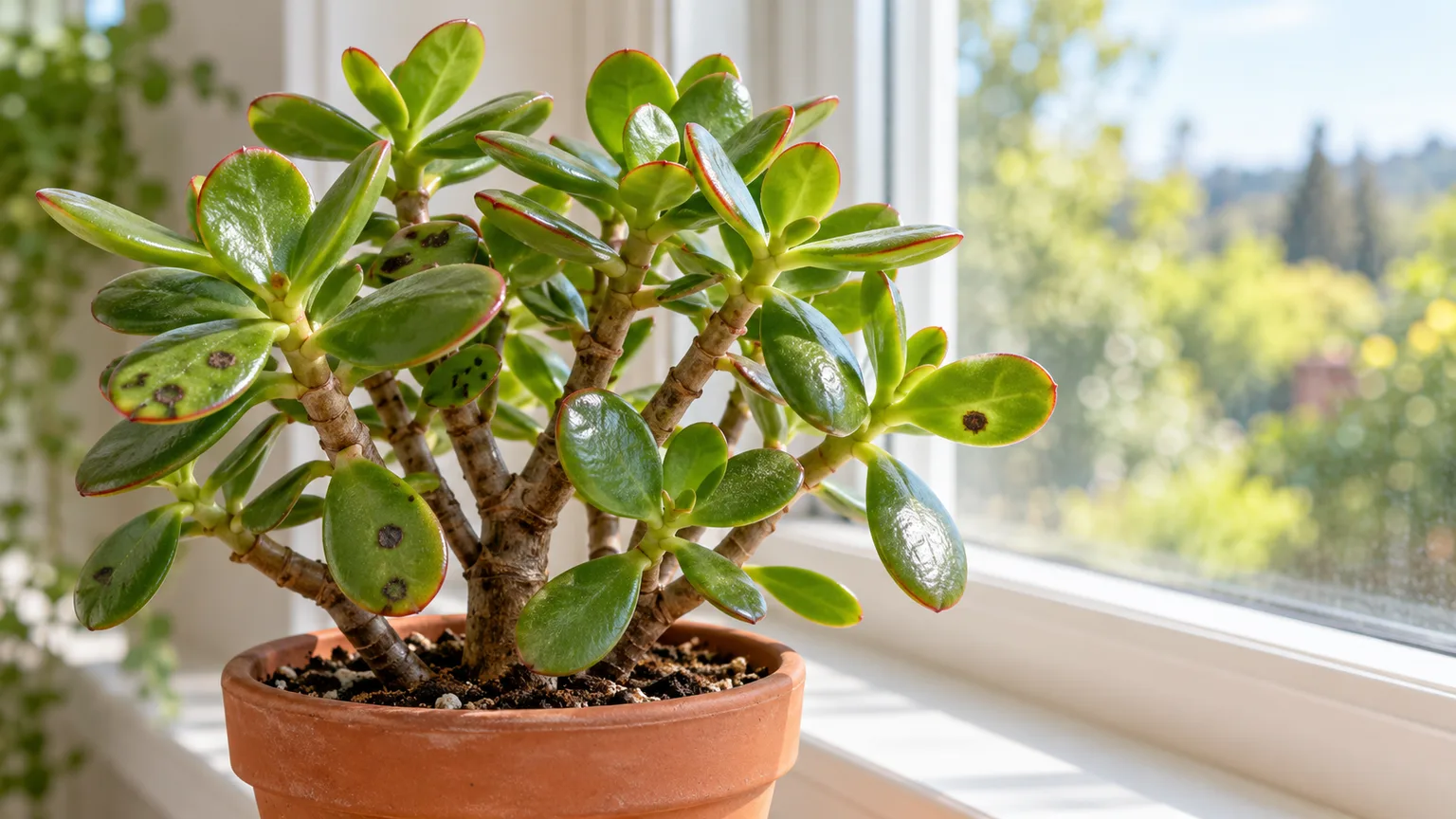
Black Spots on Jade Plant: Causes, Checks & Fixes
This guide covers black spots on Jade Plant. See also the general Black Spots guide, watering, and light pages for this plant.
Black Spots on Jade Plant: Causes, Checks & Fixes
Quick answer
Black marks on a Jade Plant do not point to one disease. The first check is whether they are tiny, fixed dots or true lesions that are enlarging and damaging the leaf. First move the plant away from other plants while you inspect it. That temporary separation protects a collection if a contagious leaf spot is involved, while giving you time to rule out a harmless Jade Plant feature before you prune or spray.
Jade Plant is Crassula ovata, a succulent with thick leaves and stems that store water, as Wisconsin Horticulture explains. That matters because normal water-transfer pores, edema, disease, and overwatering injury can all look like small marks on its waxy foliage. For the general black-spot pattern across plants, see the black spots guide; the checks below focus on the clues that are specific to Jade Plant.
What black spots look like on Jade Plant
Look at the mark in daylight and compare it with nearby leaves. A few tiny dots that sit in place on otherwise firm leaves are different from wet-looking patches that grow, merge, or occur with stem collapse. Note whether the spot is flat, raised, corky, sunken, or soft, and whether the same pattern appears on the leaf underside, stem, or only the side facing a window.
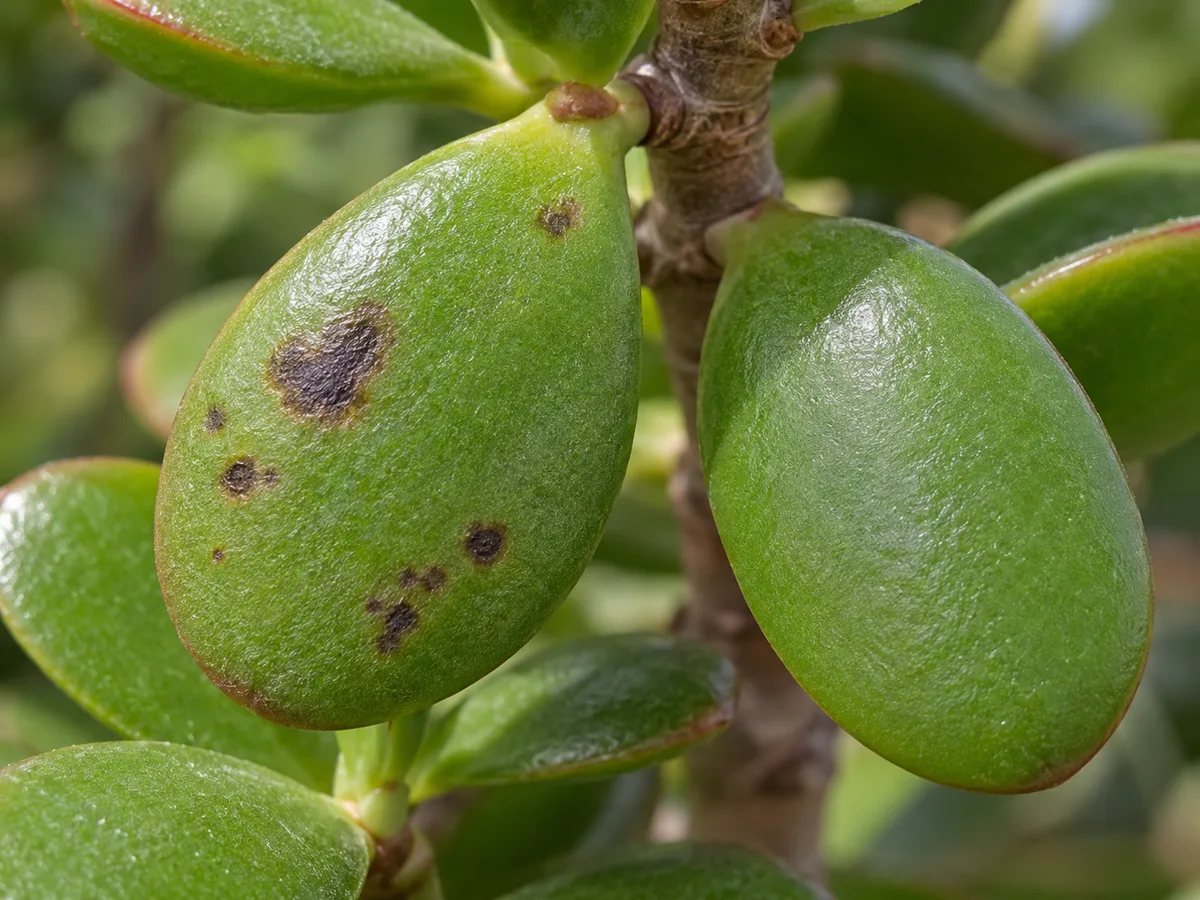
Compare the size and texture of each mark over time; the color alone cannot identify its cause.
A useful first record is a phone photo with one leaf in focus and a second photo of the whole plant. Mark the date and note whether a new spot appears over the next few days. Jade grows slowly, so use repeated observations rather than expecting a dramatic change overnight; The Spruce describes Jade’s slow growth. If the marks do not change and the leaf remains firm, that is useful evidence against an actively advancing leaf lesion.
| What you see | What it may mean on Jade Plant | Next check |
|---|---|---|
| Very small white or black dots that stay fixed on firm leaves | Normal hydathodes are possible | Compare several leaves and monitor for change; do not scrape them off. |
| Raised, rough, scabby or corky patches | Powdery mildew or edema may be involved | Check whether the marks are on leaf surfaces, whether new ones form, and whether the soil stays wet. |
| Dark patches that expand, become irregular, or develop rings or sunken tissue | A leaf-spot infection or damaged tissue is possible | Isolate, photograph, and inspect new leaves and the underside of the canopy. |
| Soft, translucent leaves with a damp, heavy pot | Excess water or root injury is more likely than a dry-soil problem | Check the mix at depth, drainage holes, and lower stem firmness. |
| Brown-black crispy areas after a move to strong sun or a spray | Sun or chemical injury is possible | Compare the affected side with shaded leaves and review recent products or placement changes. |
| Darkening at the stem base with soft tissue or collapse | Serious stem or root rot needs prompt attention | Check the trunk and root zone; seek local diagnosis if the main stem is affected. |
Jade Plant dots that are normal hydathodes
Jade has a useful lookalike that many generic plant guides miss. Penn State Extension notes that tiny white or black dots on Jade Plant leaves can be hydathodes, normal water-transfer pores rather than disease. If dots are minute, evenly scattered, present on older and newer leaves, and do not enlarge or soften the surrounding tissue, they may be part of the leaf rather than a spreading spot problem. Penn State identifies normal hydathode dots.
Do not try to prove a spot is a pest or fungus by picking at it. A hydathode is part of the leaf, and scraping may scar the surface. Use a magnifier and compare several leaves. One stable dot pattern across the plant is less concerning than a new cluster of irregular lesions appearing on fresh leaves.
Also distinguish the dots from scale insects. Scale tends to appear as separate raised bumps attached to the surface or stem; mealybugs look cottony and often sit in leaf-stem joints. A pest should have a body or residue that can be inspected, while hydathodes are flush with the leaf surface. If you find insects, follow the specific Jade Plant scale-insect guide or mealybug guide instead of treating every dark mark as a leaf disease.
Corky marks, edema, and Jade Plant powdery mildew
A rough patch is not the same as a black, spreading spot. Penn State’s Jade Plant disease table describes powdery mildew as scabby or corky areas on leaves, while Gardening Know How notes that Jade Plant edema can appear as blisters when an overwatered plant cannot use water as quickly as it absorbs it. These surface changes may age into brown or dark corking, but the underlying pattern and care history matter more than color. Penn State describes corky mildew symptoms, and Gardening Know How describes Jade edema.
Check the back of the leaf and the pot before changing care. If the soil is still damp well below the surface, the pot feels heavy, or leaves are swollen and unusually soft, wait for the mix to dry and correct the moisture problem. Jade stores water in its foliage, so a dry surface alone does not mean the root ball needs another drink. Penn State recommends infrequent watering after the soil is completely dry and stresses well-drained mix for this succulent. The Jade Plant watering guide and soil guide explain how to check the root zone without watering by calendar.
Corked tissue is damaged tissue; it will not become smooth and green again. If new leaves form normally and the existing marks stay unchanged, focus on preventing new lesions rather than trying to polish or peel old ones. If rough marks appear alongside white powder, spreading discoloration, or wilting, ask an extension office to help distinguish mildew from edema or other injury before choosing a treatment.
When a Jade Plant black spot may be leaf-spot disease
Fungal and bacterial leaf spots can both produce dark lesions, and a photograph rarely identifies the exact pathogen. Gardening Know How describes leaf spots as variable in color and shape; they may have dark margins or rings, enlarge, and eventually cause infected leaves to brown and drop. It also notes that fungal pathogens are common and that bacteria can cause some leaf spots. Use those points as a reason to monitor a spreading lesion, not as proof that Jade Plant has a named infection. The leaf-spot diagnosis is broad.
The Jade-specific risk rises when leaves remain wet, plants are crowded, or air stays still around the canopy. Succulent leaves should not be routinely misted. Water the soil rather than the foliage, leave space around the plant, and remove dropped leaves from the pot surface. In general leaf-spot management, keeping foliage dry, improving air movement, and cleaning up infected debris reduce conditions that favor spread; those cultural steps are more appropriate than applying a chemical at random. Dry foliage and sanitation help.
A spot that starts after a wet, humid spell may still be edema or physical damage. Treat the plant as a potential infection only when the lesions are changing, multiple leaves are involved, or nearby plants show similar symptoms. If new lesions keep appearing after the canopy is dry and the pot dries appropriately, take clear photos to a local plant clinic rather than guessing at a fungicide. Several unrelated conditions can create spots, and the right product depends on a confirmed diagnosis.
Check the root zone before blaming the leaves
Overwatering is a Jade Plant problem because its storage tissues can stay plump even when roots are struggling. Look for a pot that stays heavy, mix that remains wet for many days, a blocked drainage hole, or a sour smell. Then inspect the lower stem gently. If foliage is soft and translucent but the trunk is firm, correct watering and drainage first; if the trunk is soft, dark, and collapsing, the problem is more urgent.
Penn State Extension describes Jade Plant bacterial soft rot as collapse of stems or branches with soft, mushy internal tissue and recommends discarding affected plants. That is a very different sign from one or two fixed dots on otherwise healthy foliage. The soft-rot collapse pattern is a warning to assess the whole plant. Bob Vila’s succulent guide likewise identifies squishy, translucent leaves as an overwatering lookalike, rather than evidence that a plant is thirsty. Succulent overwatering signs include soft, water-filled foliage.
If soil is saturated and the base remains firm, pause watering and let the mix dry in a bright, ventilated spot. Do not repot just because a leaf has a spot. Repot only if the mix is dense and waterlogged, the drainage design has failed, or roots are soft and decayed. The Spruce’s Jade care guide likewise emphasizes a succulent mix and a pot with a drainage hole before changing pot size; The Spruce’s Jade care guide supports fixing the root zone before disturbing a stable plant. When root damage is likely, compare the Jade Plant overwatering guide, root-rot guide, and stem-rot guide.
Check light, sprays, and pests as lookalikes
A dark mark can follow a sudden change in exposure rather than an infection. Jade tolerates strong light, but leaves grown in shade can scorch when the plant is moved abruptly into direct sun. Check whether damage is limited to the window-facing side and appeared soon after a move outdoors or against hot glass. Wisconsin Horticulture notes that Jade Plant leaves damaged by sunburn, insecticide, or frost can die and fall while new leaves emerge. Jade leaf injury causes include all three.
Review any recent sprays too. A cleaning product, pesticide, or concentrated leaf shine can burn succulent tissue, especially if the plant receives strong sun before residue dries. Gardening Know How warns that insecticides may cause phytotoxicity on Jade Plant. If a spray preceded the marks, stop repeating it, keep the plant out of direct hot sun while it recovers, and do not add another treatment to counter the first. Jade spray phytotoxicity risk.
Inspect the leaf joints and stem for cottony insects, scale, or sticky residue. Mealybugs can feed at stem joints and leave sooty mold, according to Gardening Know How’s Jade Plant guide; black coating that smears is different from a lesion inside the leaf. If the plant is stretched, weak, and leaning, the Jade Plant light guide can help you change exposure gradually so sun injury does not get mistaken for a disease outbreak. For brown, dry damage, use the Jade Plant brown-leaves guide to compare sun, cold, and water stress.
What to do first and how to limit spread
Keep the first response simple: isolate the Jade Plant until you know whether spots are stable pores or active lesions. Then take these steps in order:
- Photograph and classify the marks. Record whether they are tiny and fixed, rough and corky, or expanding and wet-looking. Photograph the whole plant and one close leaf.
- Check leaves and stems. Look underneath leaves and at the joints for pests. Feel the stem only gently; firm tissue is reassuring, while a soft, collapsing base is urgent.
- Check the pot, not just the topsoil. Compare pot weight, confirm that water can escape, and use a skewer or finger to assess deeper mix. Do not water a Jade Plant with damp soil simply because a calendar says it is time.
- Remove only clearly dying tissue. If a lesion is spreading or a leaf is collapsing, cut it off with a clean blade and discard it in household waste. Avoid stripping healthy leaves to make the plant look tidy.
- Keep foliage dry and improve spacing. Water at soil level, empty standing water, and allow air to move around the leaves. Do not mist the plant or crowd it against other foliage while you monitor.
Cleaning a tool between cuts prevents moving sap or debris from one leaf to another. If you use alcohol to clean a blade, let it evaporate before cutting and keep it away from the plant. Do not wipe alcohol directly over the leaves; Jade tissue can be marked by unnecessary chemicals.
When treatment or expert diagnosis is needed
Do not reach for a fungicide because the spots are dark. Penn State’s Jade Plant disease reference includes a fungicide recommendation for powdery mildew, but that is not a blanket treatment for black marks of unknown cause. Gardening Know How notes that different organisms cause leaf spot and that identifying the pathogen can matter when chemical control is considered. If spots are multiplying on new leaves despite dry foliage, clean tools, and appropriate watering, consult a local extension service or plant-diagnostic clinic before applying a product.
If an expert confirms a disease for which treatment is warranted, ask the extension office or plant-diagnostic service what is appropriate for indoor Jade Plant and that diagnosis. Penn State’s disease table lists fungicide for powdery mildew; that recommendation does not extend to every dark mark. Do not select a spray from spot color alone. Because Jade Plant leaves can be sensitive to insecticides, avoid repeated applications without clear evidence of benefit. Penn State’s mildew treatment note is specific to powdery mildew, while leaf-spot spray limits argue against routine treatment without a diagnosis.
If the main stem is soft through its interior or branches collapse, the plant may not be salvageable. Penn State advises discarding Jade Plants affected by bacterial soft rot. Do not take cuttings from visibly rotting tissue; if only one branch is affected and the trunk is firm, ask an extension diagnostician whether a clean cutting above the damage is viable. This is a case where a clear diagnosis matters more than trying several home treatments.
Recovery: judge the next Jade Plant leaves
Black spots are scars. An old leaf will not turn back to an unmarked green surface, even when the cause has been corrected. Judge recovery by whether new lesions stop appearing and the next leaves remain firm and clean. Since Jade Plant is a slow-growing succulent, a quiet period is not enough to prove that treatment failed. Keep the care stable and compare photographs over several weeks of active growth.
If the spots were hydathodes, the plant will remain healthy without treatment and the dots will remain part of the leaves. If they were edema or sun damage, the old marks may stay corky or dry while later growth is normal. If the issue was a leaf-spot disease, continued spread or new lesions means conditions still need attention or the diagnosis needs review. If the stem or roots continue to soften, stop waiting for leaf improvement and address the rot promptly.
Do not fertilize a spotted Jade Plant to force faster replacement leaves. Feeding cannot remove old lesions or reverse rot, and it adds another variable to a plant already under stress. Keep it in bright light suited to its current acclimation, let the pot dry between thorough waterings, and follow the Jade Plant care overview for the species’ normal rhythm.
Prevent black spots from returning
For Jade Plant, prevention is mainly about matching water to the succulent root system and keeping leaves dry. Use a pot with an open drainage hole and a gritty mix that does not stay soggy. Water the soil thoroughly only after it has dried, then empty the saucer. Penn State Extension notes that Jade Plant needs well-drained soil and infrequent watering; its leaves and stems hold water, which is why persistent wetness is more dangerous than a short dry interval. Penn State’s Jade dry-down guidance.
Give the plant enough bright light for compact, firm growth, but acclimate it gradually when moving from shade to direct sun. Avoid routine misting, especially in cool rooms or where air cannot move around the canopy. Space Jade Plants so their thick leaves are not pressed together, and remove fallen leaves from the pot surface. If you have had a confirmed leaf-spot issue, keep the plant separated until new growth remains clean.
When buying or propagating Jade Plant, start with firm leaves, clean stem joints, and a root ball without a sour smell. If spots show up on a new plant, quarantine it before placing it near a collection. The Jade Plant soil guide can help correct a dense mix; use the Jade Plant watering guide if you need to reset a dry-down routine.
When to use this page vs other Jade Plant guides
Use this guide when dark marks are the main symptom and you need to distinguish normal leaf pores, corky changes, active lesions, and root or stem damage. Use Jade Plant edema when raised blisters or corking follow a wet root ball, and Jade Plant white spots when the marks are pale, powdery, or crust-like. If the leaves soften or the plant declines in wet soil, start with Jade Plant overwatering or Jade Plant root rot. Use the Jade Plant problems hub if a separate symptom is developing alongside the spots.
Related Jade Plant guides
- Jade Plant care overview — use for the plant’s normal succulent growth and care needs.
- Jade Plant watering — use when the pot remains wet or dries unevenly.
- Jade Plant soil — use when the mix is dense or drainage is poor.
- Jade Plant light — use when marks followed a move into stronger sun.
- Jade Plant edema — use for raised blisters or corky water-stress marks.
- Jade Plant stem rot — use when stems soften or collapse.
- Jade Plant problems hub — start here when spots appear with another unrelated symptom.
Related tool
Use the Black Spots on Leaves Checker to compare lesion patterns and decide whether the marks need closer disease or care checks.