Jade Plant Calcium Deficiency: How to Check Before You Feed
Quick answer
A Jade Plant (*Crassula ovata*) with repeated distortion in its newest leaves could have a calcium-delivery problem, but no reliable source establishes a unique calcium-deficiency signature for this species. First, hold any calcium supplement and check the root zone, watering pattern, and new growth before changing the soil.
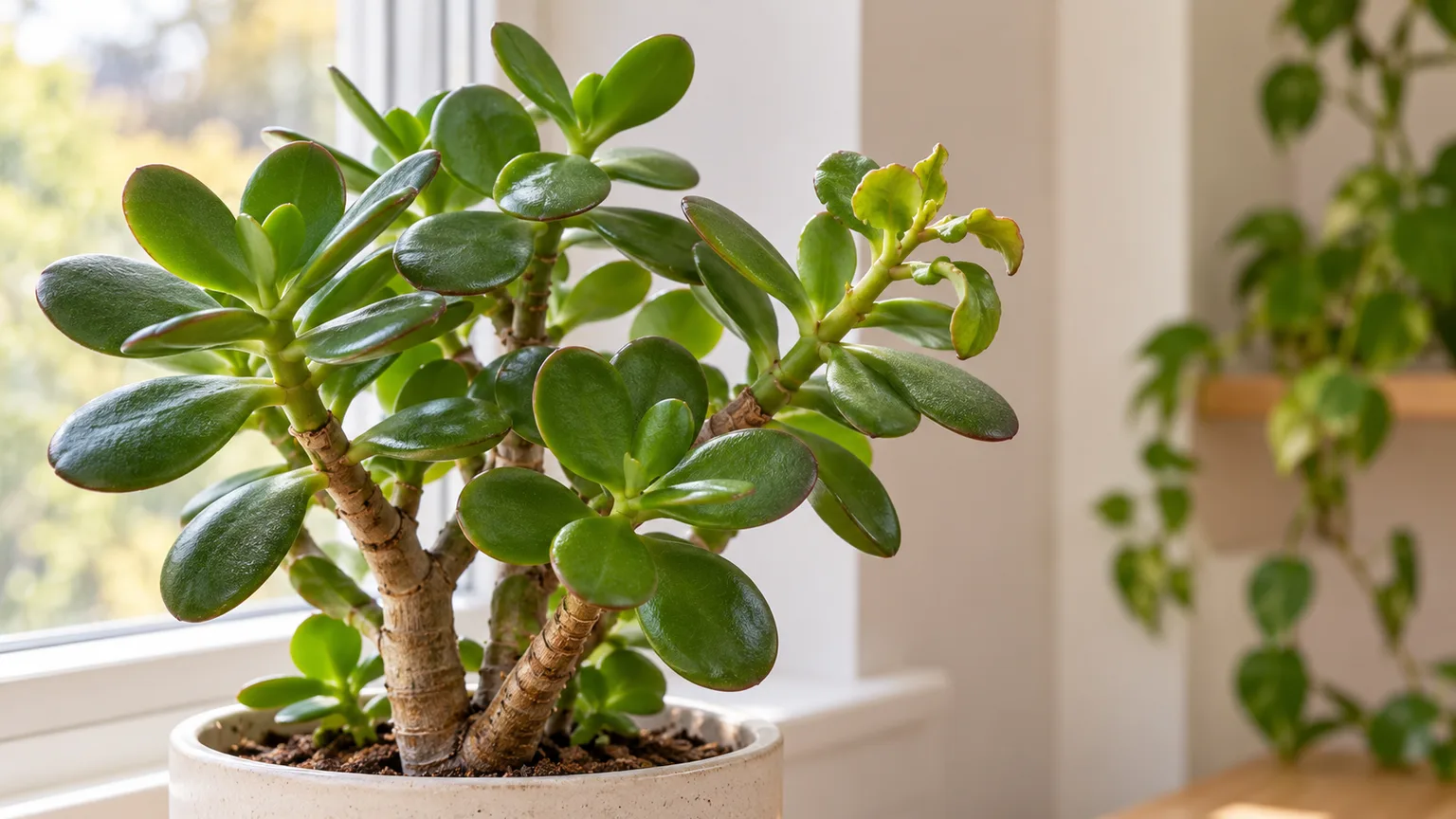
Calcium Deficiency on Jade Plant: Causes, Checks & Fixes
This guide covers calcium deficiency on Jade Plant. See also the general Calcium Deficiency guide, watering, and light pages for this plant.
Calcium Deficiency on Jade Plant: Causes, Checks & Fixes
Quick answer
Repeatedly misshapen or damaged new leaves can fit a general calcium-delivery problem, but it does not prove calcium deficiency on a Jade Plant. I found no authoritative source that documents a unique calcium-deficiency symptom pattern for Crassula ovata. Before blaming calcium, inspect root-zone moisture, visible pests, and recent handling or light changes; treat these as competing checks, not as proof of a nutrient shortage.
First, hold any calcium supplement and check the potting mix and newest growth. Jade is a succulent with thick, water-storing leaves, and it depends on very free drainage; North Carolina State Extension identifies Jade as Crassula ovata. Changing the nutrient balance before checking the roots can add another problem. Calcium is important to plant growth, but a real shortage in potting media is uncommon, and other growing conditions can mimic nutrient symptoms. RHS nutrient guidance explains these limits. The safe response is to diagnose the pattern, not to treat every distorted leaf with a calcium amendment.
What possible calcium trouble looks like on Jade Plant
If calcium delivery is limiting, pay closest attention to the leaves and growing point that are still forming. Across plants, calcium deficiency often appears in developing tissue because calcium is not readily moved from old leaves into new growth. Its symptoms vary by species, and the Royal Horticultural Society describes the familiar examples mainly in fruits and vegetables, not Jade Plants. Calcium deficiency often affects developing tissue before older foliage gives a useful clue.
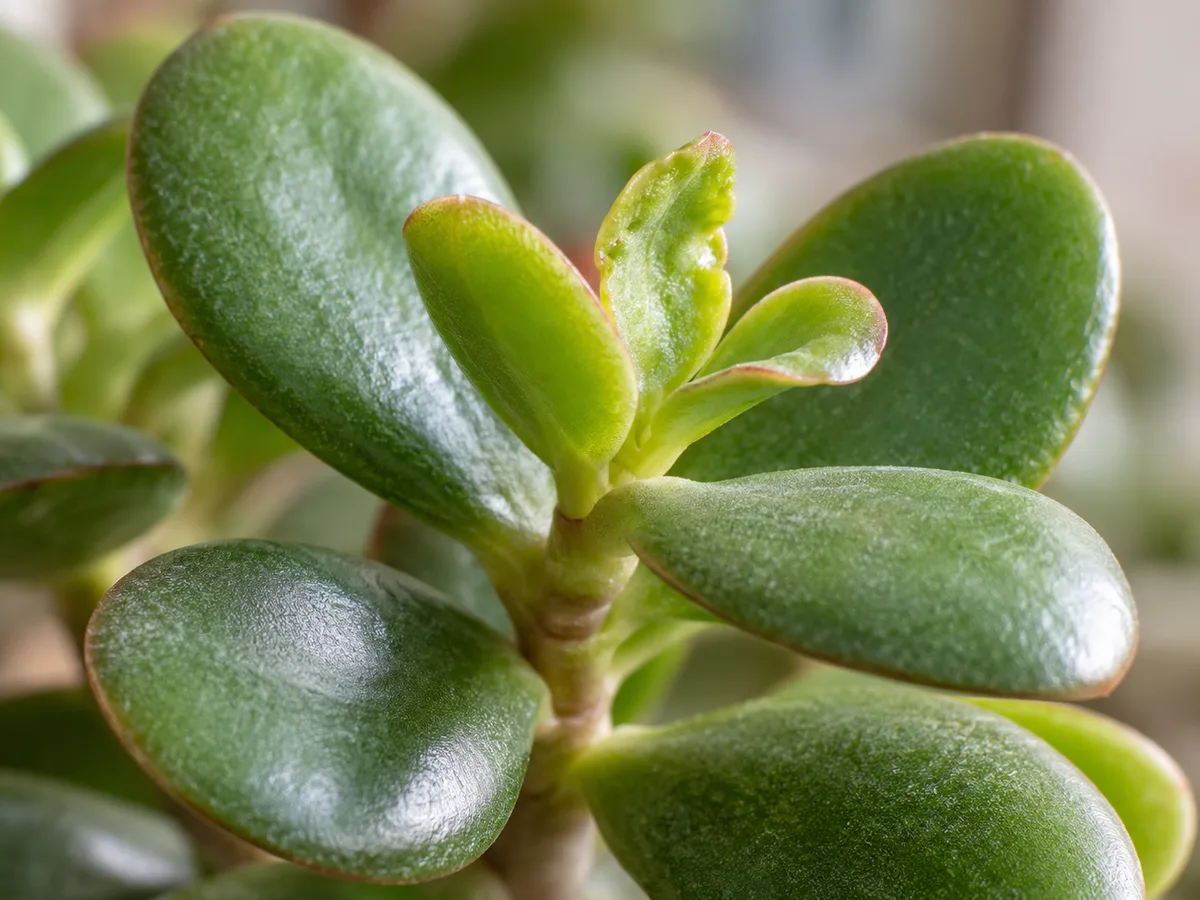
A repeated pattern in emerging leaves is worth investigating, but leaf shape alone cannot confirm calcium deficiency in Jade Plant.
On a Jade, a cautious suspicion would be that several leaves in sequence emerge small, uneven, hooked, or unable to open normally while older leaves remain relatively firm. Treat that as a pattern to investigate, not a species-specific diagnosis. The Royal Horticultural Society notes that calcium-deficiency symptoms differ among plants and that calcium shortages in growing media are very rare. RHS guidance describes variable symptoms and rare media shortages.
A single blemish on a mature, lower leaf is weak evidence. Jade leaves are thick and water-storing; an isolated spot or wrinkle can follow a dry spell, root stress, physical damage, or a sudden change in sun. If the whole plant has soft leaves, spontaneous leaf drop, or a darkening stem base, move root and watering checks ahead of nutrient treatment. Those signs fit a root-zone problem better than a clean, repeated pattern limited to fresh growth.
Why calcium can be hard to diagnose
Calcium does more than sit in soil as a fertilizer ingredient. Plants use it in cell walls and membranes, and calcium also has a signaling role inside cells. Once calcium reaches a leaf, it is not readily shifted through the phloem from older tissue to a fast-growing tip; expanding leaves depend on continued supply through the plant’s water-transport system. That helps explain why developing tissues can show symptoms while older leaves look comparatively normal. Plant calcium supports cell structure and is poorly remobilized to new tissue.
This is a general plant-physiology explanation, not proof that Jade commonly becomes calcium deficient. Jade belongs to the Crassulaceae family, and a review of plant calcium nutrition notes that some Crassulaceae species can accumulate high soluble calcium concentrations. That family-level observation does not establish the calcium status or deficiency symptoms of Crassula ovata in a home pot. Calcium accumulation differs among plant groups.
A plant can also have calcium in the potting mix but fail to deliver enough to developing tissue if roots are damaged or water movement is disrupted. The RHS lists drying of soil or compost as a cause of poor calcium distribution, while its wider diagnostic guidance warns that drought, waterlogging, low light, and poor establishment can resemble nutrient deficiencies. RHS nutrient guidance covers dry media and lookalike growing conditions. For a Jade, that makes the condition of the roots and the history of watering more useful first checks than a quick dose of lime or eggshell.
Jade-specific causes to check before adding calcium
A root zone that is wet for too long
Jade’s fleshy leaves and stems store water, and the plant is normally grown in fast-draining succulent mix. Keep the root zone draining freely; water sitting around the roots can lead to decline. North Carolina State Extension recommends well-drained potting soil and watering in moderation when the soil is dry. NC State’s Jade Plant profile emphasizes drainage and dry-soil watering.
If the pot stays heavy and damp long after watering, inspect the drainage hole and the mix before calling the symptoms a nutrient deficiency. Jade care references warn that persistently wet soil can damage roots and contribute to root rot. Gardening Know How describes this Jade watering risk. A dense, old mix or a pot with no outlet can stay wet even when the surface looks dry. A Jade that is losing leaves or developing soft, discolored tissue needs a root check; adding calcium to a poorly functioning root zone does not repair the cause. Use the Jade Plant overwatering guide when the mix remains wet and the leaves are soft, and the damaged roots guide if roots are brown, mushy, or breaking apart.
Repeated drought or uneven watering
The opposite pattern can also matter. A root ball that dries hard for long periods, then receives a large soak, may not deliver water steadily while new leaves expand. Jade should not be watered by a calendar alone. Gardening Know How advises allowing the upper soil to dry and not leaving the plant in standing water; NC State likewise recommends watering when the soil is dry. Jade care guidance supports letting the mix dry before watering.
Use a wooden skewer or a finger to check below the surface and lift the pot to learn its dry weight. Do not water just because one new leaf looks unusual. If the entire plant is wrinkled and the mix is dry through the root ball, water thoroughly and let excess drain; if the mix is still wet, wait and investigate drainage. For a broader moisture diagnosis, compare the Jade watering guide with the underwatering guide.
Old or chemically unsuitable potting mix
A long-used mix is a reason to assess its structure and drainage, not proof that its calcium is exhausted. If new leaves keep changing despite a healthy root zone, a measured pH or soil test is more useful than assuming that age alone caused a nutrient shortage.
Jade is commonly grown in a freely draining succulent mix. Gardening Know How describes a pH near 6.5 for Jade and recommends a well-draining mix; use that as a care reference rather than a reason to amend blindly. Jade care guidance gives a mildly acidic soil target. If you have a reliable pH test that repeatedly reads far outside the product’s intended range, consider the Jade soil guide and the soil-too-alkaline guide. Do not add lime just because calcium is in its name: lime also changes pH, and Jade’s soil may already be near the appropriate range.
A feeding pattern that does not fit Jade
A fertilizer label may contain calcium, but feeding more often is not automatically safer. The RHS recommends using fertilizer when a specific deficiency is known rather than applying it as a guess. RHS feeding guidance advises targeted feeding. Jade is a succulent, so a heavy routine feed is not a useful diagnostic test. Use the Jade fertilizer guide to review a restrained feeding routine and product label before adding nutrients.
If you have fertilized repeatedly, or used a strong solution on dry mix, pause feeding while you inspect the roots and any crust on the soil surface. Salt injury and general root stress can also damage tips or new growth. The magnesium-deficiency guide is useful when older leaves show a different pattern, and the Jade light guide helps when growth has become weak or stretched rather than repeatedly malformed.
How to check a Jade Plant before treating
Work through the checks in order, keeping the plant’s recent care history in view.
- Compare old and new leaves. Mark the newest leaf or photograph the growing tip today. A calcium hypothesis becomes more plausible when several newly forming leaves show a similar distortion while mature leaves remain comparatively unchanged. One old spot does not establish that pattern.
- Check moisture below the surface. Feel or probe the mix near the root zone, not only the top layer. Note whether the pot is still heavy days after watering, bone-dry all the way through, or drying unevenly.
- Check drainage and root condition if the mix stays wet. Make sure water can leave the pot. If the plant is declining and the medium smells sour or roots are soft, investigate root damage rather than adding a nutrient supplement.
- Inspect the growing point and leaf surfaces. Look for pests, sticky residue, fine webbing, scars, or mechanical injury. A localized mark is not enough to confirm a nutrient problem.
- Review recent changes. Note a new window, colder season, repotting, a fertilizer dose, hard pruning, or a long gap between waterings. A symptom that began after one of these changes deserves a care-context check.
- Test before amending when the pattern persists. If new leaves continue to deform despite healthy roots and steady, species-appropriate care, use a reputable soil or tissue test where available. RHS notes that specialist leaf-tissue analysis exists but can be expensive. The RHS explains the limits of tissue testing. A test is more useful than repeated home additions that change several variables at once.
The global calcium-deficiency symptom guide explains the broader pattern across plants. Use it as a comparison, not as a substitute for the Jade-specific root and watering checks above.
The first fix: pause calcium and protect the roots
The first action is to withhold the planned calcium supplement until the root zone and new-growth pattern are checked. Do not mix eggshell powder, garden lime, or a concentrated calcium product into Jade’s pot as a diagnostic trial. When the root cause is water delivery or damaged roots, an amendment can make the medium harder to interpret and may change its chemistry without fixing uptake.
If the mix is wet, improve drainage and let it dry to the plant’s normal watering point before watering again. If the roots are soft or deteriorating, follow the root-rot guide for that problem; do not try to solve active root decay with fertilizer. If the mix is dry throughout and the plant is otherwise firm, water when it is due, allow full drainage, and return to a consistent dry-to-water cycle.
If roots look healthy, the mix drains, and repeated new leaves still show a consistent distortion, then gather evidence before feeding: check a representative soil sample, review the fertilizer label, and seek extension or laboratory advice if available. If calcium deficiency is confirmed, choose a product that explicitly lists calcium and follow its label at the recommended dilution. The point is to correct a verified shortage, not to guess a dosage for a Jade-specific condition that has not been established.
What to avoid while you diagnose it
- Do not add lime without checking pH. Jade care guidance lists limestone as a pH amendment; adding it without a pH check can change the medium even when calcium shortage has not been confirmed. The Jade soil reference discusses limestone for pH adjustment.
- Do not feed dry, stressed roots. Jade’s roots should not receive a concentrated fertilizer solution while the mix is powder-dry or the plant is declining; Jade care guidance warns against fertilizing dry soil. The Jade care reference covers this root-injury risk. Follow the product’s label and the plant’s normal watering needs.
- Do not combine repotting, heavy pruning, and nutrient changes at once. Unless the mix is failing or roots are rotting, change one condition at a time so the next growth gives you useful evidence.
- Do not strip off every marked leaf. Keep firm leaves that still support the plant; remove only tissue that is fully dead or rotting.
If leaf deformation is your only clue, start with the deformed new growth guide or the distorted leaves guide to compare other causes before applying a nutrient treatment.
Recovery and what to watch next
Keep any marked leaf as a record of the original pattern rather than as the recovery score. Judge the result by the next leaves that form after the root-zone or nutrient issue is corrected: do they open more evenly, and does the growing tip remain firm? Compare photographs over time instead of waiting for an older leaf to become a perfect diagnostic example.
Do not promise yourself a fixed recovery date. Judge the next leaves in the context of season, light, temperature, and root condition. If the plant is stable but not actively producing leaves, keep the care steady rather than escalating the fertilizer dose. If several new leaves continue to deform, the growing point collapses, roots smell sour or soften, or the decline spreads through the stems, revisit the root diagnosis and ask a local extension service or plant clinic about testing.
A leaf that turns soft or drops while the mix is wet is a reason to inspect drainage, not proof that calcium is low. A firm plant with healthy roots and a recurring new-growth pattern gives you a better basis to investigate nutrient delivery. Keep these observations separate; otherwise, every new symptom can push you toward another amendment.
Prevent the same problem from returning
For Jade, prevention is mostly about keeping roots functional and feeding cautiously. Grow it in a pot with drainage and a fast-draining succulent mix; check the root-zone dryness before watering rather than following a weekly schedule. Do not let the pot sit in collected water, and reassess the mix if it stays wet for unusually long. Give the plant enough bright light for sturdy growth, but acclimate it if moving it into stronger direct sun. Use fertilizer only during active growth and according to its label; Jade care guidance recommends feeding during the growth period rather than on dry soil. The Jade reference describes a seasonal feeding routine.
Keep a short record of watering, fertilizer, repotting, and changes in light when a problem starts. That lets you connect deformed leaves to a real change rather than make several corrections at once. If the same fresh-growth pattern returns in a healthy, draining root system, then a nutrient test or a measured adjustment is more sensible than an annual calcium supplement.
When to use this page vs other Jade Plant guides
Use this guide when several newly forming leaves look abnormal and calcium delivery is one possibility. For broad care orientation, start with the Jade Plant overview or its problems hub. If the concern is older leaves rather than emerging tissue, compare the magnesium-deficiency guide. Soft leaves, leaf drop, or a persistently wet mix point you toward overwatering or damaged roots. If leaf shape remains the main clue but nutrition is uncertain, use distorted leaves to compare other causes.
Related Jade Plant guides
- Jade Plant care overview: use for the full care picture and a starting point.
- Jade Plant problems hub: use to choose a more fitting diagnosis when this nutrient pattern does not match.
- Light: use when new growth is weak or stretched rather than repeatedly misshapen.
- Fertilizer: use once the diagnosis is clearer and you need a routine feeding plan.
- Soil too alkaline: use only when a reliable pH test points to an alkaline mix.
- Repotting: use when the potting medium has broken down or roots have outgrown the container.
Related tool
If the cause is still unclear after checking the pot and new leaves, use the Plant Problem Diagnosis tool to compare likely causes before adding an amendment.