Potassium Deficiency on Jade Plant: Signs and Safe Feeding
Quick answer
Potassium deficiency is possible in a container-grown Jade Plant, but brown edges alone cannot confirm it. Look for a repeated yellow-to-brown margin pattern on older leaves, then check feeding history, the potting mix, and root health before adding fertilizer.
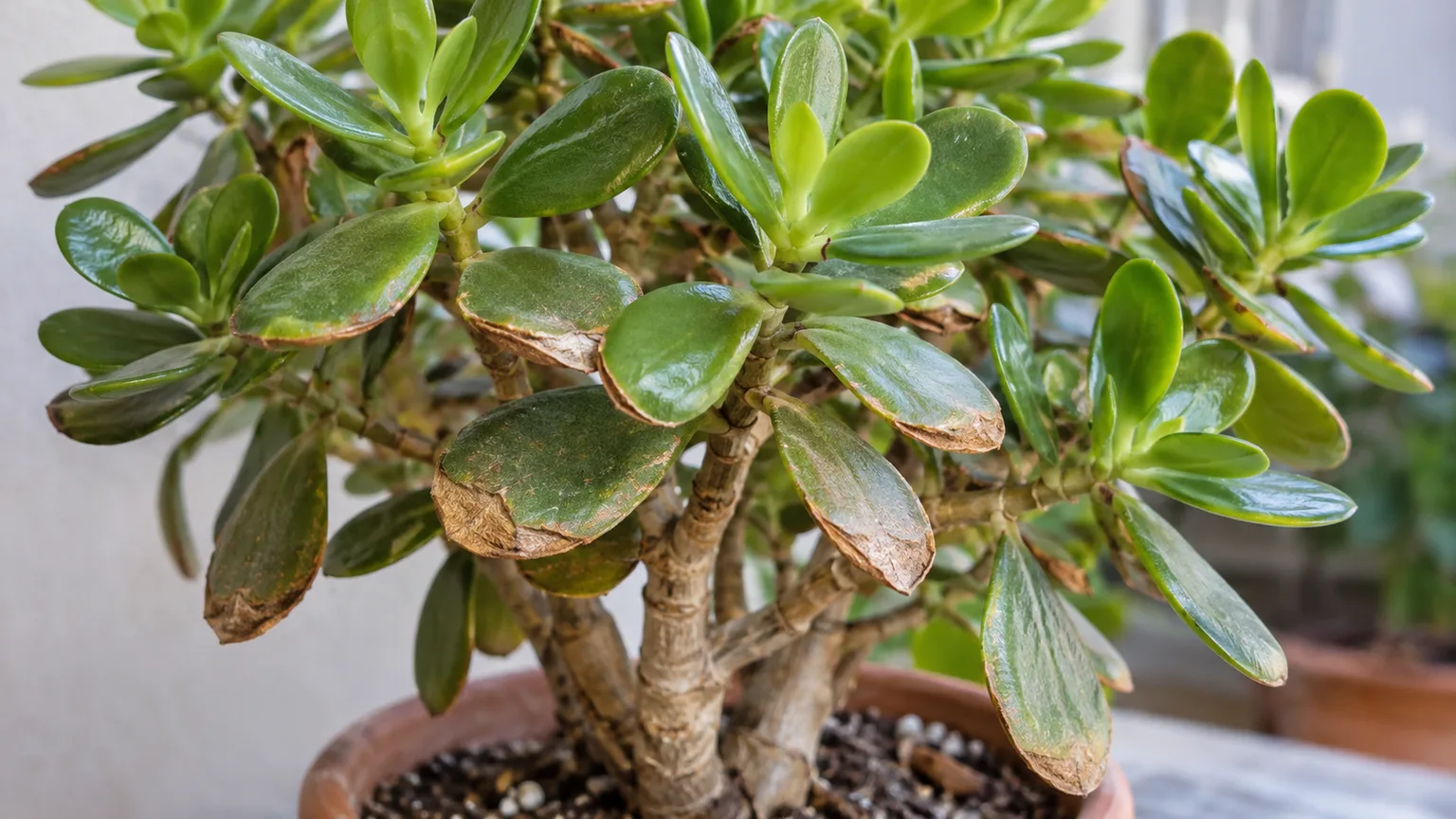
Potassium Deficiency on Jade Plant: Signs, Checks & Safe Fixes
This guide covers potassium deficiency on Jade Plant. See also the general Potassium Deficiency guide, watering, and light pages for this plant.
Potassium Deficiency on Jade Plant: Signs, Checks & Safe Fixes
Quick answer
Potassium deficiency is possible in a container-grown Jade Plant, but a brown edge by itself does not confirm it. In broad-leaved plants, potassium shortage can begin on older leaves with yellowing followed by brown tips, marginal scorch, or spots; the pattern is useful as a clue, not a Jade-specific test. West Virginia University Extension describes the older-leaf pattern. For the general nutrient issue across plants, see the potassium deficiency guide. On Jade, compare several older leaves and check the pot, roots, light, and feeding history before treating the symptom.
First action: pause potassium-only supplements and check whether multiple older leaves show the same gradual edge pattern before adding fertilizer. Container plants can develop potassium deficiency, but root or soil conditions can create similar signs. UC IPM explains why a container symptom needs a wider diagnosis.
What potassium deficiency may look like on Jade Plant
Jade (Crassula ovata) carries water in thick, fleshy oval leaves on woody stems. NC State describes Jade’s succulent leaf form. If potassium supply is low, the broadleaf pattern to compare is yellowing that develops into dry brown tips or margins on older leaves, sometimes with spots; severe cases can affect younger growth. UC IPM describes these broadleaf symptoms. There is no reliable Jade-specific symptom signature in the extension and horticulture sources consulted, so describe the pattern as a possibility rather than a confirmed diagnosis.
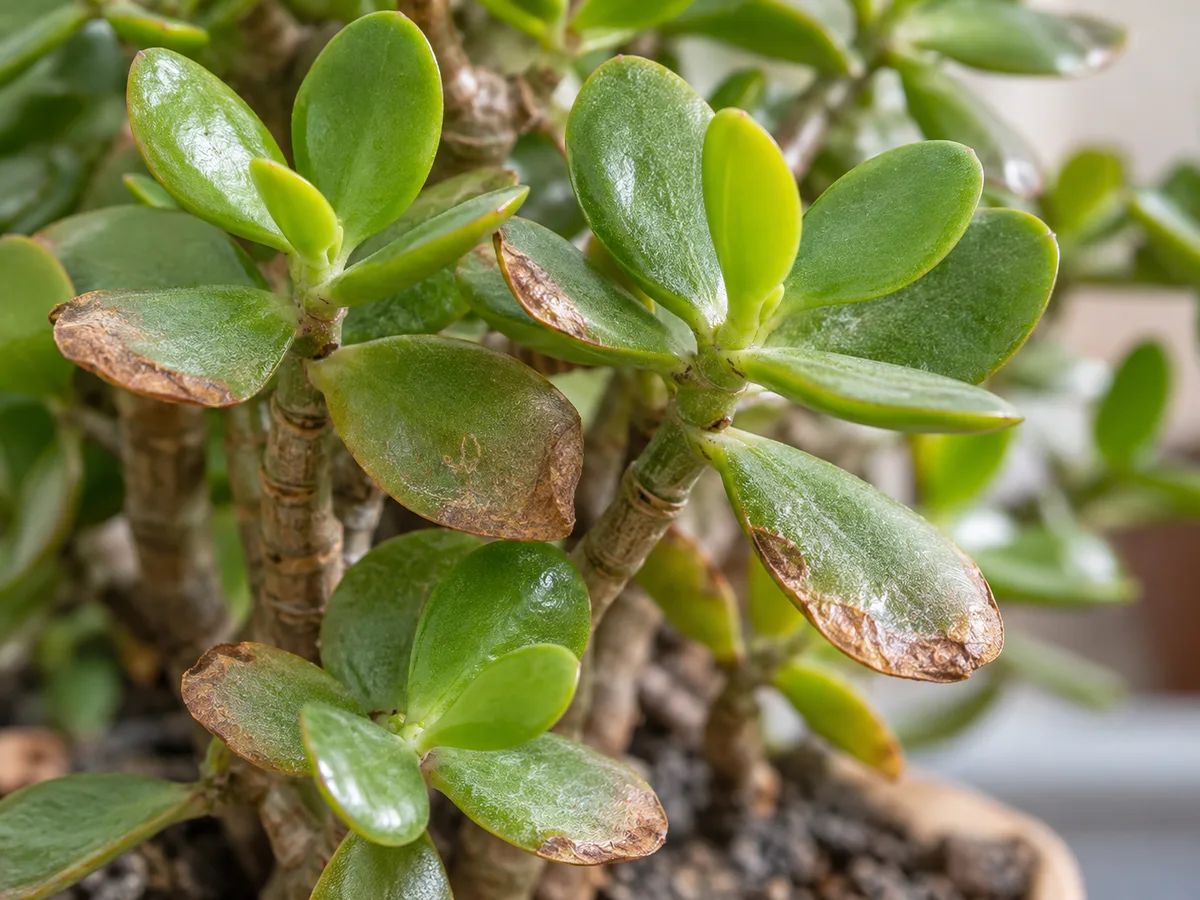
An illustrative margin-scorch pattern: compare older leaves with new stem-tip growth, and do not diagnose potassium deficiency from one leaf alone.
On a Jade, look for the same change on more than one older leaf. A repeated yellow-to-brown band that begins along the margin is more informative than an isolated brown tip. If new growth is firm and mostly green while older leaves show progressive edge damage, potassium shortage stays on the list, especially if the plant has spent a long time in the same nutrient-poor mix without feeding. Still, brown edges can also follow excess fertilizer, strong sun, drought, or root trouble.
Color alone is not enough. NC State notes that direct sun can tint Jade leaf margins red, so a firm red rim without dry or dead tissue is not the same as a scorched edge. If the mark is on the sun-facing side only, compare it with the Jade light guide before assuming a nutrient problem. Likewise, a single damaged lower leaf may simply be old; watch for a repeated pattern rather than treating one cosmetic mark.
When to use this page versus other Jade Plant guides
| What you see | Better next check |
|---|---|
| Several older leaves develop yellowing and dry brown margins while the newest leaves stay firm | Continue the potassium and root-zone checks below |
| Brown tips followed a recent feed or appear with surface deposits | Review the Jade brown-tips guide and fertilizer history |
| Leaves are soft or dropping while the pot remains wet and heavy | Check Jade watering guidance and root health |
| The older leaves turn uniformly pale rather than burning at the edge | Compare the Jade nitrogen-deficiency guide |
| Yellowing sits between green veins | Compare the Jade magnesium-deficiency guide |
Use the Jade problems hub if the marks do not fit any of these patterns. A visual symptom can narrow the possibilities, but it cannot show how much potassium is in the mix or whether roots can take it up.
Why a Jade in a gritty mix can still have a nutrient problem
Jade needs a fast-draining succulent mix because roots that stay wet are vulnerable to rot. Clemson Extension describes slow drainage and overwatering as common root-rot risks for Jade, and recommends feeding modestly rather than treating it like a fast-growing foliage plant. Clemson’s Jade factsheet gives its watering and feeding context. That balance matters: drainage protects the plant, but a container with little nutrient reserve can also lose soluble nutrients over time.
UC IPM notes potassium deficiency among container-grown plants and says poor drainage, root injury, irrigation, or other soil conditions can restrict uptake and produce deficiency-like symptoms. This does not mean every Jade in gritty mix is potassium-starved. It means a nutrient question should include both the mix and the root zone: an empty-looking fertilizer history is one clue; a wet, compacted, or damaged root system is a different problem that fertilizer will not repair.
Jade grows slowly and is sensitive to overfeeding. Epic Gardening advises checking other growth problems before fertilizing and describes a single half-strength dose as a cautious response when a Jade is underperforming. Epic Gardening’s Jade guidance cautions against overfertilizing. That is why an extra potassium booster is a poor first guess: it can add salts without proving that potassium is the missing piece.
How to check before you feed
Start with the leaves, then review the growing conditions that could produce the same appearance.
- Compare leaf age and pattern. Mark two or three affected older leaves with a photo. Look for gradual yellowing followed by dry brown margins on more than one leaf, rather than one sun-facing mark or a single damaged tip.
- Review feeding and repotting history. Note the last time the Jade received a complete fertilizer and whether it was recently repotted. Clemson Extension recommends waiting four months before feeding a repotted Jade; a fresh mix and recent feed make a simple deficiency less likely.
- Check the surface and pot. A crust or deposits are reasons to pause before adding nutrients, especially if you have recently fertilized or use mineral-rich water. Do not scrape the surface into the pot or try to correct it with more potassium.
- Check root-zone conditions without unpotting unnecessarily. Lift the pot and feel the mix several centimeters down. A heavy pot that stays wet, sour-smelling soil, soft leaves, or a soft stem base points toward water or root trouble, not a straightforward nutrient shortage. For the Jade’s mix and drainage setup, use the soil guide.
- Notice where light reaches the leaves. A red, firm margin on the bright side may be normal coloration; crispy patches limited to a window-facing surface suggest light stress. If the mark is primarily on exposed leaves, correct the exposure gradually rather than feeding.
A home inspection cannot measure potassium. WVU Extension recommends laboratory testing to confirm a soil nutrient shortage; ask the lab or local extension office whether it can interpret container potting mix before sending a sample. WVU’s diagnostic guidance explains the value of soil testing. If the Jade has severe symptoms or the history is unclear, this is safer than repeatedly changing fertilizer strength.
The first correction when potassium shortage is plausible
If several older leaves show the same marginal pattern, the Jade is actively growing, it has not been recently repotted, and the roots and mix are not waterlogged or damaged, make one modest correction: apply a complete liquid houseplant or succulent fertilizer once at half the label strength, on already-moist mix. Clemson recommends regular but spaced Jade feeding, while Epic Gardening suggests a single half-dose when other causes have been checked. Use that as a cautious one-time step, not a new frequent schedule.
Do not use a potassium-only product, wood ash, or homemade peel water to chase a visual symptom. UC IPM warns that enough complete fertilizer to supply one nutrient can create excesses of others and contribute to salinity; it also notes that excessive potassium can reduce magnesium availability. If the plant is already fertilized, recently repotted, or showing deposits, hold the feed and investigate those causes first. The Jade fertilizer guide covers the routine care schedule.
After the single correction, return to ordinary Jade care and give the plant time. Do not combine a nutrient dose with repotting, heavy pruning, and a change in watering on the same day. If fresh damage continues, the answer may be uptake trouble, salt accumulation, strong light, or a different nutrient pattern rather than a need for more potassium.
What can recover, and what cannot
A dry brown margin is damaged tissue; do not expect it to become green again. Keep a firm leaf attached and judge the result by the next leaves at the stem tips. Jade’s slow growth means the response may be gradual, so look for clean new margins over the next active-growth flush rather than expecting a rapid change to the old foliage.
If the newer leaves also develop marginal damage, or the plant becomes soft and drops leaves while the soil remains wet, stop feeding and reassess the roots and watering. Repeated fertilizer applications can worsen salt stress. A persistent pattern deserves a container-media test or advice from a local extension office, particularly before adding a concentrated potassium source.
Prevent a repeat on Jade Plant
Use a complete, moderate fertilizer only during active growth, and keep the Jade’s drainage and watering needs intact. Clemson Extension recommends feeding every three to four months and waiting four months after repotting; Gardening Know How also places feeding during Jade’s growing period and advises against applying fertilizer to dry soil. Jade feeding guidance describes seasonal timing. Follow the product label and do not add extra potassium if the plant is growing normally.
Replace mix when it becomes compacted or fails to drain, not simply because an old leaf has a brown edge. A fresh, fast-draining mix and a modest feeding routine are more reliable than trying to correct the plant with concentrated salts. Keep watering tied to the Jade’s dry-down, and use the Jade overview when you need its full care profile rather than another nutrient treatment.
Related Jade Plant guides
- Jade Plant overview: use for the full care profile and normal growth habit.
- Jade Plant problems hub: use when the damage does not match one nutrient pattern.
- Jade fertilizer guide: use for routine feeding and label strength.
- Jade soil guide: use when the mix drains slowly or has broken down.
- Jade watering guide: use when the pot stays wet or the leaves lose firmness.
- Jade brown-tips guide: use when scorch follows fertilizer or mineral deposits appear.
Related tool
If the pattern remains unclear after checking the leaves and root zone, use the Plant Problem Diagnosis tool to compare likely causes before applying another fertilizer.