Brown Tips on Jade Plant: Causes, Checks & Fixes
Quick answer
Brown tips on Jade Plant usually come from drought rhythm swings, fertilizer/mineral salt buildup, or sudden light increase. Start by resetting a dry-down watering cycle, then branch by symptom pattern.
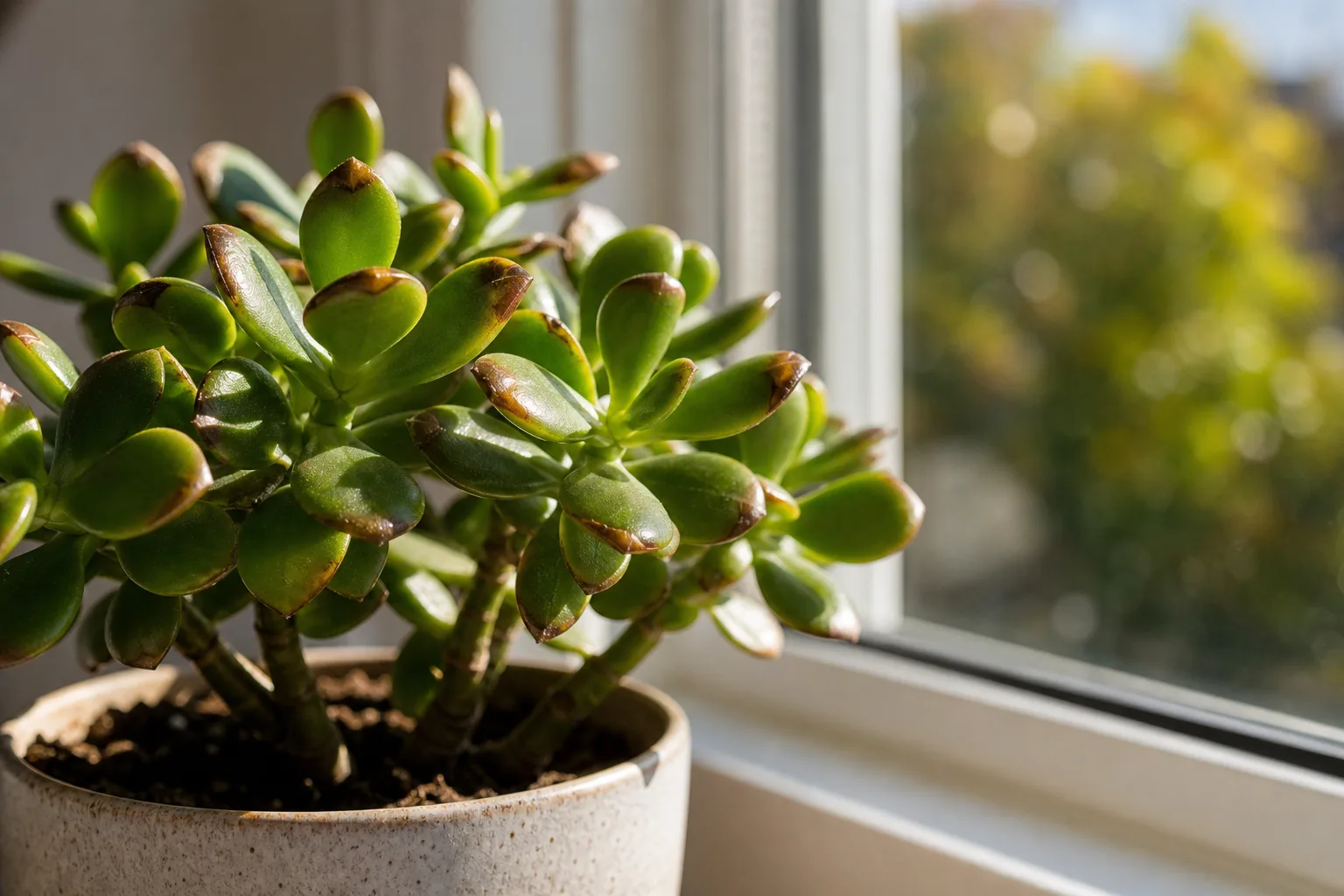
Brown Tips on Jade Plant: Causes, Checks & Fixes
This guide covers brown tips on Jade Plant. See also the general Brown Tips guide, watering, and light pages for this plant.
Brown Tips on Jade Plant: Causes, Checks & Fixes
Quick answer
Brown tips on jade are usually a stress signal, not a contagious disease. The usual drivers are watering rhythm swings, fertilizer/mineral salts in the root zone, or sudden higher light before acclimation. Jade is a succulent that stores water and performs best with deep watering followed by a real dry interval Wisconsin Horticulture, Clemson HGIC.
First fix: reset watering rhythm before anything else. Water thoroughly once, drain fully, then wait for a true dry-down before watering again.
5-minute diagnosis matrix
| Pattern you see | Most likely cause | Confidence check | First action |
|---|---|---|---|
| Crisp tan tips, leaves still firm, very light pot | Drought rhythm stress | Mix dry well below surface; long gaps between watering | Reset dry-down cycle and keep intervals consistent |
| Brown tips plus white crust on pot or mix | Fertilizer/mineral salt stress | Recent feeding, hard-water residue, older mix | Flush mix thoroughly and pause fertilizer |
| Brown edges after sudden brighter window/outdoor move | Sun acclimation failure | Damage started within days of light jump | Move to bright filtered light, then re-acclimate gradually |
| Soft stem base, wet/sour mix, spreading tissue collapse | Root stress / rot risk | Stem softness + persistent wet media | Unpot and inspect roots immediately |
Why Jade Plant gets brown tips
Jade (Crassula ovata) is a woody succulent adapted to bright light, sharp drainage, and moderate watering when media dries NC State Extension. It tolerates brief drought better than chronically wet roots, but repeating drought-then-flood cycles can still injure leaf margins.
The high-probability causes on indoor jade are:
- Drought rhythm stress: long dry periods followed by heavy soaking.
- Salt stress: concentrated fertilizer salts in container media, especially in older terracotta setups.
- Sun scorch: abrupt exposure to higher light intensity without acclimation.
- Root stress from excess moisture: impaired roots cannot hydrate leaves evenly, so tips brown first.
Low humidity is usually not the main problem for jade. Jade Plant overview generally tolerates typical indoor humidity when light and watering are managed correctly Wisconsin Horticulture.
What brown tips look like on Jade Plant
On jade, pattern matters more than color alone:
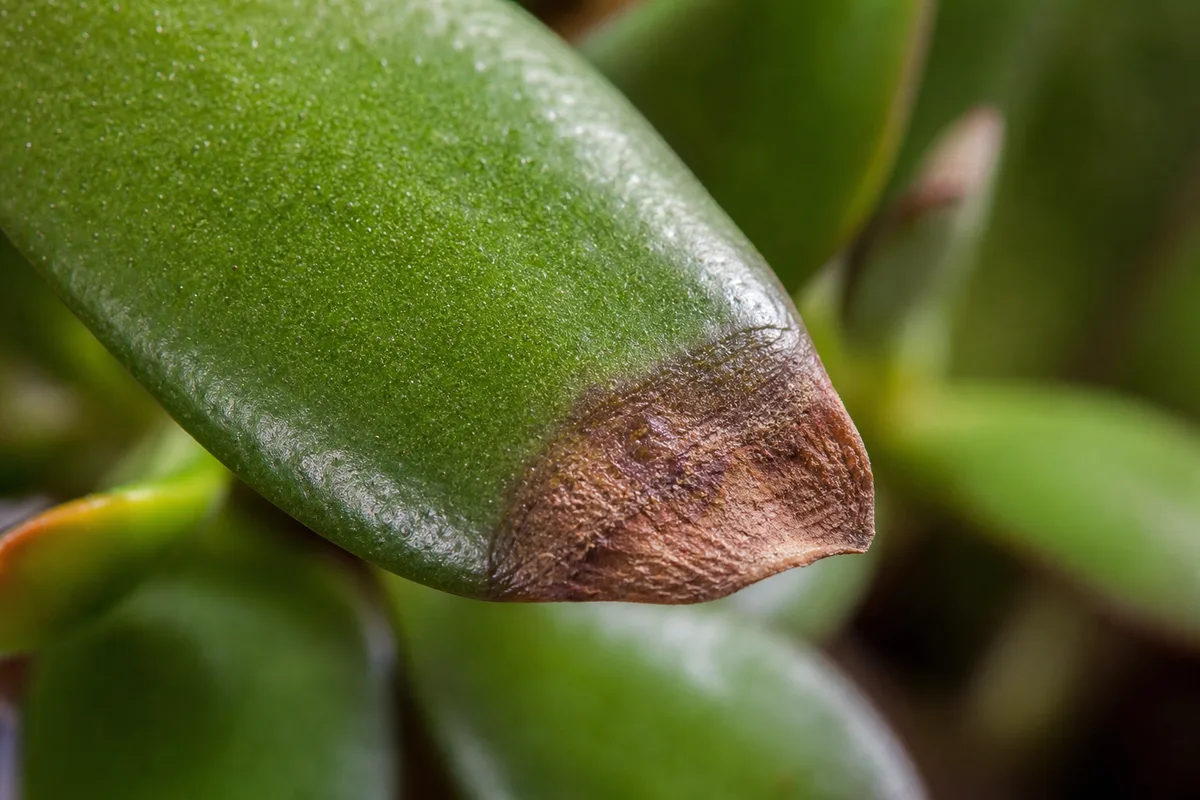
Brown Tips symptoms on Jade Plant - compare with healthy tissue on the same plant.
- Crispy tan-brown tips on otherwise firm leaves usually match drought rhythm or salt stress.
- Bleached patches plus brown edges after a sudden bright-window or outdoor move usually indicate scorch.
- Soft, darkening tissue with wet mix points to root-zone trouble, not cosmetic tip burn.
Red edging by itself can be a normal light response on this species, while pale bleached damage is more consistent with light shock NC State Extension.
How to confirm the cause
Use this quick confirmation order before you treat:
- Check soil moisture depth and pot weight. If the pot is very light and mix is dry deep down, drought rhythm is likely.
- Review fertilizer timing. Tip burn appearing after heavier feeding suggests salt accumulation.
- Look for white crust on soil or pot rim. That supports salt/mineral concentration.
- Check recent light changes. If symptoms appeared soon after stronger direct sun, suspect scorch and acclimation failure.
- Inspect stems at the base. Softness with persistently wet media raises root-rot concern.
Jade should be watered thoroughly, then allowed to dry between cycles; overwatering and poor drainage are common drivers of root decline RHS, Clemson HGIC.
If you suspect mineral or fertilizer buildup, University of California IPM notes that brown/scorched tips and margins can follow excessive soluble salts in soil or water UC IPM.
First fix for Jade Plant
First, reset watering rhythm:
- Water deeply once.
- Let excess drain fully.
- Do not water again until the mix has dried down appropriately for jade.
Then pause fertilizer while the plant stabilizes. If salt stress is likely, flush with plain water and resume lighter feeding only after clean new growth appears. Excess fertilizer salts are a recognized cause of tip and margin necrosis in houseplants Missouri IPM.
Trim only fully dead tip tissue after conditions are corrected. Cosmetic pruning before stabilization can hide whether damage is still progressing.
Step-by-step recovery
Week 1-2: Stop spread
- Keep bright light but avoid harsh new midday exposure.
- Keep foliage dry; focus on root-zone management.
- Hold fertilizer until new stress has stopped.
Week 3-6: Rebalance root function
- Continue dry-down watering cycles.
- If salts were the trigger, perform a careful flush and reassess.
- Watch stem firmness and leaf turgor, not old tip color.
Week 6+: Judge success by new growth
Browned tissue stays brown. Recovery is confirmed when new leaves emerge clean and margins stop worsening.
Hard-water and salt edge case
If white crust keeps returning on the pot rim or media surface, your water and fertilizer combination may be concentrating salts faster than the plant can tolerate. Brown/scorched tips from soluble salts can overlap with drought symptoms UC IPM.
Practical adjustment:
- Flush the pot thoroughly during active growth.
- Reduce fertilizer concentration and frequency.
- In persistently hard-water areas, alternate with lower-mineral water for periodic flushes.
Lookalike causes to rule out
- Whole-leaf collapse with soggy mix: more consistent with root stress/rot.
- Wrinkling without wet media: usually dehydration pattern.
- Pest stippling/webbing: points to pest issues rather than classic brown-tip stress.
If your symptoms include broader tissue decline, cross-check related guides:
What not to do
Do not mist leaves to fix brown tips. Do not repot immediately unless root conditions require it. Do not push fertilizer on a stressed jade.
Jade is toxic to cats and dogs if chewed or ingested, with vomiting, depression, and incoordination reported by ASPCA ASPCA. Keep trimmings and fallen leaves away from pets.
How to prevent brown tips next time
Build a simple prevention routine:
- Water deeply only after dry-down.
- Reduce watering in cooler, lower-light months.
- Fertilize lightly in active growth, not on stressed roots.
- Acclimate gradually before stronger direct sun.
- Refresh or flush media periodically if salts accumulate.
Jade can handle bright light and some direct sun, but abrupt intensity jumps can still burn tissue, especially after lower-light indoor placement Wisconsin Horticulture.
For foundational care routines, use:
When to worry
Escalate quickly if you see:
- soft stem bases
- persistent wet sour-smelling mix
- rapid spread from tips into whole leaves
- simultaneous leaf drop and stem softening
That combination suggests deeper root failure rather than simple edge stress. In mild cases, jade often rebounds once conditions stabilize; in severe root-collapse cases, salvage may require cutting healthy sections for propagation.
If there is no stabilization after 10-14 days of corrected watering and light, inspect roots directly instead of repeating surface treatments.
When to use this page vs other Jade Plant guides
- Jade Plant watering guide - Use for routine moisture checks before assuming brown tips is the main issue.
- Jade Plant problems hub - Browse all 49 common issues on this species.
- Low Humidity on Jade Plant - Different entry point when symptoms overlap with brown tips.
- Overwatering on Jade Plant - Different entry point when symptoms overlap with brown tips.
- Yellow Leaves on Jade Plant - Different entry point when symptoms overlap with brown tips.