Kalanchoe Fertilizer Guide: When & How to Feed
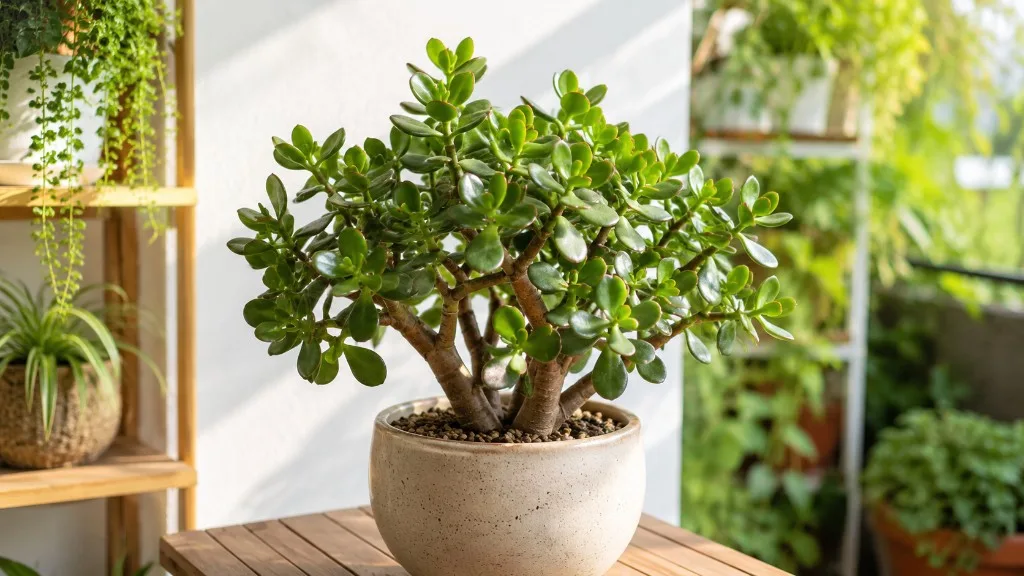
Kalanchoe Fertilizer Guide: When & How to Feed
Kalanchoe Fertilizer Guide: When & How to Feed
Kalanchoe fertilizer rewards a light touch. Kalanchoe blossfeldiana — the compact Flaming Katy or florist kalanchoe sold in bloom at grocery stores — is a Madagascar succulent bred for long-lasting flower clusters, not fast leafy growth. It stores water in thick, scalloped leaves on short stems that usually reach 6 to 18 inches (15–45 cm) indoors. That small root zone and slow metabolism mean excess nitrogen or full-strength houseplant food causes soft stems, salt crust, and weak rebloom far faster than it produces bigger plants.
The two rules that matter most: dilute everything to half strength or weaker, and feed only when the plant is actively growing — not in winter rest, not while you are forcing short-day bloom cycles, and not on a stressed or newly repotted specimen. Clemson Cooperative Extension advises fertilizing actively growing kalanchoes once a month with any houseplant fertilizer. Many home growers do better with an even leaner schedule: two or three half-strength feeds from spring through early fall, or every four to six weeks at half label strength when new leaves are forming steadily.
Use a succulent or cactus water-soluble formula, or balanced liquid at half strength, on moist soil only. Skip feeding after Kalanchoe repotting, during heat stress, and whenever white salt crust appears on the mix. Fix Kalanchoe light and Kalanchoe watering first — fertilizer cannot rescue a plant in dim light or wet soil.
Why Fertilizer Matters for Kalanchoes
Kalanchoes are light feeders in the Crassulaceae family. NC State Extension describes Kalanchoe blossfeldiana as a slow-growing, drought-tolerant succulent native to northeast Madagascar. Even in fast-draining Kalanchoe soil, regular watering leaches small amounts of nitrogen, phosphorus, potassium, and trace elements from container mix over months. Root growth and microbial activity consume the rest.
Fertilizer replaces what the plant uses — but only while roots are actively taking up water and building tissue. On a florist plant still covered in blooms, metabolic priority sits with open flowers, not explosive vegetative growth. After you deadhead and the plant enters a vegetative phase with bright light, modest feeding supports new leaves and the energy reserves needed for next season’s buds. Feeding is maintenance, not a rescue tool for yellow leaves caused by overwatering, etiolation from low light, or compacted mix.
Think of nutrients as supporting a healthy cycle: vegetative growth → short-day rest → rebloom. Skipping fertilizer entirely rarely kills a kalanchoe in good light and gritty mix. Overfeeding in a small plastic pot often does cause tip burn, leggy stems, and salt stress that lingers into spring.
When to Fertilize Kalanchoes: Active Growth, Rest, and Bloom Cycles
Timing follows growth phase and photoperiod, not guilt about whether the plant still looks green in December. Feed when you see new leaves, firm stems, and active root uptake. Stop when growth slows, when you are forcing rebloom with long nights, or when the plant is stressed.
Spring and Summer Feeding Window
Start feeding when fresh growth appears after winter — new leaf pairs at stem tips, side shoots after Kalanchoe pruning, or steady vegetative fill-in once spent blooms are removed. Outdoors in temperate climates, that window usually runs mid-spring through late summer. Indoors with bright south or east windows, heated rooms may extend active growth slightly, but most kalanchoes still follow a seasonal rhythm.
During this window, half-strength succulent or balanced liquid feed every four to six weeks suits most container plants. Growers who prefer minimal intervention often use two or three applications total from spring through early fall and still see excellent foliage. Clemson Extension’s monthly guidance during active growth is the upper bound for vigorous specimens in strong light — not a mandate for every dim windowsill plant.
Watch the plant, not the calendar. If it is building firm new leaves and internodes stay short, timing is right. If growth is static, improve light and confirm soak-and-dry watering before adding food.
Fall Taper and Winter Pause
Taper in early to mid-fall as day length drops. Give a final half-strength feed only if you still see new leaves forming, then stop entirely from late fall through winter for typical indoor setups. Kalanchoes often look fine through winter — thick leaves, old color — while metabolism slows sharply. Unused nutrients accumulate as soluble salts when roots absorb water slowly.
University of Maryland Extension notes that excessive or frequent fertilizer is a primary cause of high soluble salts in indoor plants, with symptoms including brown leaf tips and marginal necrosis. Winter feeding on a plant that is not using nutrients is an easy path to that problem. Resume in spring when new growth returns — not on a fixed calendar date.
Pause Feeding During Bloom-Forcing
Kalanchoes rebloom after short-day treatment — roughly 14 to 16 hours of uninterrupted darkness nightly for about six weeks, as Clemson Extension describes for reblooming kalanchoe. During that bloom-induction period, do not fertilize and keep watering sparse. The plant is resetting bud formation, not building bulk foliage. Nutrients applied now do not shortcut photoperiod biology; they mostly raise salt load in a root zone that is already being watered lightly.
After buds are visible above the foliage and you return to normal care, you may resume very light feeding if the plant is still in active vegetative growth before the next long-night cycle — but many growers skip feed entirely while flowers are open and wait until after deadheading. A plant in full bloom does not need bloom booster on top of half-strength maintenance feed.
Best Fertilizer Type for Kalanchoes
The best kalanchoe fertilizer for most homes is a complete water-soluble formula labeled for cacti and succulents, or a balanced houseplant formula used at half strength. You want enough nitrogen for steady leaf development without softening tissue, moderate phosphorus for root and flower function, and potassium for overall vigor. Micronutrients on the label matter because pale new growth on otherwise well-watered plants sometimes traces to trace-element gaps rather than macronutrient hunger.
Avoid full-strength high-nitrogen lawn or foliage boosters. Kalanchoes in small pots punish overdosing faster than underdosing.
Succulent Formulas and NPK Ratios
Succulent-specific fertilizers typically carry lower nitrogen than all-purpose houseplant food — ratios such as 2-7-7, 5-10-10, or similar profiles where nitrogen is modest relative to phosphorus and potassium. That profile suits kalanchoe because excess nitrogen pushes soft, fast, weak growth with fewer resources stored for rebloom.
A balanced 10-10-10 water-soluble fertilizer diluted to half strength also works during vegetative growth. What fails is full-strength 20-20-20 or weekly undiluted feeds designed for hungry tropical foliage plants. Liquid formulas win for control: you mix, dilute, and apply a known dose to moist soil in a 10–15 cm pot where precision prevents localized salt hot spots.
If you already own balanced houseplant food, dilute it rather than buying duplicate bottles. Pick water-soluble succulent-labeled products with micronutrients listed when shopping fresh.
Phosphorus When You Want More Flowers
If a healthy kalanchoe in correct light and timing produces few buds, some growers switch briefly to a formula somewhat higher in phosphorus during the vegetative months before short-day treatment — not during darkness induction and not as a substitute for 14-hour nights. Phosphorus supports flowering physiology, but photoperiod and bright light trigger rebloom; no fertilizer replaces six weeks of long nights.
Do not pour bloom booster on a plant still in full florist bloom or sitting in a dim room. Fix placement per the Kalanchoe light guide first. Deadhead spent clusters, give bright light through summer, then follow rebloom timing in fall.
How Much Fertilizer to Use on Kalanchoes
If you remember one number, make it half strength — and for minimal feeding, quarter strength. Houseplant labels assume a range of species and pot sizes. Kalanchoe sits in the light feeder category in a small root volume, far less salt-tolerant than heavy-feeding tomatoes and more vulnerable when water sits in plastic saucers.
Example: if the bottle says 1 teaspoon per gallon for cacti and succulents, use ½ teaspoon per gallon on a four- to six-week schedule during active growth. If it says 1 tablespoon per gallon for general houseplants, use 1½ teaspoons per gallon at most — and consider going weaker still. Measure with a spoon or syringe; eyeballing concentrates errors.
For a final fall feed, half strength is enough. Go weaker if you see salt crust or post-feed tip burn. Pale, stretched new foliage usually means too little light, not hunger — kalanchoe in dim corners will not fix etiolation with fertilizer.
How Often to Fertilize Kalanchoes
Frequency should follow growth rate, container size, and salt management. Two reasonable schedules exist for most indoor kalanchoes:
Minimal feeding (recommended for beginners):
- Two to three half-strength applications total from mid-spring through early fall
- First feed when new growth appears; optional second in midsummer; optional third in early fall if still growing
- No fertilizer from late fall through winter or during bloom-forcing darkness
Moderate feeding (actively growing plants in bright light):
- Every four to six weeks with half-strength succulent or balanced liquid from mid-spring through late summer
- Aligns with Clemson Extension’s monthly guidance for actively growing plants at conservative dilution
- No fertilizer from late fall through winter
For kalanchoes in the same pot more than two years without repotting, the moderate schedule may help as stored nutrients deplete. For freshly repotted plants, wait two to four months before any liquid feed — commercial mixes include starter charge.
| Situation | Suggested frequency | Strength |
|---|---|---|
| Active growth, bright light | Every 4–6 weeks | Half label strength |
| Active growth, moderate light | 2–3 feeds per season | Half strength |
| Minimal-care approach | 2 feeds (spring + midsummer) | Half strength |
| Early fall, slowing growth | Once, then pause | Half strength |
| Winter indoors | Skip | — |
| Bloom-forcing darkness | Skip | — |
| After repotting | Wait 2–4 months | Then half strength |
| Recovering from burn | Pause 4–8 weeks | Flush; resume at quarter strength |
Constant low-dose fertilizer at every watering stacks salts faster than kalanchoe can use them in small pots. Plain water between feeds matches how the Kalanchoe overview handles nutrition.
Step-by-Step: How to Feed Kalanchoes Safely
Safe feeding is mostly order of operations:
- Check season and growth. Confirm active vegetative growth — not winter rest, not bloom-forcing darkness, not full stress.
- Inspect for salt crust or tip burn. White residue on soil or pot rim means skip feeding and flush instead.
- Water with plain water if the top layer is dry. Bring the root zone to evenly moist before fertilizer touches it. Never pour fertilizer onto dry soil.
- Mix at half strength in room-temperature water.
- Apply slowly across the soil surface, directing solution away from the leaf crown and stem base. Stop when a little drains from the bottom.
- Discard saucer drainage within 30 minutes.
- Mark the date so you do not double-feed in an enthusiastic week.
Morning feeding after the plant has hydrated is fine; the moist-soil rule matters more than the clock. Before every feed, confirm soil moisture, newest leaf firmness, and season. New leaves should be firm and appropriately colored for the cultivar. Pale, thin, far-apart leaves mean check light and water before assuming hunger.
Signs Your Kalanchoe Needs More Nutrition
Under-fertilizing is far less common than over-fertilizing on container kalanchoes, especially when plants start in nutrient-enriched cactus mix. Most “hungry” diagnoses are actually too little light, overwatering, or natural slow growth mistaken for deficiency.
When a plant truly needs more nutrients, signs are gradual on new growth:
- Slower leaf production during peak spring and summer despite good light and correct watering
- Uniformly paler new leaves, not isolated yellow spots from pests
- Smaller new leaves than the previous generation on the same stem
- Overall lack of vigor after more than two years in the same depleted mix with no feeding
If only older lower leaves yellow while new growth looks fine, suspect natural aging, watering issues, or salt buildup before fertilizer. Increase from two feeds per season to every six weeks at half strength — not from minimal feeding to full label strength overnight.
Signs of Over-Fertilizing and Salt Buildup
Over-fertilizing is the dominant fertilizer problem on kalanchoes. Symptoms often appear one to two weeks after a too-strong feed, or gradually when salts accumulate from winter feeding, hard water, and never flushing.
Watch for:
- Brown, crispy leaf tips and margins, especially on newer leaves
- White or yellowish crust on the soil surface, pot rim, or drainage holes
- Soft, swollen leaves paired with leggy stem extension
- Sudden leaf drop despite soil that is not bone dry
- Stunted new growth with burnt edges on unfurling leaves
- General decline after repotting when fertilizer was applied too soon on enriched mix
University of Maryland Extension explains that high soluble salts reduce water uptake through osmotic stress — burn looks like drought even when soil is moist. Hard water plus fertilizer creates a double mineral load. Terracotta pots help by allowing evaporation through walls, but they do not eliminate salt from over-feeding.
How to Flush a Kalanchoe After Over-Feeding
If you suspect burn, stop fertilizing immediately and leach the soil:
- Move the pot to a sink or tub where drainage is acceptable.
- Water slowly with plain room-temperature water until water runs freely from drainage holes. Let drain completely.
- Repeat two to three times over 30–60 minutes, allowing full drainage between passes.
- Pause all feeding for 4–8 weeks while monitoring new growth.
- Resume at quarter to half strength only when new leaves emerge without burnt margins and salt crust is gone.
Badly burned leaves will not green up again — judge recovery by new growth. Do not feed “to help it bounce back” during the pause.
Seasonal and Situational Adjustments
In late summer, stretch the interval before stopping entirely. In spring, wait for visible new growth before the first feed — not a fixed calendar date. Outdoor summer kalanchoes on a bright patio may dry faster; match feed to visible new tissue, not automatic doubling.
After repotting into fresh mix with starter nutrients, wait two to four months before liquid feed. After stress — root rot recovery, pest cleanup, severe underwatering — hold food until stable new growth returns. Propagation cuttings need no fertilizer until roots are established and new leaves appear; then quarter strength at wide intervals only during the growing season per the Kalanchoe propagation guide.
Fertilizer and Other Kalanchoe Care
Fertilizer only works when light, water, and soil are already in range. Kalanchoe in bright indirect light to several hours of direct sun uses nutrients more efficiently than one in deep shade. Soak-and-dry watering keeps roots healthy; fertilizing wet stagnant soil or bone-dry soil both cause problems. Fast-draining succulent mix with perlite and grit prevents compaction that concentrates salts.
Pet note: The ASPCA lists kalanchoe (Kalanchoe spp.) as toxic to cats and dogs, with bufodienolides causing vomiting, diarrhea, and abnormal heart rhythm. Concentrated fertilizer solution and crusty soil are not safe for pets to ingest either. Keep plants, runoff, and stored bottles out of reach.
Common Kalanchoe Fertilizer Mistakes
The failures that show up most often: full label strength in small containers, feeding in winter because leaves still look green, fertilizer on dry soil, feeding immediately after repotting, high-nitrogen all-purpose food that softens leaves, feeding during 14-hour darkness bloom induction, bloom booster instead of correct photoperiod, feeding at every watering, ignoring white salt crust, and adding fertilizer when pale leaves mean too little light. A kalanchoe on a sunny summer sill and one in a dim office are not the same — match the schedule to growth rate.
Another subtle mistake: treating kalanchoe like a fast tropical foliage plant because it is sold as a common houseplant. It is a short-day flowering succulent with a small root zone. Respect that biology and fertilizer becomes a minor seasonal task instead of a recurring rescue attempt.
When to use this page vs other Kalanchoe guides
- Kalanchoe overview — Start here for whole-plant context, toxicity, and rebloom basics before deep-diving feeding.
- Kalanchoe light — Fix placement and photoperiod before chasing bloom with fertilizer.
- Kalanchoe watering — Soak-and-dry rhythm must be stable before adding salts.
- Kalanchoe soil — Drainage and mix choice affect how quickly salts accumulate.
- Kalanchoe repotting — Fresh mix changes when you should resume feeding.
Related Kalanchoe guides
- Kalanchoe overview
- Kalanchoe watering
- Kalanchoe light
- Kalanchoe soil
- Kalanchoe propagation
- Kalanchoe repotting
- Kalanchoe pruning
Conclusion
Kalanchoe fertilizer success comes down to dilute feeding and seasonal timing. Use succulent or cactus water-soluble formula, or balanced liquid at half strength, apply every four to six weeks from mid-spring through late summer — or as few as two or three times per growing season — and stop in fall and winter. Pause entirely during short-day bloom induction, water onto moist soil, flush when crust appears, and wait months after repotting before the first feed.
When in doubt, less is more. Kalanchoe tolerates a skipped season far better than a double dose after soft leaves or brown tips. Watch new growth: firm leaves and compact stems mean your rhythm is working. White crust, burnt margins, and leggy soft stems mean pull back, flush, and fix light and water before you reach for the bottle again.