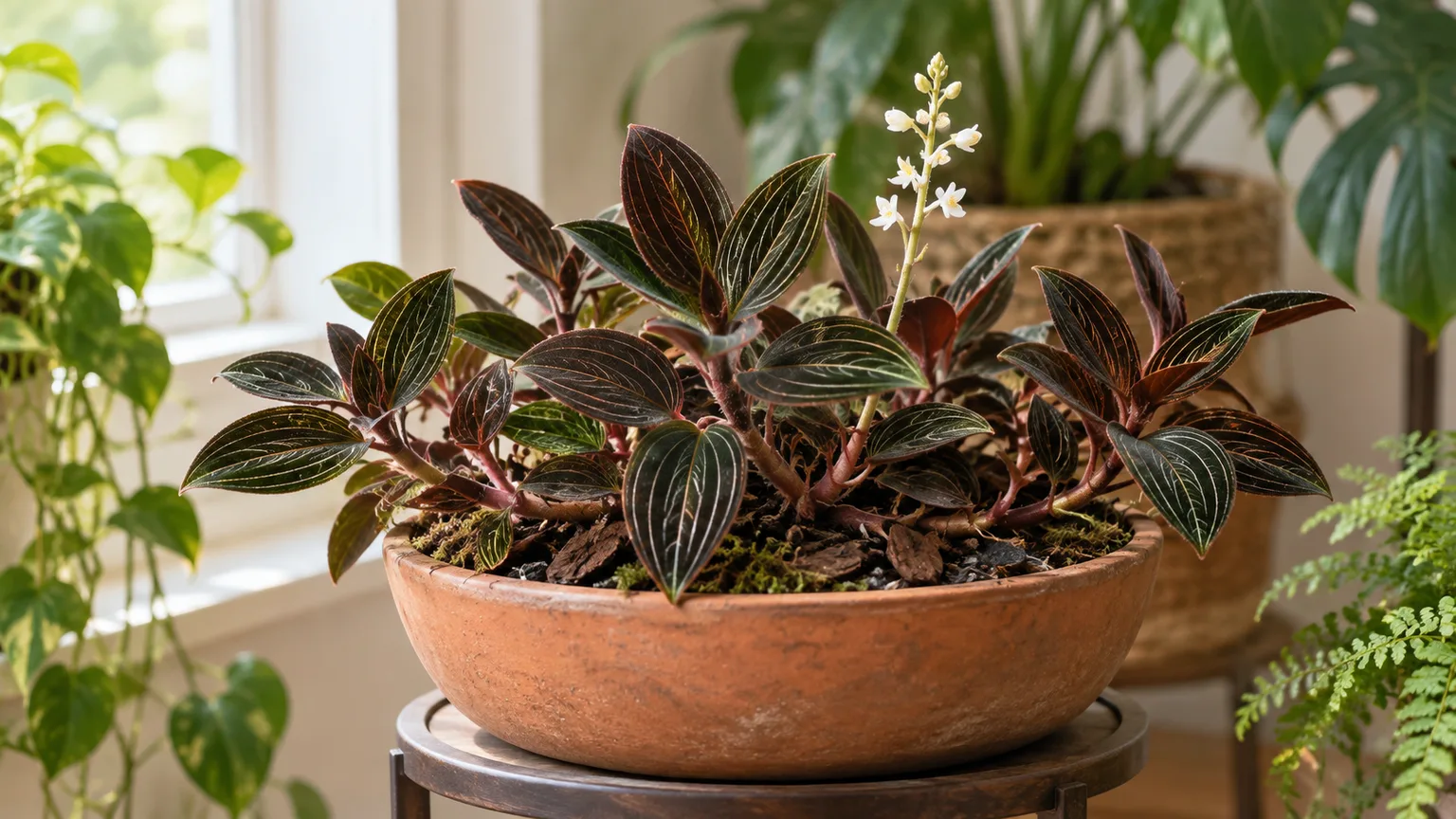
Browse general houseplant problems or use our diagnosis tool for Ludisia Discolor.
Ludisia Discolor problems
Use the guides below to diagnose and fix common issues on Ludisia Discolor. Each problem page explains why it happens on this species and what to do first.
Is Ludisia discolor the same as every jewel orchid?
No. Ludisia discolor is one species commonly called a jewel orchid, while growers also use that name for other terrestrial orchid genera such as Macodes and Anoectochilus. Check the botanical label because light and growing-medium needs vary.
How much light does a black jewel orchid need?
Give it intermediate, filtered light or bright shade. A north- or east-facing window can work indoors; protect the velvety leaves from hot direct sun.
Should Ludisia discolor dry out between waterings?
Let the surface of its terrestrial mix begin to dry, then water and drain the pot. Keep some moisture below the surface, but never leave the roots sitting in saturated compost or a full saucer.
Why are my Ludisia leaves losing color or turning crisp?
Check for too much direct sun, a root zone that has dried for too long, or a mix that stays waterlogged. Change one condition at a time and inspect the creeping stems before adjusting fertilizer.
Is Ludisia discolor safe for cats and dogs?
NC State Extension tags the exact species as non-toxic to cats and dogs, and also tags it as non-toxic to horses. The source does not establish safety for rabbits, birds, turtles, or tortoises, and its classification should not be applied to other jewel-orchid species.
How do I propagate Ludisia Discolor?
Propagate Ludisia Discolor from healthy stem or root divisions during active growth.
What soil is best for Ludisia Discolor?
Use use a moisture-retentive but airy terrestrial orchid medium. A peat-free houseplant compost or loam blended with fine-to-medium orchid bark and a small amount of sphagnum suits this creeping ground orchid better than a very coarse epiphytic bark mix by itself. A good mix includes Start with peat-free houseplant compost or a light loam-based mix., Add fine-to-medium bark for air space and a small amount of sphagnum to help retain even moisture., Use a shallow pot with drainage holes so creeping rhizomes can spread without sitting in water. Choose a shallow, wide pot with open drainage. The medium should hold some moisture around the shallow roots while letting excess water escape quickly; do not keep the rhizomes in waterlogged compost.
How this Ludisia Discolor problems guide is reviewed?
Written by Sai AnanthLead content writer at LeafyPixels. B.Pharmacy graduate from Andhra University with a background in pharmacognosy, turned indoor gardening writer after a long-time plant hobby became a research-led resource for home growers.View Sai Ananth's profile · Reviewed by LeafyPixels Review Board
This Ludisia Discolor problems problem guide was researched and written by Sai AnanthLead content writer at LeafyPixels. B.Pharmacy graduate from Andhra University with a background in pharmacognosy, turned indoor gardening writer after a long-time plant hobby became a research-led resource for home growers.View Sai Ananth's profile. Problems symptoms on Ludisia Discolor, lookalike causes, and step-by-step fixes are cross-checked against extension pest, disease, and care references before publication.
We prioritize sources that hold up under scrutiny:
University cooperative extension bulletins and fact sheets (Penn State, Clemson, UMD, NC State, and similar programs)
Botanical garden and horticultural society publications
Peer-reviewed plant science and veterinary toxicology references where pet safety matters (including ASPCA Animal Poison Control)
Established reference works on indoor plant culture
The LeafyPixels editorial team then reviews the draft for clarity, step-by-step usefulness, and fit with real apartment and home conditions-not ideal greenhouse setups. When guidance changes materially, we update the page and note the revision date.
Sources used
Just Houseplants — Jewel Orchid Care Guide (n.d.) Practical indoor guidance on indirect light, lightly moist soil, average-room humidity, temperature, shallow containers, and common foliage-stress signs; cross-checked against NC State and RHS. [Online]. Available at: https://justhouseplants.com/jewel-orchid/ (Accessed: 1 March 2024).
North Carolina State Extension Gardener Plant Toolbox — Ludisia discolor (n.d.) Scientific identity, Southeast Asian range, creeping terrestrial habit, intermediate light, moisture-retentive but well-drained medium, tepid watering, feeding, pests, and exact-species pet tags for cats, dogs, and horses. [Online]. Available at: https://plants.ces.ncsu.edu/plants/ludisia-discolor/ (Accessed: 1 March 2024).