Micro Sword Aquarium Plant Care: Planting, Light
Lilaeopsis brasiliensis
Grow Micro Sword submerged with careful planting, stable aquarium conditions and patient runner growth. Learn its light, substrate and CO2 needs, plus a botanical name caveat.
Micro Sword Aquarium Plant Care Guide
Start with wateringThe most common care mistake for Micro SwordWatering guide →Micro Sword care essentials
Light
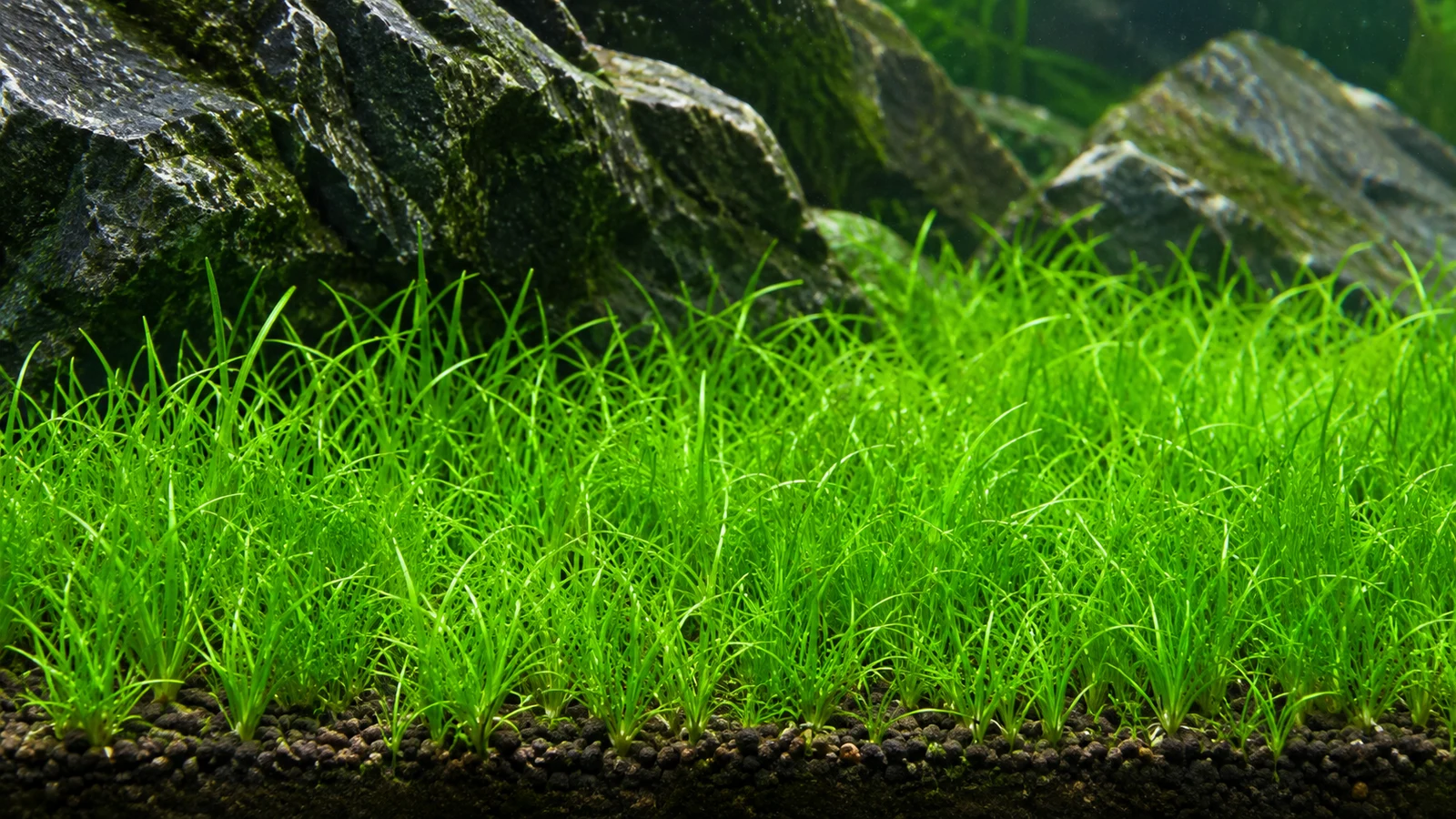
Moderate aquarium lighting for steady growth; brighter, unshaded light helps form the compact 4–7 cm lawn
Water
Keep Micro Sword submerged in stable freshwater aquarium conditions. This is an aquatic plant, not a terrestrial plant that should dry between waterings.
Soil
Use a fine or nutrient-bearing aquarium substrate that can hold the plant's small roots. Aquarium soil supports planting; inert sand or gravel may need aquarium-safe root nutrition. This species is rooted and spreads by stolons, so it is not attached to rock or driftwood like an epiphyte.
Humidity
Temperature
Fertilizer
As needed for the aquarium's plant load and substrate; follow aquarium-product labels rather than adding a fixed dose.. Aquarium-safe root tabs or liquid plant fertilizer, selected for the tank's livestock and substrate
About Micro Sword
Micro Sword is native to South America (Brazil), typically reaches Usually about 4–7 cm (1.5–3 in) in a compact, well-lit aquarium lawn; growth can be taller or more open under different tank conditions indoors, with slow growth. Micro Sword has a rooted, stolon forming aquatic herb, usually grown fully submerged as a foreground carpet growth habit and part of the Apiaceae family. It is also known as Brazilian Micro Sword, Micro Sword Grass, and Copragrass.
| Detail | Information |
|---|---|
| Also known as | Brazilian Micro Sword, Micro Sword Grass, Copragrass |
| Native region | South America (Brazil) |
| Mature size | Usually about 4–7 cm (1.5–3 in) in a compact, well-lit aquarium lawn; growth can be taller or more open under different tank conditions |
| Growth rate | Slow |
| Growth habit | Rooted, Stolon Forming Aquatic Herb, Usually Grown Fully Submerged As A Foreground Carpet |
| Scientific name | Lilaeopsis brasiliensis |
| Family | Apiaceae |
How to care for Micro Sword?
How much light does Micro Sword need?
Moderate aquarium lighting for steady growth; brighter, unshaded light helps form the compact 4–7 cm lawn. Lower-light aquariums, with slower and less compact carpet growth. Higher light when the tank is stable and algae is controlled. low light
- Moderate aquarium lighting for steady growth - Moderate aquarium lighting for steady growth; brighter, unshaded light helps form the compact 4–7 cm lawn.
- brighter - Moderate aquarium lighting for steady growth; brighter, unshaded light helps form the compact 4–7 cm lawn.
- unshaded light helps form the compact 4–7 cm lawn - Moderate aquarium lighting for steady growth; brighter, unshaded light helps form the compact 4–7 cm lawn.
- Lower-light aquariums, with slower and less compact carpet growth - Lower-light aquariums, with slower and less compact carpet growth.
- Higher light when the tank is stable and algae is controlled - Higher light when the tank is stable and algae is controlled.
- low light - Lower-light aquariums, with slower and less compact carpet growth.
When should you water Micro Sword?
Keep Micro Sword submerged in stable freshwater aquarium conditions. This is an aquatic plant, not a terrestrial plant that should dry between waterings.
- Check for firm green leaves
- healthy rooted clumps
- and new runners. In a slow-growing carpet - Keep Micro Sword submerged in stable freshwater aquarium conditions.
- also watch for algae coating the leaves or repeated uprooting - Keep Micro Sword submerged in stable freshwater aquarium conditions.
- Drain excess water - Keep Micro Sword submerged in stable freshwater aquarium conditions.
What soil works best for Micro Sword?
Use a fine or nutrient-bearing aquarium substrate that can hold the plant's small roots. Aquarium soil supports planting; inert sand or gravel may need aquarium-safe root nutrition. This species is rooted and spreads by stolons, so it is not attached to rock or driftwood like an epiphyte.
- Nutrient-bearing aquarium soil or a fine planted-tank substrate - Use a fine or nutrient-bearing aquarium substrate that can hold the plant's small roots.
- If the tank uses inert sand or gravel - Aquarium soil supports planting; inert sand or gravel may need aquarium-safe root nutrition.
- use aquarium-safe root nutrition only as needed - Use a fine or nutrient-bearing aquarium substrate that can hold the plant's small roots.
How to propagate Micro Sword?
Lilaeopsis spreads by stolons. Once a runner has formed a rooted plantlet, separate it carefully and replant it in the foreground. Keep new clumps spaced a few centimetres apart so light and water can reach each one as they fill in.
- Stolon or runner separation - Once a runner has formed a rooted plantlet, separate it carefully and replant it in the foreground.
- Division into small rooted clumps - Keep new clumps spaced a few centimetres apart so light and water can reach each one as they fill in.
Grower notes for Micro Sword
Use the botanical label with the common name
Micro Sword is commonly sold as Lilaeopsis brasiliensis. Tropica and the New Zealand Plant Conservation Network use that name, but World Flora Online records it as a synonym of Lilaeopsis minor based on a Tropicos record. The aquarium trade name is clear; the broader botanical treatment is not fully aligned across sources.
Plant small clumps, not one dense pot
Micro Sword has fine roots that are easy to damage while dividing or planting. Separate the pot into small rooted portions and space them a few centimetres apart. Tropica recommends open, unshaded placement so the shoots can grow together into a lawn.
Give the carpet time
Tropica rates the plant's growth as slow. A tidy carpet will not appear in a few days; runners need time to root and spread. Keep lighting and water conditions steady rather than changing several tank settings when growth looks slow.
Light changes the shape of the lawn
The plant can tolerate lower aquarium light, but Tropica notes that its dense 4–7 cm lawn form needs stronger light. Keep foreground clumps out of the shadow of taller plants, and avoid increasing light so abruptly that algae takes over the slow-growing leaves.
Root nutrition supports runner growth
Micro Sword is planted in substrate rather than tied to hardscape. Nutrient-bearing aquarium soil helps anchor its fine roots; inert sand or gravel may need an aquarium-safe root supplement. Do not add terrestrial fertilizer to a filled tank.
Thin algae and replant healthy runners
Slow-growing leaves can collect algae when tank light and nutrients are out of balance. Remove damaged or algae-covered leaves, keep water moving gently around the foreground, and replant healthy rooted runners to fill gaps.
Micro Sword pet safety
No species-specific veterinary toxicity classification was verified in the sources reviewed. Do not label Micro Sword pet-safe based only on aquarium use; keep aquarium plants and water away from unsupervised pets and ask a veterinarian about ingestion.
Pet safety remains unverified for this aquarium trade plant. No toxic or non-toxic classification is inferred from its use in aquariums.
Watering Micro Sword
For Micro Sword, check for firm green leaves, healthy rooted clumps, and new runners. In a slow-growing carpet, also watch for algae coating the leaves or repeated uprooting. and water continuous submersion; maintain the aquarium's normal water level and routine water changes. Growth responds to the tank's light and temperature cycle. Avoid abrupt changes to lighting or water conditions; adjust one factor at a time while watching new growth.
| Detail | Information |
|---|---|
| How often | Continuous submersion; maintain the aquarium's normal water level and routine water changes. |
| How to check | Check for firm green leaves, healthy rooted clumps, and new runners. In a slow-growing carpet, also watch for algae coating the leaves or repeated uprooting. |
| Seasonal changes | Growth responds to the tank's light and temperature cycle. Avoid abrupt changes to lighting or water conditions; adjust one factor at a time while watching new growth. |
Soil & potting for Micro Sword
Use a mix of Nutrient-bearing aquarium soil or a fine planted-tank substrate, If the tank uses inert sand or gravel, use aquarium-safe root nutrition only as needed for Micro Sword. Conventional pot drainage does not apply underwater. Keep the roots anchored while leaving the leaf bases and growing points exposed to moving aquarium water. Repot replant rooted runners or divide crowded clumps when expanding or refreshing the foreground; there is no pot-repotting schedule in a submerged tank., ideally in during active aquarium growth, while tank conditions are stable.
| Detail | Information |
|---|---|
| Recommended mix | Nutrient-bearing aquarium soil or a fine planted-tank substrate, If the tank uses inert sand or gravel, use aquarium-safe root nutrition only as needed |
| Drainage | Conventional pot drainage does not apply underwater. Keep the roots anchored while leaving the leaf bases and growing points exposed to moving aquarium water. |
| Repotting frequency | Replant rooted runners or divide crowded clumps when expanding or refreshing the foreground; there is no pot-repotting schedule in a submerged tank. |
| Best season to repot | During active aquarium growth, while tank conditions are stable |
Signs it needs repotting
- Rooted clumps repeatedly lift out of the substrate
- Older leaves are shaded by an overcrowded carpet
- Runners reach an area where you want the carpet to continue
Humidity & temperature for Micro Sword
Fertilizer & pruning for Micro Sword
Feed Micro Sword as needed for the aquarium's plant load and substrate; follow aquarium-product labels rather than adding a fixed dose. using aquarium-safe root tabs or liquid plant fertilizer, selected for the tank's livestock and substrate. The best feeding window is during active submerged growth. Terrestrial garden fertilizers and large, rapid changes in nutrient or water conditions.
| Detail | Information |
|---|---|
| Fertilizer schedule | As needed for the aquarium's plant load and substrate; follow aquarium-product labels rather than adding a fixed dose. |
| Best season | During active submerged growth |
| Fertilizer type | Aquarium-safe root tabs or liquid plant fertilizer, selected for the tank's livestock and substrate |
| What to avoid | Terrestrial garden fertilizers and large, rapid changes in nutrient or water conditions |
Pruning (optional)
The carpet grows slowly, so prune only when leaves are damaged, algae-covered, or overgrown. Remove affected leaves at their base and thin crowded clumps instead of scalping the whole foreground.