Magnesium Deficiency on Monstera Adansonii: What to Check
Quick answer
Yellow areas between green veins on older Monstera adansonii leaves can fit a general magnesium-deficiency pattern, but they do not confirm it or show that this species is especially susceptible. First, compare several mature leaves and inspect the potting mix before adding a magnesium product. Check watering, roots, light, and recent feeding; correct the cause only after the pattern and care history agree.
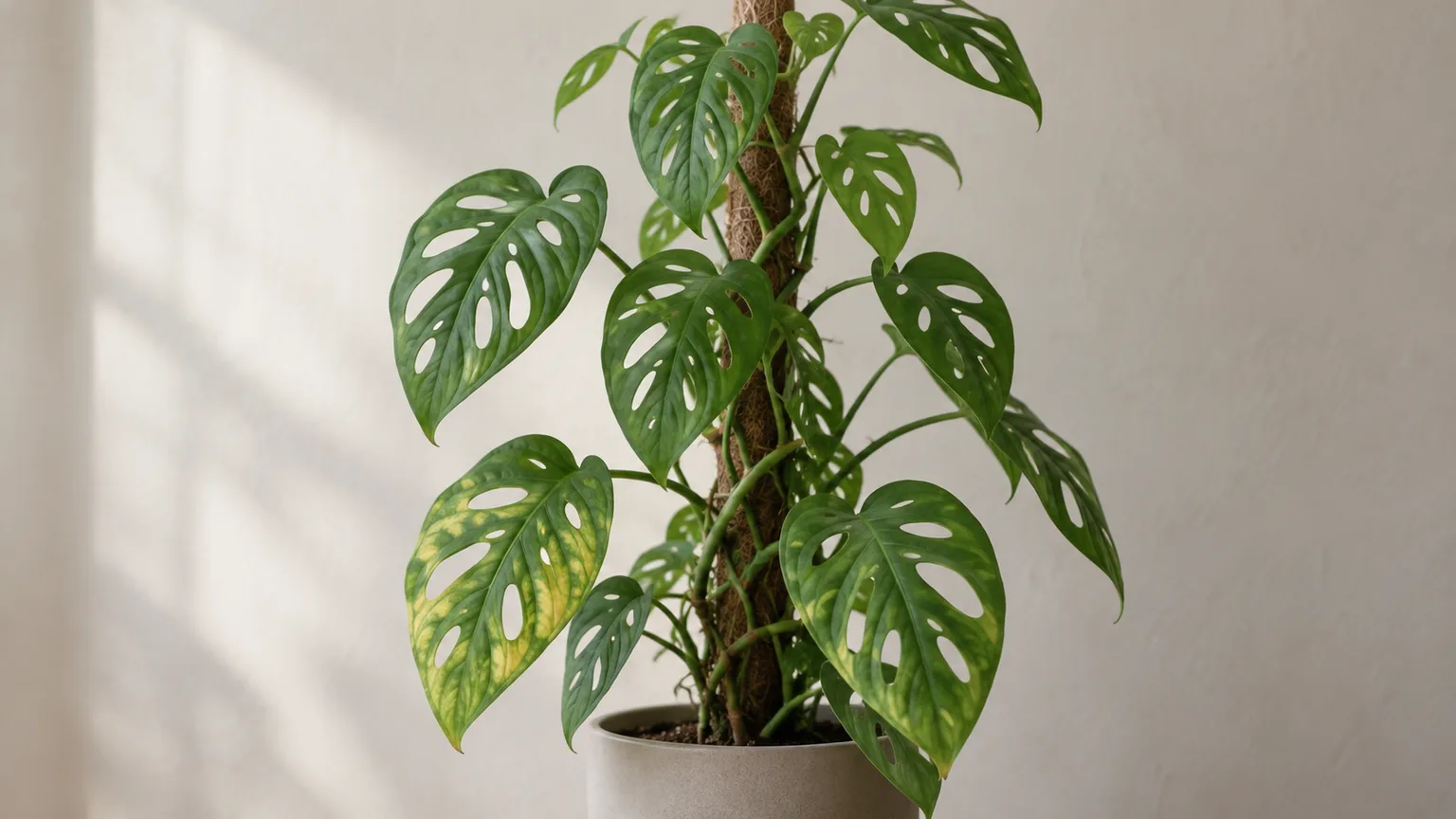
Magnesium Deficiency on Monstera Adansonii: How to Confirm It
This guide covers magnesium deficiency on Monstera Adansonii. See also the general Magnesium Deficiency guide, watering, and light pages for this plant.
Magnesium Deficiency on Monstera Adansonii: How to Confirm It
Quick answer
Yellow areas between green veins on older Monstera adansonii leaves can fit a general magnesium-deficiency pattern. The pattern is not a Monstera adansonii-specific diagnosis, and a yellow leaf by itself is not enough to justify magnesium or fertilizer. First, compare several mature leaves on the same vine and photograph the pattern before changing the plant’s feed.
Magnesium is part of chlorophyll, and broad plant references describe its deficiency as interveinal chlorosis that often begins on older leaves. Those references describe plants generally; they do not establish that Monstera adansonii is unusually prone to magnesium shortage or has a unique deficiency signature. Use this page to sort the clue from lookalikes, then check the root zone and care history. The general magnesium-deficiency guide explains the nutrient pattern across plants; this guide focuses on what an owner can inspect on a climbing or trailing Adansonii.
What magnesium deficiency can look like on Monstera adansonii
The broad magnesium pattern is yellowing in the tissue between veins while the veins remain greener, often beginning on older leaves. Magnesium is mobile inside plants, so a shortage may show first in mature lower foliage as the plant reallocates it toward active growth. Severe cases can be associated with slower growth, smaller leaves, or older leaves dropping, but those are late and nonspecific signs. NParks’ nutrient guide describes this general pattern and magnesium’s role in chlorophyll.
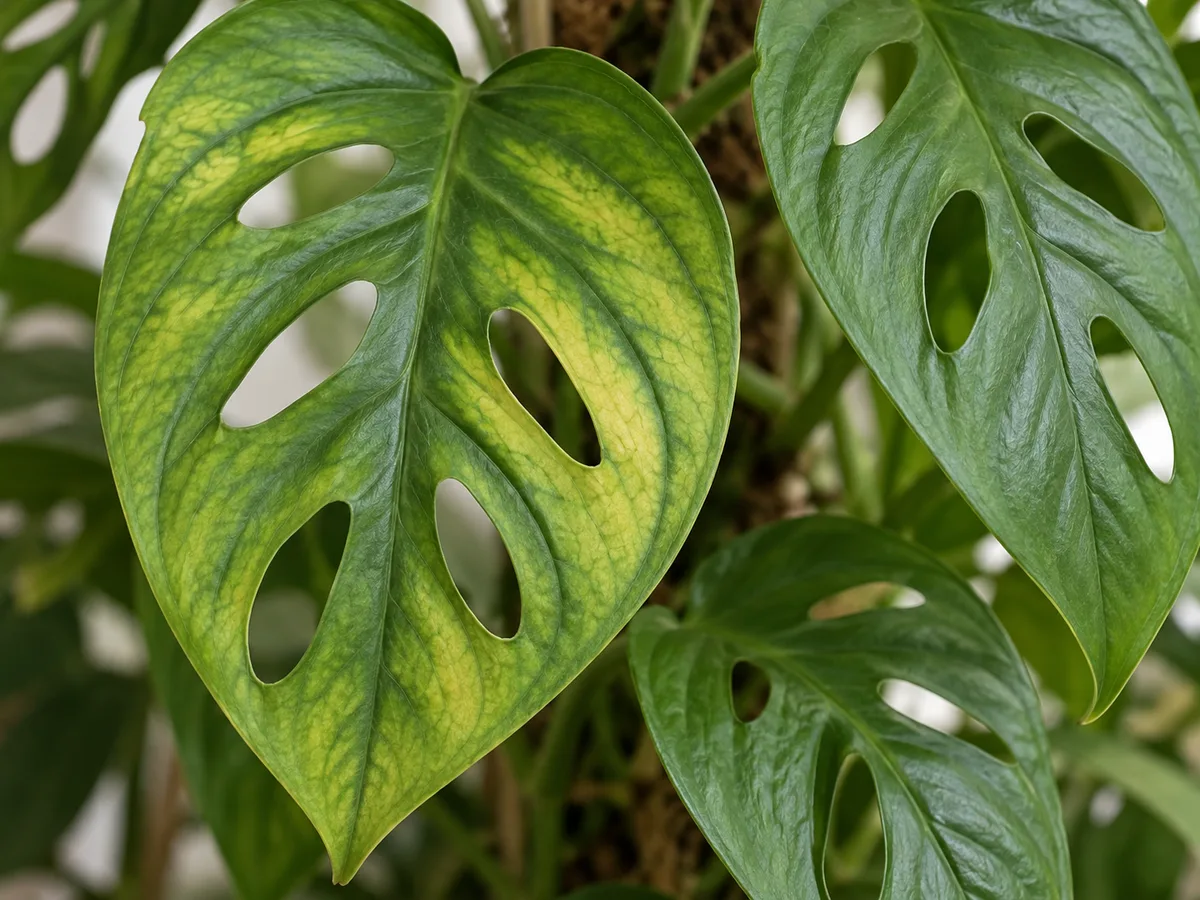
Illustrative general nutrient pattern only; the image cannot confirm a magnesium diagnosis on Monstera adansonii.
On an Adansonii, inspect the leaf blade rather than the holes. The oval openings are natural fenestrations that help identify the species; they are not missing tissue caused by a nutrient shortage. Look for a broad pale zone between veins across the solid parts of a mature blade. A sharply bounded brown patch, a hole with torn edges, or damage on only one exposed leaf points you toward a different check.
Do not use one old leaf as the entire case. A lower leaf may yellow as it ages, especially on a long vine with several leaf generations, while a leaf that is still unfolding may look lighter before it hardens. A magnesium hypothesis becomes more plausible when the same interveinal pattern appears on more than one mature leaf and the newest leaves remain comparatively green. Even then, it is a lead to investigate, not confirmation.
The plant’s growth habit shapes how you make that comparison. Monstera adansonii can climb or trail, and a supported vine can have leaves at different heights and ages. Compare leaves from the same stretch of stem when possible; a leaf facing a bright window may be more faded or scorched than a shaded leaf even when both belong to the same plant. NC State describes Adansonii as a fast-growing climbing vine with oval leaf holes, so its long stems can show several different conditions at once NC State Extension’s plant profile.
Read leaf age along the Adansonii vine
Begin at the active tip and trace backward along the stem. Note whether the first yellowing is on older, fully expanded leaves or on the newest leaf as it opens. That location matters because magnesium is mobile and its deficiency pattern commonly starts in older foliage, while iron deficiency often begins on younger leaves. A Monstera with yellow new leaves and green older leaves does not match the usual magnesium clue as well as a plant whose older blades show interveinal yellowing. NParks distinguishes magnesium symptoms on older leaves from iron symptoms on young leaves.
Pay attention to the direction of change, not just the number of yellow leaves. Photograph two or three mature leaves in natural light, then take another photo from the same angle after the plant has had time to grow. Record whether the pale areas are expanding, whether the veins remain distinct, and whether a new leaf opens normally. A quick phone note about which node carries the oldest affected leaf is more useful than relying on memory, particularly if the vine is trained up a support or drapes behind furniture.
A single pale leaf at the bottom of a long stem may be senescence, shading, or a response to a recent change in the plant’s water use. If the yellowing is isolated to one leaf, avoid removing several leaves or changing fertilizer immediately. If several older leaves develop the same between-vein pattern while growth continues at the tip, then check root conditions and feeding history in a consistent order. UConn notes that nutrient symptoms can overlap with drought, excess water, disease, insects, salt injury, and other stresses; visual diagnosis has limits. UConn’s deficiency guidance recommends soil and plant-tissue testing when confirmation is needed.
Check the pot beneath the climbing stem
Before you reach for a supplement, check the mix at root depth. Lift the pot to judge whether it feels unexpectedly light or heavy, then feel the mix a few centimeters below the surface. A very dry, light pot means the roots have had limited access to water; a pot that stays wet and heavy suggests the mix may be drying too slowly. Neither condition proves magnesium deficiency. They do tell you to check the root environment before increasing fertilizer concentration.
This matters for Adansonii because its climbing display can distract from the container. A moss pole, trellis, or aerial root supports the vine, but the potting mix still needs to drain and supply the roots. The plant can look structurally fine above the rim while the lower mix remains compacted or saturated. If the pot smells sour, the stem near the soil line is soft, or the mix stays wet for unusually long stretches, treat root-zone trouble as the first concern and use the Monstera adansonii watering guide to reset your checks.
Look through the drainage holes if you can do so without disturbing the vine. Firm roots and a pot that dries at a predictable pace make a nutrient shortage more plausible than roots that are dark, mushy, or surrounded by sour-smelling mix. Do not unpot a stable plant just to confirm a suspected magnesium deficiency; pulling a climbing Monstera from its container can damage roots and will not tell you the nutrient concentration. Reserve a root inspection or repotting for a mix that fails to drain, a plant that is declining quickly, or clear signs of root damage.
Also check where the pot sits. Adansonii grows best with bright indirect light; a dark corner can slow growth and lengthen the time the soil remains wet, while direct harsh sun can bleach or scorch exposed leaves. This does not make low light a magnesium diagnosis. It means you should compare the affected leaf’s window-facing side with shaded leaves and review the Monstera adansonii light guide before changing the feeding routine.
Separate magnesium-like yellowing from lookalikes
Use the leaf age, pattern, and care history together. The guide to yellow leaves on Monstera adansonii covers whole-leaf yellowing and other common causes; the differences below help decide which branch to inspect first.
| What you notice | What it may fit | What to check next |
|---|---|---|
| Older leaves show pale tissue between greener veins | General magnesium-deficiency pattern | Check whether several mature leaves repeat the pattern, then review fertilizer and root conditions |
| New leaves are yellow while older leaves stay green | Iron availability or another problem affecting new growth | Check the newest leaves and root-zone conditions; compare with the iron-deficiency guide |
| An older leaf turns evenly pale or yellow | Nitrogen shortage, aging, or broad stress | Review the age and growth pattern with the nitrogen-deficiency guide |
| Yellowing or browning starts at the edge of a mature leaf | Potassium-related pattern, salts, or physical damage | Check leaf margins and recent fertilizer history; compare the potassium-deficiency guide |
| New leaves are curled, poorly expanded, or marked at the tips | Calcium-related pattern, mechanical damage, or inconsistent water | Compare the newest growth and water delivery; the calcium-deficiency guide covers young-leaf symptoms, and drought can limit calcium movement. Gardening Know How’s calcium overview provides practical context for that lookalike |
| Pale areas have webbing, stippling, sticky residue, or tiny moving insects | Pest feeding is more likely than a nutrient pattern | Inspect both sides of leaves, petioles, and nodes before applying fertilizer |
Do not treat the table as a home lab test. Different deficiencies can overlap, and a pest or root problem can change how an affected leaf looks. A white crust on the soil or pot rim, repeated brown tips after feeding, or decline after a recent fertilizer change points toward salt accumulation or fertilizer injury rather than a simple magnesium shortage. If those signs are present, review the Monstera adansonii fertilizer guide and its feeding history before adding another nutrient.
First response: pause extra magnesium and confirm the pattern
The first action is to hold any magnesium-specific additive while you compare several mature leaves and check the pot. Do not respond to one yellow leaf with Epsom salts, a concentrated “cal-mag” product, or a foliar spray. A visible symptom cannot show how much magnesium is available in the mix, and adding more of one nutrient can make the root-zone balance harder to interpret. UConn recommends soil and plant-tissue testing as the best way to confirm a nutrient deficiency when the pattern persists.
If the mix is dry, use the plant’s normal watering checkpoint and let excess water drain; do not water repeatedly to “push” magnesium into the roots. If the mix is wet, pause watering until it approaches its usual dry-down and check that drainage holes are open. If the plant is actively collapsing or the roots smell sour, deal with the root issue before any feed. Change one condition at a time so you can tell whether new growth responds.
Review your fertilizer label rather than relying on the product name. “Complete” houseplant fertilizers differ, and the guaranteed analysis may list secondary nutrients separately from N-P-K. Check whether magnesium is listed and whether you have been feeding at the label rate during active growth. UF/IFAS advises using a complete fertilizer according to label directions for houseplants and notes that salts can build up from fertilizer, potting mix, and water. UF/IFAS houseplant-care guidance supports label-based, restrained feeding instead of a guessed dose.
Correct only the cause that fits your Adansonii
If the only evidence is one yellow leaf, make no nutrient change yet. Continue steady care, photograph the plant, and watch the next leaves. If several mature leaves repeat the between-vein pattern, the pot dries normally, roots look sound, no pests are present, and the fertilizer history shows little or no complete feeding during active growth, a cautious correction to the regular fertilizer routine is more defensible than an emergency magnesium treatment.
Choose a complete houseplant fertilizer appropriate for foliage plants and follow its label. If you already feed regularly, do not double the amount. Check whether the product includes magnesium; if it does not and the pattern persists, seek a soil or tissue test or advice from a local extension service before adding a separate source. A balanced product at its stated rate supplies nutrients in a known formulation, whereas an improvised dose makes it difficult to tell whether magnesium was the problem or whether the plant is reacting to salts.
If the pot has been staying wet
Do not feed a Monstera whose mix remains wet and whose growth is declining. Let the mix reach its normal watering checkpoint, check that the container drains, and consider whether the mix is too dense for a climbing aroid. The Monstera adansonii soil guide covers the plant’s airy, well-drained mix; use it if water is lingering around the roots. If the stem base softens or the plant continues to wilt in wet mix, follow the root-rot guide rather than trying magnesium.
If the pot dries too quickly
A small hanging pot, a warm bright spot, or a fast-growing vine may use water more quickly than a larger pot in lower light. Confirm this with pot weight and soil moisture rather than setting a new calendar. Correct the watering interval first and then watch whether new leaves stay firm and green. If the yellow pattern continues after water delivery is consistent, revisit the nutrient hypothesis.
If fertilizer crust or repeated tip damage is present
Salt deposits can collect from fertilizer, potting mix, or water, and excessive salts can damage roots and leaf tips. UF/IFAS describes white crust on soil or pot edges and brown tips as signs associated with salt buildup. Do not add magnesium on top of that pattern. If the mix drains well and the plant is otherwise stable, follow a cautious, thorough watering that allows excess to drain and empty the cachepot; if the root zone stays wet, correct drainage instead of flushing it. Repeated salt symptoms call for reviewing the feed rate and water source, not stronger fertilizer.
Track recovery on the next leaves
Existing yellow tissue may not return to its former green, even after you correct the cause. A leaf that has developed a necrotic patch or dropped will not be restored by a supplement. Do not use the color of the original damaged leaf as the only progress measure. On a climbing Adansonii, the next leaf at the active tip is a clearer checkpoint.
Look for three signs over the next growth cycle: the pale pattern stops appearing on additional mature leaves, new leaves open with an even green color, and the pot continues to dry in a predictable way. If the plant is not actively growing because light or temperature is low, it may take longer to see a new-leaf response; absence of immediate new growth does not prove the treatment failed. Keep the support and pot stable while you observe rather than pruning the vine or repotting it at the same time.
If more leaves yellow, the vine becomes soft near nodes, or the pot remains wet and heavy, reassess the original diagnosis. Continuing symptoms after a fertilizer change are a reason to pause and investigate water, light, salts, roots, or pests, not to increase the dose again. Persistent symptoms across multiple new leaves are a good point to ask an extension service or plant diagnostic lab whether it can test a sample of your potting mix or foliage.
Prevent a repeat without overfeeding
Use the plant’s growing season and actual pot dry-down to guide routine care. NC State describes Adansonii as a fast-growing vine suited to bright indirect light, warm conditions, and moist, well-drained soil NC State Extension’s care profile. Use that as a baseline, then adjust watering to the pot’s dry-down; active summer growth is not a reason to raise fertilizer concentration. The overview for Monstera adansonii and its fertilizer guide help align feeding and placement with the way this vine grows.
Use one complete fertilizer according to its label, and avoid alternating several products that each add overlapping nutrients. More fertilizer is not a reliable shortcut to larger leaves or more fenestrations. Skip feeding when the plant is not actively growing, when the mix is dry enough to stress the roots, or when the roots are compromised. After feeding, note the date and amount so a later leaf change can be compared with the actual routine instead of a vague memory.
Keep the climbing support from confusing your watering check. A damp moss pole and a dry potting mix can coexist, as can a dry pole and a wet lower root zone. Check the pot itself before each watering and ensure water can leave through the drainage holes. If the pot becomes rootbound or the mix breaks down, use the repotting guide to plan a suitable change rather than repotting solely because a leaf turned pale.
Finally, scan the undersides of mature leaves and the newest growth when you water. Early pest spotting, stable light, a well-drained mix, and measured feeding make it easier to distinguish a real nutrient pattern from a one-off injury. If the same older-leaf pattern returns despite consistent care, use a test rather than adding magnesium by guesswork.
When to use this page vs other Monstera adansonii guides
Use this page when several mature leaves show yellow tissue between greener veins and the newest leaves are less affected. Use the yellow-leaves guide when the whole leaf turns yellow, only one leaf ages out, or you are sorting several possible causes. If the newest leaves are pale first, check the iron-deficiency guide instead of assuming magnesium.
If yellowing began after a recent feeding or white crust is visible, review your care notes and check for salt buildup before adding magnesium. If the pot stays wet, roots smell sour, or the stem softens, prioritize the root-rot guide. If care history is unclear and symptoms overlap, the Monstera adansonii problems hub gives the plant’s registered problem guides in one place.
For a symptom checklist that ranks likely causes across common plant problems, use the Plant Problem Diagnosis tool. It can organize observations, but it cannot verify magnesium concentration or replace a soil or tissue test when symptoms persist.
Related Monstera adansonii guides
- Whole-plant care: Start with the Monstera adansonii overview for its climbing habit and normal conditions.
- Water and roots: Use the watering guide for moisture checks; use the soil guide when the mix stays wet or drains poorly.
- Feeding: The fertilizer guide above covers routine feeding; use the nitrogen-deficiency guide if older leaves turn evenly pale.
- Lookalikes: Compare edge damage with potassium deficiency, young-leaf distortion with calcium deficiency, and persistent uptake problems with the nutrient-lockout guide.
- Problem list: Visit the Monstera adansonii problems hub when the symptom pattern does not fit this nutrient guide.