Calcium Deficiency on Monstera Adansonii: What to Check
Quick answer
A curled, poorly expanded Monstera adansonii leaf with a small necrotic patch can fit a general calcium-deficiency pattern, but it does not confirm one or show that this species is especially susceptible. First, pause any calcium amendment and inspect the newest growth and the pot’s moisture before changing the mix; drought, wet roots, salts, and other stresses can look similar.
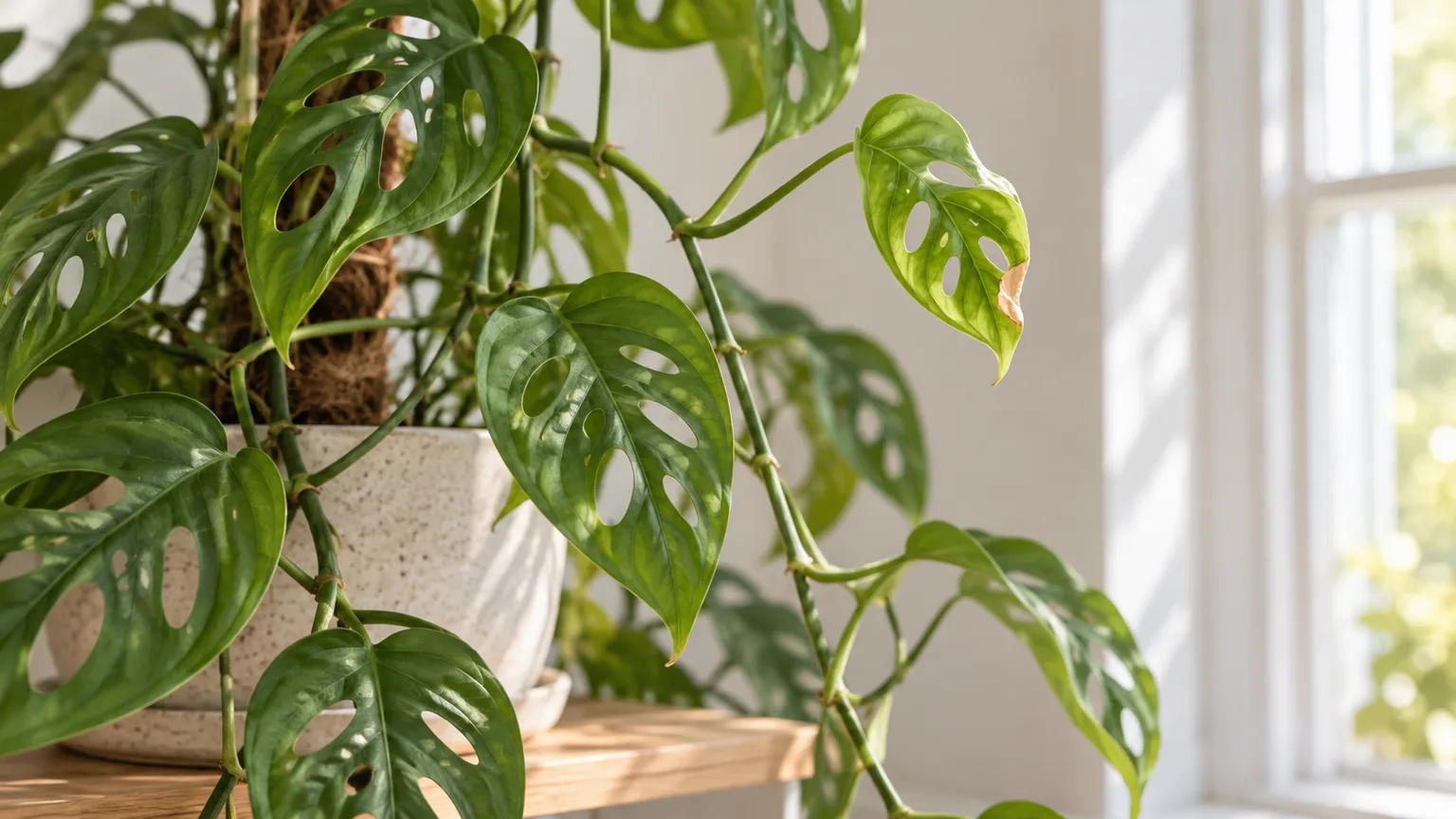
Calcium Deficiency on Monstera Adansonii: Causes, Checks & Fixes
This guide covers calcium deficiency on Monstera Adansonii. See also the general Calcium Deficiency guide, watering, and light pages for this plant.
Calcium Deficiency on Monstera Adansonii: Causes, Checks & Fixes
Quick answer
A curled or poorly expanded new Monstera adansonii leaf with a small dead patch can fit a general calcium-deficiency pattern. It does not confirm the diagnosis, and it is not evidence that this species is unusually prone to calcium shortage. The first action is to pause any calcium amendment and inspect the newest growth and the moisture around the roots before changing the potting mix. Water stress, damaged roots, excess fertilizer, pests, or another nutrient problem can produce overlapping signs.
The useful clue is where the damage starts. A calcium problem, if present, is more plausible when repeated symptoms affect the newest expanding leaves or vine tip while older leaves remain comparatively normal. The broad calcium-deficiency guide covers the general nutrient pattern; this page focuses on what can actually be checked on a climbing or trailing Adansonii. For whole-plant context, start with the Monstera adansonii overview.
What calcium deficiency could look like on Monstera adansonii
There is no reliable leaf shape that proves calcium deficiency in this species. General plant references describe poor expansion, curling, and necrotic patches on young leaves as possible calcium-deficiency signs, while also warning that several other stresses can look similar. UConn’s calcium symptom guidance is useful for recognizing that pattern, but it does not establish a Monstera adansonii-specific signature.
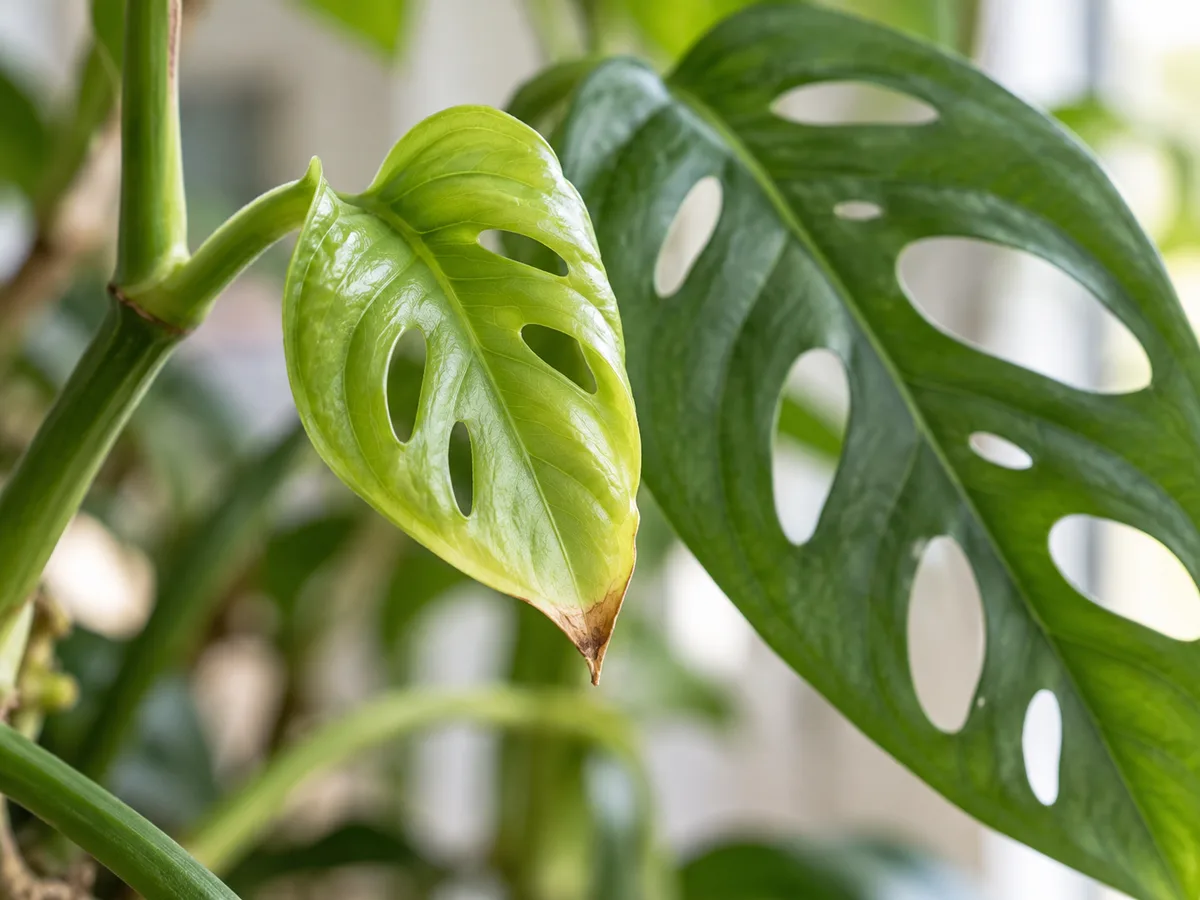
A mild, illustrative pattern only: compare the newest expanding leaf with several mature leaves; the image cannot confirm a nutrient diagnosis.
On an Adansonii, look at the growing end of the vine first. If calcium delivery is inadequate, the newest leaf may stay smaller than its recent predecessors, open unevenly, curl, or develop a dry patch at the margin or tip. A root tip or growing point may also fail to develop normally in a genuinely severe deficiency, but you cannot assess that from the visible leaf alone. NParks’ nutrient guide describes calcium as relatively immobile within plants, so a shortage tends to show first in young tissue rather than as a uniform change across all the older leaves.
Look for a repeated sequence, not one imperfect leaf. One leaf can be caught on a support, rubbed against a wall, damaged while it is opening, or marked by handling. A consistent pattern across two or more new leaves is more meaningful, especially if the older leaves retain their usual color and texture. Even then, the pattern suggests where to investigate; it does not identify calcium as the cause.
Monstera adansonii is recognizable by its climbing or trailing stems and green leaves with oval holes. Those holes are natural fenestrations, not dead spots or evidence of a deficiency. NC State Extension’s plant profile describes the species’ fenestrated leaves and climbing habit. For diagnosis, compare the newest leaf’s tissue between the veins and around the edge; do not count the normal openings as missing or damaged tissue.
Why the newest leaf matters on this vining Monstera
Calcium is used in plant cell walls and is not readily moved from mature tissue back into fresh growth. That is why generic deficiency descriptions point readers toward young leaves and active growing tips. A leaf that is already fully expanded may keep its old appearance even if the conditions at the roots change. The plant’s next leaf is usually a better progress marker than the oldest fenestrated leaf on a long trailing stem.
This matters on Adansonii because a pot can contain several stages of growth at once. A hanging vine may carry older, fully perforated leaves near the shelf while a small new leaf is forming at the tip. A climbing plant on a pole may have a different pattern, with several active ends after pruning or training. Compare leaves of similar age and position along the same vine instead of comparing the newest leaf with an older leaf that formed in a different season or in a different location.
A fresh leaf on a Monstera is also not a static shape while it is opening. Give it time to unfold before calling a partial curl a defect. If it opens cleanly and then holds its shape, a temporary crease may have been a mechanical snag. If it remains undersized or distorted after opening, and later leaves repeat the same change, record the pattern and look for a root-zone cause. This distinction is more useful than trying to diagnose from how many holes appear: the number and size of fenestrations vary with leaf age and growing conditions.
An aerial root on a climbing stem is not a substitute for healthy roots in the pot. NC State describes Adansonii as a climbing plant that uses aerial roots to attach to support, but the potting mix still supplies the main root system with water and dissolved nutrients. A dry moss pole, a damp pole, and a moist potting mix are separate conditions. Do not soak the container because an aerial root looks dry, and do not assume a humid pole can correct a root ball that is chronically dry or waterlogged.
Check the Adansonii pattern before changing fertilizer
Make a short record before you intervene. Note which leaf first changed, whether it was still opening, what the edge and center look like, and whether the vine tip remains firm. A phone photo taken from the same angle every week can reveal whether the next leaf is improving, staying the same, or worsening. On a long Monstera vine, mark the node or tie nearest the affected leaf so you can compare the same growth point later.
Then check the following in order:
- Leaf age and location. Is the first affected tissue at the active tip, on one recently opened leaf, or only on an older leaf farther down the vine? A calcium hypothesis fits new growth better than a single aging lower leaf. If older leaves yellow first, compare the pattern with the nitrogen-deficiency guide or magnesium-deficiency guide; those nutrients have different movement patterns and should not be treated as calcium by default.
- Tissue versus fenestrations. Check whether the brown or pale area is actual leaf tissue, a clean oval hole, or a tear. Normal holes have smooth green margins. A tan or black area is tissue damage; it can result from several causes and still does not identify a nutrient.
- Moisture at root depth. Feel the mix about 3–5 cm below the surface and lift the pot if you can. A very light pot with dry mix suggests that roots have had inconsistent access to water. A heavy pot that stays wet for many days, especially with a sour smell or soft stem tissue, raises concern about poor drainage or root damage. Use the Adansonii watering guide to match watering to the pot’s actual dry-down rather than a fixed calendar.
- Recent changes. Write down any change in light, pot size, mix, fertilizer, water source, or support in the weeks before the leaf changed. A recent full-strength feed, a repot, an abrupt move into direct sun, or a long dry spell can explain a symptom pattern better than a sudden calcium shortage. Review the fertilizer guide before changing feeding.
- Undersides, nodes, and margins. Inspect the young leaf, its petiole, and the node for insects, fine webbing, sticky residue, or physical damage. Pests that feed on soft growth can distort the same fresh tissue that makes a grower suspect a nutrient issue. If you find pests or sticky residue, use the relevant pest guide rather than adding calcium.
The position of symptoms is a clue, not a diagnosis. UConn notes that visual deficiency signs overlap with drought, excess water, disease, insects, and other stress, and recommends soil and plant-tissue analysis for confirmation. UConn’s testing guidance is especially relevant if several successive Adansonii leaves are affected or if the problem keeps returning after watering and drainage are corrected. A single abnormal leaf does not justify changing the soil chemistry.
The first action: pause calcium additions and inspect water delivery
Do not add calcium on the strength of a curled leaf. The first action is to hold any calcium-specific product, lime, eggshell powder, or homemade calcium water while you check whether the roots are receiving water consistently. Calcium must be available in the root zone and move with water toward growing tissue; a dry root ball can mimic a deficiency even when the potting mix contains calcium. Gardening Know How’s calcium overview explains this general water-and-calcium relationship, while UConn specifically warns that drought can limit calcium uptake and transport.
For the Adansonii pot, check moisture before choosing an action. If the upper 3–5 cm is dry and the pot feels light, water the mix evenly until excess drains, then empty the saucer or cachepot. If it is still wet and heavy, do not water again just to “move calcium”; first let the mix dry toward its normal checkpoint and make sure the drainage holes are open. The soil guide can help you decide whether the container mix is too dense for this climbing aroid.
Avoid unpotting the vine solely to look for calcium. Roots on a stable plant do not need disturbance just because a new leaf looks odd. Inspect them only if the pot remains wet, the stem softens at several nodes, the plant declines rapidly, or the mix smells sour. In that case, the immediate concern is whether the roots can function, not whether a supplement will raise calcium.
Recovery paths for a trailing or climbing Adansonii
Once you have checked the pot, follow the evidence in front of you instead of applying every possible treatment.
If the mix is dry and the pot is light
Water thoroughly once so the root ball is evenly moist, allow excess to drain, and then return to a measured dry-down routine. Adansonii is a tropical climber that prefers moist, well-drained soil and bright indirect light according to NC State Extension. The aim is not to keep the mix wet; it is to avoid a cycle where the fine roots dry completely and then receive a large rescue soak after the leaf has already started to deform.
A hanging basket can dry faster than a deep container, while a tightly packed pole setup or a large cachepot can retain moisture longer. Check the pot itself, not the moss pole or the room humidity. Keep the plant in stable indirect light while you observe the next leaf, and use the light guide if the vine has recently moved from a bright window to a dim interior corner. Do not raise fertilizer at the same time; changing water, light, and feeding together makes it hard to identify what helped.
If the mix stays wet or roots may be compromised
Pause watering until the mix has dried to the usual checkpoint and inspect the container’s drainage. Overwatering can cause root rot on Monstera adansonii, so a persistently wet pot with declining leaves needs a root-zone response, not a calcium dose. If soft, dark roots or a foul odor are present, follow the root-rot guide and repot only when the evidence points to damaged roots or failing mix. If the plant simply took longer to dry after a cool or low-light week and the stem remains firm, give it time before disturbing the root ball.
Do not try to compensate for poor drainage by withholding all water indefinitely. A living root system still needs moisture, but the timing should follow the mix and container. Once the plant is stable, compare how long a trailing pot takes to dry with how long the pole-trained plant takes; a single schedule does not fit both displays.
If the pattern followed a strong or repeated feed
Stop extra fertilizer and look for a crust on the soil surface or pot rim. UConn’s nutrient guide lists salt injury among stresses that can mimic deficiency symptoms, so a dry-looking or distorted leaf after feeding does not automatically mean the plant is hungry for calcium. Do not flush a pot that already stays wet or drains poorly; first confirm that water can pass through freely. For persistent salt or fertilizer symptoms, compare the nutrient-lockout guide and the potassium-deficiency guide rather than adding a second product.
When roots are firm and the mix drains well, resume the ordinary balanced feeding schedule for this plant only when it is actively growing. Follow the label rate or the plant-specific fertilizer guidance; do not layer calcium nitrate on top of a complete fertilizer without checking its nutrient contents. Overlapping products can add more than calcium, including nitrogen or soluble salts, and the extra dose may create a new problem before the first one is understood.
If the root zone is stable but new leaves keep deforming
If several successive growing points produce the same weak or curled leaves despite consistent moisture, healthy roots, and no visible pests, ask a soil laboratory or local extension service about testing the substrate or plant tissue. A test can distinguish low calcium from a pH or nutrient-balance problem that restricts uptake. UConn’s guidance is to confirm suspected nutrient deficiencies with soil and tissue analysis when visual symptoms are not enough. This is a more useful next step than sprinkling lime into a small houseplant pot.
If a test confirms low calcium, use a labeled houseplant fertilizer or amendment that fits the test result and the existing mix. Follow its directions and consider the pH of the potting medium before adding lime; a product intended for garden soil is not automatically appropriate for an indoor aroid container. Do not spray a calcium solution onto the leaves unless a qualified source specifically recommends that treatment for this plant and product. Leaf sprays can leave deposits, and the plant’s tender new leaves are not a safe place to experiment with an unverified concentration.
Lookalikes: what an Adansonii leaf can and cannot tell you
| What you see | A more useful clue | Next check |
|---|---|---|
| Clean oval openings in mature leaves | These are normal Adansonii fenestrations, not missing tissue from calcium deficiency. | Compare the margin around the opening with the actual curled or brown area. |
| One crease or tear on a leaf that just opened | Damage limited to one leaf can occur during unfurling or from contact with a pole, shelf, or wall. | Watch the next leaf before changing fertilizer. |
| Several new leaves stay small or curl | This can fit a general immobile-nutrient pattern, including calcium, but also requires checking water delivery and roots. | Check moisture, drainage, recent feeding, and then consider testing. |
| Older leaves turn uniformly pale or yellow | Calcium is a less tidy fit when the oldest leaves change first; compare with light, water, and mobile nutrients. | See pale leaves or the nitrogen guide. |
| Pale tissue between veins on new leaves | Iron deficiency can also affect young leaves; it should not be collapsed into a calcium diagnosis. | Compare the pattern with the iron-deficiency guide. |
| Pale tissue between veins on older leaves | Magnesium deficiency is a more relevant lookalike than calcium when the older foliage is affected first. | Review the magnesium guide. |
| Brown patches after sun exposure or a new fertilizer dose | Direct sun, salt stress, or root stress can leave necrotic tissue without a calcium shortage. | Review recent placement and feeding before treating; use the distorted-leaves guide if shape remains the main symptom. |
These comparisons are shortcuts for deciding what to inspect, not a remote diagnosis. For example, calcium and iron can both involve young tissue, but color pattern and the root-zone history matter. UConn’s nutrient guide distinguishes younger-leaf symptoms for immobile nutrients from common older-leaf patterns for mobile nutrients; it also warns that other stresses can imitate deficiencies. If the pattern is mixed, worsening, or repeated on each new vine tip, get a test rather than choosing a fertilizer by the first matching picture.
What recovery looks like on the next Adansonii leaves
A calcium-related injury does not heal backward. Brown, dry, or dead tissue will not turn green again, and a leaf that has already finished expanding may remain curled or undersized. Trim a leaf only if most of its blade is dead or it is obstructing care; removing every marked leaf will not correct the roots and can reduce the plant’s ability to support new growth.
Look for the next one or two leaves to open with a more even outline and fewer new dead patches. On a fast-growing Monstera adansonii in favorable light and warmth, a new leaf may arrive relatively soon, but the interval depends on season, plant size, root health, and whether the vine is actively extending. A plant that pauses in lower light or during cool conditions may need longer before it produces a useful comparison. Review the whole care setup before deciding that a slow week means treatment failed.
Recovery is less convincing if each newest leaf is smaller than the last, the growing point darkens, several leaves decline in sequence, or stems soften at nodes. A plant with firm stems and stable roots that produces one clean new leaf is moving in the right direction, even if older damage remains visible. If no active growth appears for a long time, recheck light, temperature, root crowding, and watering before assuming calcium is still missing.
Prevent calcium-like symptoms on a climbing or trailing Adansonii
Prevention is about stable delivery to working roots, not a calcium supplement on a calendar. Use an airy, well-drained mix and a container with open drainage holes; water when the mix approaches its dry-down point, then let excess water escape. Monstera adansonii prefers moist, well-drained soil and bright, indirect light, and direct sun can scorch its leaves (NC State Plant Toolbox). Use the soil guide and watering guide to match the setup to the actual pot.
Check the root zone after a change in display. A hanging basket, a pole-trained vine, a nursery pot inside a cachepot, and a recent repot can all dry at different speeds. An aerial root attached to a pole may be damp while the potting mix is dry, or the mix may remain wet while exposed aerial roots look dry. Base the next watering on the potting mix rather than on the feel of the support or a fixed weekly reminder.
Keep the light steady and indirect; direct sun can scorch the leaves. If placement changes, avoid simultaneously increasing water and fertilizer. The plant’s light guide covers placement choices.
Feed the Adansonii consistently but conservatively during active growth, and do not stack supplements on top of a complete fertilizer. A balanced feed provides more than calcium, so repeated extra dosing can upset the overall nutrient balance. If you use very soft or reverse-osmosis water, or repeatedly see abnormal new growth despite healthy roots, ask about testing the water and substrate rather than guessing. A one-time test is more informative than repeatedly changing calcium, magnesium, and pH at the same time.
Finally, watch the newest node during routine care. A weekly glance at the active tip, the underside of the newest leaf, and the mix depth can catch a repeated pattern before several leaves are involved. Photographing one normal leaf and one developing leaf gives you a simple baseline for this particular plant. If a mark appears once and the next leaf opens normally, leave the mix alone; a stable Adansonii does not need a corrective product for every cosmetic blemish.
When to use this page vs other Monstera Adansonii guides
Use this page only when the newest leaves repeatedly show poor expansion, curling, or small necrotic patches and you are trying to decide whether calcium could be involved. The page cannot confirm a deficiency from a photo. If the issue is better explained by another pattern, go directly to that guide:
- Wet, heavy mix or soft roots: use root rot on Monstera adansonii when roots or stems appear damaged, or overwatering when the main problem is a pot that stays wet.
- White crust, recent heavy feeding, or burned tips: use nutrient lockout before adding any nutrient; the fertilizer guide linked above covers normal product strength and timing.
- General leaf color change: use pale leaves when the whole blade is losing color, or compare the iron-deficiency guide when yellowing appears on new growth. The magnesium guide linked above covers an older-leaf pattern.
- A single damaged leaf or persistent distortion: use distorted leaves when shape is the main clue but no nutrient pattern is clear.
Related Monstera Adansonii guides
The Monstera adansonii problems hub lists the registered problem pages for this plant. The overview is the starting point for normal growth and care; use the watering and soil guides linked above when root-zone conditions are the likely cause, and the fertilizer guide when you need the normal feeding schedule.
If you want a structured next step, use the Plant Problem Diagnosis Tool to compare visible signs with care history before changing more than one variable.