Overwatering on Monstera Adansonii: Causes, Checks & Fixes
Quick answer
Overwatering on Monstera adansonii shows as limp thin fenestrated leaves while the top 3–5 cm of mix stays wet, a heavy pot, and sometimes soft stems at nodes. First step: stop watering until the top 3–5 cm dry completely-do not add water because leaves look wilted.
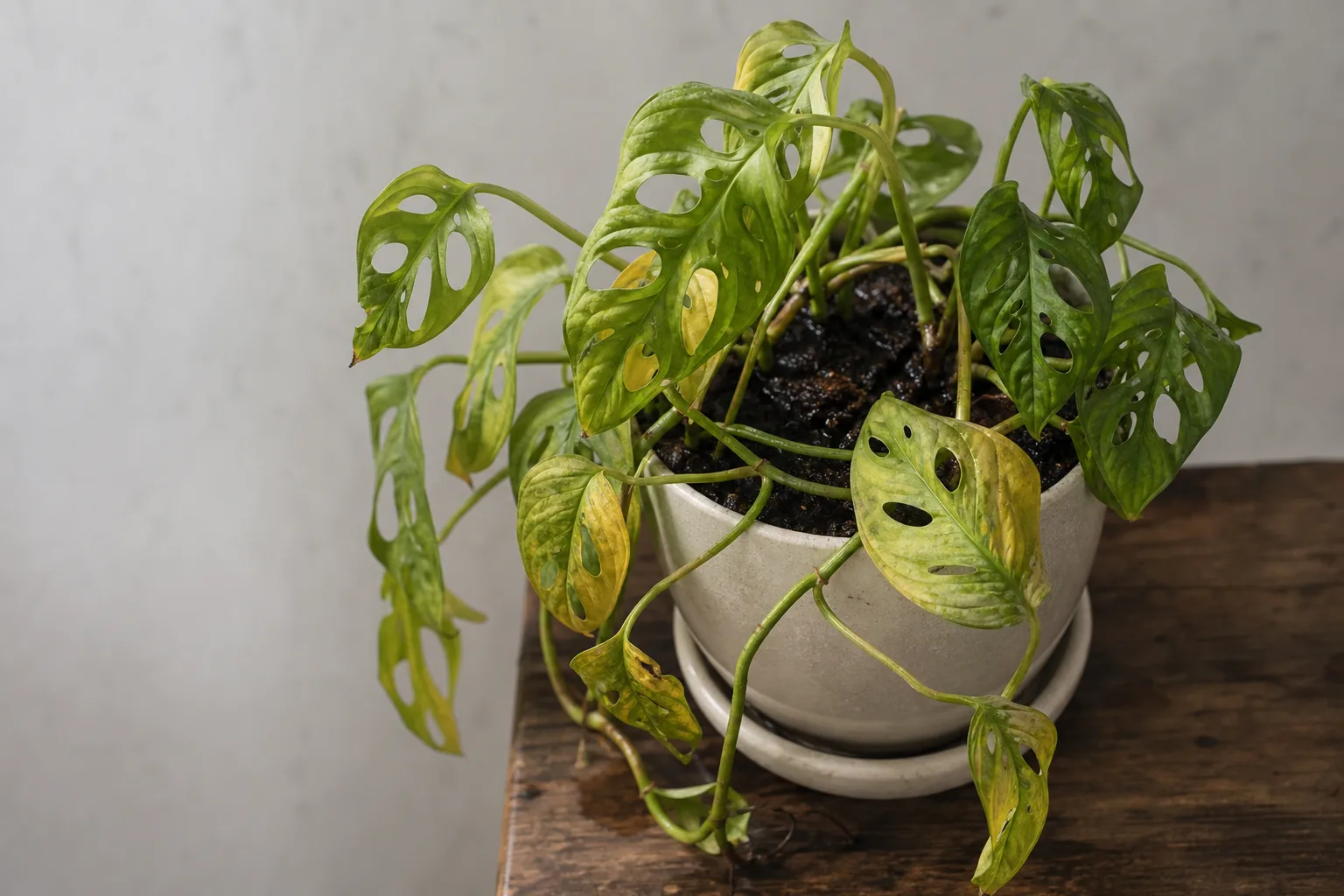
Overwatering on Monstera Adansonii: Causes, Checks & Fixes
This guide covers overwatering on Monstera Adansonii. See also the general Overwatering guide, watering, and light pages for this plant.
Overwatering on Monstera Adansonii: Causes, Checks & Fixes
Quick answer
Overwatering on Monstera adansonii (Monstera adansonii, Swiss cheese vine) means the root zone stays wet too long-roots lose oxygen, fine roots die, and the plant cannot drink even when the mix feels damp. The signature trap on this species: limp thin fenestrated leaves while the top 3–5 cm of mix is still wet and the pot feels heavy. That is root stress, not thirst.
First step: stop watering until the top 3–5 cm of mix dry completely. Empty any saucer or cachepot water, then recheck moisture with a finger or skewer at depth-not by leaf appearance alone. Do not fertilize, mist heavily, or repot into a larger container on day one.
For ongoing prevention rhythm, see the Monstera adansonii watering guide. If stems are mushy at the crown with sour-smelling soil, escalate to the root rot protocol-this page covers early and moderate overwatering rescue.
What overwatering looks like on Monstera Adansonii
Overwatering on adansonii shows as a cluster of wet-soil signals, not one pale leaf.
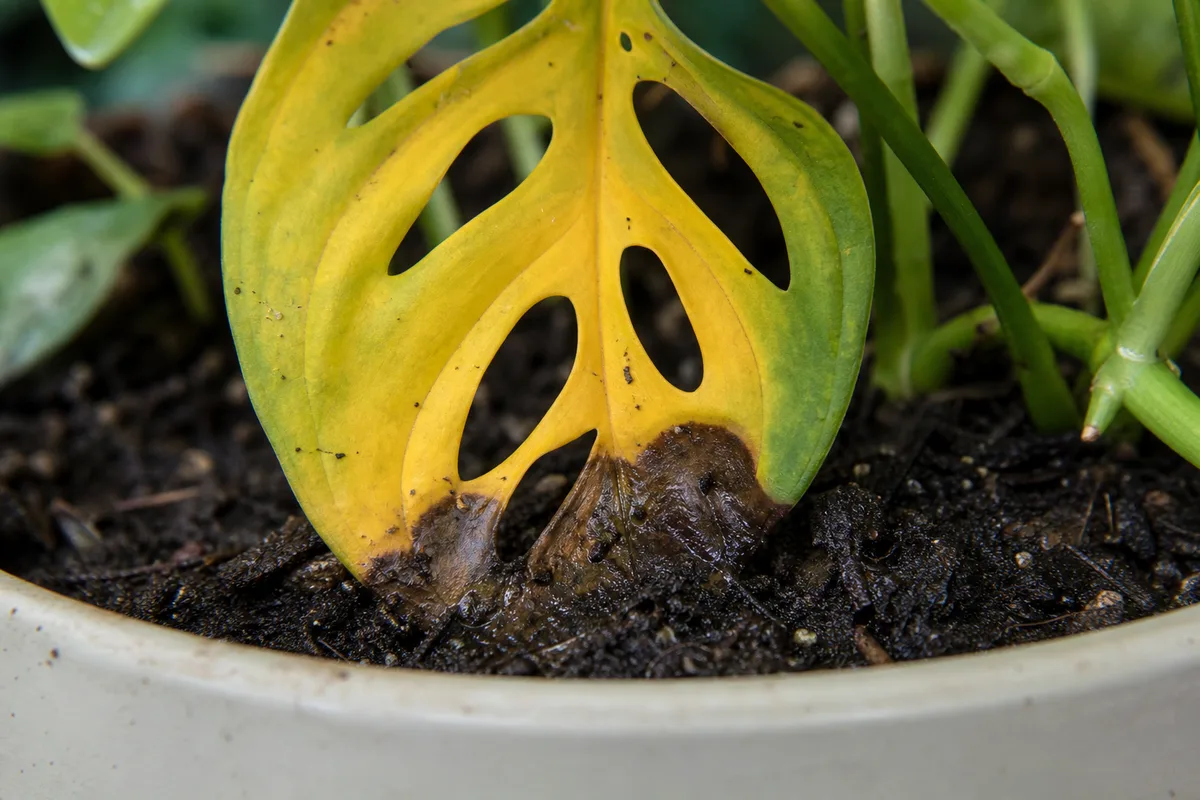
Overwatering symptoms on Monstera Adansonii - compare with healthy tissue on the same plant.
Early signs
- Limp, drooping thin leaves with oval holes-often the whole vine looks tired while mix at 3–5 cm depth is still damp
- Heavy pot that does not lighten for many days after the last watering
- Yellowing lower leaves on persistently wet mix-not isolated old-leaf drop (yellowing can signal excess moisture on aroids)
- Fungus gnats hovering at the pot rim when the surface rarely dries (see fungus gnats)
- White or gray mold on the soil surface-shared habitat with chronically wet organic mix (mold on soil)
- Stalled new vine tips-the next leaf stays furled or browns at the edge while roots struggle below
Adansonii leaves are smaller and thinner than Monstera deliciosa and lose turgor faster when roots fail-so the wilted appearance with moist soil paradox appears sooner on a trailing Swiss cheese vine than on a thick deliciosa leaf.
Advanced signs
- Soft, mushy stems at nodes along the vine-not firm green internodes
- Sour or rotten smell when you slide the root ball out or probe deep mix
- Brown, mushy roots with outer tissue slipping off healthy-looking white tips gone
- Widespread yellowing climbing the vine while soil stays dark and cool at depth
- Crown collapse-the base of the plant goes limp while upper leaves still hang on briefly
Edema (water-soaked blisters on leaves) appears on some houseplants with excess water; on adansonii, limp fenestrated foliage on wet mix and soft nodes are the more reliable indoor signals.
Why Monstera Adansonii gets overwatered
Monstera adansonii is a rapid-growing vining aroid from tropical rainforests. Indoors it wants moist, well-drained soil-even moisture between waterings, not constant sogginess. Overwatering happens when the pot cannot dry at the root zone between drinks.
Calendar watering. Watering every Sunday because the plant is “a tropical” ignores that a small hanging basket in a dim winter room may need ten days or longer to dry at 3–5 cm depth while summer growth in bright light uses water faster.
Oversized pots and heavy peat mix. A pot much wider than the root ball holds a water reservoir in the center. Plain peat-heavy bagged mix without perlite and orchid bark compacts in fast-growing aroid roots, leaving less air space after each soak.
Cachepots and saucers holding runoff. Decorative outer pots and full saucers wick water back into the bottom layer. The top may crust dry while the lower half stays saturated-ideal for root decline and fungus gnat larvae.
Low light and cool rooms. Evaporation slows in north-facing winter corners. The same watering volume that worked in July keeps mix wet for weeks in December-often paired with not enough light slowing uptake.
Misreading limp leaves as thirst. Growers see collapsed fenestrated leaves and add water, worsening root damage when soil is already waterlogged. On adansonii, always pair leaf turgor with pot weight and depth moisture before the next watering.
Trailing display in small hanging pots. Shallow baskets dry unevenly-the rim looks dry while the core stays wet, or the entire pot stays soggy if watered on schedule without depth checks.
How to confirm the cause
Work through this checklist before treating pests, repotting, or feeding:
- Moisture at 3–5 cm - Insert a finger or wooden skewer. Wet at that depth after many days without watering confirms excess retention, not a one-day lag.
- Pot weight - Lift the container. A heavy, cool pot days after watering means the root zone is still saturated.
- Leaf-soil paradox - Limp leaves plus wet depth equals overwatering until proven otherwise. Limp leaves plus light dry pot points to underwatering.
- Stem firmness - Pinch nodes along the vine. Soft, watery internodes suggest advancing rot; firm green stems support a dry-down-first approach.
- Smell - Sour or rotten odor from the drainage hole or after sliding the nursery pot out confirms oxygen-starved mix.
- Surface life - Fungus gnats, mold, or algae on wet organic top-dressing support chronic moisture-not a leaf pest as the primary driver.
- New growth trend - Stalled or browning unfurling leaves on wet mix suggest root stress; crispy edges with dry mix suggest drought or low humidity instead.
Lookalike problems on adansonii
| Pattern | Soil at 3–5 cm | Pot weight | Distinctive adansonii clue |
|---|---|---|---|
| Overwatering | Wet for days | Heavy | Limp fenestrated leaves on wet mix; gnats; soft nodes |
| Underwatering | Dry | Light | Crispy leaf edges; mix pulls from pot sides |
| Root rot (advanced) | Wet, sour | Heavy | Mushy roots; yellowing climbs vine; see root rot |
| Spider mites | Can be either | Varies | Webbing, stippling on leaves; mites on undersides-not flies at soil |
| Low humidity | Often appropriately moist | Normal | Crispy margins with firm stems; no sour soil smell |
Overwatering is confirmed when limp thin leaves, heavy wet pot, and damp mix at 3–5 cm align-and underwatering or mite patterns do not fit.
First fix for Monstera Adansonii
Stop watering until the top 3–5 cm of mix dry completely, and empty all standing water from saucers or cachepots.
That single pause lets oxygen return to the root zone before you add more stress. While the mix dries:
- Move the plant to brighter filtered indirect light if it sits in a dim corner-faster dry-down without harsh direct sun that can scorch thin leaves
- Improve airflow around hanging baskets so the pot rim does not stay humid
- Remove fallen leaflets decaying on the wet surface
- Do not fertilize a stressed root system
- Do not repot into a larger pot to “help drying”-extra volume holds more water
When to unpot and inspect roots
Unpot when yellowing spreads, stems soften at multiple nodes, smell is sour, or decline continues two weeks after consistent dry-down. Slide the root ball out gently:
- Firm white tips with mostly intact roots - return to the pot, let full dry-down finish, resume watering only when top 3–5 cm are dry per the watering guide
- Brown mushy roots - trim dead tissue with clean shears, repot into fresh chunky aroid mix, and follow root rot steps if rot is extensive
Wear gloves when trimming roots or handling cut stems-calcium oxalate crystals in sap can irritate skin.
Step-by-step recovery
Days 1–3 - Stabilize moisture
Pause all watering. Empty saucers. Note pot weight. Place in bright indirect light if the current spot is very dim. Do not mist leaves while soil stays wet.
Days 4–14 - Dry-down and observation
When the top 3–5 cm are dry, water once thoroughly until runoff, then empty the saucer within 30 minutes. Mark the calendar and track how many days until the top layer dries again-adjust future rhythm to that interval, not a fixed weekly habit.
Weeks 2–4 - Judge new growth
Recovery shows in firm stems and new vine tips unfurling with perforations-not in old leaves re-firming. Trim only fully yellow or mushy leaves that pull away easily.
Salvage via propagation
If roots are mostly lost but firm vine segments with healthy nodes remain above the rot line, take node cuttings before decline reaches every growing point. Act while tissue is still green and turgid-not after the crown collapses.
Recovery timeline
Mild overwatering (firm stems, no sour smell): leaves often regain turgor within several days to two weeks once soil oxygen returns and you stop adding water too soon.
Moderate root damage (some brown tips, yellow lower leaves): expect two to four weeks before consistent new growth at vine tips. Old damaged leaves may yellow and drop rather than green up.
Advanced rot (mushy crown, majority dead roots): recovery is uncertain-propagation from healthy nodes may be the practical save. See root rot for full protocol.
What not to do
- Do not water because leaves look wilted-check depth moisture and pot weight first
- Do not fertilize waterlogged plants hoping to “boost” recovery
- Do not repot into a bigger pot without fixing mix and watering rhythm
- Do not leave the plant in a cachepot full of runoff
- Do not assume every yellow leaf means overwatering-pair color change with wet mix and weight (yellow leaves guide for patterns)
How to prevent overwatering on Monstera Adansonii
- Water when the top 3–5 cm of mix are dry-not on a calendar; see watering
- Use chunky aroid mix with perlite and orchid bark per soil guidance
- Match pot size to roots-repot up only one size when repotting, not into a large decorative cachepot as the primary container
- Empty saucers within 30 minutes of every soak
- Reduce frequency in winter and dim rooms when growth slows
- Pair light with water-brighter spots dry faster; dim corners need longer intervals (light)
Conclusion
Overwatering on Monstera adansonii is a moisture-at-depth problem disguised as a thirsty vine. Limp fenestrated leaves on wet mix, a heavy pot, and soft nodes tell you to pause-not pour.
Dry the top 3–5 cm, restore drainage discipline, and judge success by new perforated growth at vine tips. For chronic prevention and seasonal rhythm, keep the watering guide as your reference; for mushy roots and sour soil, move promptly to root rot care.
Related tool
Use the Root Rot Risk Checker to narrow causes for overwatering on this plant before changing multiple variables at once.