Mold on Soil on Monstera Adansonii: Causes, Checks & Fixes
Quick answer
White or gray fuzz on Monstera adansonii soil is usually harmless saprophytic mold on a damp surface-not a leaf disease. First step: scrape the top 1–2 cm, then let the top 3–5 cm of aroid mix dry before you water again.
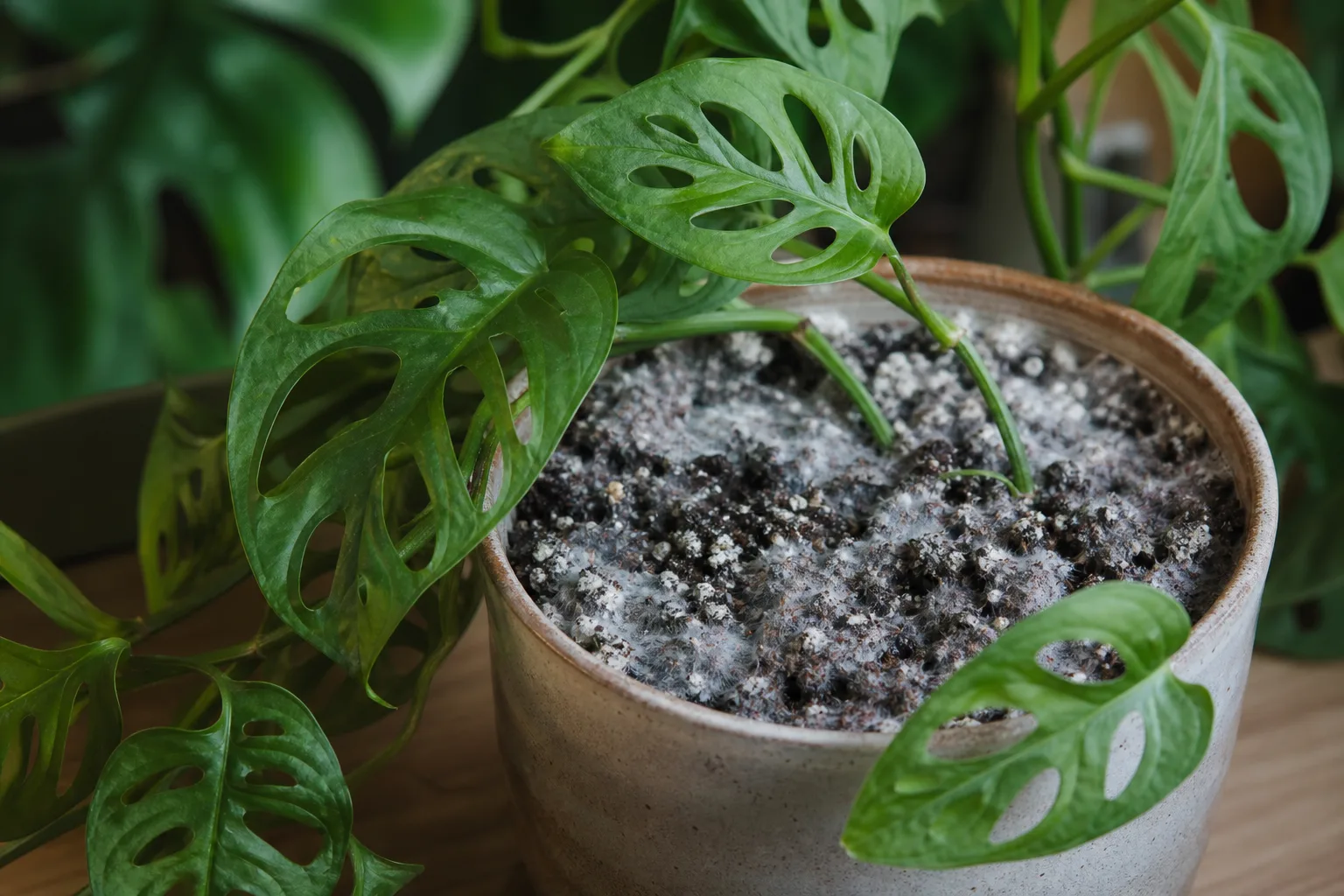
Mold on Soil on Monstera Adansonii: Causes, Checks & Fixes
This guide covers mold on soil on Monstera Adansonii. See also the general Mold on Soil guide, watering, and light pages for this plant.
Mold on Soil on Monstera Adansonii: Causes, Checks & Fixes
Quick answer
White or gray fuzz on the soil surface of Monstera adansonii is almost always saprophytic mold-a fungus breaking down organic matter in the mix, not a disease attacking the fenestrated leaves. Monstera adansonii (Swiss cheese vine) has thinner leaves than deliciosa and dries faster in small pots-growers often overcompensate with frequent watering, leaving the top layer damp enough for mold spores.
First step: scrape off the top 1–2 cm of moldy soil and stop watering until the top 3–5 cm of mix feel dry. That removes active growth and breaks the wet cycle that keeps mold and fungus gnats coming back. Do not reach for fungicide on day one; fix moisture and airflow first.
Mold on soil vs. overwatering on Monstera adansonii
Surface mold and overwatering share a root cause-soil that stays wet too long-but they are not the same diagnosis.
| Signal | Surface mold alone | Overwatering / root stress |
|---|---|---|
| Soil surface | White/gray fuzz | May also show mold |
| Stems | Firm at base | Soft, darkening at soil line |
| New leaves | Unfurling normally | Brown tips, stalled unfurling |
| Older leaves | Green | Yellowing clusters on wet mix |
| Smell | Musty, earthy | Sour, rotten |
| Fungus gnats | Common | Very common |
| Recovery after scraping + dry-down | Mold gone in 1–2 weeks | Leaves keep declining |
Mold on houseplant soil appears when organic potting mix stays constantly moist on the surface. Adansonii’s fast dry-down makes surface mold common in hanging baskets watered lightly but often-each top-up keeps the surface soggy without fully hydrating roots. Mold is the early warning; overwatering and root rot follow if wet feet continue.
What mold on soil looks like on Monstera adansonii
Check for this pattern together-not just one fuzzy spot after a single heavy watering:
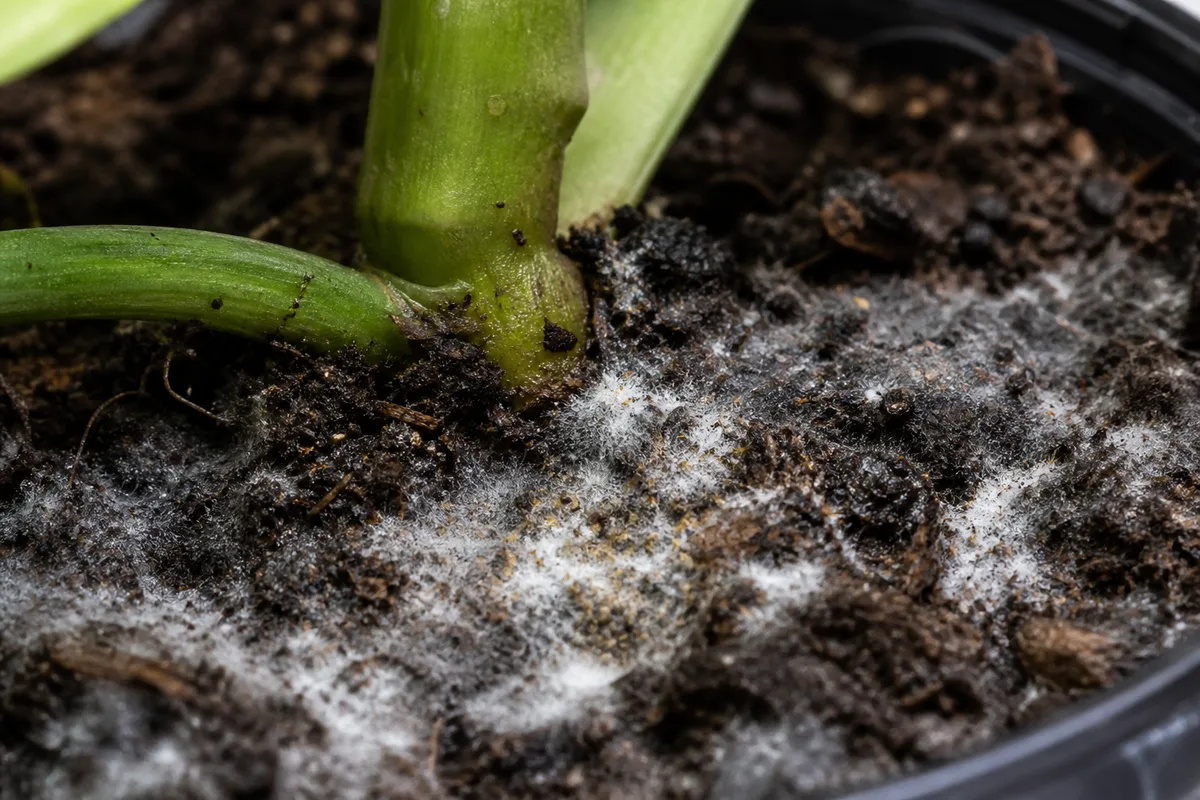
Mold on Soil symptoms on Monstera Adansonii - compare with healthy tissue on the same plant.
- White, gray, or yellow-tan fuzz on the soil surface, sometimes circular patches
- Growth concentrated where fallen fenestrated leaflets decay on the mix
- No direct leaf damage in early stages-thin leaves still firm, petioles green
- Fungus gnats rising when you water or disturb the surface
- Musty smell when you scrape the top layer
- Mold returning within days of scraping if the surface never dries
Do not mistake perlite, lime, or slow-release fertilizer crystals for mold-they do not grow outward or return after scraping. Mold spreads across the surface and reappears when moisture stays high.
Why Monstera adansonii soil grows mold
Adansonii soil molds when the top layer never dries between waterings. Common triggers:
Frequent light watering in hanging pots. Top layer stays wet; center may still be moist from the last drink. Growers see slightly limp thin leaves and add water-but in a soggy pot, limp leaves often mean overwatering, not thirst.
Dense peat mix without enough bark or perlite. Adansonii needs well-draining chunky mix-see soil guide. Dense mix holds moisture at the surface while the hanging pot feels “light enough” by weight incorrectly.
Low winter light. Same summer schedule in December keeps mix wet for weeks while growth stalls in dimmer rooms.
Saucers holding runoff. Standing water wicks back into the mix and keeps the bottom saturated even when the top looks merely damp.
Fallen leaf debris on the surface. Dropped adansonii leaflets and top-dressing bark break down into food for saprophytic fungi.
Recent repot into wet mix. Fresh peat-heavy soil plus immediate deep watering can leave the surface anaerobic for days.
How to confirm the cause
Work through these checks before treating mold as a leaf disease or reaching for fungicide:
- Stem firmness - Press the base gently at the soil line. Firm tissue with surface mold only points to cosmetic fungus. Soft, darkening sections suggest overwatering or rot.
- Moisture at 3–5 cm depth - Insert your finger or a skewer 3–5 cm deep. Wet days after the last watering confirms chronic moisture, not a one-time splash.
- New leaf unfurling - Brown crisp tips on wet mix suggest root stress past mold. Normal unfurling with fuzzy soil alone fits surface fungus.
- Drainage holes - Confirm holes are open and not blocked by roots. Water should exit freely from hanging baskets and floor pots alike.
- Saucer check - Empty standing water within 30 minutes of each watering.
- Scrape test - Remove the top 1–2 cm. If fuzzy growth is only in the top layer and lower mix smells neutral, saprophytic mold is likely.
- Gnat correlation - Adult gnats plus persistent surface dampness confirm the wet-soil cycle mold and larvae both exploit.
Confirmed surface mold fits when stems are firm, leaves are otherwise normal, fuzz is limited to the top 1–3 cm, and scraping plus dry-down stops regrowth within two weeks.
First fix for Monstera adansonii
Scrape off the top 1–2 cm of moldy soil and stop watering until the top 3–5 cm of mix are dry.
That removes active fungal growth and breaks the wet surface layer. Let the surface dry before the next watering-for adansonii, insert a finger or skewer 3–5 cm deep; water only when dry at that depth, then soak until runoff and empty the saucer.
Once scraped and drying:
- Remove fallen leaflets and organic debris from the pot surface
- Empty the saucer after every watering; never let the pot sit in runoff
- Improve airflow around hanging baskets-crowded vines trap humidity at the pot rim
- Top-dress with a thin layer of dry perlite if you want a faster-drying surface after scraping
Do not flood the pot with fungicide on day one-fix moisture first. Do not repot immediately unless sour smell or soft stems confirm root rot. Do not mist the soil or bottom-water into a full saucer while clearing mold.
Step-by-step recovery
Day 1 - Scrape, discard, and pause water
Scrape moldy top layer into a bag-not the compost pile indoors. Wipe the pot rim. Move the plant to slightly brighter light if it has been in a dim corner, but avoid harsh direct sun the same day.
Days 2–14 - Dry-down and monitor
Check moisture at 3–5 cm depth every few days. When dry, water thoroughly until runoff exits drainage holes, then empty the saucer. Watch for fungus gnat decline as the surface stays dry-see the fungus gnats guide if flies persist after dry-down.
Week 2+ - Adjust long-term rhythm
Match watering to season: less in winter, more in bright summer growth. Hanging adansonii in active growth may need water more often than floor deliciosa-but still only when the top layer dries. If mold returns within days, the interval is still too short or drainage needs improvement-see soil and repotting guides.
Recovery timeline
Surface mold should not return within one to two weeks once the top layer stays dry between waterings. Fungus gnats often decline over the same period. If mold reappears within 3–5 days of scraping, the root zone is still too wet-treat as an overwatering problem, not cosmetic mold alone.
Judge improvement by no new fuzz after scraping, fewer gnats when you water, and firm stems with new leaves unfurling-not by expecting old leaves to change color.
What not to do
- Do not spray the soil with vinegar, hydrogen peroxide, or cinnamon and call it fixed-dry-down solves the cause
- Do not cover mold with decorative stones without fixing moisture-the fungus persists underneath
- Do not assume firm stems mean roots are fine forever-chronic wet soil damages roots before stems soften
- Do not bottom-water into a saucer that stays full for days
- Do not water because thin leaves look slightly limp without checking soil moisture first
How to prevent mold on Monstera adansonii soil
- Water only when the top 3–5 cm are dry-use finger depth, not calendar days per the watering guide
- Use chunky aroid mix with perlite and bark per the soil guide
- Empty saucers within 30 minutes of every watering
- Give bright indirect light so the pot dries evenly between drinks
- Remove fallen leaflets from the soil surface during routine care
- Reduce watering frequency in winter when growth slows-the most common overwatering season for indoor adansonii
- Space hanging baskets so air moves around the pot rim instead of trapping humidity between crowded vines
When to use this page vs other Monstera Adansonii guides
- Monstera Adansonii watering guide - Use for routine moisture checks before assuming mold on soil is the main issue.
- Monstera Adansonii problems hub - Browse all 22 common issues on this species.
- Root Rot on Monstera Adansonii - Different entry point when symptoms overlap with mold on soil.
Related Monstera Adansonii guides
- Monstera Adansonii overview
- Monstera Adansonii watering
- Monstera Adansonii light
- Monstera Adansonii soil
- Root Rot on Monstera Adansonii
- Monstera Adansonii problems
- Ants on Plant on Monstera Adansonii
- Brown Tips on Monstera Adansonii
Related tool
Use the Plant Problem Diagnosis Tool to narrow causes for mold on soil on this plant before changing multiple variables at once.