Fungus Gnats on Monstera Adansonii: Causes, Checks & Fixes
Quick answer
Fungus gnats on Monstera adansonii are small dark flies breeding in the top layer of constantly moist potting mix-not on the fenestrated leaves. First step: let the top 3–5 cm of mix dry completely and place yellow sticky traps at soil level.
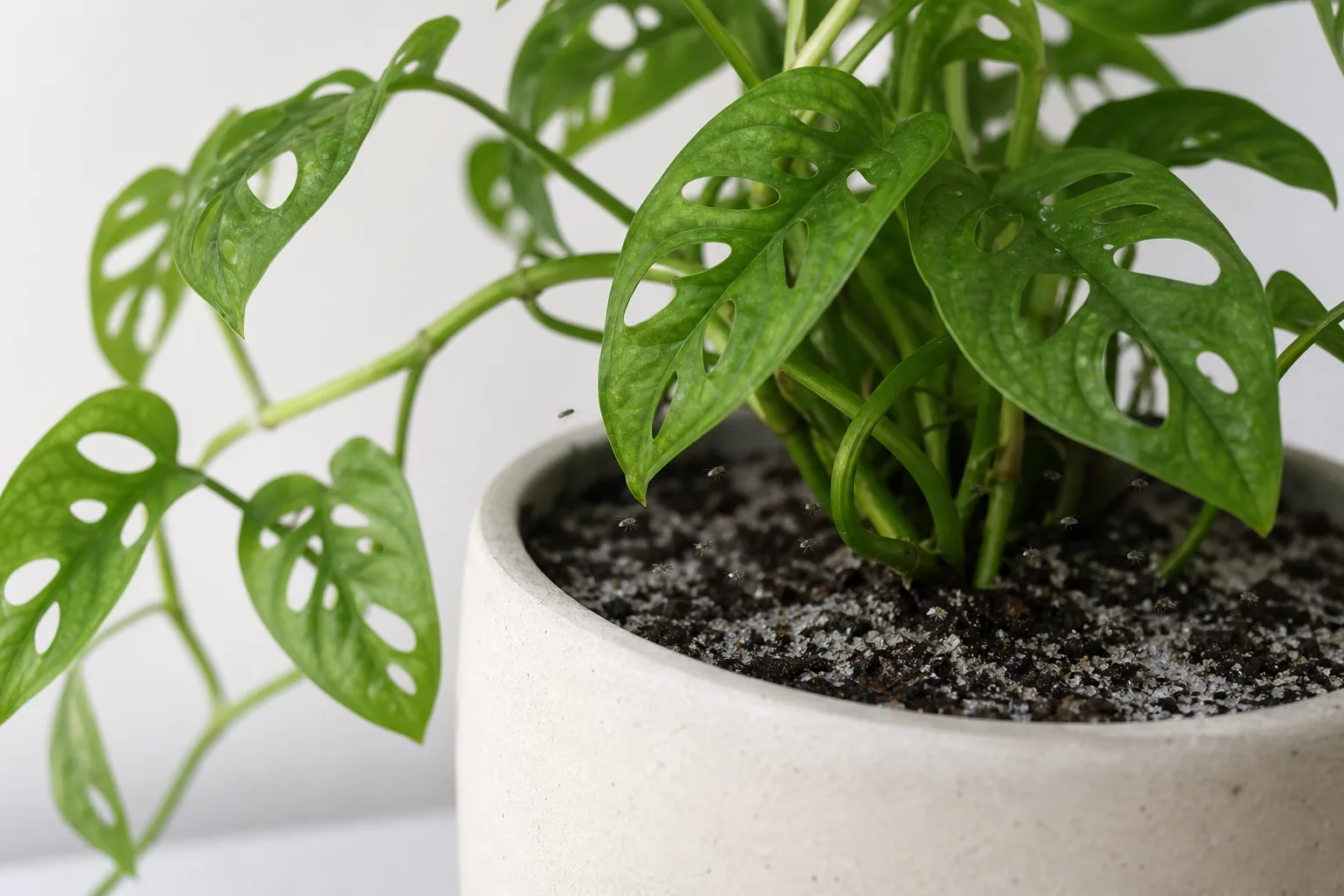
Fungus Gnats on Monstera Adansonii: Causes, Checks & Fixes
This guide covers fungus gnats on Monstera Adansonii. See also the general Fungus Gnats guide, watering, and light pages for this plant.
Fungus Gnats on Monstera Adansonii: Causes, Checks & Fixes
Quick answer
Fungus gnats on Monstera adansonii (Monstera adansonii, Swiss cheese vine) are small dark flies that breed in the top layer of constantly moist potting mix-not on the thin fenestrated leaves. Adansonii’s smaller leaves and faster dry-down in hanging pots make growers water more often than the root zone needs, leaving organic aroid mix soggy at the surface where larvae hatch.
First step: let the top 3–5 cm of mix dry completely before the next watering and place yellow sticky traps at soil level. Do not spray the foliage hoping to kill flies-adults live briefly; larvae in wet soil are the breeding source.
Judge progress by fewer flies on traps each week and firm stems with new unfurling leaves-not by expecting old leaves to change. Heavy gnat clouds usually mean overwatering or poor drainage, not a leaf pest.
What fungus gnats look like on Monstera adansonii
Adult flies
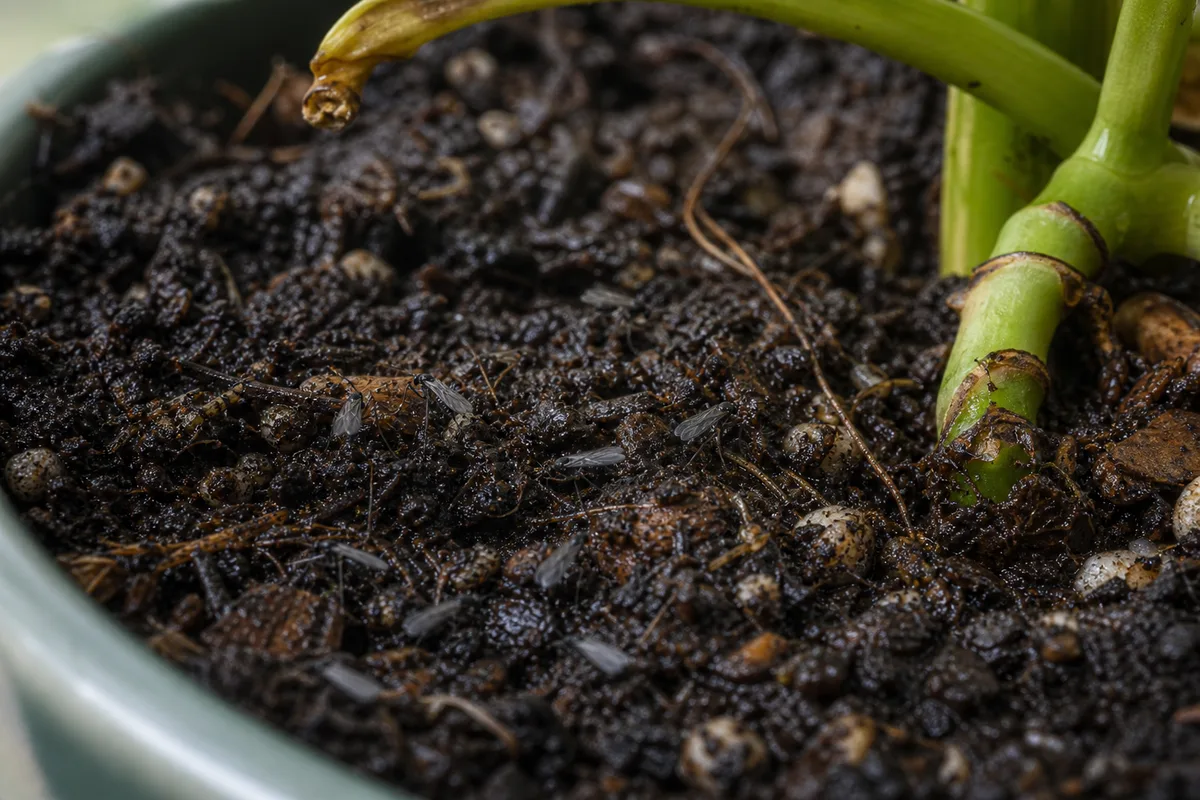
Fungus Gnats symptoms on Monstera Adansonii - compare with healthy tissue on the same plant.
- Small dark flies about 1/8 inch long with long legs and narrow wings
- Weak fliers that hover near the pot, keyboard, or window-not fruit flies
- Rise in a cloud when you water or disturb the soil surface
- Run on wet soil rather than landing on dry leaf tips
- Yellow sticky traps at soil level catch adults within days when breeding is active
Fungus gnats are commonly associated with overwatered houseplants and moist organic growing media. On adansonii, the problem is almost always wet aroid mix, not the holes in the leaves.
Larvae in soil
- Tiny translucent worms roughly 1/16 inch long in the top 2–3 cm of mix
- Visible when you scrape the surface or slide the plant from its nursery pot
- Feed on fungi and decaying organic matter in moist soil-heavy populations can stress fine roots
- Concentrated where fallen adansonii leaflets decay on the surface
What adansonii symptoms to expect
Early gnat cases often show no leaf damage. Watch instead for:
- Flies concentrated at the pot rim, not evenly across vines
- White mold on the soil surface-shared wet-organic habitat (see mold on soil)
- Yellowing lower leaves on persistently wet mix-crossover to root stress, not gnat feeding alone
- New leaves stalling or browning at tips when roots are compromised in soggy mix
Adansonii leaves mark and dry faster than Monstera deliciosa-so root stress from wet soil may show as crisp edge browning on new unfurling leaves before you notice many flies.
Why Monstera adansonii gets fungus gnats
Adansonii is a thin-leaved vining aroid that needs well-draining chunky mix and dries faster than deliciosa in small pots. Gnats appear when the top layer never dries between waterings.
Calendar watering in hanging baskets. Growers water when leaves look slightly limp-but in a soggy pot, limp leaves may mean overwatering, not thirst. Wet surface = gnat nursery.
Peat-heavy mix without enough bark or perlite. Dense mix holds moisture at the surface while the hanging pot feels “light enough” by weight incorrectly.
Saucers holding runoff. Standing water wicks back; the top stays humid for gnats and mold.
Low winter light. Same watering frequency in December as July keeps mix wet for weeks while growth stalls.
Fallen debris on soil. Dropped leaflets and top-dressing decay feed larvae alongside fungi.
How to confirm the cause
- Fly behavior - Adults rise from the pot, not from leaf axils. Spider mites leave webbing; thrips leave silver stippling-different pests.
- Sticky trap test - Place yellow traps at soil level for 48 hours. Multiple catches confirm active breeding nearby.
- Larva check - Scrape top 2 cm of mix onto white paper. Translucent worms confirm larvae in soil.
- Moisture at 3–5 cm - Wet days after watering confirms the cycle gnats need.
- Leaf pattern - Gnats alone rarely spot leaves. Yellow clusters on wet mix suggest root stress beyond flies.
- Neighbor pots - Check other houseplants on the same shelf; gnats spread between wet pots.
Confirmed fungus gnats fit when flies rise from adansonii soil, traps catch adults, larvae are in the top layer, and drying the surface reduces fly counts within two weeks.
First fix for Monstera adansonii
Let the top 3–5 cm of mix dry completely and place yellow sticky traps at soil level.
Let the soil surface dry before rewatering-for adansonii, insert a finger or skewer 3–5 cm deep; water only when dry at that depth, then soak until runoff and empty the saucer.
Once drying and trapping:
- Remove fallen leaflets from the soil surface
- Top-dress with dry perlite if the surface crusts wet underneath
- Improve airflow around hanging baskets-crowded vines trap humidity at the pot rim
Do not flood the pot daily trying to flush larvae-that worsens root rot on Monstera Adansonii. Do not mist leaves heavily while soil stays soggy. Do not apply systemic pesticides on day one before fixing moisture.
Step-by-step recovery
Week 1 - Dry-down, traps, and debris removal
Pause watering until top 3–5 cm are dry. Set sticky traps. Remove surface debris. Water once thoroughly when dry, then empty saucer.
Weeks 2–3 - BTI if larvae persist
If flies remain heavy after dry-down, apply BTI drench per label to moist soil-targets larvae without harming plants. Repeat per product instructions.
Week 4+ - Adjust rhythm
Match watering to season and pot size. Hanging adansonii in bright summer growth may need water more often than floor deliciosa-but still only when the top layer dries.
Recovery timeline
Fly counts on traps should decline within two weeks once the surface stays dry between waterings. Larval generations need 3–4 weeks of consistent dry-down to clear fully. If flies persist with dry soil, check neighbor pots or add BTI.
What not to do
- Do not spray neem on leaves alone while soil stays wet-flies return from larvae
- Do not repot into fresh wet mix without fixing watering rhythm
- Do not assume limp thin leaves always mean thirst-check soil moisture first
How to prevent fungus gnats on Monstera adansonii
- Water when top 3–5 cm are dry-see watering guide
- Use chunky aroid mix with perlite and bark per soil guide
- Empty saucers after every watering
- Reduce frequency in winter and dim rooms
- Clear fallen leaves from the pot surface during routine care
When to use this page vs other Monstera Adansonii guides
- Monstera Adansonii watering guide - Use for routine moisture checks before assuming fungus gnats is the main issue.
- Monstera Adansonii problems hub - Browse all 22 common issues on this species.
- Root Rot on Monstera Adansonii - Different entry point when symptoms overlap with fungus gnats.
Related Monstera Adansonii guides
- Monstera Adansonii overview
- Monstera Adansonii watering
- Monstera Adansonii light
- Monstera Adansonii soil
- Root Rot on Monstera Adansonii
- Monstera Adansonii problems
- Ants on Plant on Monstera Adansonii
- Brown Tips on Monstera Adansonii
Related tool
Use the Plant Problem Diagnosis Tool to narrow causes for fungus gnats on this plant before changing multiple variables at once.