Low Humidity on Monstera Adansonii: Causes, Checks & Fixes
Quick answer
Low humidity on Monstera Adansonii shows first at leaf edges and unfurling leaves. First step: measure humidity at the canopy and run a humidifier until you reach at least 50% relative humidity near the plant.
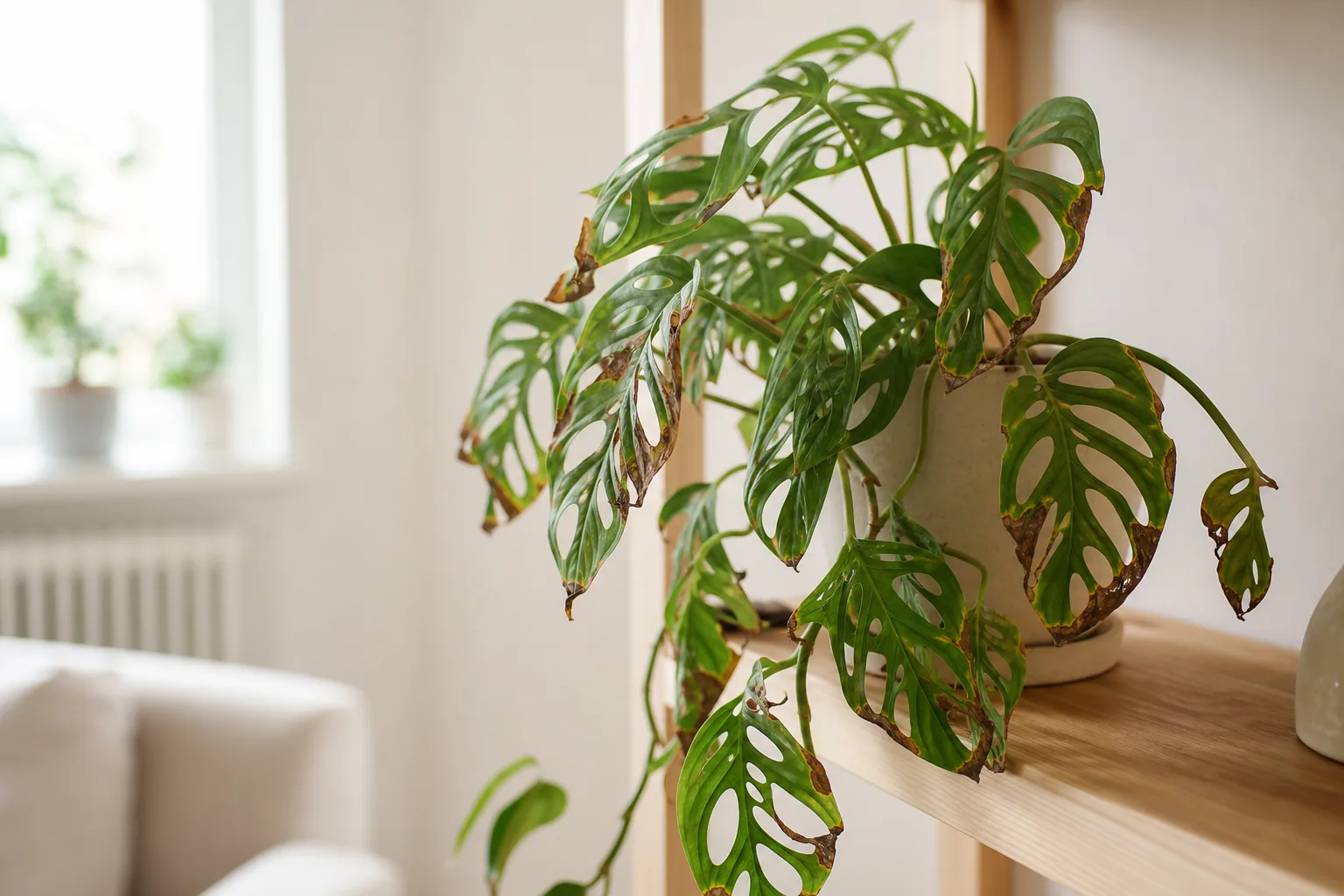
Low Humidity on Monstera Adansonii: Causes, Checks & Fixes
This guide covers low humidity on Monstera Adansonii. See also the general Low Humidity guide, watering, and light pages for this plant.
Low Humidity on Monstera Adansonii: Causes, Checks & Fixes
Quick answer
Low humidity on Monstera Adansonii (Monstera adansonii, Swiss cheese vine) is environmental stress from air that is too dry for a tropical aroid-not a disease you can spray away. This species has thin, heavily fenestrated leaves that lose moisture faster than the broader leaves of Monstera deliciosa, so dry indoor air shows up as crispy margins, stuck leaf unfurling, and increased spider mite risk long before the whole plant collapses.
First step: measure relative humidity at canopy height with a hygrometer, then run a humidifier until readings stay at least 50% near the leaves. Move the plant off the path of heating vents and AC blasts before Monstera Adansonii repotting guide, fertilizing, or watering more often. Dry air damage and wet-root damage look similar from across the room; humidity checks tell them apart.
What low humidity looks like on Monstera Adansonii
Dry air rarely yellows the entire plant overnight. On Adansonii, the earliest signs are local and edge-focused:
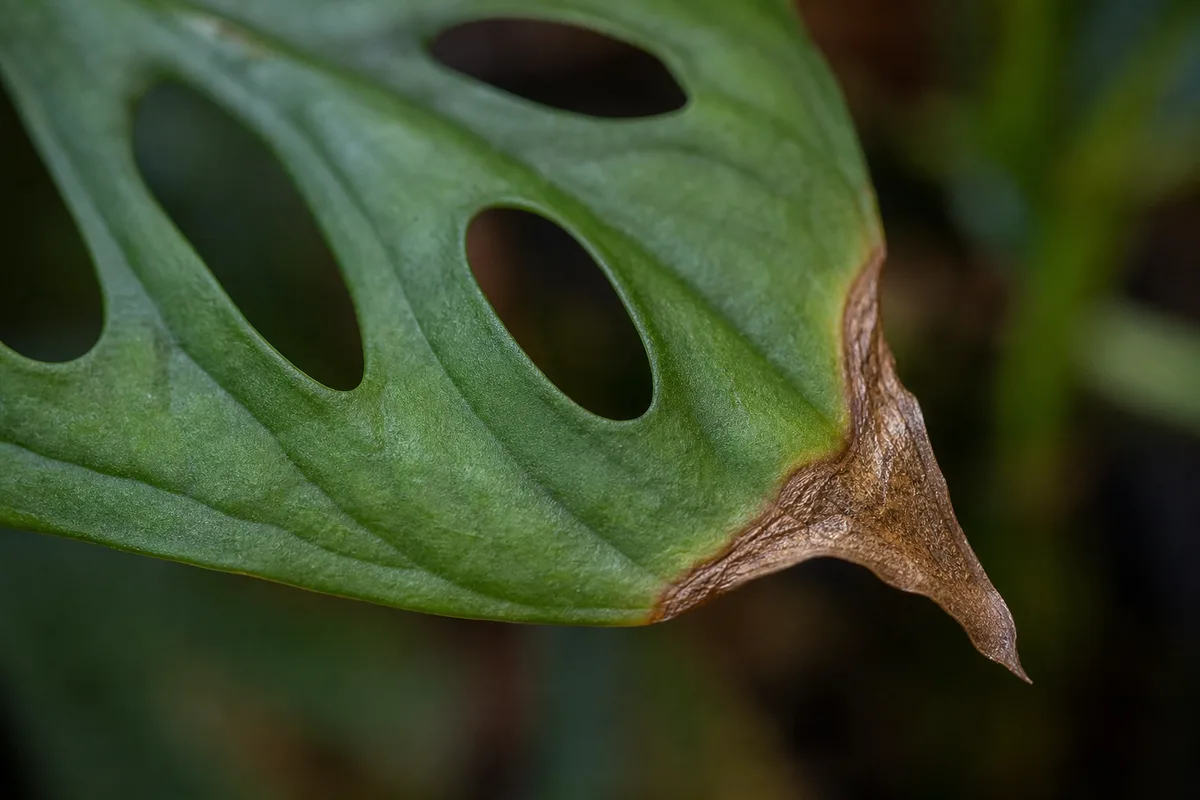
Low Humidity symptoms on Monstera Adansonii - compare with healthy tissue on the same plant.
- Brown or tan crispy tips and margins on mature leaves while the center stays green
- New leaves that unfurl slowly, stick, or brown at the edges before they fully open-fenestrations make these young leaves especially fragile
- Slightly cupped or curled leaf edges on the newest growth during heating season
- Smaller or less perforated new leaves when humidity has been low for weeks-not a nutrient problem until you rule out air moisture
- Fine stippling, webbing, or dusty undersides that appear after prolonged dry heat-spider mites favor hot, dry conditions on many houseplants
The pattern matters. If only margins and newest leaves look dry but stems are firm and soil dries on your normal schedule, suspect air humidity. If whole leaves yellow while soil stays wet, look at watering and roots instead.
Hanging baskets make this worse. A trailing Adansonii exposes more leaf surface to open room air than a floor pot, and small containers dry out faster after watering-two separate stresses that both show as edge burn.
Why Monstera Adansonii gets low humidity stress
Adansonii evolved in warm, humid tropical forest understory. North Carolina Extension notes that it prefers Monstera Adansonii light guide and warm, humid conditions, with humidifiers or pebble trays recommended indoors. Penn State Extension states that monstera likes humidity preferably above 50% and may need a nearby humidifier when indoor air is very dry.
Most homes fall short-especially in winter. University of Maryland Extension explains that most indoor environments lack sufficient humidity for healthy houseplants, particularly in winter, when heating systems pull moisture from the air. Room readings of 20–30% are common while tropical foliage wants roughly 50–60% for steady growth on this vine.
Adansonii-specific triggers in real homes:
- Forced-air heating or AC blowing directly on the foliage
- Radiators, fireplace heat, or sunny window glass that super-dry the microclimate around the pot
- Trailing placement in open doorways or hallways with constant air exchange
- Recently moved plants from a humid greenhouse or bathroom to a dry living room-leaf drop and edge burn often follow the relocation, not bad roots
- Overcompensating with misting alone, which Maryland Extension notes is questionable for raising humidity and can leave thin Adansonii leaves wet overnight if overdone
Unlike succulents, this is not a plant that thrives on desert-dry air. It tolerates brief dips, but chronic dryness shows on the leaves within weeks.
How to confirm the cause
Work through these checks before changing your Monstera Adansonii watering guide or repotting:
- Hygrometer at canopy height - Place it near the leaves for 24 hours. Below ~45% with edge burn strongly suggests dry air; mid-50s with ongoing crisping points to salt burn, light stress, or underwatering instead.
- Soil moisture at depth - Stick your finger 3–5 cm into the mix. Dry throughout with a light pot and limp leaves suggests underwatering. Damp mix with only edge burn fits humidity, not drought.
- Vent and window map - Is the vine in the path of a heat register, AC vent, or cold draft? Maryland Extension warns that indoor plants are sensitive to drafts or heat from registers-protect them from sudden air changes.
- Season timing - Did crisping start when heat turned on or when summer AC ran constantly? Seasonal timing supports a humidity diagnosis.
- New growth behavior - Watch the next leaf unfurl. Stuck, torn, or browned unfurling in otherwise stable soil confirms air moisture is too low.
- Pest inspection - Hold leaves to the light and check undersides for stippling and fine webbing. Missouri Botanical Garden lists stippled, yellowing leaves and webbing as early spider mite signs-often linked to dry conditions indoors.
- Salt check - White crust on the soil surface or pot rim with tip burn may be fertilizer salts, not humidity. Clemson HGIC notes brown tips from hot dry air, improper watering, and salt accumulation-humidity fixes alone will not solve salt injury.
If humidity is low and soil stays wet for days, you may have two problems: dry air stressing leaves while roots sit in stale moisture. Fix placement and humidity first; then reassess watering.
First fix for Monstera Adansonii
Run a humidifier within a few feet of the plant and raise relative humidity at the canopy to at least 50%.
That single step addresses the most common cause without stacking misting, repotting, and extra watering on the same day. Move the pot off the direct path of heating vents and AC blasts while the humidifier runs. Empty saucers after normal watering-do not try to fix dry air by keeping the root zone soggy.
Do not reach for fertilizer, neem oil, or a larger pot until humidity and placement are stable for one to two weeks unless you have confirmed active spider mites.
Step-by-step recovery
Once the humidifier is running and vents are avoided, proceed in this order:
- Group plants or add a pebble tray - Maryland Extension recommends grouping plants to raise local humidity and using pebble trays as a supplement. Keep tray water below the pot bottom so roots do not wick up constantly.
- Relocate if needed - A bright bathroom or kitchen often holds higher humidity than a dry living room, provided light is still bright and indirect. Avoid cold window glass in winter.
- Trim dead edges only after conditions stabilize - Maryland Extension grooming guidance says to neatly trim dry or brown leaf tips with sharp scissors. Follow the natural leaf contour on Adansonii so cut edges look tidy.
- Hold fertilizer and repotting - Stressed aroids do not need feed until new growth looks healthy for two weeks. Repotting adds shock without fixing dry air.
- Treat spider mites if confirmed - Rinse undersides, increase humidity, and isolate the plant. Dry air makes mite outbreaks worse; humidity alone is not a cure once mites are established.
- Flush salts if crust is present - If white deposits sit on the soil, drench the pot with clear water several times per Clemson HGIC salt management and resume a lighter feed schedule after recovery.
If the vine climbs, a moist moss pole can help local humidity around aerial roots, but it does not replace room-level moisture in a dry winter room.
Recovery timeline
Stabilization: Humidity readings should reach the 50–60% target within 24–48 hours of running a humidifier. Edge burn should stop spreading on new tissue within one to two weeks.
New leaves: The next one to two unfurling leaves tell the story. Clean, green unfurling within two to four weeks means the fix is working. Old crispy margins never re-green-trim them or leave them until you prune later.
Full appearance: Replacing the most damaged foliage through normal growth may take several months, especially on a long trailing stem. Adansonii grows quickly in warm, humid, bright conditions; recovery slows in cool or dim rooms even if humidity is correct.
Worsening signs: New leaves still tear or brown before opening after three weeks of proper humidity, widespread yellowing with wet soil, or mite webbing spreading to neighboring plants-escalate to watering review or pest treatment.
Lookalike symptoms
- Underwatering - Whole leaves limp, pot feels very light, mix dry deep down. A deep soak helps once; humidifier does not fix a thirsty root ball.
- Overwatering / root stress - Yellowing, mushy stems, sour soil smell. Wet roots cannot be cured by misting leaves.
- Salt or fluoride burn - Tip burn with white crust on soil or pot rim; flush and reduce fertilizer, not just humidify.
- Too much direct sun - Bleached or scorched patches on the sun-facing side, not symmetric edge crisping on all leaves.
- Normal acclimation - One or two older leaves yellow and drop after purchase while new center growth stays firm-often relocation shock combined with lower humidity, not an emergency.
What not to do
Do not water more often because leaf edges look dry while the mix is still damp-that invites root rot on Monstera Adansonii on an aroid that already wants top 3–5 cm dry between drinks. Avoid misting as the only fix; brief mist does not sustain the humidity this vine needs through a dry winter night.
Skip heavy fertilizer on stressed leaves-salts worsen tip burn. Do not repot on day one unless the mix is failing. Do not place the humidifier so far away that the canopy still reads below 40% while the rest of the room feels fine.
Monstera Adansonii care cross-check
Low humidity fixes work best when the rest of care matches Monstera Adansonii overview:
- Light: Bright indirect light-not direct sun through glass, which dries leaves faster and scorches thin tissue.
- Water: Allow the top 3–5 cm of mix to dry, then water thoroughly until drainage runs clear. Reduce frequency in winter when growth slows.
- Support: Climbing on a moss pole often produces larger, cleaner leaves than long bare trailing stems in dry air.
- Temperature: Keep roughly 18–27°C (65–80°F) and avoid cold drafts below about 10°C (50°F)-NC Extension warns against drops below 50°F.
Humidity supports the leaf surface; it does not replace correct watering or light.
How to prevent low humidity next time
- Run a humidifier through heating season or whenever room readings drop below 50%.
- Group tropical plants to share transpired moisture, per Maryland Extension.
- Keep Adansonii several feet from heat registers and AC vents.
- Quarantine and acclimate new vines gradually when moving from humid shops to dry homes-expect temporary leaf drop.
- Check humidity at the plant, not on a thermostat across the room.
- Maintain your normal dry-down watering rhythm; do not keep soil wet to compensate for dry air.
When to worry
Low humidity alone rarely kills a established Adansonii quickly. Escalate if new leaves repeatedly fail to unfurl, spider mites spread despite humidity and rinsing, or yellowing pairs with wet, sour soil-that pattern needs a root inspection, not more misting.
Cosmetic edge burn on a few older leaves in winter can wait for a humidifier adjustment. Active pest colonies, collapsing stems, or root smell cannot.
Conclusion
Low humidity on Monstera Adansonii is a placement and air-moisture problem on a thin-leaved tropical vine. Confirm it with a hygrometer at the canopy, raise humidity to at least 50% with a humidifier, and keep the plant away from drying vents. Old crispy edges will not heal, but clean new fenestrated leaves prove you fixed the environment-then trim, stay consistent, and let this fast-growing vine replace the damaged foliage.
When to use this page vs other Monstera Adansonii guides
- Monstera Adansonii watering guide - Use for routine moisture checks before assuming low humidity is the main issue.
- Monstera Adansonii problems hub - Browse all 22 common issues on this species.
- Brown Tips on Monstera Adansonii - Different entry point when symptoms overlap with low humidity.
- Curling Leaves on Monstera Adansonii - Different entry point when symptoms overlap with low humidity.
- Leaf Drop on Monstera Adansonii - Different entry point when symptoms overlap with low humidity.