Black Spots on Monstera Deliciosa: Causes, Checks & Fixes
Quick answer
Black spots on Monstera deliciosa are usually localized tissue death from fungal or bacterial leaf spot, not random aging. First step: stop overhead watering and misting, then inspect whether spots are dry and mechanical or wet with yellow halos and spreading edges.
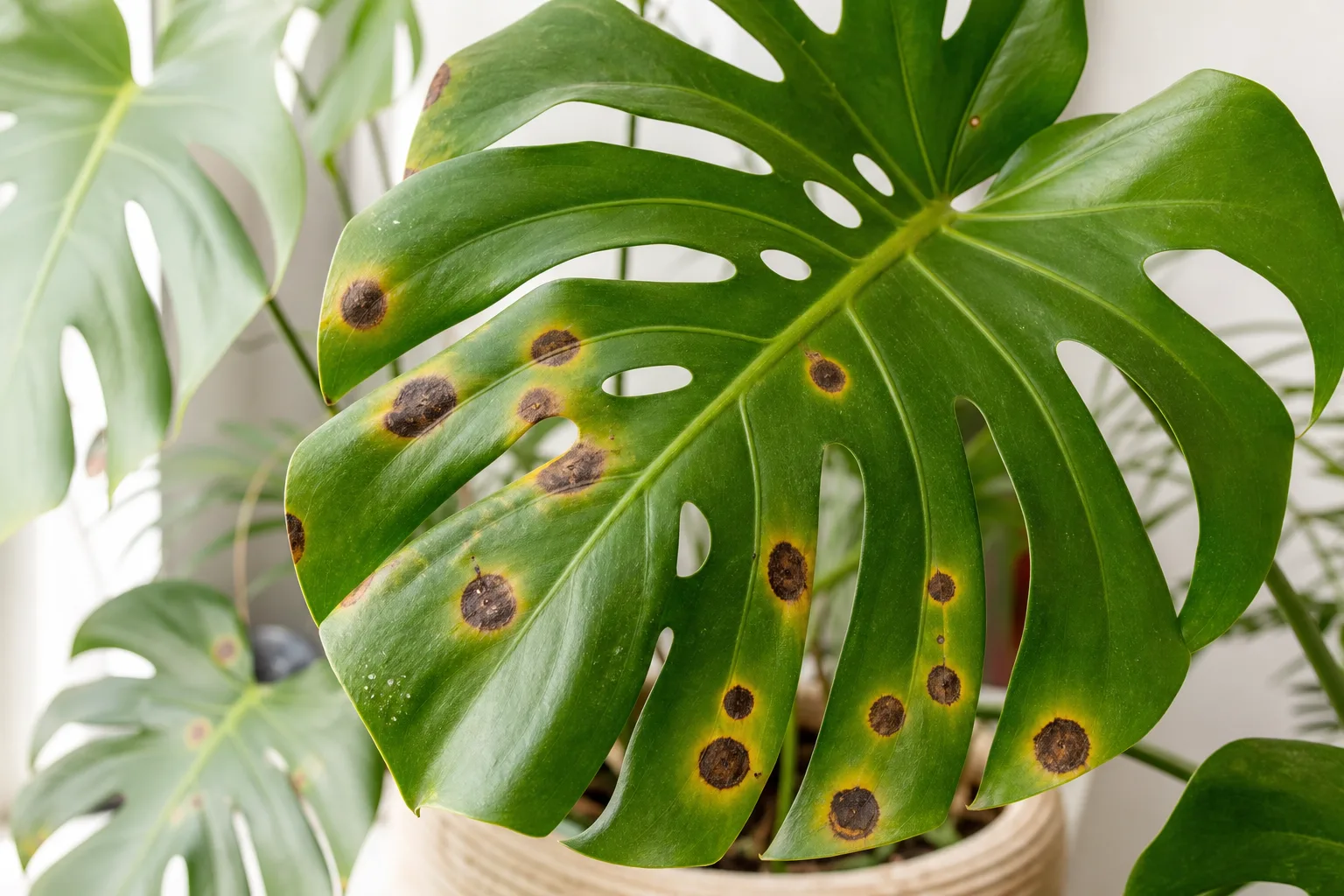
Black Spots on Monstera Deliciosa: Causes, Checks & Fixes
This guide covers black spots on Monstera Deliciosa. See also the general Black Spots guide, watering, and light pages for this plant.
Black Spots on Monstera Deliciosa: Causes, Checks & Fixes
Quick answer
Black spots on Monstera deliciosa (Monstera deliciosa) are necrotic patches-small areas where leaf tissue has died and turned dark brown to black. On this large-leaf climber, spots often start water-soaked, then dry and darken as they expand. For how leaf pathogens spread in general, see our black spots guide. On Monstera deliciosa, broad fenestrated blades, overhead watering habits, and stagnant air around a moss pole make wet-leaf infections more likely than on small-leaved houseplants.
A few isolated dry black marks from physical damage are cosmetic. Spreading spots with yellow halos, wet centers, or new lesions on unfurling leaves need action the same week-not extra fertilizer.
First step: stop wetting foliage and improve airflow around the canopy. Water at soil level only, empty saucers, and space the plant away from crowded shelves. Then identify whether spots are mechanical, pest-related, or true leaf spot disease.
What black spots look like on Monstera Deliciosa
Healthy Monstera foliage is glossy green with splits and holes. Black spotting breaks that pattern in recognizable ways:
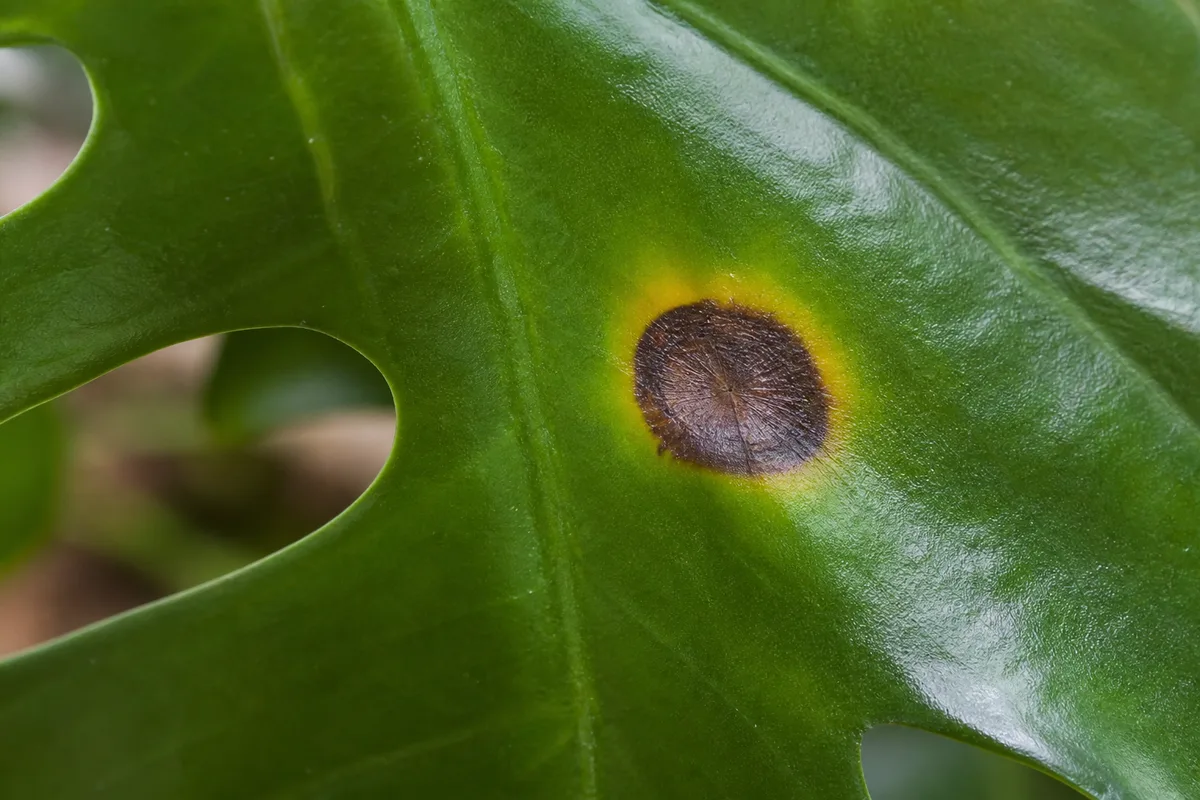
Black Spots symptoms on Monstera Deliciosa - compare with healthy tissue on the same plant.
- Small dark brown to black circles with yellow halos - Often start water-soaked, then crisp at center. Classic fungal or bacterial leaf spot on wet foliage.
- Irregular black patches merging into larger dead zones - Lesions coalesce on large blades when humidity stays high and leaves remain wet overnight.
- Black specks along veins or fenestration edges - Sometimes edema or cold injury on succulents; on Monstera, check for pest frass or mechanical creasing at unfurling leaves first.
- Single dry black mark, no halo, no spread - Bumping, pet damage, or healed mechanical wound. Stable for months.
- Stippled darkening with silver trails - Pest feeding, especially thrips-not classic leaf spot.
- Blackening at the base of a soft petiole on wet soil - Stem or root issue, not superficial spotting. See root rot.
Spots on new unfurling leaves at the vine tip are more urgent than one old mark on a lower moss-pole leaf.
Why Monstera Deliciosa gets black spots
Fungal leaf spot
Fungal spores germinate on persistently wet leaves and penetrate tissue, creating expanding necrotic lesions. Monstera’s large surface area and leaf holes trap droplets longer than smooth small leaves.
Bacterial spotting
Bacterial infections produce dark, water-soaked spots that can spread quickly in warm, humid, stagnant conditions. Splash from infected soil or shared pruning tools moves bacteria between plants.
Overhead watering and night wetness
Misting, showering foliage late in the day, or drip from a leaking ceiling vent keeps blades wet when evaporation slows. That extends the infection window on a floor plant whose lower leaves sit in still air.
Poor airflow around a tall specimen
A Monstera on a moss pole creates a dense vertical canopy. Without spacing from walls and neighboring plants, moisture lingers between overlapping blades.
Stress-weakened foliage
Chronic overwatering, dim light, or root stress lowers defenses-making infection more likely when water sits on leaves.
How to confirm the cause
- Spot texture - Wet, greasy, or water-soaked margins suggest active disease. Dry, calloused black marks suggest old mechanical damage.
- Halo presence - Yellow ring around a dark center fits pathogen spotting.
- Spread rate - New spots weekly on multiple leaves = disease or pest. One mark stable for months = mechanical.
- Watering habits - Overhead spray, shower rinses without drying, or wet leaves at night raise disease probability.
- Underside inspection - Webbing, thrips, or scale differ from uniform lesions.
- Soil and stem base - Soft black tissue at soil line is not leaf spot-isolate and inspect roots.
First fix for Monstera Deliciosa
Stop wetting foliage and increase airflow-then remove the worst infected leaves with clean tools.
That single environmental correction slows most leaf-spot spread before you reach for fungicides.
- Switch to soil-level watering only; water early in the day so incidental splash dries quickly.
- Space the plant away from walls and crowded collections; run a fan on low if air is stagnant.
- Prune heavily spotted leaves into a sealed bag; disinfect pruners between cuts.
- Avoid misting until at least two weeks pass with no new spots on emerging leaves.
- If spread continues on otherwise healthy plants, use a species-safe fungicide or bactericide per label after removing infected tissue.
Do not fertilize spotted, stressed foliage on day one.
Step-by-step recovery
Active leaf spot (spreading wet lesions)
- Isolate from other plants if collection is dense.
- Remove worst affected blades; keep partially green leaves if spots are few and stable.
- Water at soil line; keep saucers empty.
- Wipe dust from remaining leaves with a damp cloth, then let surfaces dry fully.
- Monitor new unfurling leaves weekly-they should open without fresh spots within two to three weeks.
- Read full leaf spot disease if lesions keep appearing.
Mechanical or single-spot damage
- No fungicide needed if the mark is dry and unchanged for weeks.
- Trim edge of damage if cosmetically bothersome.
- Adjust placement so petioles do not scrape walls or shelves.
Pest-related darkening
- If silver streaks or frass accompany spots, treat thrips or spider mites instead of assuming fungus.
Recovery timeline
Environmental correction alone: New spot formation should slow within seven to ten days; clean new leaves within two to three weeks.
After pruning plus dry foliage culture: Existing black tissue remains visible permanently.
Worsening: Spots on every new leaf within a week, soft stems, or sour soil mean layered root or stem problems-escalate beyond leaf-spot protocol.
Lookalike symptoms
| Pattern | Likely cause | Page |
|---|---|---|
| Wet spots with yellow halos, spreading | Leaf spot pathogens | This page / leaf spot disease |
| Uniform yellow then brown, wet soil | Overwatering | Moisture triage |
| Silver streaks, distorted new leaves | Thrips | Pest ID |
| Dry single mark, stable | Mechanical damage | Monitor only |
| Black soft stem base | Root rot | Root inspection |
What not to do
Do not mist heavily to “help humidity” while spots are spreading.
Do not compost infected Monstera leaves indoors-bag and discard.
Do not share unclean pruners between plants in a collection.
Do not assume fungicide alone fixes chronically wet leaves without changing watering habits.
How to prevent black spots next time
Water at soil level; avoid splashing foliage when possible. Keep Monstera in bright indirect light with good air movement. Use a humidifier instead of foliar misting for dry winter air. Remove fallen leaf debris from the pot surface. Quarantine new plants before placing them beside a mature moss-pole specimen.
When to worry
Urgent when spots appear on most new leaves within days, lesions merge across half a blade, or stems blacken at the soil line on wet mix. A single stable mark on one lower leaf is low urgency.
When to use this page vs sibling guides
| Your question | Best page |
|---|---|
| Dark spots on leaf blades | This page |
| Full disease protocol and fungicide context | Leaf spot disease |
| Whole leaves turning brown | Brown leaves |
| Chronic wet soil, no distinct spots | Overwatering |
Related Monstera deliciosa guides
- Monstera deliciosa overview
- Watering guide
- Leaf spot disease
- Brown leaves
- Thrips
- Overwatering
- Problems hub
Conclusion
Black spots on Monstera deliciosa are manageable when you keep leaves dry, improve airflow, and prune actively spreading lesions. Old black tissue will not revert; success is measured by clean new leaves unfurling at the vine tip. Match mechanical marks with monitoring, pathogen spots with sanitation, and pest scars with the right treatment-not a generic “more water” response.