Thrips on Monstera Deliciosa: Causes, Checks & Fixes
Quick answer
Thrips on Monstera deliciosa leave silvery scrape marks and black frass on large split leaves, often scarring leaves still unfurling at the moss-pole tip. First step: isolate the plant and shake a suspect new leaf over white paper to confirm slender insects before rinsing every reachable underside.
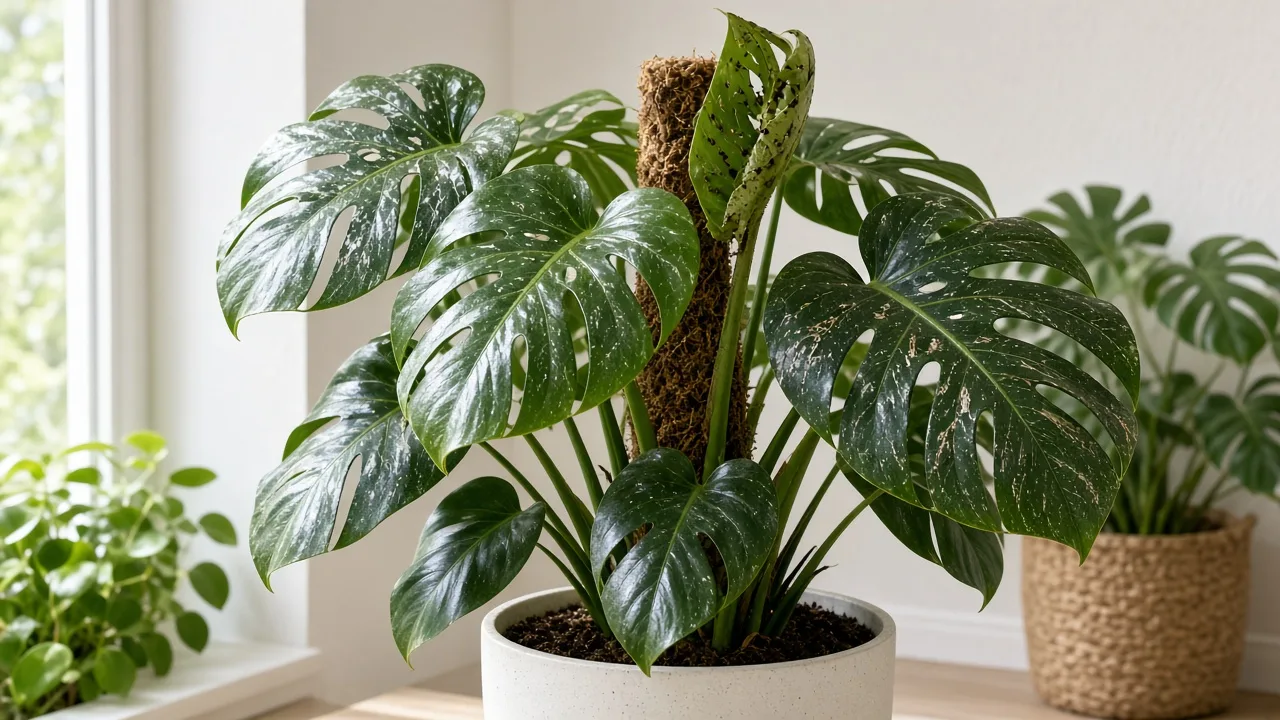
Thrips on Monstera Deliciosa: Causes, Checks & Fixes
This guide covers thrips on Monstera Deliciosa. See also the general Thrips guide, watering, and light pages for this plant.
Thrips on Monstera Deliciosa: Causes, Checks & Fixes
Quick answer
Thrips on Monstera deliciosa show as silvery or bronze scrape marks on large glossy split leaves, often with black frass specks and distorted leaves still unfurling at the moss-pole tip. For general thrips biology and life cycle, see our thrips guide. On deliciosa, silver stippling reads clearly across broad fenestrated lobes—and damage often scars the split while the leaf is still rolled at the climbing tip.
First step: isolate the Monstera and shake suspect new leaves over white paper to confirm thrips before spraying.
When to use this page vs other Monstera Deliciosa guides
| Pattern | Read next |
|---|---|
| Silvery streaks on new unfurling splits, black frass dots | This page |
| Fine dots with silk on undersides | Spider mites |
| Sticky shiny residue, no scrape marks | Sticky leaves |
| Twisted tips without frass | Distorted leaves |
| Cupped mature splits, no insects | Curling leaves |
| Bumps that do not move | Scale insects |
What thrips look like on Monstera deliciosa
Thrips damage is easy to miss on a tall floor specimen because most pest thrips feed hidden in buds and shoot tips while the glossy upper surface still looks fine. On deliciosa, the symptom signature is silver stippling on fenestrated leaves—not the uniform edge browning of humidity stress.
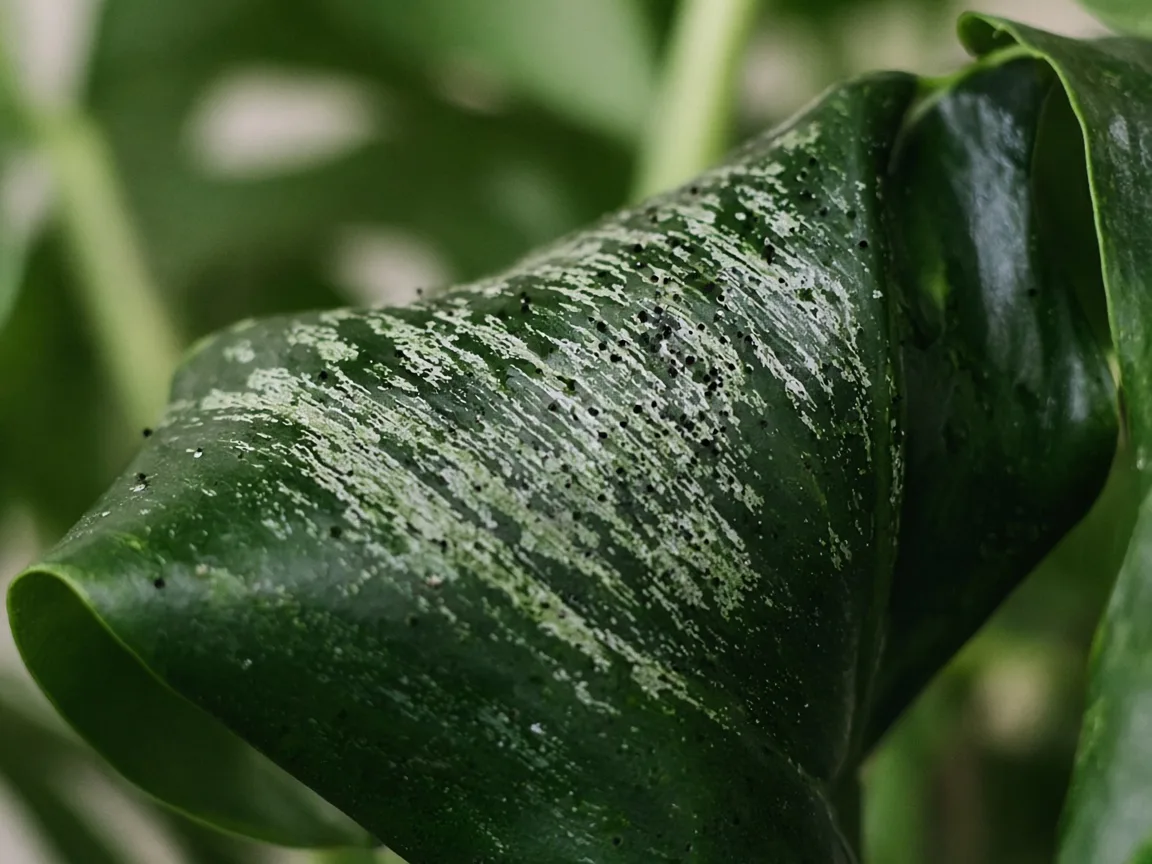
Silvery scrape marks and black frass on an unfurling fenestrated leaf—compare with clean tissue on the same petiole.
Silver stippling on split foliage:
- Pale silvery or bronze streaks and flecks across large glossy lobes and fenestrations
- Black varnish-like frass dots on the leaf surface—thrips feeding is usually accompanied by black flecks of excrement
- Scars that look worse once splits open, because feeding happened while tissue was still expanding
Unfurling splits at the moss pole:
- The highest leaf still rolled at the climbing tip shows silvery patches before holes develop
- Torn, crinkled, or stalled unfurling when the growing point was fed upon heavily
- Western flower thrips—the most common pest thrips on ornamentals—concentrates in these sheltered crevices on houseplant aroids
Insect signs (when you can see them):
- Slender adults less than 1/20 inch long—pale yellow, brown, or black
- Light yellow larvae on leaf backs; adults jump or fly when disturbed
- Unlike spider mites, no fine webbing at thick petiole joints
Why Monstera deliciosa gets thrips
Thrips puncture leaf cells and suck contents, leaving stippling highly visible on broad fenestrated foliage. Monstera deliciosa setups often make infestation worse before you notice:
Sheltered unfurling tissue. Monstera’s large climbing habit stacks overlapping split leaves and hides the active growing tip inside a moss-pole cluster. Thrips scar splits before fenestrations open—by the time damage shows on a mature lobe, the next bud may already be fed upon.
Nursery and shelf spread. Thrips arrive on new houseplants and walk between shelf aroids. One infested Swiss cheese plant can seed philodendrons, pothos, and other monsteras on the same display.
Soft new growth. Fast summer growth pushes tender unfurling splits where western flower thrips concentrate. Excess nitrogen can increase thrips populations by producing soft, succulent tissue thrips prefer—hold heavy feeds while you treat.
Dusty broad leaves. NC State recommends wiping dust off regularly on this coarse-textured vine. Dusty floor specimens hide frass on dark green tissue and make casual inspection miss early streaks on lower overlapping lobes.
Western flower thrips specifically. On ornamentals, western flower thrips feeds in buds, flowers, and growing tips—exactly where deliciosa pushes new fenestrated leaves. Penn State lists thrips among common monstera houseplant pests alongside mites and scale.
Lookalike symptoms
| What you see | Likely cause | Key difference on Monstera deliciosa |
|---|---|---|
| Silvery streaks + black frass, no webbing | Thrips | Jumping adults on paper shake; scars on unfurling splits |
| Pinhead dots + fine silk on undersides | Spider mites | Slow-moving specks; webbing at petiole joints |
| Sticky coating on split leaves | Aphids or honeydew pests | Insects or wax clusters, not scrape marks alone |
| Brown patches without frass | Physical damage or brown leaves | Mechanical tears or cultural stress, not feeding scars with frass |
| Uniform yellow, wet mix | Overwatering | Base-up yellowing, sour soil—no moving insects |
How to confirm the cause
Work through these checks before you spray:
- Isolate first — Move the deliciosa away from other aroids. Thrips walk and fly to neighboring plants on contact.
- Paper shake test — Hold a damaged new split over white paper and tap sharply. Shake foliage onto light paper to dislodge thrips for identification.
- Inspect the moss-pole tip — Peel back the highest leaf still unfurling. Silvery patches inside the roll confirm feeding before splits open.
- Frass check — Look for black varnish-like dots on silvery streaks—not sticky honeydew.
- Sticky traps — Blue or yellow cards near the pot catch adult western flower thrips and show whether populations are active.
- Neighbor scan — Inspect pothos, philodendrons, and other monsteras from the same nursery batch.
- Rule out watering stress — Yellow leaves from overwatering start at the soil line with wet mix and no frass.
If you find moving specks or frass on silvery streaks, thrips are confirmed. If only webbing appears, switch to the spider mites guide.
First fix for Monstera deliciosa
Isolate the plant, then rinse every reachable leaf underside under lukewarm water or shower spray.
Roll a heavy floor pot into a shower or outdoors on a mild day. Spray from below so water hits overlapping fenestrations, thick petioles, and moss-pole crevices where thrips hide. Forceful washing reduces thrips numbers on houseplants. Let glossy foliage drain in bright indirect light the same day—do not leave wet leaves in direct sun.
This single rinse knocks down adults and larvae and gives you a clean baseline before any spray. Do not stack soap, oil, and repotting on the same day.
Step-by-step recovery
After the initial rinse, follow severity:
Days 1–14: Physical control (light silvery streaks on a few leaves)
- Repeat rinsing every two to three days on every split leaf you can reach; use a step stool for tall moss-pole specimens
- Wipe reachable glossy backs with a soft damp cloth—work petiole by petiole on six-foot plants
- Place blue or yellow sticky traps near the pot to monitor adults
Days 7–28: Contact sprays if streaks spread (moderate infestation)
- Apply insecticidal soap or narrow-range horticultural oil labeled for thrips on houseplants, covering undersides until runoff
- Repeat on label intervals through at least three cycles—thrips have several generations per year and eggs inside tissue survive a single spray
- Pesticides alone rarely control thrips well on large specimens; combine rinsing, traps, and repeat contact sprays
Heavy infestation (scarred unfurling tips on multiple stems)
- Trim and bag only leaves too distorted to open cleanly; do not strip an entire floor specimen at once
- Treat every aroid on the same shelf, not just the worst-looking deliciosa
- Hold fertilizer until new growth unfurls without fresh streaks
Recovery timeline
Judge recovery on new fenestrations, not old scarred lobes:
- 3–7 days after first rinse: Fewer adults on sticky traps; fresh frass stops appearing on the highest unfurling leaf
- 2–4 weeks: Clean new splits emerge without silvery streaks—this is your main success signal
- 6+ weeks on large floor plants: Several unstreaked fenestrated leaves confirm the population is broken; continue spot checks at the moss-pole tip
Mature split leaves with silver stippling do not revert—the glossy tissue stays marked. Success means unstreaked new growth, not a cosmetic reset of every lobe on a six-foot plant.
Mistakes to avoid
- Stopping after one rinse or one spray. Thrips eggs inside leaf tissue hatch after the first treatment; moss-pole specimens need repeated underside coverage across dozens of split leaves.
- Spraying only glossy tops. Western flower thrips feed in crevices, unfurling buds, and leaf backs—tops-only sprays miss the active colony.
- Confusing thrips stippling with mites. Mites add webbing and slow-moving specks; thrips leave scrape marks and black frass without silk.
- Heavy nitrogen while treating. Soft new growth feeds thrips; keep to the usual fertilizer rhythm only after clean new leaves appear.
- Ignoring nearby plants. Inspect every aroid on the same shelf, not just the deliciosa with the most visible streaks.
- Repotting on day one. Repot only if mix is failing or pests are in the soil line—not as a first response to leaf streaks.
Western flower thrips on unfurling fenestrations
This is the deliciosa-specific pattern that generic thrips pages miss. Damage follows the leaf still rolled at the climbing tip:
- Silvery scars may only become obvious once splits open—if the next leaf is already streaked inside the roll, you waited too long between moss-pole inspections
- Fenestrations that should develop holes may stall or tear when the growing point was fed upon heavily
- For six-foot specimens, prioritize the top three reachable leaves and the active tip over random lower canopy samples
Western flower thrips adults are fast-moving and often pale; larvae are light yellow. Both hide in the tight curl of a new split where spray coverage is hardest to achieve—plan repeated rinses from above and below rather than one heroic spray session.
Prevention
- Quarantine new monsteras six weeks before placing them beside a moss-pole deliciosa
- Wipe dust from broad split leaves monthly per NC State guidance—dust hides frass on dark green lobes
- Inspect the moss-pole tip during weekly watering checks
- Avoid heavy nitrogen feeds that push soft unfurling tissue during active thrips season indoors
- Keep humidity above 50% with a humidifier near large floor plants—cultural vigor helps tolerance, though humidity alone does not eliminate thrips
Related Monstera Deliciosa guides
Conclusion
Thrips on Monstera deliciosa are a hidden-bud pest—silver stippling on fenestrated leaves and scars on unfurling splits mean inspect the moss-pole tip, isolate, and rinse undersides before you reach for sprays. Judge recovery by clean new fenestrations, not perfect older lobes.