Curling Leaves on Monstera Deliciosa: Causes, Checks & Fixes
Quick answer
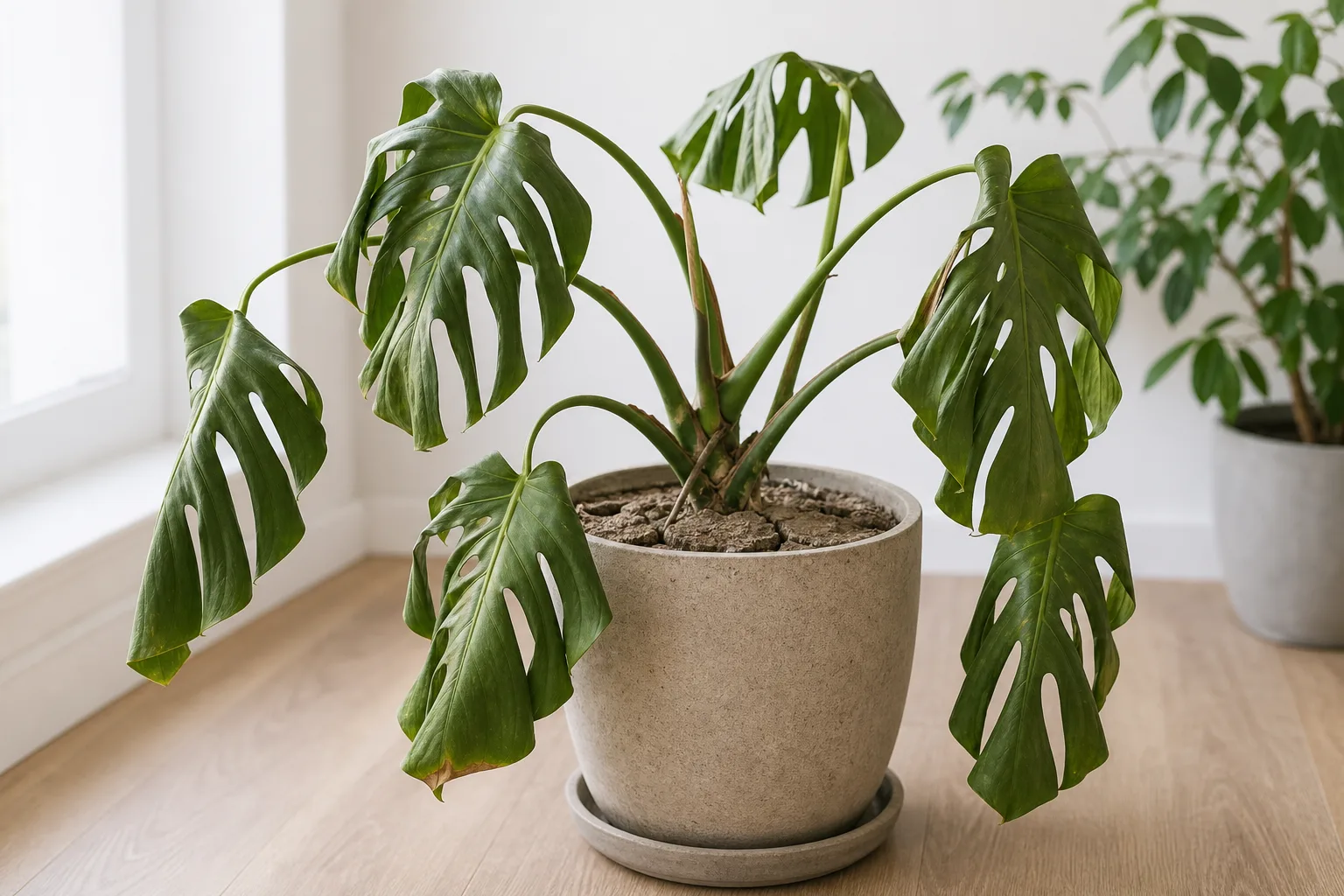
Curling leaves on Monstera deliciosa are a stress response, not a single disease. First step: probe soil 3–5 cm deep and lift the pot-dry mix with a light container usually means underwatering; wet cool mix with limp curl points to overwatering. Check the newest rolled leaf at the vine tip before changing light, humidity, or pest treatments.
Curling Leaves on Monstera Deliciosa: Causes, Checks & Fixes
This guide covers curling leaves on Monstera Deliciosa. See also the general Curling Leaves guide, watering, and light pages for this plant.
Curling Leaves on Monstera Deliciosa: Causes, Checks & Fixes
Quick answer
Curling leaves on Monstera deliciosa (Monstera deliciosa) mean the large split blades are rolling inward, cupping, or twisting to reduce water loss or protect damaged tissue. On this climbing aroid, curl is almost always a moisture, humidity, light, or pest signal-not a mysterious nutrient shortage. For how leaf curl works as a general houseplant response, see our curling leaves guide. On Monstera deliciosa, the pattern usually shows up on broad fenestrated foliage, at the moss-pole vine tip, or on leaves facing a hot window.
The diagnostic trap is the same one that catches owners on drooping leaves: underwatering and overwatering both curl foliage, and the leaf shape alone does not tell you which. Dry mix with a light pot and crisp inward roll points to thirst. Heavy wet mix with limp cupped leaves points to roots struggling in saturated soil. Silver-scarred new growth at the unfurling tip points to thrips-not a watering fix at all.
First step: probe soil moisture 3–5 cm deep and lift the pot. Do not mist, fertilize, or repot until you know whether the root zone is dry, evenly moist, or waterlogged-and whether the newest rolled leaf at the vine tip looks normal or warped.
What curling leaves look like on Monstera Deliciosa
Healthy Monstera deliciosa holds stiff, glossy green blades on long petioles along a climbing apical vine. Curling breaks that pattern in ways that narrow the cause if you read the whole plant-not just the most dramatic leaf.
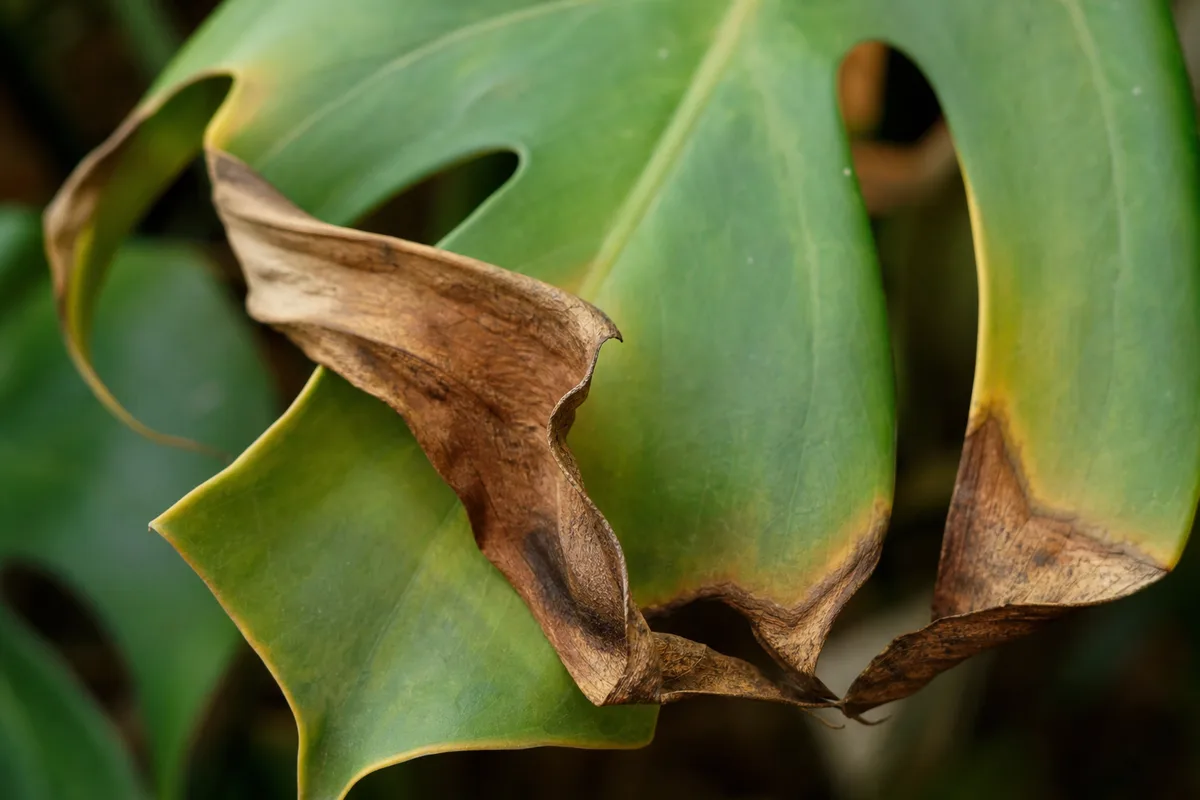
Curling Leaves symptoms on Monstera Deliciosa - compare with healthy tissue on the same plant.
Typical curl patterns on this species:
- Inward roll on several mature leaves, dry soil, light pot - Leaf margins curl like a taco; edges may feel papery. Classic underwatering or a missed watering cycle on a large-leaf climber that transpires heavily in bright light.
- Cupped limp leaves on wet, heavy soil - Blades curl while petioles lose turgor. Overwatering reduces root oxygen; uptake fails even though the mix feels wet.
- New leaf stuck in its sheath with dry brown at the roll - Unfurling stalls on the moss pole. Often low humidity or heat near glass-not thirst.
- Twisted, scarred, or ruffled new leaves only - Mature fenestrated foliage below stays flat while the apical unfurling leaf opens small and distorted. Strong clue for thrips or aphids on tender growth.
- One-sided curl on window-facing leaves - Hot direct sun triggers self-shading curl on the exposed side. See heat stress if afternoons bake the glass.
- Tightly rolled emerging leaf for a few days - Normal. A new Monstera leaf emerges rolled before splitting open; that is growth, not pathology.
Monstera leaves are large relative to the petiole, so one cupped blade can dominate the visual field. Always compare the newest unfurling leaf at the vine tip with two or three mature leaves lower on the moss pole before treating.
Why Monstera Deliciosa gets curling leaves
This tropical climbing aroid evolved with episodic rain, sharp drainage, and high humidity in forest canopy gaps. Indoors, curl almost always traces to how water, air moisture, light, and pests interact with its large leaf surface and active unfurling habit-not a random leaf disease.
Underwatering and drought curl
Monstera uses water quickly through broad fenestrated blades in bright indirect light. When the top 3–5 cm of chunky mix dries beyond what roots can access-especially if bark has shrunk from the pot wall-leaves curl inward to reduce exposed surface area. Calendar watering in winter while the plant still grows under a grow light produces the same pattern. Large floor pots can feel dry at the surface while the core is moist; always probe depth, not just the top crust.
Overwatering and uptake failure
Saturated mix drives out soil oxygen. Fine roots die; remaining roots cannot move water even though soil feels wet. The plant shows drought symptoms in abundance-limp inward curl on wet soil, sometimes yellow lower leaves. This is a dangerous misread because the instinct to “help” with more water accelerates decay.
Low humidity at the unfurling tip
New Monstera leaves emerge rolled on long petioles at the top of a moss pole-right where rising heat and dry forced air hit first. When relative humidity drops below roughly 40% for weeks, unfurling can stall and mature margins may cup. Monstera prefers high humidity and bright filtered light indoors-extra watering does not replace humid air.
Heat and direct sun stress
Monstera deliciosa wants moderate brightness without direct sunlight. Afternoon sun on a south or west window curls and bleaches the exposed side of large leaves as a self-shading response. Hot glass and ceiling vents compound the damage on tall specimens.
Thrips and aphids on new growth
Sap-sucking pests scar expanding tissue before it hardens. On Monstera, that means the newest unfurling leaf opens wrinkled, twisted, or smaller than the leaf below while older fenestrated blades may look fine. Thrips often leave silver streaks; aphids cluster at tender petiole joints.
How to confirm the cause
Work through these checks in order. Each step narrows the cause before you treat.
- Soil moisture at 3–5 cm - Dry at depth with a light pot = thirst. Wet, cool, dark soil with a heavy pot = pause watering.
- Pot weight - Learn what “dry” and “moist” feel like on your container. Curl on a feather-light pot almost always needs water; curl on a pot you can barely lift needs dry-down, not another soak.
- Which leaves curl - Several mature leaves at once = environmental moisture or light. Only new growth warped = pests or unfurling stress.
- Unfurling leaf condition - Stuck roll with dry brown edge = humidity or heat. Silver scars or black specks = pests.
- Window and vent placement - One-sided curl on sun-facing foliage = light or heat. Uniform curl in a dim, wet corner = overwatering plus low evaporation.
- Pest scan - Hold the newest leaf to the light; check undersides of fenestrations and petiole axils with a magnifier.
- Root peek (if soil is wet and curl spreads) - Slide the plant partly out. Healthy roots are firm and light-colored; mushy roots confirm wet-root stress.
If dry soil and a light pot confirm dehydration, you do not need to unpot. If soil is wet and multiple leaves have curled over a week, inspect roots before the next watering.
First fix for Monstera Deliciosa
Probe soil at 3–5 cm depth and lift the pot-then act on dry versus wet, not on how alarming one curled blade looks.
That single check prevents drowning an overwatered plant or letting a thirsty floor Monstera sit another week. Everything else follows from moisture balance.
- If dry: Water thoroughly until a small amount runs from drainage holes, then empty the saucer. For severely dry mix that repels water, bottom-soak the pot 20–30 minutes, then drain fully.
- If wet: Do not water. Move to brighter indirect light if the plant sits in deep shade-faster dry-down helps. Wait until the top quarter to one-third of mix dries before reassessing.
- If only the newest leaf is warped with pest signs: Isolate the plant and rinse leaf undersides thoroughly before any spray. Confirm active pests before treating.
Do not fertilize, repot into a larger container, or prune half the vine on day one.
Step-by-step recovery
Thirst recovery (dry soil, crisp inward curl)
- Water deeply once, or bottom-soak if mix has shrunk from the pot wall.
- Drain completely-never leave the pot standing in water.
- Move out of direct hot sun while the plant rehydrates.
- Resume watering when the top 3–5 cm dries again.
- Judge recovery by turgid existing leaves and the next unfurling leaf opening flat within one to two weeks.
Wet-root recovery (soggy soil, limp curl)
- Stop watering until the top quarter to one-third of mix dries.
- Clear drainage holes; keep saucers empty.
- If curl spreads after appropriate dry-down, unpot and trim mushy roots to firm tissue.
- Repot into fresh chunky aroid mix-not a bigger pot unless roots filled the old one.
- Read root rot if stems soften at the base.
Low-humidity unfurling recovery
- Run a humidifier to 50–60% near the moss pole canopy.
- Move the plant away from heat registers and hot window glass.
- Do not compensate with extra watering on wet soil.
- See low humidity for full setup.
Pest recovery (distorted new growth only)
- Isolate from other plants.
- Shower or rinse undersides of large leaves and the apical growth tip.
- Confirm thrips, aphids, or spider mites before applying horticultural oil or insecticidal soap per label.
- Repeat on the schedule the product requires.
Recovery timeline
Simple underwatering: Inward curl may relax within 12–48 hours after a proper soak. The next unfurling leaf should open flat within one to two weeks.
Overwatering without major rot: Once mix dries appropriately, curl spread should stop within three to seven days. New apical leaves opening without cupping are the best sign.
Low humidity: Stuck unfurling may take two to four weeks of stable 50–60% humidity before the next leaf opens cleanly.
Pest-scarred new leaves: Old warped blades will not flatten. Track whether the next two new leaves emerge undamaged after treatment.
Worsening signs: Curl spreading on wet soil despite dry-down, soft stems at the soil line, or every new leaf opening twisted mean escalate to root inspection or pest ID.
Lookalike symptoms
| What you see | Likely cause | Check |
|---|---|---|
| Inward curl, dry soil, light pot | Underwatering | Soak once; probe depth weekly |
| Cupped limp leaves, wet heavy pot | Overwatering | Dry-down; inspect roots |
| Crisp brown edges, firm stems | Low humidity | Hygrometer at canopy |
| Silver scars on newest leaf only | Thrips | Magnifier on growth tip |
| Tight roll for days, then opens green | Normal unfurling | No treatment needed |
What not to do
Do not soak a Monstera whose soil is already wet because curled leaves look sad. That converts recoverable cupping into rot.
Do not mist heavily in a dim corner as a humidity fix-wet foliage without airflow can invite fungal spotting on large leaves.
Do not assume fertilizer deficiency before checking moisture, humidity, and pests on the newest growth.
Do not expect severely twisted leaves to uncurl-recovery is always measured by new apical foliage.
How to prevent curling leaves next time
Match watering to how fast your pot dries in its actual spot. For most indoor Monstera deliciosa plants, water when the top 3–5 cm of chunky mix is dry-roughly every 7–10 days in warm bright conditions, less in winter.
Keep the plant in bright indirect light so it uses water steadily. Run a humidifier through dry heating season. Provide a moss pole so heavy leaves do not stress sideways. Quarantine new plants and inspect the apical growth tip weekly during active growth.
When to worry
Treat as urgent if many leaves curl at once on soggy soil, stems soften at the base, or every new leaf opens twisted with spreading silver damage. Slow cupping of one or two leaves after a missed watering, with green apical unfurling, is lower urgency.
When to use this page vs sibling guides
| Your question | Best page |
|---|---|
| Leaves curl inward-need wet-vs-dry triage first | This page |
| Limp leaves before or with curl | Drooping leaves |
| Crisp edges without full cupping | Brown tips |
| New leaf stuck in roll, dry brown edge | Low humidity |
| Silver scars, distorted new growth only | Thrips |
| Chronically wet soil | Overwatering |
Related Monstera deliciosa guides
- Monstera deliciosa overview - species hub and care baseline
- Watering guide - dry-down rhythm for large pots
- Low humidity - stuck unfurling and edge curl
- Underwatering - drought curl and crisp margins
- Overwatering - limp curl on wet soil
- Thrips - scarred new leaves at the vine tip
- Problems hub - all Monstera issue guides
Conclusion
Curling leaves on Monstera deliciosa look dramatic on large split foliage, but the diagnosis is usually straightforward. Probe soil at depth, lift the pot, and inspect the newest unfurling leaf at the moss-pole tip. Thirst curl clears after one proper soak; wet-root curl needs dry-down; humidity curl needs a humidifier; pest curl needs isolation and confirmed treatment. Judge recovery by flat new apical growth-not by old cupped blades flattening again.