Whiteflies on Monstera Deliciosa: Causes, Checks & Fixes
Quick answer
Whiteflies on Monstera deliciosa show up as tiny moth-like insects on the undersides of large split leaves that flutter into a white cloud when you disturb the canopy. First step: isolate the plant immediately and wash every reachable leaf underside with lukewarm water to knock down nymphs.
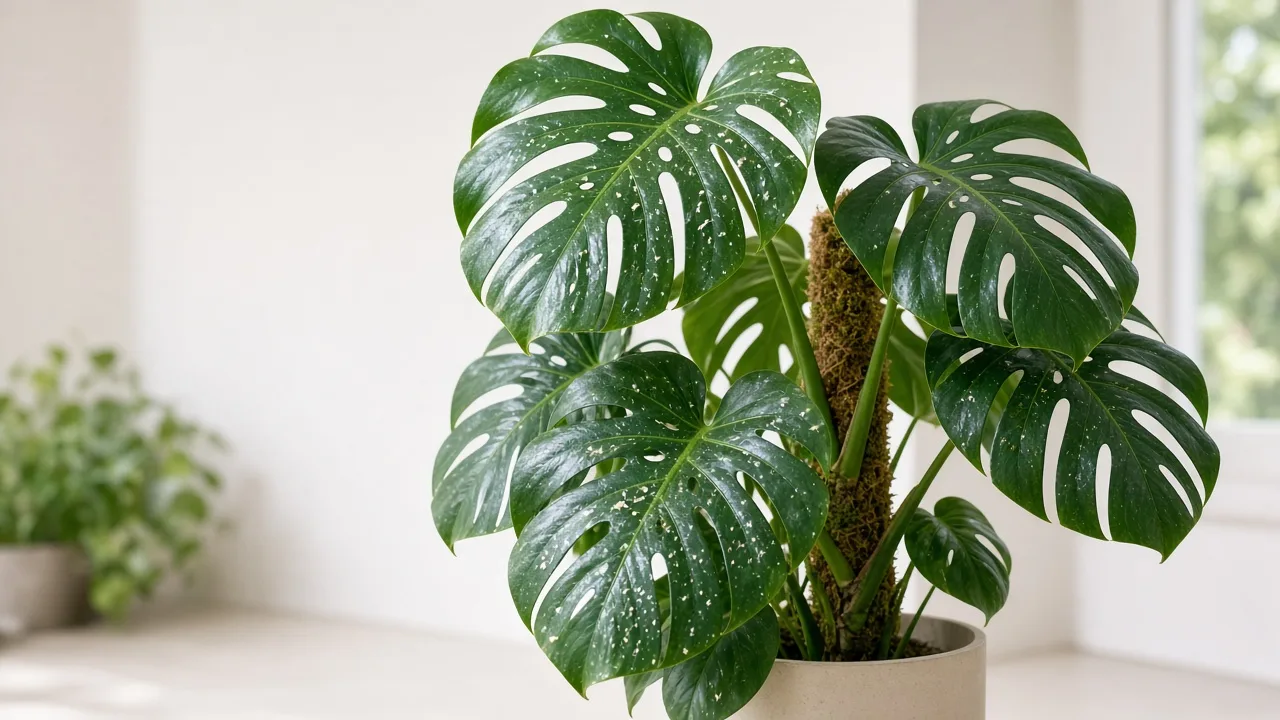
Whiteflies on Monstera Deliciosa: Causes, Checks & Fixes
This guide covers whiteflies on Monstera Deliciosa. See also the general Whiteflies guide, watering, and light pages for this plant.
Whiteflies on Monstera Deliciosa: Causes, Checks & Fixes
Quick answer
Whiteflies on Monstera deliciosa appear as tiny white, moth-like insects on the undersides of large split leaves. Disturb the canopy and they flutter away in a white cloud before resettling on glossy leaf backs.
Nymphs look like flat disks glued to leaf undersides. Both stages excrete sticky honeydew that can coat broad Monstera foliage and foster black sooty mold.
See our whiteflies guide for general pest biology. On Monstera deliciosa, inspect the glossy backs of the largest lower canopy leaves—overlapping splits create sheltered undersides whiteflies favor on floor specimens.
First step: isolate the Monstera the same day you see flying white insects, then wash reachable undersides with lukewarm water.
When to use this page vs other Monstera deliciosa guides
| Pattern | Read next |
|---|---|
| White cloud on disturbance | This page |
| Sticky leaves without flying insects | Sticky leaves |
| Cottony wax clusters | Mealybugs |
| Silvery streaks, no flight | Thrips |
| Stippling + fine webbing | Spider mites |
| Brown bumps on stems | Scale insects |
What whiteflies look like on Monstera deliciosa
Adults are about 1/16 inch long, white and moth-like. On deliciosa you usually notice the flight response before you spot individual insects on gigantic pinnately lobed leaves.
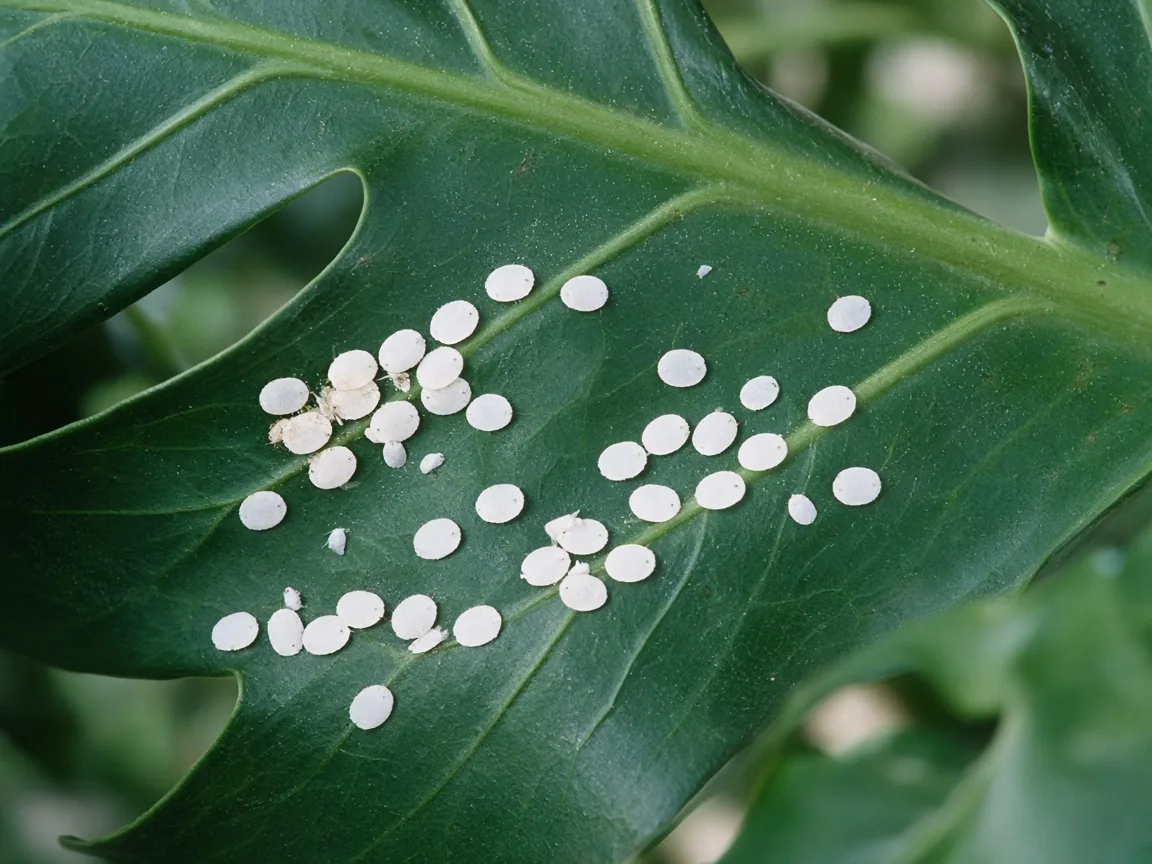
Flat pale nymphs and powdery adults on the glossy back of a fenestrated Monstera leaf—compare with clean lower tissue on the same petiole.
Typical signs on split-leaf Monstera:
- White cloud when you water, mist, or move overlapping leaves
- Flat pale nymph disks on broad split-leaf backs, especially lower canopy
- Sticky honeydew on glossy foliage, petioles, and floors below
- Black sooty mold growing on honeydew deposits
- Yellowing or stunted new splits at the moss-pole tip when feeding is heavy
Unlike mealybugs, whiteflies fly when disturbed. Unlike thrips, damage shows as honeydew and flight—not silvery scrape marks.
Why Monstera deliciosa gets whiteflies
Monstera’s large leaf surface and indoor floor placement give whiteflies extensive feeding area on sheltered undersides that weekly top-watering misses. Warm rooms let whiteflies reproduce year-round.
Monstera-specific entry routes:
- Nursery stock with hidden nymphs on broad juvenile leaves
- Summer patio time, then brought indoors with adults already present
- Touching canopies between aroids on the same shelf
- Over-fertilized soft new splits at the climbing tip—sap-rich tissue whiteflies prefer
Whiteflies are extremely difficult to control on houseplants once established across a tall canopy. Catching them on the first flying adult saves weeks of repeat treatment.
Lookalike symptoms
| Sign | Check | Likely cause |
|---|---|---|
| White cloud on touch | Adults fly | Whiteflies |
| Cottony wax, no flight | Stays put when disturbed | Mealybugs |
| Silvery streaks | No cloud on shake | Thrips |
| Stippling + webbing | Paper tap test | Spider mites |
| Sticky + bumps on stems | Immobile scales | Scale insects |
How to confirm
- Disturbance test — Tap or mist a split leaf; a white cloud confirms adults.
- Underside inspection — Use a step stool on tall floor plants; check the largest reachable lower splits first.
- Honeydew tackiness — Sticky residue across multiple leaf backs, not just one drip spot.
- Yellow sticky traps — Adults stick within 48 hours when placed near the pot rim.
- Lifecycle timing — Eggs hatch in about a week; plan repeat treatments through overlapping life stages.
- Neighbor scan — Inspect pothos and philodendron shelf mates watered on the same schedule.
First fix for Monstera deliciosa
Isolate the plant, then wash every reachable leaf underside with lukewarm water or a gentle shower spray.
Iowa State recommends washing undersides as an early mechanical step. Work systematically through the canopy per Monstera light needs—bright placement helps you see nymph disks on dark green tissue.
Protect flooring from runoff on large pots. Do not return the Monstera to a shared aroid shelf until you have two clean weeks of monitoring.
Mistakes to avoid
- Do not top-water only and assume the pest is gone—nymphs stay glued to undersides whiteflies chose on overlapping splits.
- Do not spray insecticide once and stop—four to five applications at five- to seven-day intervals are usually needed because eggs and pupae resist single passes.
- Do not fertilize a heavily infested Monstera to “help it recover”—soft new splits attract more sap feeders.
- Do not confuse honeydew stickiness with overwatering—check for flight and nymph disks before changing your watering rhythm per the watering guide.
Step-by-step recovery
- Hang yellow sticky traps near the pot—one trap per couple of plants per Missouri Botanical Garden guidance.
- Repeat washing every two to three days on all reachable leaf backs.
- Insecticidal soap on label intervals; repeat every five to seven days through four cycles, coating undersides thoroughly.
- Remove heavily infested lower leaves when practical—they are often the hardest to reach anyway.
- Wipe honeydew from glossy splits so sooty mold does not block light to remaining tissue.
- Two clean weeks before shelf return; keep inspecting moss-pole tip growth weekly.
Overlapping split-leaf canopy: whiteflies on floor Monstera
Tall Monstera deliciosa plants are hard to treat completely—prioritize new growth at the moss-pole tip and the largest reachable lower leaves where nymph disks cluster on sheltered glossy backs.
Overlapping fenestrations create pockets your shower spray never hits. Use a step stool and work in sections—lower third one day, middle canopy the next—rather than one rushed pass that misses the backs of broad splits.
Moss-pole tip: where whiteflies hide on deliciosa
The active climbing tip pushes soft, sap-rich unfurling splits. Whiteflies often concentrate here before you notice adults flying from lower leaves. Inspect the highest reachable node and the backs of the newest split still expanding.
If honeydew appears on the tip leaf while lower canopy looks clean, treat the whole plant—generations overlap and adults resettle quickly after flight.
Recovery timeline
Two to four weeks for full treatment cycles covering egg, nymph, and adult stages. Honeydew-dulled mature splits may stay matte even after pests are gone.
Judge recovery by clean new fenestrations at the moss pole, not by old leaves that yellowed during feeding. Stunted tip growth should resume once nymph counts drop.
Prevention
- Quarantine new monsteras six weeks before placing near pothos or philodendron neighbors.
- Inspect broad undersides during weekly watering—NC State recommends wiping dust from leaves regularly so pests are easier to spot.
- Run yellow sticky traps as early warning near floor specimens.
- Avoid heavy nitrogen feeds that push soft tender splits whiteflies prefer—follow the fertilizer guide schedule for your light level.
- After summer outdoors, isolate and inspect before merging back into indoor collections.
Related Monstera Deliciosa guides
Conclusion
Whiteflies on Monstera deliciosa are a flight-and-honeydew signal—isolate the same day you see a white cloud, then wash undersides systematically before reaching for sprays. Tall split-leaf specimens need section-by-section treatment, not a single top-water pass.