Low Humidity on Neon Pothos: Causes, Checks & Fixes
Quick answer
Low humidity stresses Neon Pothos when heated or air-conditioned air dries leaf margins-measure humidity near the plant, move it off vents, and run a humidifier to reach 40–60%.
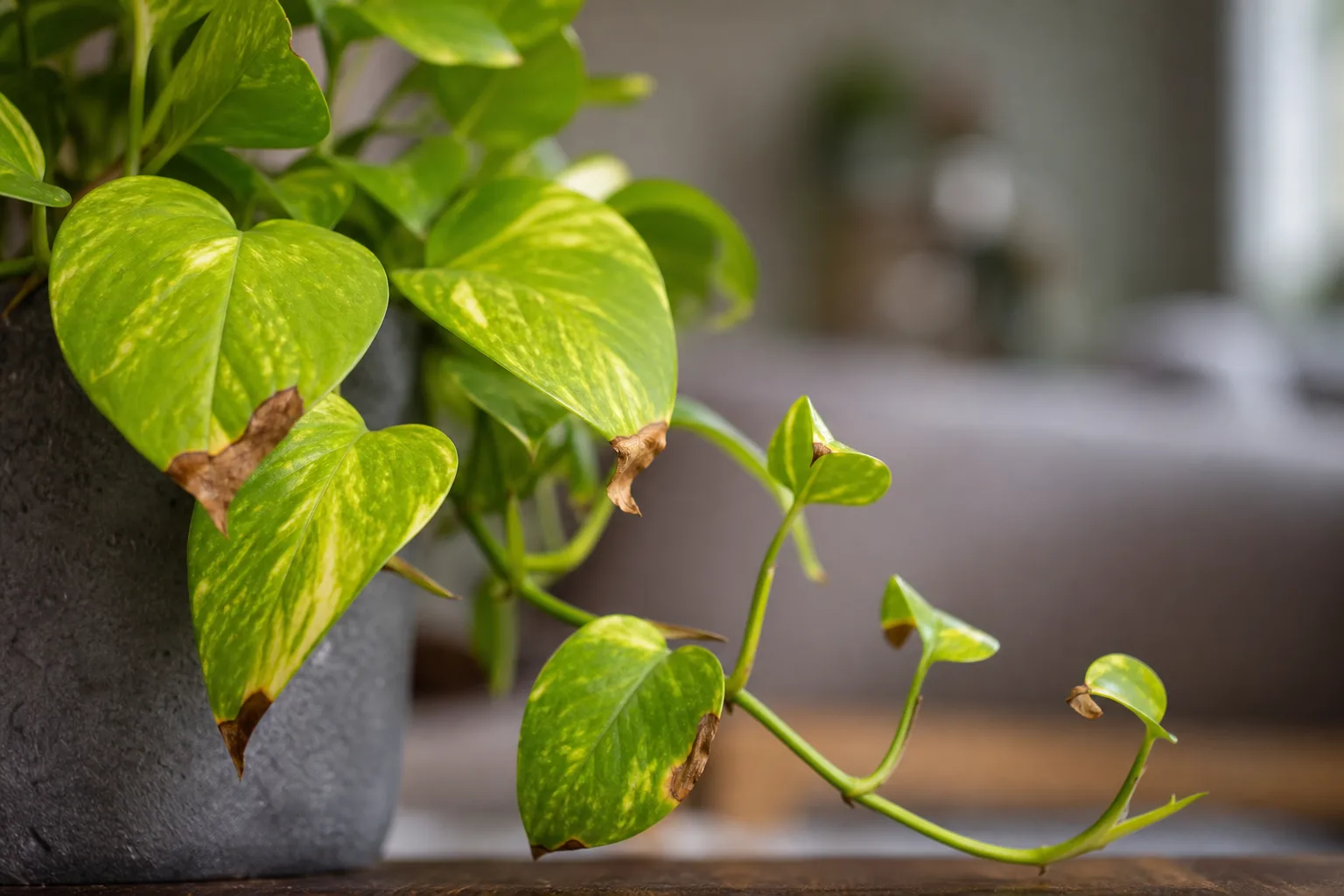
Low Humidity on Neon Pothos: Causes, Checks & Fixes
This guide covers low humidity on Neon Pothos. See also the general Low Humidity guide, watering, and light pages for this plant.
Low Humidity on Neon Pothos: Causes, Checks & Fixes
Quick answer
Low humidity on Neon Pothos (Epipremnum aureum ‘Neon’) shows up as crispy brown leaf margins, slowed new growth, and sometimes spider mites in dry winter rooms. Pothos tolerates average homes better than ferns, but the Neon cultivar’s slender, thinner leaves lose moisture faster than broader Golden or Marble Queen foliage.
First step: measure humidity at leaf height with a hygrometer and move the pot away from heating vents, AC returns, and hot window glass. Target 40–60% relative humidity near the plant-the range Neon Pothos performs best in at home. If readings stay below 35% after repositioning, run a cool-mist humidifier in the room rather than misting leaves or watering more often.
What low humidity looks like on Neon Pothos
Dry air damage on Neon Pothos is usually localized at leaf edges, not random spots across the blade. Watch for:
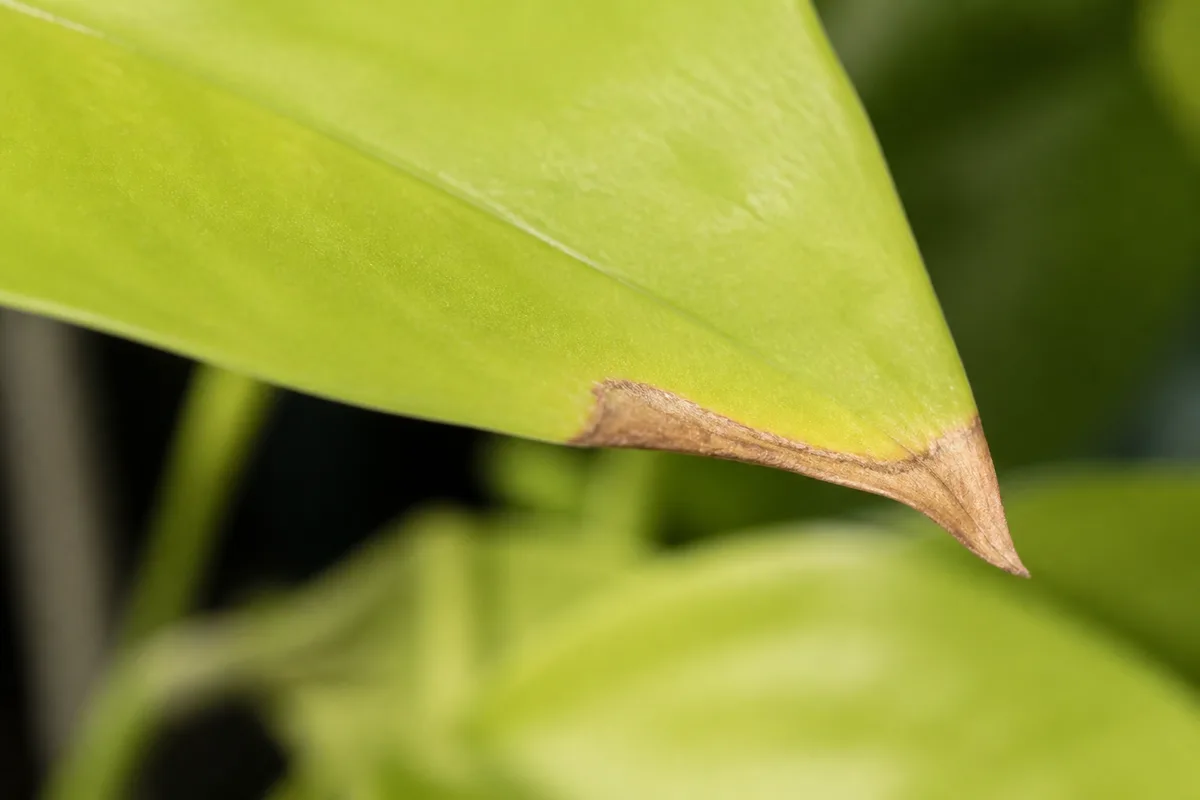
Low Humidity symptoms on Neon Pothos - compare with healthy tissue on the same plant.
- Tan or brown crispy margins while the leaf center stays chartreuse-green
- Slow internode growth and smaller new leaves during winter heating season
- Leaf curl or slight cupping on the newest leaves at the vine tips
- Tip dieback that spreads slowly from the outer edge inward, not overnight collapse
Because Neon leaves are bright lime-green and relatively thin, edge burn shows up clearly against healthy tissue. Older leaves at the base often crisp first; the vine tips may look fine for weeks while margins on mature foliage brown.
Not typical of humidity alone: uniform yellowing with wet soil (overwatering), limp wilt with bone-dry mix (underwatering), or fine yellow stippling with webbing (spider mites). Humidity stress is usually dry, papery edges on an otherwise firm leaf attached to a plant with cycling soil moisture.
Why Neon Pothos struggles in dry air
Pothos evolved in warm, humid tropical understory. Clemson Extension notes pothos prefers 50–70% humidity and will tolerate typical home levels of 30–60%, but leaf scorch and tip dieback often follow low humidity or intense light. Neon sits in the middle of that range-it is hardy, yet its slender leaves (described by Clemson as thinner than other pothos cultivars) have less tissue buffer when transpiration outpaces uptake.
Indoor dry-air triggers that hit Neon Pothos hardest:
- Winter heating dropping room humidity into the 20–30% range for months-lower humidity and hot indoor air often trigger leaf drop
- Forced-air vents and radiators blasting leaves and drying the pot surface fast
- Summer AC removing moisture while the plant sits in a cold draft
- South- or west-facing glass combining low humidity with leaf heating
- Trailing vines near doorways catching repeated dry air exchanges
Neon Pothos also grows quickly when light and water are right. Fast transpiration on long trailing stems means leaf margins dry first when ambient moisture is low-even if roots are healthy and soil moisture is correct.
How to confirm the cause
Work through these checks before buying equipment or changing your Neon Pothos watering guide:
- Hygrometer reading at leaf height - Place the sensor within 30 cm of the foliage, not on the floor. Below 35% with crisp edges strongly suggests dry air. Above 45% with ongoing tip burn points to hard water, salt buildup, or underwatering instead.
- Vent and window proximity - Leaves fluttering when heat or AC runs, or foliage touching cold winter glass, confirms localized dry zones even if a room-average reading looks acceptable.
- Season timing - Symptoms that appear within weeks of turning on central heat, or after moving the plant near a new workspace heater, fit humidity stress better than sudden root failure.
- Soil moisture pattern - Stick your finger 4–5 cm into the mix. If soil cycles from dry to moist on your normal schedule and roots are firm when you slip the plant from the pot, crispy edges are environmental-not rot.
- New vs. old growth - Humidity stress often browns older leaves first while the vine keeps producing new chartreuse leaves, just smaller or with curled tips. Widespread yellowing with soggy soil suggests a different problem.
- Pest check on undersides - Hold white paper under a leaf and tap the blade. Moving specks plus stippling mean spider mites, which prefer warm, dry conditions, not humidity damage alone.
If humidity is low and soil stays dry too long, you may have combined drought and dry air-fix placement and humidity first, then water thoroughly when the top 3–5 cm dries.
First fix for Neon Pothos
Move the pot at least 60 cm from heating vents, AC returns, and hot window glass, then run a cool-mist humidifier until readings at leaf height stay in the 40–60% range.
That single step addresses the most common cause-localized dry air-without the risk of overwatering. NC State Extension recommends a humidifier or a tray of wet pebbles to raise humidity around pothos. A humidifier changes the whole microclimate; pebble trays help only within a few centimeters of the pot and work best as a supplement, not the main fix in a dry room.
Do not increase watering frequency because leaf tips are brown. Wet soil on a plant that is not using water quickly invites root rot from chronic overwatering-a far harder problem than dry margins.
Step-by-step recovery
After repositioning and starting humidification:
- Stabilize for one week - Keep light, watering, and temperature steady. Neon Pothos recovers faster when you change one variable at a time.
- Trim fully brown tips - Cut along the natural leaf contour with clean scissors. Partial green tissue can stay; only remove dead margin if it spreads or looks unsightly.
- Group plants if space allows - Clustering pots raises local humidity a few points through shared transpiration. Leave air gaps so foliage does not stay wet against neighbors.
- Water on your normal dry-down schedule - Allow the top 3–5 cm to dry, then soak until water runs from drainage holes. Dry air increases transpiration but does not mean the roots need constant moisture.
- Inspect for spider mites weekly - Dry indoor air in winter favors mite outbreaks. If stippling or webbing appears, rinse leaf undersides and treat before mites spread along trailing vines.
- Hold fertilizer until new growth looks clean - Feeding stressed foliage can burn sensitive leaf edges, especially if salts accumulate in dry soil.
Recovery timeline
Stabilization: Humidity and placement fixes should stop new tip burn within one to two weeks. Existing crispy edges will not green up again.
New growth: Watch the vine tips. Clean chartreuse leaves with full margins emerging over two to four weeks confirm the environment is working. Smaller leaves or persistent curl mean humidity is still borderline or light is too weak for recovery.
Full vine appearance: Older browned leaves can be trimmed gradually over one to two months as new foliage fills in. Neon Pothos grows quickly in Neon Pothos light guide once air moisture stabilizes.
Worsening signs: Fine stippling spreading along a trailing stem, leaves yellowing while soil stays wet, or margins browning despite humidity above 50%-recheck for mites, salt buildup, or underwatering.
Lookalike symptoms
- Underwatering - Whole leaf wilt, pot feels light, mix dry throughout. Deep soak once; edges recover on new growth, not old leaves.
- Hard water or fluoride burn - Crispy tips with otherwise healthy margins; often follows tap-water-only routine. Flush soil and use filtered water if tips persist at adequate humidity.
- Fertilizer salt burn - Brown tips after heavy feeding or dry fertilizer on soil surface. Leach the pot and pause feed until new leaves emerge clean.
- Too much direct sun - Pale or scorched patches on the leaf face, not just margins; move back from hot glass even if humidity is fine.
- Spider mites - Stippling, bronzing, and webbing on undersides in dry heat; raise humidity and rinse or treat mites-humidity alone will not clear an active infestation.
- Normal aging - One or two oldest leaves yellowing and dropping at the base while the rest of the vine is firm; not a humidity emergency.
What not to do
Do not mist heavily once a day as your main humidity strategy. Misting raises moisture briefly and can leave Neon leaves wet too long in cool rooms. A humidifier is more reliable.
Do not water more often because tips are crispy-soggy mix with firm-looking leaves still risks pothos root rot.
Do not place the pot inside a closed pebble tray so the crown sits in standing water. Roots need drainage; humidity comes from evaporation below the pot, not from soaking the stem base.
Do not move the plant daily between rooms hunting humidity. Stable placement plus a humidifier beats bouncing between a dry living room and a steamy bathroom.
How to prevent low humidity next time
- Run a humidifier from first heating season through spring, especially if room readings drop below 35%.
- Keep Neon Pothos off window sills above radiators and away from desk heaters under trailing vines.
- Group humidity-loving plants in the same bright corner to share transpired moisture.
- Check a hygrometer monthly in winter; do not rely on how the air feels to your skin.
- Maintain bright indirect light so the plant uses water predictably-weak light plus dry air produces thin, slow-recovering leaves.
- Inspect leaf undersides during dry months before mite webbing spreads down long Neon vines.
When to worry
Low humidity alone rarely kills Neon Pothos-it slows growth and browns margins. Escalate when:
- Spider mites appear with stippling and webbing in dry heat-treat and isolate immediately.
- Many leaves yellow while soil stays wet-that pattern suggests root trouble, not dry air alone.
- New growth stops entirely for more than a month in warm bright conditions after humidity fixes-recheck light, roots, and pests.
Neon Pothos is one of the more forgiving pothos cultivars, but persistent dryness through a full winter can leave a long trailing plant looking thin and ragged until spring growth resumes. Fixing air moisture early costs less effort than rebuilding a mite-weakened vine later.
When to use this page vs other Neon Pothos guides
- Neon Pothos watering guide - Use for routine moisture checks before assuming low humidity is the main issue.
- Neon Pothos problems hub - Browse all 5 common issues on this species.
- Brown Tips on Neon Pothos - Different entry point when symptoms overlap with low humidity.