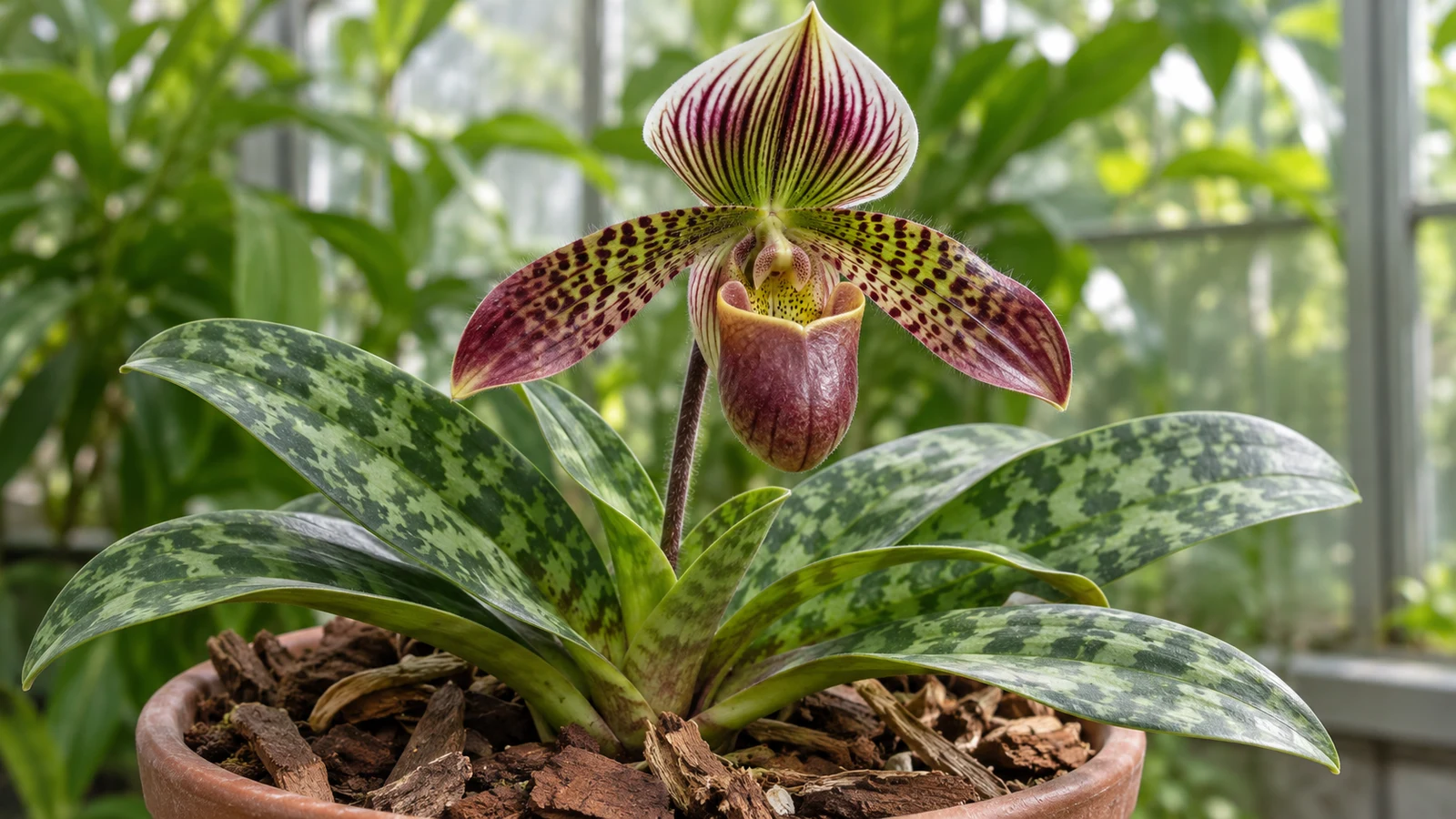
Browse general houseplant problems or use our diagnosis tool for Paphiopedilum.
Paphiopedilum problems
Use the guides below to diagnose and fix common issues on Paphiopedilum. Each problem page explains why it happens on this species and what to do first.
Most Paphiopedilum are terrestrial or semi-terrestrial, although NC State Extension notes that a few species grow epiphytically or lithophytically. Use an airy specialist orchid medium rather than assuming every orchid needs exposed roots or coarse bark.
How often should I water a Paphiopedilum?
Check the pot instead of following a calendar. Water thoroughly when the surface of the medium begins to dry, let excess drain, and keep the root zone lightly moist. Do not let the whole mix dry out or sit waterlogged.
Do all Paphiopedilum need the same temperature?
No. Plain green-leaved types are generally cooler growers, while many mottled-leaved types prefer warmer conditions. Species and hybrids vary, so use the plant’s label and a reliable species or hybrid-group guide.
What light is best for a slipper orchid?
Provide bright filtered light or light shade and protect the leaves from hot direct sun. The RHS advises more shade in summer and a brighter position in winter.
What potting mix should I use?
Use a specialist Paphiopedilum or terrestrial-orchid mix that holds some moisture but stays airy and drains well. Avoid dense standard houseplant soil and do not leave the pot standing in water.
Are Paphiopedilum orchids safe around pets?
Their safety is unverified in the species-specific sources checked. The ASPCA plant list is not all-inclusive and did not show Paphiopedilum in the accessible page. Keep the orchid out of reach and contact a veterinarian if a pet chews it.
How do I propagate Paphiopedilum?
Propagate Paphiopedilum from healthy stem or root divisions during active growth.
How this Paphiopedilum problems guide is reviewed?
Written by Sai AnanthLead content writer at LeafyPixels. B.Pharmacy graduate from Andhra University with a background in pharmacognosy, turned indoor gardening writer after a long-time plant hobby became a research-led resource for home growers.View Sai Ananth's profile · Reviewed by LeafyPixels Review Board
This Paphiopedilum problems problem guide was researched and written by Sai AnanthLead content writer at LeafyPixels. B.Pharmacy graduate from Andhra University with a background in pharmacognosy, turned indoor gardening writer after a long-time plant hobby became a research-led resource for home growers.View Sai Ananth's profile. Problems symptoms on Paphiopedilum, lookalike causes, and step-by-step fixes are cross-checked against extension pest, disease, and care references before publication.
We prioritize sources that hold up under scrutiny:
University cooperative extension bulletins and fact sheets (Penn State, Clemson, UMD, NC State, and similar programs)
Botanical garden and horticultural society publications
Peer-reviewed plant science and veterinary toxicology references where pet safety matters (including ASPCA Animal Poison Control)
Established reference works on indoor plant culture
The LeafyPixels editorial team then reviews the draft for clarity, step-by-step usefulness, and fit with real apartment and home conditions-not ideal greenhouse setups. When guidance changes materially, we update the page and note the revision date.